
5 Urban Artisan Creameries Making Great Cheese
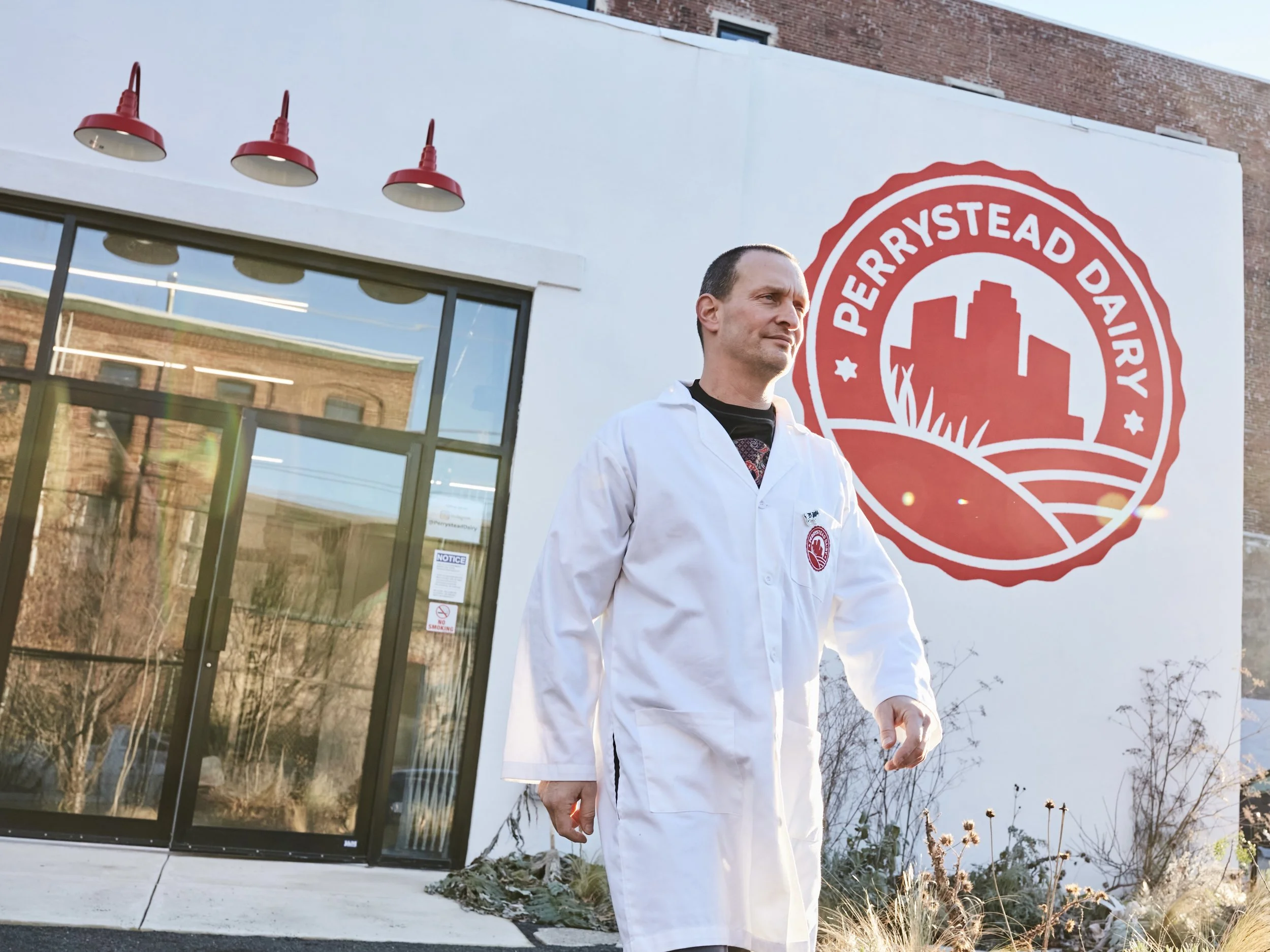
Yoav Perry at Perrystead Dairy
Recently, Ohio's Department of Agriculture has done some bragging about the Buckeye State leading the nation in the amount of “Swiss Cheese” produced in the state. While there are a good number of small artisan cheesemakers in the Buckeye State, the big tonnage comes mostly from large manufacturers making ingredient or commodity cheese. Urban Stead Creamery in Cincinnati is cut from a different cloth. In fact, as one of a very small number of urban artisan cheesemakers, the 8-year-old company is even markedly different from other artisan cheesemakers.
The United States’ cheese renaissance that began with a few goat lady makers in the 1980s is still made up primarily of small rural makers. Many of them are intentionally located on the same farm, where the high-quality milk is produced by forward-thinking farmers and their carefully-tended four-legged charges. But a few rare exceptions are bringing great milk into city neighborhoods to be coaxed into cheese. Those city-made wheels might be sold to local restaurants as easily as they are distributed to specialty retailers both near and far. This is the unique world of urban artisan cheesemaking.
Urban Stead, Cincinnati
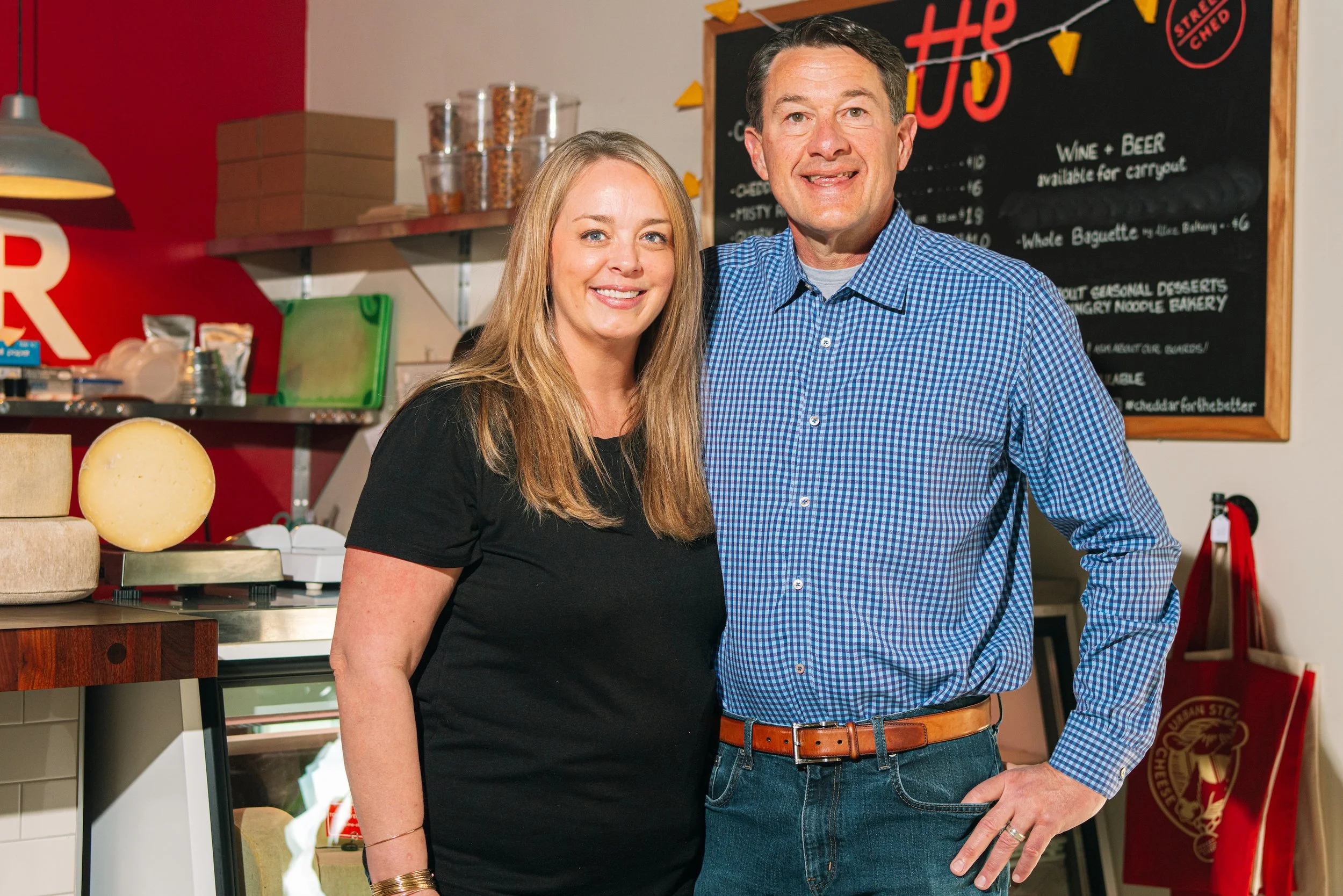
Andrea Siefring-Robbins and Scott Robbins of Urban Stead, photo credit Jon Medina
The milk used for Urban Stead’s cheeses including StreetChed and Misty River Camembert is produced about 50 minutes north of Cincinnati at Bohl’s Jersey Farm, says co-founder Andrea Siefring-Robbins. Each week on Sunday, a staffer drives to pick up fresh milk. Cheesemaking takes place Monday to Thursday, and by the weekend, Robbins and her husband Scott are helping in the tasting room inside the creamery shop. Yes, they operate a bar in their creamery where neighbors from the Evanston, East Walnut Hills and Walnut Hills neighborhoods can enjoy a local craft beer and a cheese plate that might feature the creamery’s Aged Gouda and its Tomme d’Evanston. Andrea says a rural cheesemaking operation was never on the couple’s radar.
“Being an urban creamery aligns with our life and our lifestyle,” she says. “My mom told me never marry a military man and don’t ever marry a farmer. I remember being at family weddings and my uncles having to leave to milk cows and then come back.” Scott’s experience in the restaurant business helped push the Robbins toward the idea of adding the tasting room. Urban Stead has a staff of 11 total operating the milk hauling, cheesemaking, and tasting room.
Perrystead Dairy, Philadelphia
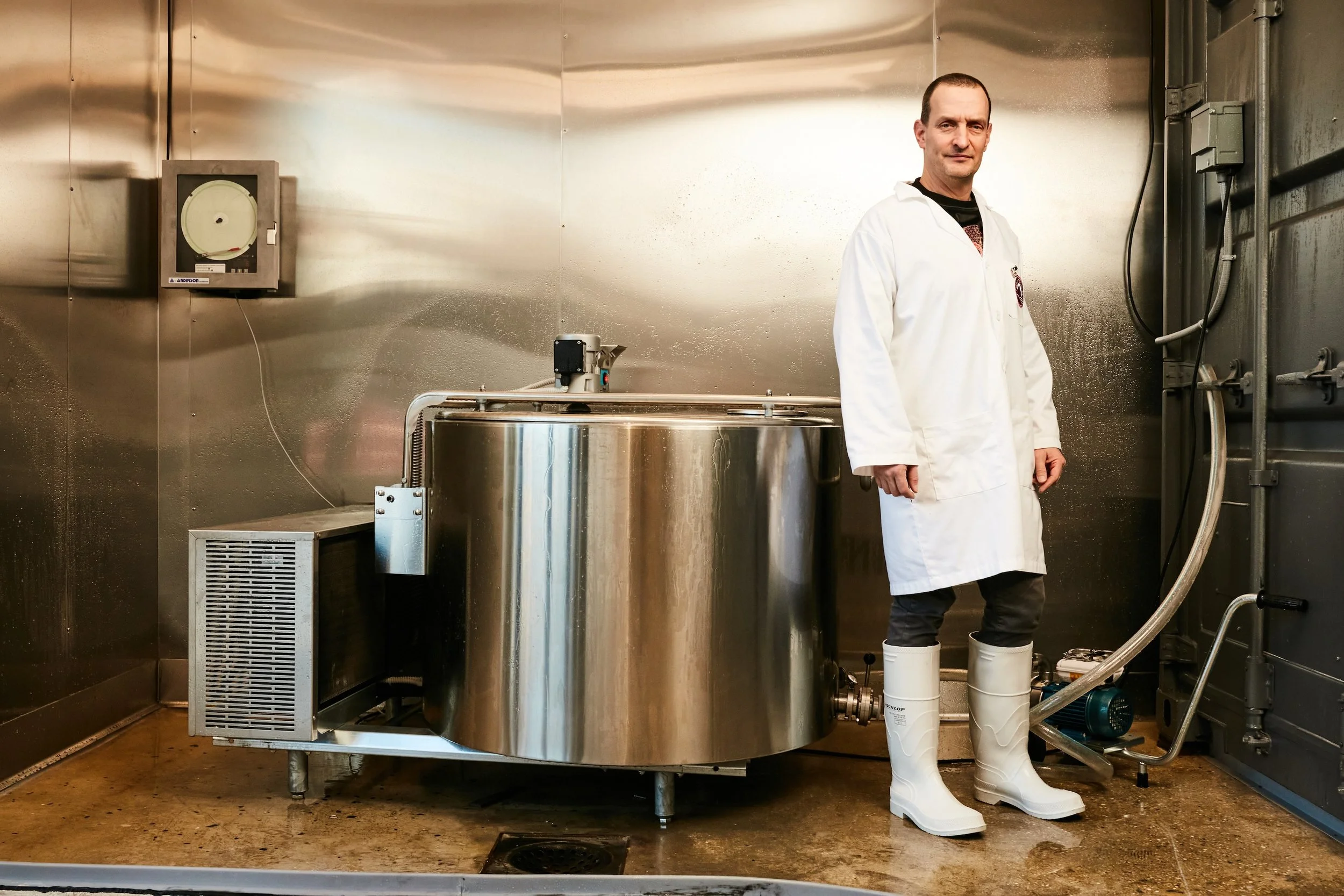
Yoav Perry at Perrystead Dairy
Tenaya Darlington, in a cover story for Food and Wine magazine, made a bold declaration—the world’s best cheeses are now made in the United States. One of the 25 world-class American artisan cheeses featured in the article is Intergalactic, a geo-ripened bloomy lactic cheese turned out by a tiny creamery adjacent to the Fishtown neighborhood of Philadelphia—one of the country’s largest cities.
Yoav Perry, who launched Perrystead Dairy in 2021 believes there are only about 20 artisan creameries worldwide located within city limits. Perry’s cheeses are made from milk from a single-farm source just about 40 miles from the Philadelphia creamery.
It’s commonly held that farmstead cheesemaking produces the best cheeses. In fact the term farmstead cheese is used only for cheeses that are made at farm-based creameries, where the milk never leaves the farm. That designation is one that often separates the great from the good in the cheese shop cases. It’s indisputable that milk quality is crucial to quality cheesemaking, and before even discussing the differences between raw and heat-treated milk, farmstead makers point out that milk is fragile and can be damaged if not handled properly.
In such operations, milk travels by gravity from the milking barn to the creamery, and farmstead makers describe udder-warm milk cascading gently into the cheese vat without so much as a ripple of turbulence. But it is also generally accepted that a single source of high-quality milk is the next best thing, and allows the cheesemaker to start on near-equal footing.
“You need world-class milk if you want to make world-class cheese,” Perry says. “I know my farmers’ operations, I have been there, and it’s spectacularly good milk,” he says. “A certified milk hauler gets it to us within hours, so it’s very fresh.” The farm Perrystead currently works with does all the right things, utilizing breeds suited for grazing and cheese production, and taking care with feeding and animal health in order to produce high quality milk. Perry pays well-above average premiums for milk of that quality.
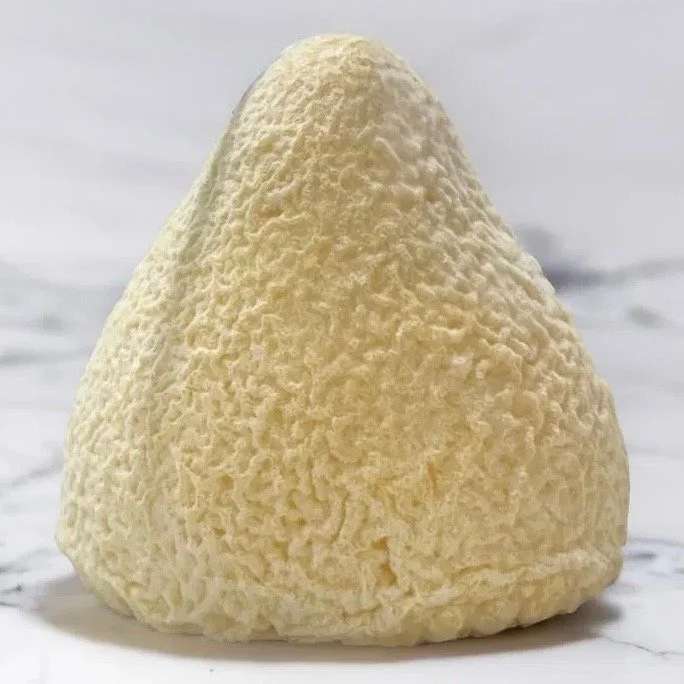
Perrystead Dairy’s Madcap
No one can argue with the creamery’s results. Perry strives for inventiveness, using unique cultures and coagulants, and the creamery focuses on small-format beauties like Intergalactic, washed-rind Moonrise, and a spruce-wrapped cheese named Treehug, all of which have become sought after and awarded. The Real Philly Schmear is a spreadable, all-natural cheese that is actually made in the city whose name is part of the ubiquitous cream cheese brand. A cone-shaped number named Madcap is the newest cheese in the regular line-up. It was created by two of the creamery’s novice cheesemakers (less than five years experience) and like Intergalactic, it is coagulated with cardoon thistle flowers, giving it vegetarian cred.
Perry also notes that distributing from the tiny creamery right into the Interstate 95 corridor has allowed the cheeses to flow freely to multiple metros in addition to Philadelphia, stretching from Maine to Virginia. Sure there are challenges to urban cheesemaking, Robbins says,“The lack in the number of them is evidence that there are a specific set of challenges to urban cheesemaking. There are challenges to every business model, of course. Compared to farmstead, where getting the cheese to market is a challenge, getting close to the customer is not a challenge for us.” The advantages of an urban location also include a broader labor pool, she says.
Perry points out that a small urban footprint has guided his company toward producing small cheeses that require less aging time and space. Perry has compiled a list of at least 19 city-based cheese operations, and he muses about forming an official collaborative organization. Below are three more urban cheese operations of note in the US.
Tulip Tree Creamery, Indianapolis
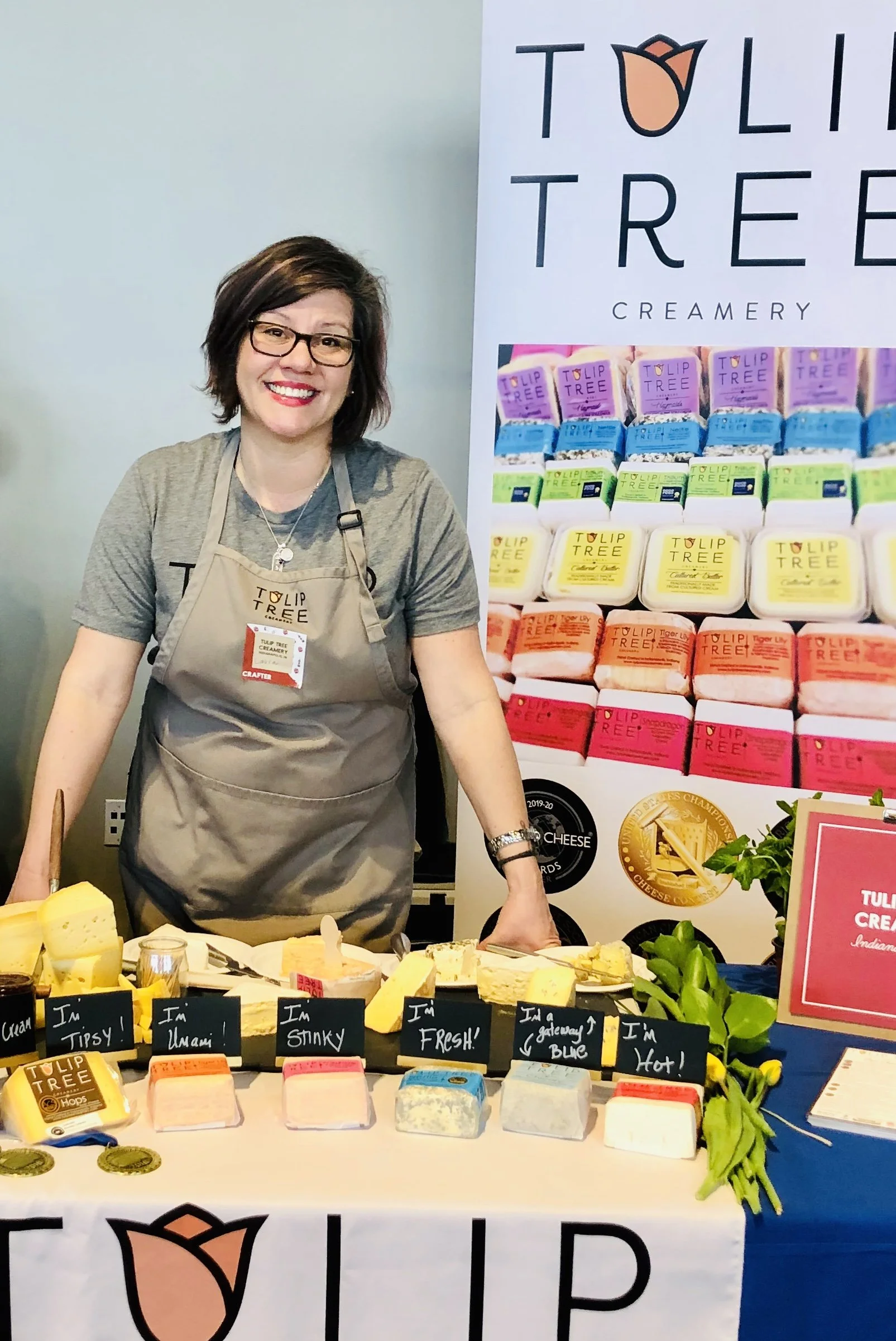
Laura Davenport of Tulip Tree
Founded in 2014, this artisan cheese and butter maker is located on the northwest side of Indiana’s capitol. The company uses fresh milk from small Indiana family farms. Cheeses including Trillium and Foxglove are loosely inspired by old world classics, but strive for uniqueness. The creamery makes a gouda and an Alpine, and a cheese called hops that is infused with craft beer. Batches are made with numerous beer styles from as many as eight different Indiana breweries.
Tulip Tree also offers cheesemaking and pairing classes, and like Urban Stead and Perrystead the creamery has integrated itself into the local food and restaurant community. Tulip Tree’s owners have an affinity for gardening, so all of their cheeses are named for plants. Co-owner Laura Davenport notes that the creamery is able to market products through a multitude of farmers' markets and to restaurants in Indianapolis and in Chicago, and that some products are developed exclusively for local sales.
Beecher’s Handmade Cheese, Seattle
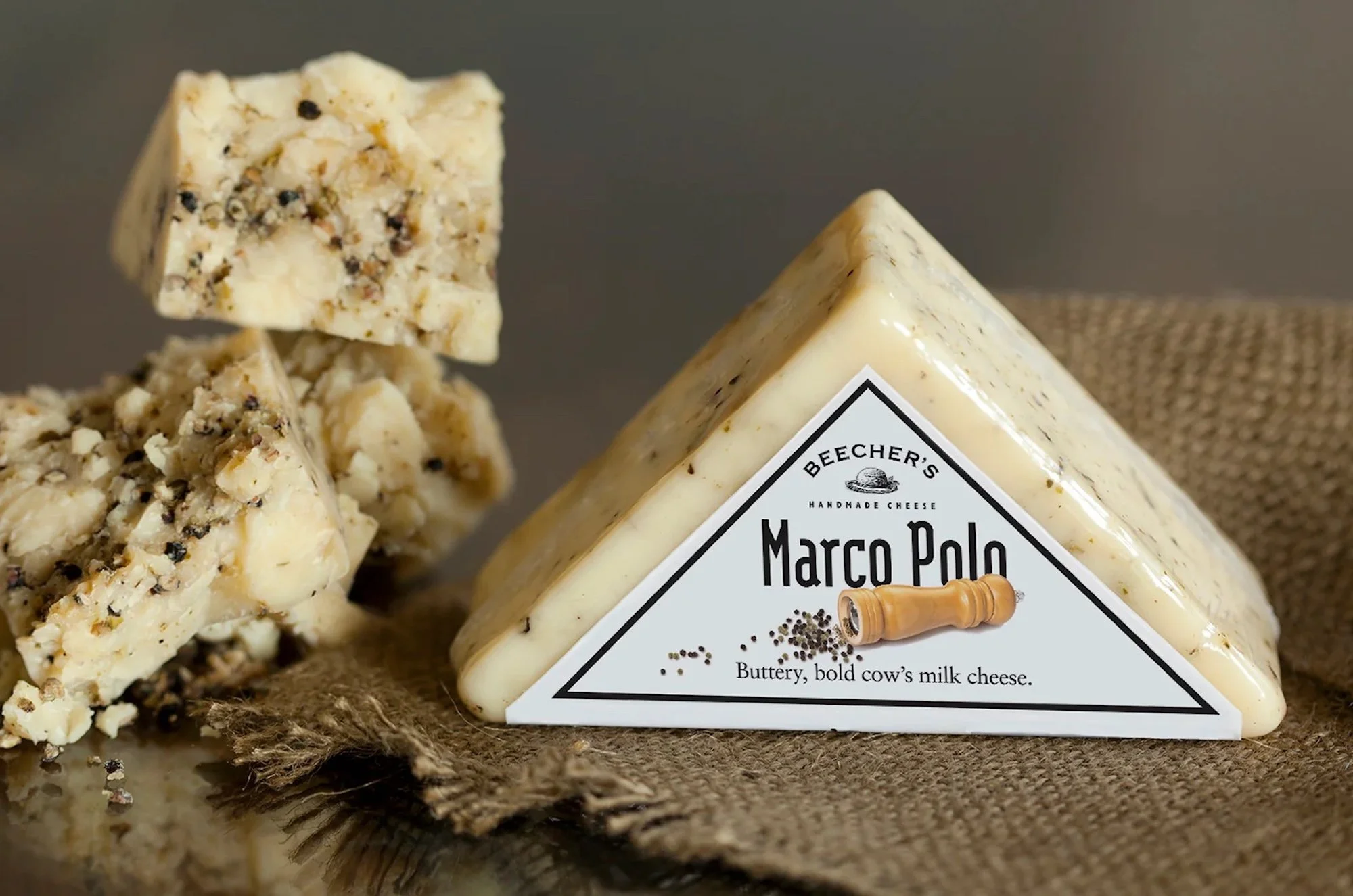
Beecher’s Handmade Cheese’s Marco Polo photo credit Beecher's
Seattle’s Pike’s Place Market has been home to Beecher’s since 2003. The company sources from local farms to produce an array of cheeses, focused largely on British inspired Cheddar, and was among the first US artisans to make a clothbound cheddar—its Beecher’s Flagship. It also operates multiple cafes offering a “world’s best” mac and cheese dish, elevated grilled cheese sandwiches, and fresh cheese curds to go. Marco Polo, a clothbound with pepper corns, might be this author’s favorite spiced cheese.
Hill Valley Dairy, Milwaukee
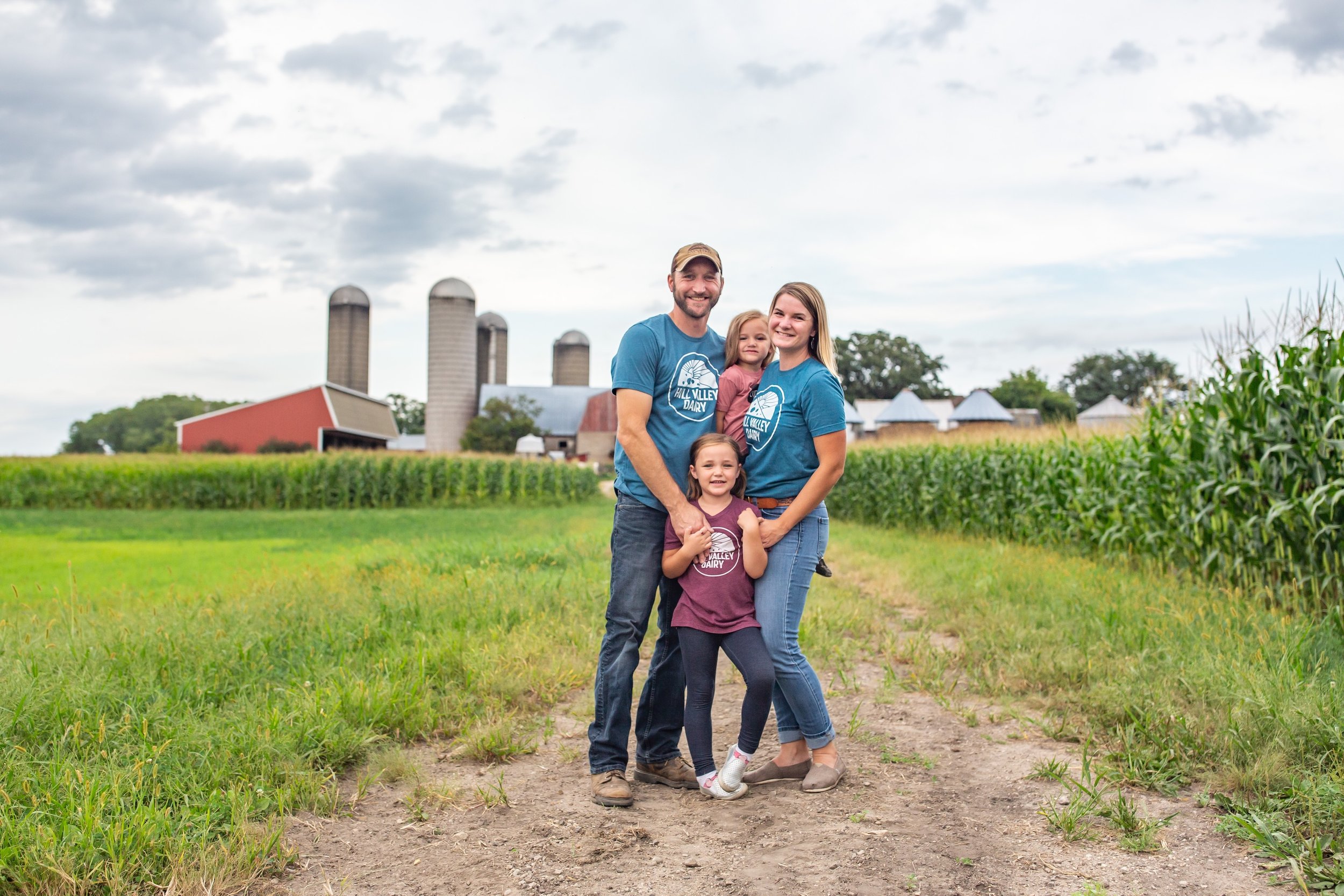
Henningfield Family of Hill Valley Dairy
Veteran cheesemaker Ron Henningfeld and his wife Josie operate this creamery on the first floor of a large four-story building in Milwaukee’s Walker’s Point neighborhood. They make an array of cheeses including Cheddar and Alpines in the same building where Clock Shadow Creamery was launched in 2021, in fact, Henningfeld worked for that operation (and previously at Uplands Cheese), developing the brand for Hill Valley, which was then launched in late 2023. Clock Shadow was operated by Bob Wills of Cedar Grove Cheese, and the brand continues, but is now made at the main Cedar Grove facility near the town of Plain, in central Wisconsin.
The Henningfelds source their grass-fed milk exclusively from the third-generation farm Ron grew up on, which is now operated by his brother’s family. The creamery also features a cheese shop and tasting room.
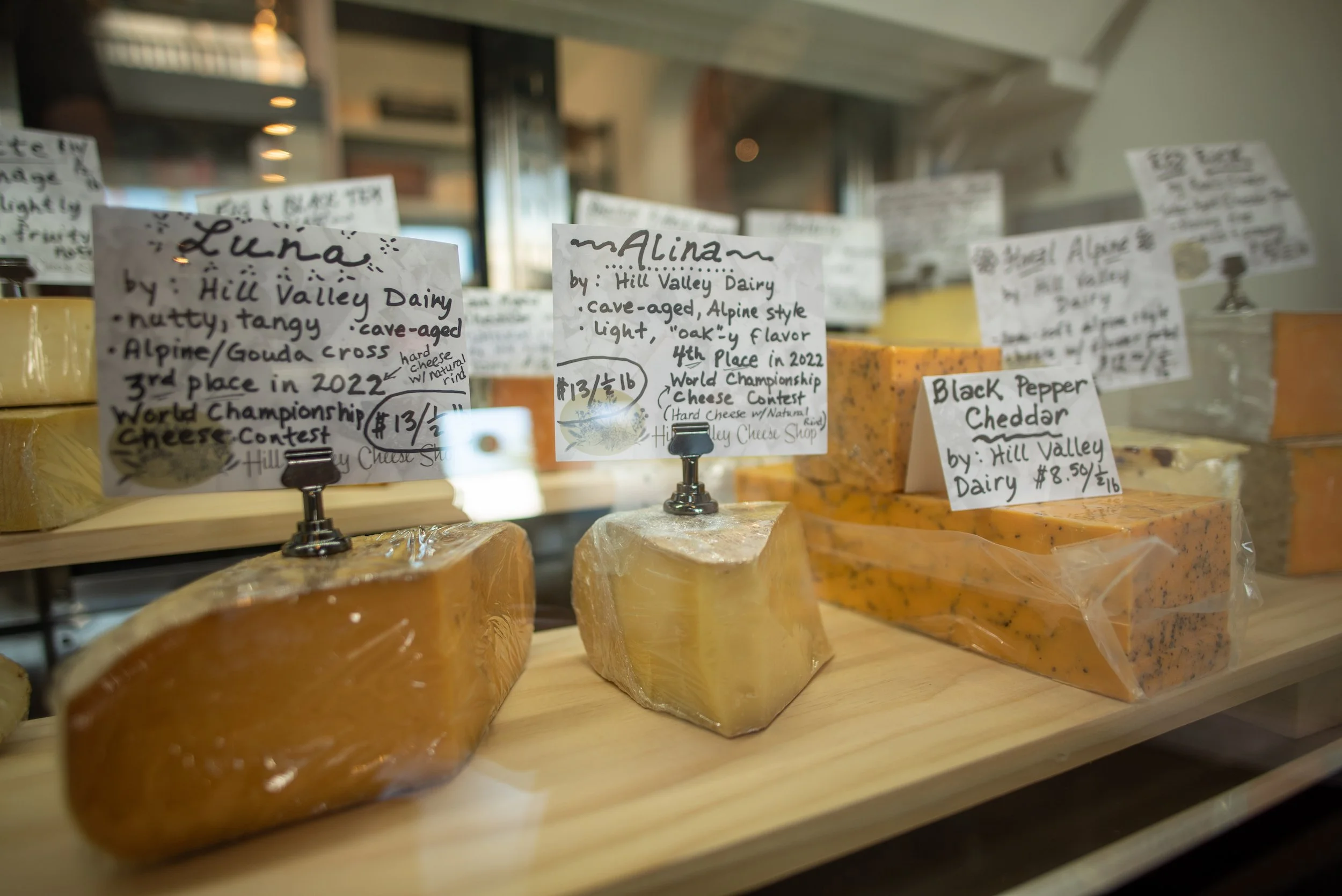
Hill Valley Dairy cheeses
The company produces Cheddar, Goudas and Alpines, many with added flavor ingredients. Ron Henningfeld says they are most excited about Alpines like the award-winning Alina.
“Alpines are taking off for us and that’s where our attention is focused,” he says. “But also fresh curds. It works for us in that it is made right in the city in Milwaukee, and our neighbors know that they can come right in and get fresh curds.” Young cheese are aged on site, while the Alpines are aged in a dedicated aging facility near the farm, about 35 miles from the city.