
Four Affineurs Aging America’s Best Cheeses
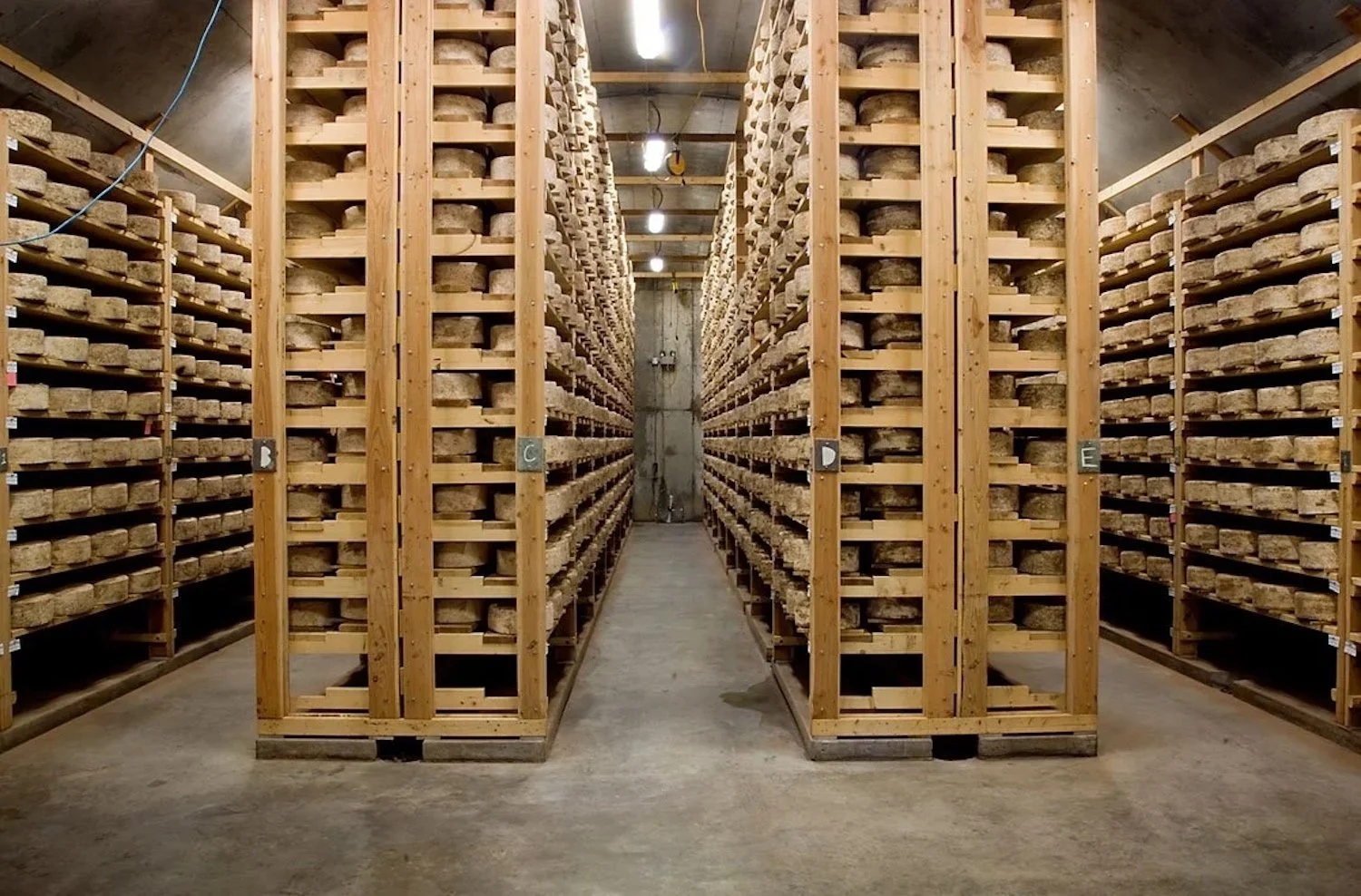
Wheels of cheddar maturing at The Cellars at Jasper Hill. Photo credit Jasper Hill
Consider a wheel of Comté, if you will, that bears the label Marcel Petite. You would be tempted to believe that Marcel Petite is the “producer” of the cheese, that is, the cheesemaker who made the wheel, perhaps on a dairy also owned by Marcel Petite. For French PDO cheeses such as Comté, however, and many others throughout Europe, the label typically refers to the cheese’s final producer: the affineur.
Affinage, Explained
Affinage, or “refinement,” refers to the stage in which cheeses are ripened and aged — the stage in cheesemaking where cheeses develop personality. With no disrespect intended to our favorite fresh cheeses, which can also beautifully express matters of milk quality and seasonality, the act of aging cheese is where things start to get really interesting.
The many variables of affinage are what give us the sheer number of unique cheeses available worldwide. Those variables may include whether cheeses are aged in natural caves or highly controlled environments; whether wheels are manipulated with various techniques or left mostly alone other than an occasional flip; whether cheeses are exposed to the open air or encased in various sealants; and whether the affinage facility holds 20 wheels or 200,000.
European vs. American Cheese Production Models
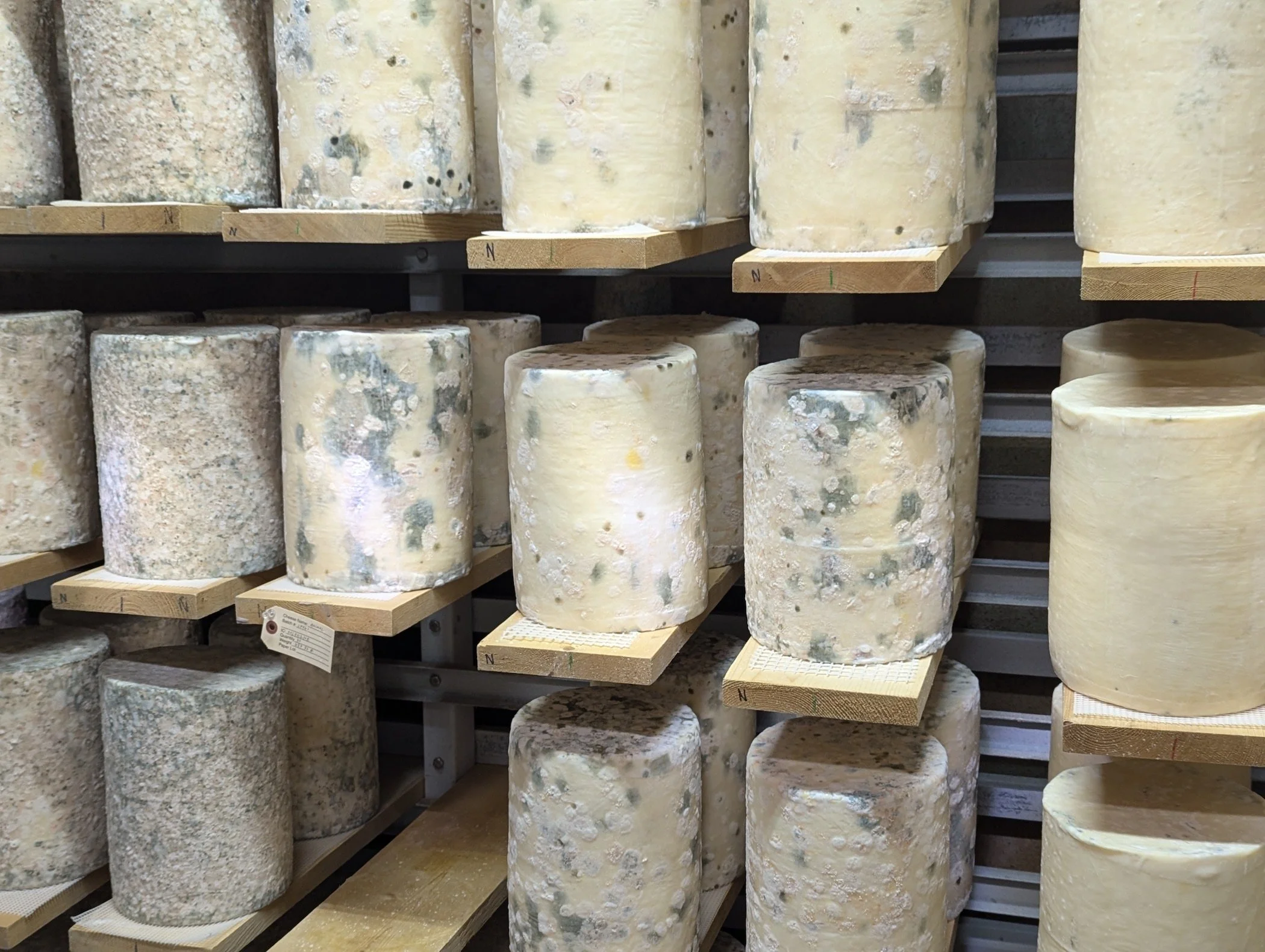
Murray’s Cave cheese wheels at various stages of maturation. Photo credit Pamela Vachon
Traditionally, much of Europe has operated under a three-part cheese system that separates Protected Designation of Origin (PDO) cheese production into three separate entities: the dairy or collective of dairies supplying the milk, the cheesemaker, and the affineur. Given hundreds, if not thousands of years of cheese history across the continent, this is the system that proliferated to maximize quality, control, and scalability.
The American artisan cheese industry, on the other hand, is still in its relative infancy, and affinage in the U.S. has largely been handled by individual cheese producers, which in many cases are farmstead operators who are also responsible for their herd of milk-producing animals.
Along with the growth of the American cheese industry, however, American affinage has also been on a journey over the past few decades. While many American creameries continue to do the affinage for their own cheeses, affinage in the U.S. is still ripening, with myriad players experimenting with various models to continue to build and refine the process. Here is a deeper look at several unique affinage models that are pushing the American cheese industry forward.
The Cellars at Jasper Hill: An Early Affinage Incubator
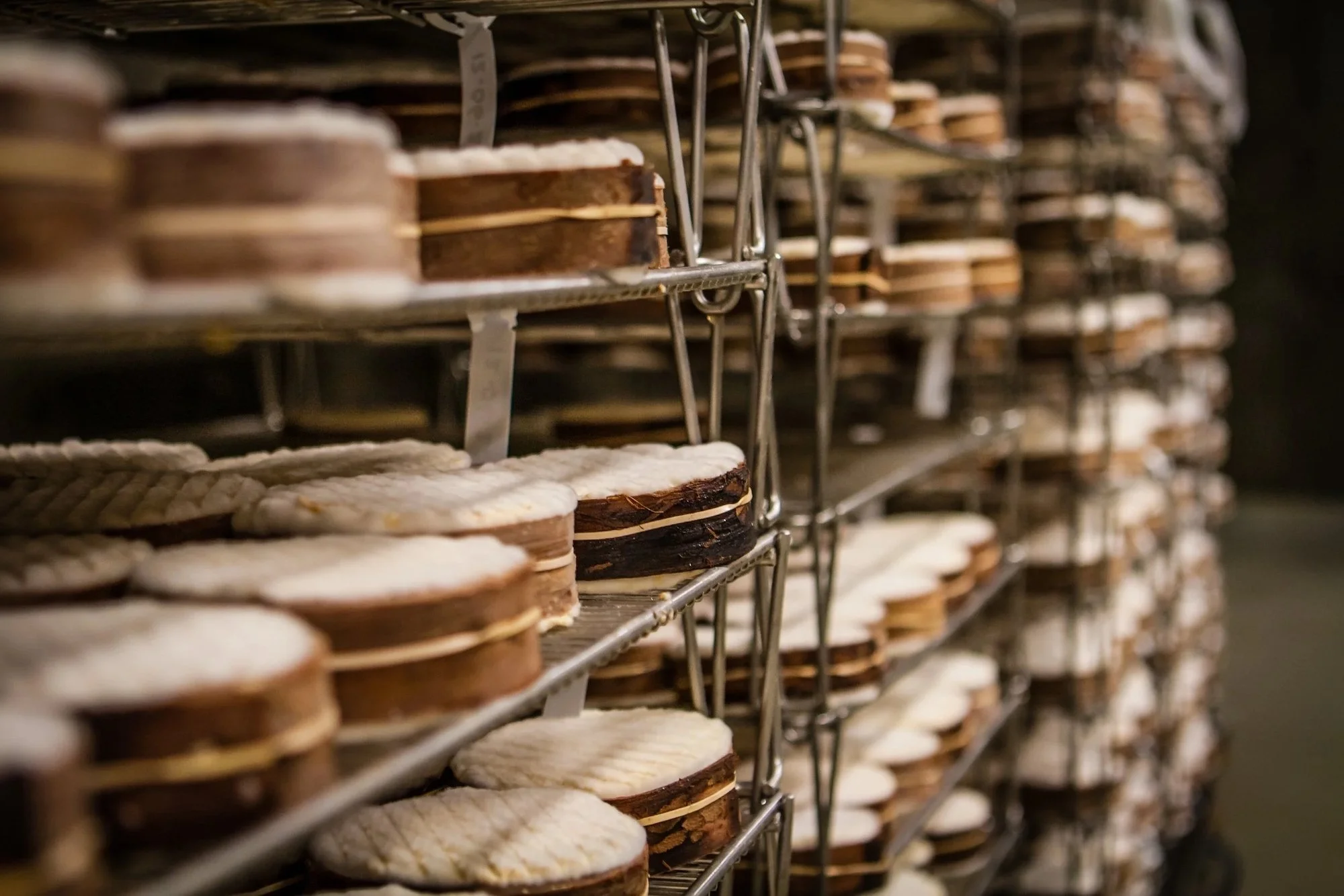
Washed-rind cheeses aging at The Cellars at Jasper Hill. Photo credit Jasper Hill
The evolution of Greensboro, Vt.–based Jasper Hill, well known for its award-winning cheeses, offers a lens into the challenges of consolidated affinage in a still-developing American cheese industry.
In addition to producing milk and making cheese, the company also operates The Cellars at Jasper Hill, which includes running a herd-management operation, two cheesemaking facilities, and a cave-aging cellar.
The Cellars was originally designed as a regional aging facility serving farms across Vermont’s Northeast Kingdom.
“We started out with a European model in mind,” says Zoe Brickley, Jasper Hill’s Director of Communications. “We're in the middle of nowhere. That's where the farms are. That's where the cheese is made. [The idea was that] this is going to be a piece of infrastructure to help people gain access to the value-added market.”
But costs on both sides of the operation were a challenge, narrowing profit margins for both the creameries outsourcing affinage and Jasper Hill itself, which stood to gain more from using its own shelf space to grow inventory.
Food safety considerations also played a role in Jasper Hill moving away from providing affinage services for others, says Brickley, who notes that in terms of food safety conditions in a shared space, “you're only as on top of it as your weakest producer.”
“There's a liability, especially with the advent of the Food Safety Modernization Act, which makes [those relationships] quite complicated,” she says. “You need to be really up in people's business, which is achievable, but difficult.”
Today, The Cellars at Jasper Hill houses mostly its own label of cheeses plus Cabot Clothbound Cheddar, with a small bit of shelf space reserved for cheddar from Shelburne Farms. (A few other operations also offer affinage as a favor to their neighbors, like Milton Creamery formerly did for Flory’s Truckle.) The Cellars at Jasper Hill Farm was instrumental, however, in the middle stages of Vermont’s exceptional artisan cheese industry growth, giving rise to a few cheeses beyond the Jasper Hill label, and buying time for some creameries to establish their own affinage facilities. Notably, Von Trapp Farmstead Oma began its life in Jasper Hill’s cellars before it was moved to a new Von Trapp Farmstead facility in September 2024.
Wegmans Cheese Caves: A Retail Affineur Model for Quality Control
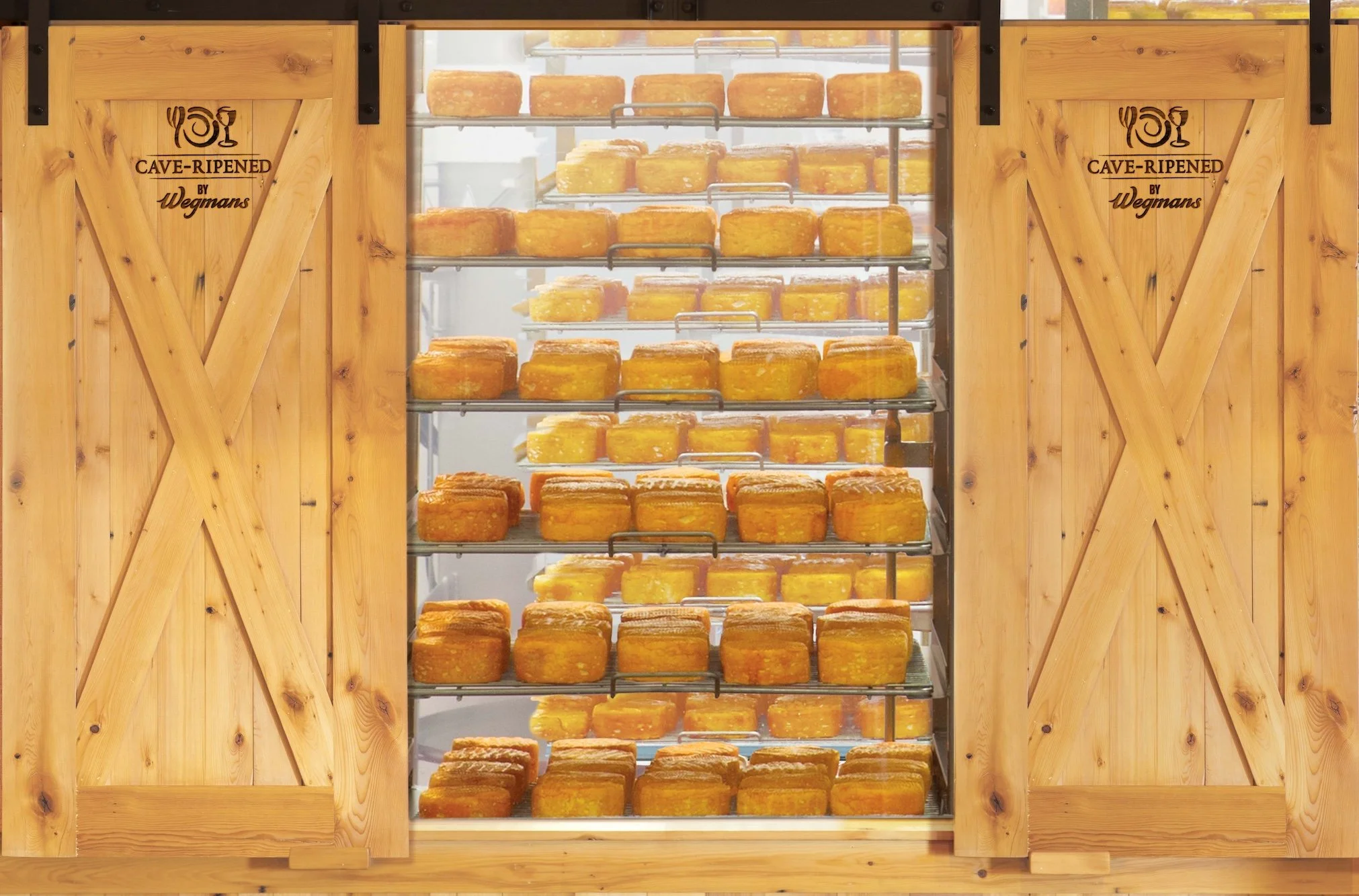
Cheeses ripening at Wegmans Cheese Caves. Photo credit Wegmans
In Europe, some affineurs operate off-premise facilities that age cheese for distribution to retailers, while many retailers — known as fromageries — age cheeses themselves. This model is less common in the U.S. artisan cheese industry, though a few notable examples offer a glimpse into alternative approaches to affinage.
Wegmans, an East Coast grocery retail chain headquartered in Rochester, New York, began its own affinage program in 2014 as a measure of quality control for certain cheeses bearing the Wegmans label, including a variety of young, bloomy-rind, or washed-rind cheeses.
“The goal at Wegmans was to really focus on soft-ripened cheeses, which are very sensitive to the environment and have a short shelf life,” says Head Affineur Mathieu Callol, who came to Wegmans with an extensive affinage background in both France and Switzerland. “The idea was to have a central location where we can have a knowledgeable team controlling the quality and only sending the best of the best to our customers.”
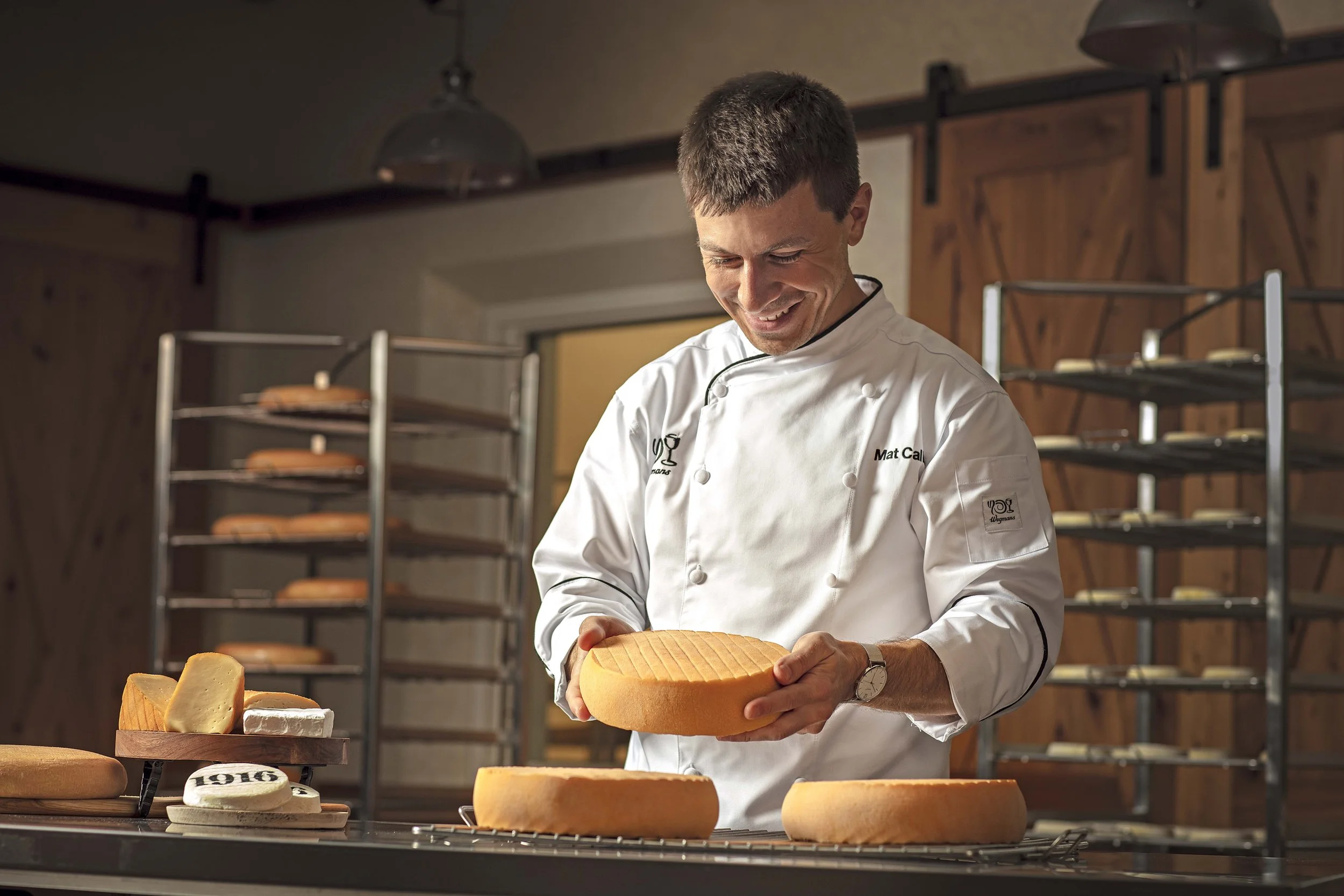
Wegmans Head Affineur Mathieu Callol. Photo credit Wegmans
Some caves develop almost a solera-like system of ambient flora with wheels constantly coming and going. At the Wegmans cheese facility, however, cheeses in the same stage of maturation are all completely cleared and packaged before a new batch of cheese comes in.
“It's one of the most wild cave situations I've ever seen,” Jasper Hill’s Brickley says of the Wegmans facility. “It's extremely risk-averse, as is the entire Wegmans operation. Like, I would eat Wegmans sushi off the floor.”
That risk aversion and focus on soft cheeses doesn’t mean there isn’t room for creativity. Wegmans has partnered with Vermont Creamery to create flavored goat cheeses that go beyond typical inclusions, with varieties featuring ingredients such as orange peel and Thai-inspired seasonings. The retailer has also sourced wheels from a French creamery for its award-winning washed-rind Sake 2 Me, which is rinsed in sake.
Wegmans also recently released a blue cheese in partnership with Rogue Creamery. “Our chairman, Danny Wegmans, loves blue cheese,” says Callol. “He loved the Rogue River Blue, and there are a lot of trends around sake and yuzu, so we wondered: Can we do something with all of that?” The result is Bluzu, a sake-soaked blue decked with yuzu peels.
With a background mainly in European PDO cheeses, Callol is inspired by what American cheesemakers are able to do with their own affinage. “I'm impressed with all those cheesemakers, because they are not afraid of innovation,” he says. “France is very traditional, and I've learned to be more open-minded and try new things, because there is no barrier. You are free to develop any kind of rind and any flavors you would like.”
Murray’s Cheese Caves: A Retail Affineur Model for Collaboration and Experimentation
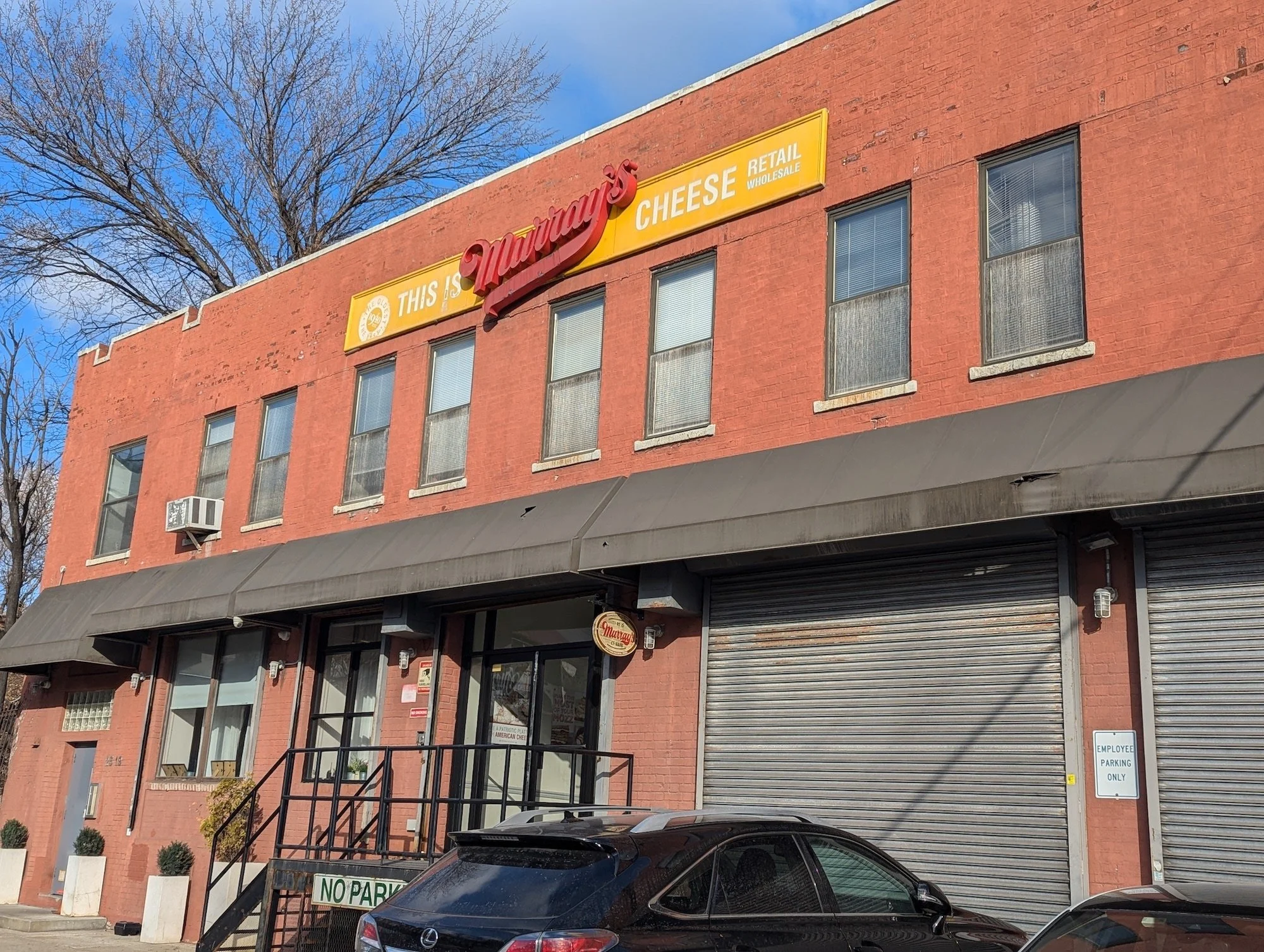
Murray’s Cheese Caves in Long Island City, Queens. Photo credit Murray’s Cheese
Murray’s, now in its twenty-first year of affinage, began with a model similar to that used by Wegmans. Initially, the focus was on using established aging traditions to improve the quality of the cheeses Murray’s handled, explains Josh Windsor, Murray’s Associate Director of Caves. This included the Loire Valley-style ash-ripened goat cheeses that are still part of the Murray’s cave-aged inventory today.
Over time, however, collaboration and experimentation became a defining part of Murray’s model. Two cheeses illustrate that shift. Hudson Flower emerged as a solution to the unavailability of Fleur de Maquis (Brin d’Amour), with local hops standing in for the wild Mediterranean herbs traditionally used to coat the cheese. (“No one wants wild foraged herbs from New York City,” Windsor says.) And Greensward, commissioned by Eleven Madison Park, took the base of a beloved American artisan cheese — Jasper Hill’s Harbison — and transformed it into something uniquely New York.
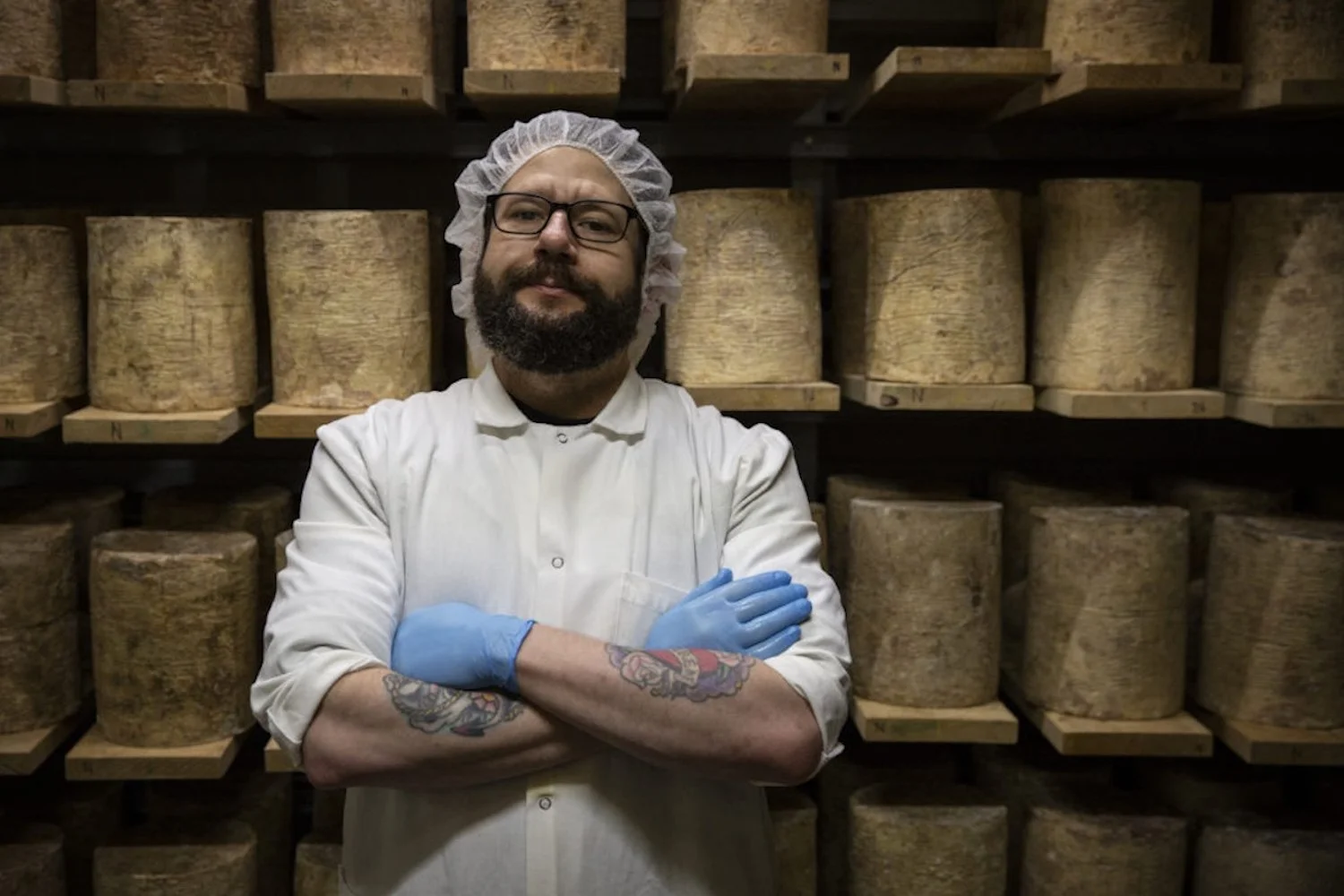
Josh Windsor, Associate Director of Caves at Murray’s Cheese. Photo credit Murray’s Cheese
These early experiments resulted in innumerable collaborations, many of which have become crucial parts of Murray’s canon. They include Stockinghall, a highly awarded American cheddar that was developed in a year-long process between Murray’s and Cornell University, using base wheels from Old Chatham Creamery, washed-rind Cornelia (which begins as Point Reyes Toma) and Annelies, an American extension of Walter Raas’s beloved Chällerhocker. The retail strength of Murray’s, and the flexibility of its cave-aging program, also allows for fun, seasonal, or limited-edition creations such as cacio e pepe-inspired Burrino Pepato, Quicke Hearts Cheddar, and Sunday Sauce.
These efforts, plus the work to continually improve consistency and quality, combined to “really set the direction towards where we are now,” says Windsor of Murray’s Caves, “which is really thinking about what are American cheeses, and how do we explore that and try to answer the question through affinage.”
Beehive Cheese: From Cheesemaker to Affineur
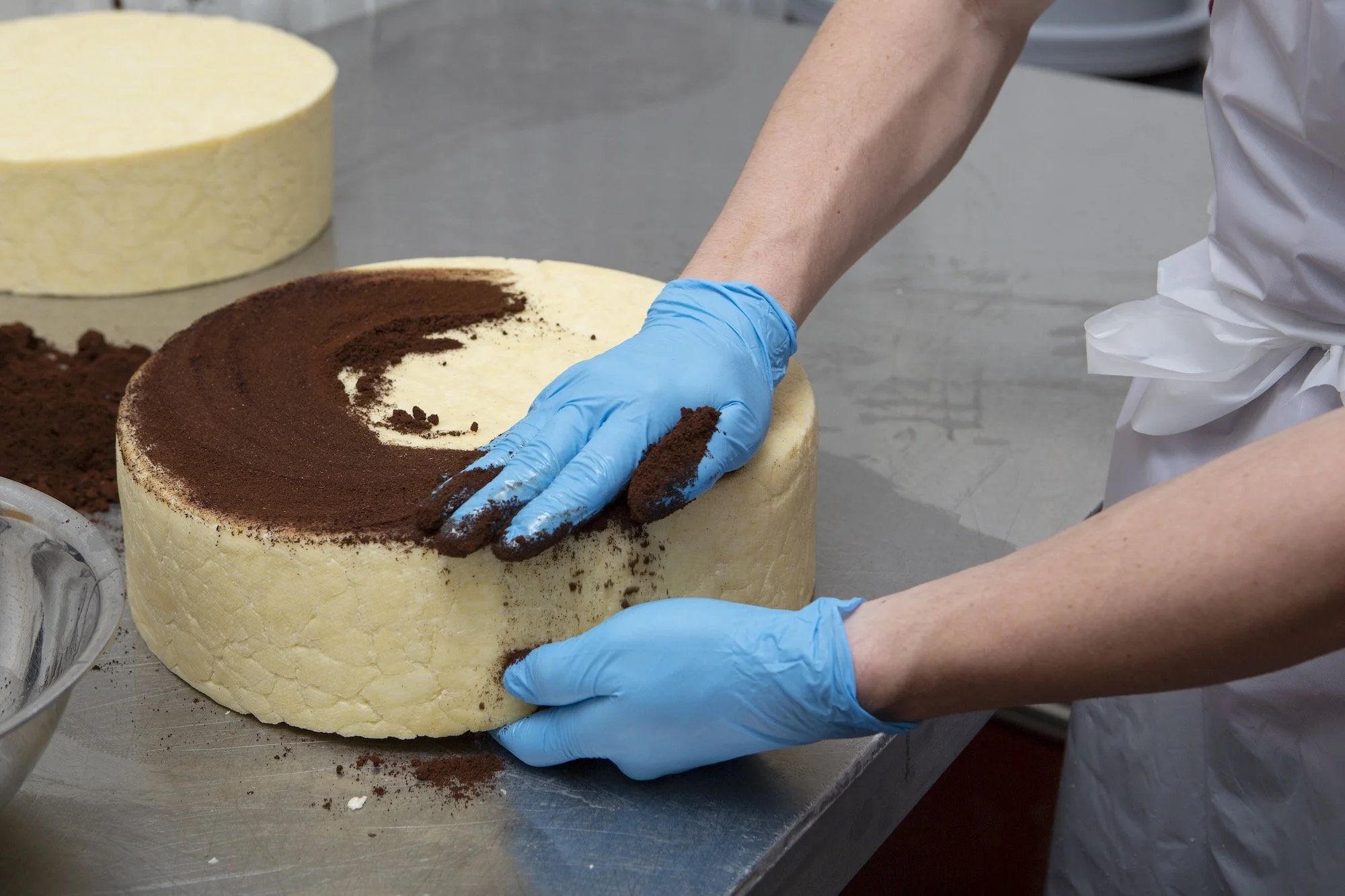
Beehive’s Barely Buzzed cheese getting its signature coffee rub. Photo credit Beehive Cheese
Utah-based Beehive Cheese produces cheddars with distinctive finishes, including the bourbon-soaked Pour Me a Slice, coffee-rubbed Barely Buzzed, and sea salt- and honey-treated Seahive, along with versions flavored with porcini, chives, and Hatch green chiles. The brand began in 2005 as a family-run operation that handled both the handcrafted cheesemaking and the affinage, partnering with family-run Gossner Foods for its dairy supply.
While Beehive’s founders began as cheesemakers in earnest, it was its affinage that helped define the brand. “Experimenting on new, crazy flavors is where a lot of the personality of our cheeses show up,” says Britton Welsh, President of Beehive Cheese.
In late 2023, Beehive Cheese shifted to a more European model, focusing solely on affinage for its line of flavored cheeses. Dairy partner Gossner Foods now produces the base wheels of Promontory Cheddar, a move that has expanded the company’s growth potential.
“Focusing on affinage has helped us get back to what we do best,” says Welsh, noting that with an ideal cheesemaking partner, the company can now focus its energy on the part of the process where ideas and experience make the biggest difference.
“Narrowing our focus has opened the door to more creativity,” he adds. “That focus has led to better consistency, better cheese, and a clearer sense of who we are. It’s also given us the opportunity to use the limited resources of our family company to bring our cheeses to more fans.”
Like Murray’s, the freedom to experiment also creates opportunities for experiments to become limited-run products.
“We can play with flavoring and even new cheese styles in a hands-on way,” says Welsh. “Some of those experiments turn into small-batch or seasonal cheeses, and others quietly improve the core cheeses we’ve been making for years. It keeps things creative while still respecting what Beehive has always done best.”