
Who Will Make the Cheese When the Cheesemaker Is Gone?
For America’s small artisan cheesemakers, figuring out how to survive is hard enough. Increasingly, another question looms: What happens to the cheese, the farm, and a lifetime of knowledge when it’s time to stop?
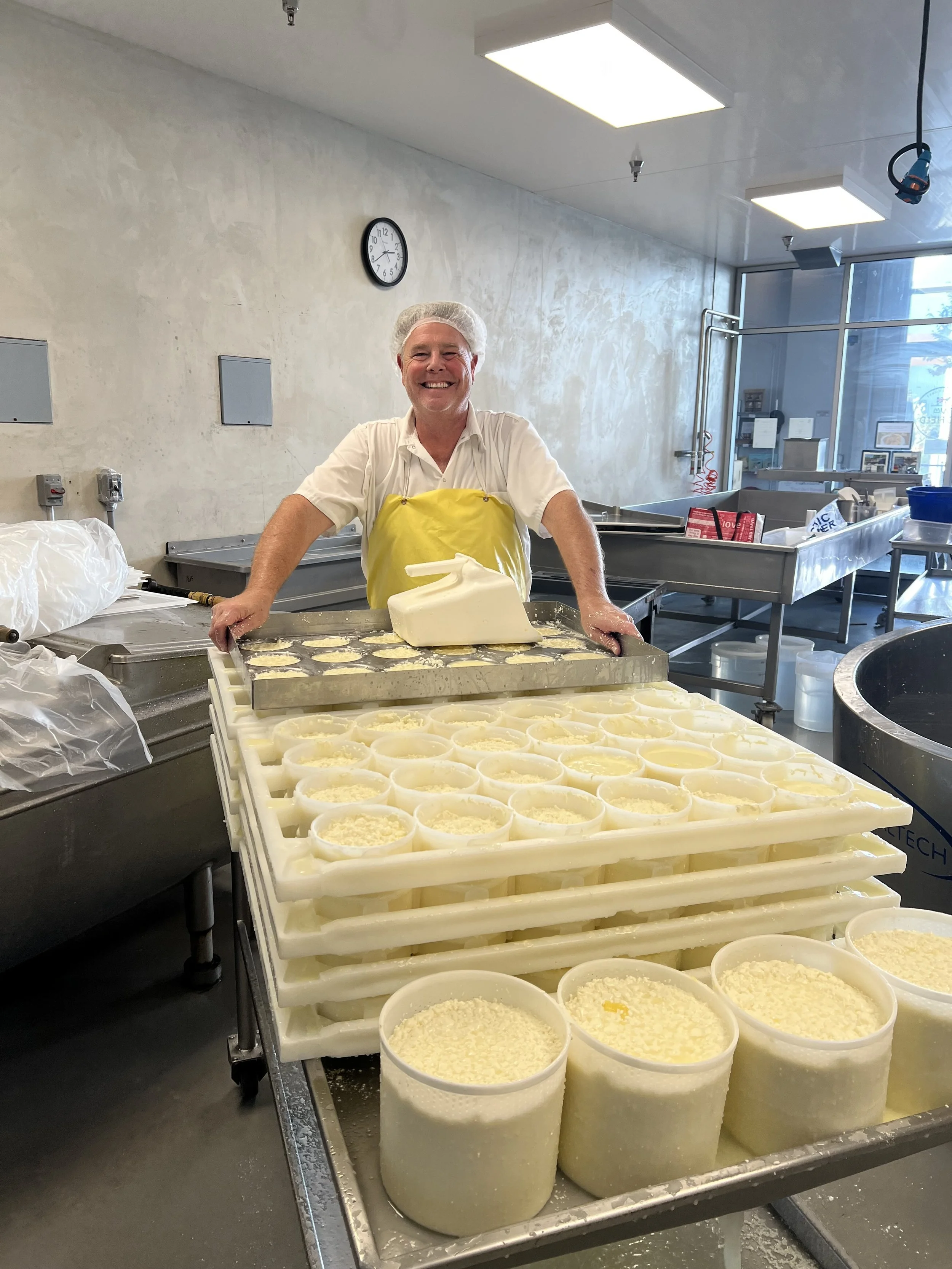
Keith Adams at his former creamery
When Keith Adams closed Alemar Cheese Company and William Cofield Cheesemakers after two decades of making award-winning artisan cheese, he didn’t simply walk away from a job.
There were recipes. Cultures. Equipment. Relationships with farmers, retailers and distributors. There was a beautiful creamery in Sebastopol, California, purpose-built for making and aging cheese. There were cheeses customers had sought out for years. And there was the enormous, mostly invisible accumulation of knowledge that comes from spending thousands of days coaxing milk into something delicious.
Then there was Adams himself.
“It’s been a grieving process,” he told me several months after closing. For the moment, he’s deliberately resisting making grand plans for what comes next. “It feels too raw and fresh right now.”
Adams’ story, which he told candidly in a recent Cheese Professor essay, struck a nerve because it illuminated just how precarious American artisan cheesemaking has become. Rising costs, challenging distribution, consolidation and consumers’ resistance to the true price of handmade cheese have left many small producers struggling. Leslie Cooperband recently reported in Cheese Professor that farmstead cheese production declined 10 percent from 2015 to 2021, while the number of raw-milk cheesemakers dropped nearly 20 percent in less than four years.
But Adams’ departure raises another question, one that will become increasingly urgent as a generation of pioneering American cheesemakers approaches retirement: What happens when the cheesemaker is ready—or forced—to stop?
The Impossible Math of Succession
Succession is complicated for any small business. With artisan cheese, the hurdles are unusually high.
A prospective successor doesn’t just need money. They need cheesemaking expertise, access to quality milk, equipment, a compliant production facility, distribution relationships and a tolerance for enormous amounts of physical and financial risk.
And, according to Adams, they need something less quantifiable. “The key to the whole thing is this obsession with doing it,” he says. “If you are not obsessed with doing it, you shouldn’t do it.”
Adams knows something about that obsession. Before cheese, he owned and operated bagel shops. When he founded Alemar in Minnesota in 2009, he raised about $150,000 and sought out three things: great milk, a great mentor and a great teacher. Cowgirl Creamery co-founder Sue Conley became a mentor and connected him with cheesemaker Margaret Morris, who helped him learn the craft.
Today, Adams believes the financial barrier is significantly higher. Even a business with acclaimed cheeses and loyal customers may not be an attractive acquisition if the financial situation tells a different story. “If I showed a P&L to somebody, they would have run away,” Adams says of his own companies.
He did imagine succession within his family. One of his two daughters, Alexandra, joined Alemar during the pandemic, but the relentless stress of running the business followed her home each night. Eventually, father and daughter agreed it wasn’t the life she wanted.
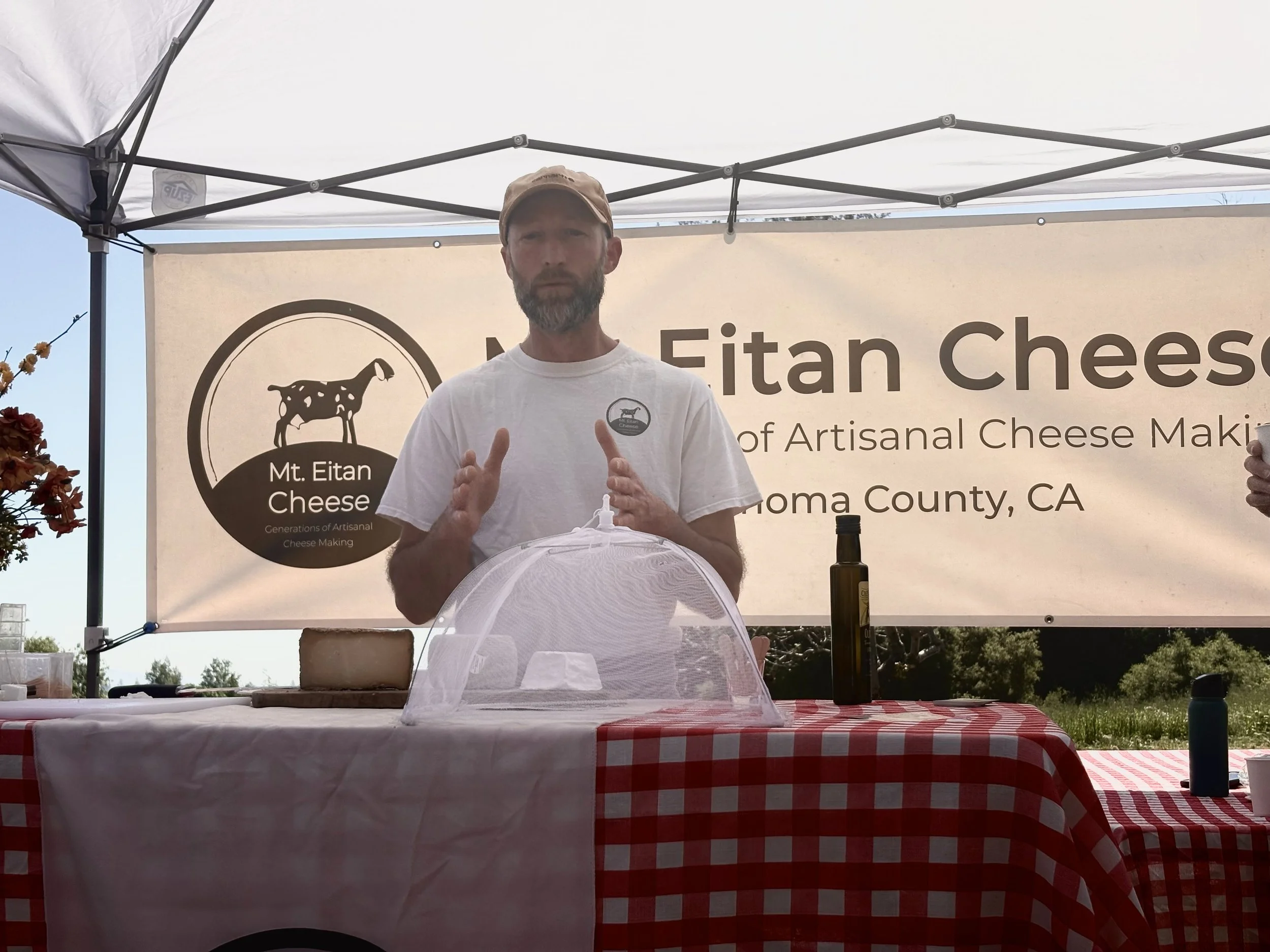
Omer Seltzer of Mt. Eitan Cheese
Adams also explored having another cheesemaker produce Alemar’s cheeses. That didn’t come together either. Still, one part of his cheesemaking legacy found an unexpectedly hopeful next chapter. Cheesemaker Omer Seltzer of Mt. Eitan Cheese is taking over the former William Cofield production space in Sebastopol.
For Adams, knowing that the facility will keep making cheese matters enormously. “It was literally a dream come true,” he says. “I didn’t want to see it go to waste.”
That may be what succession increasingly looks like in American artisan cheese—not necessarily one tidy handoff of a company from founder to successor, but pieces of a cheesemaking life finding new homes.
A Different Model of Letting Go
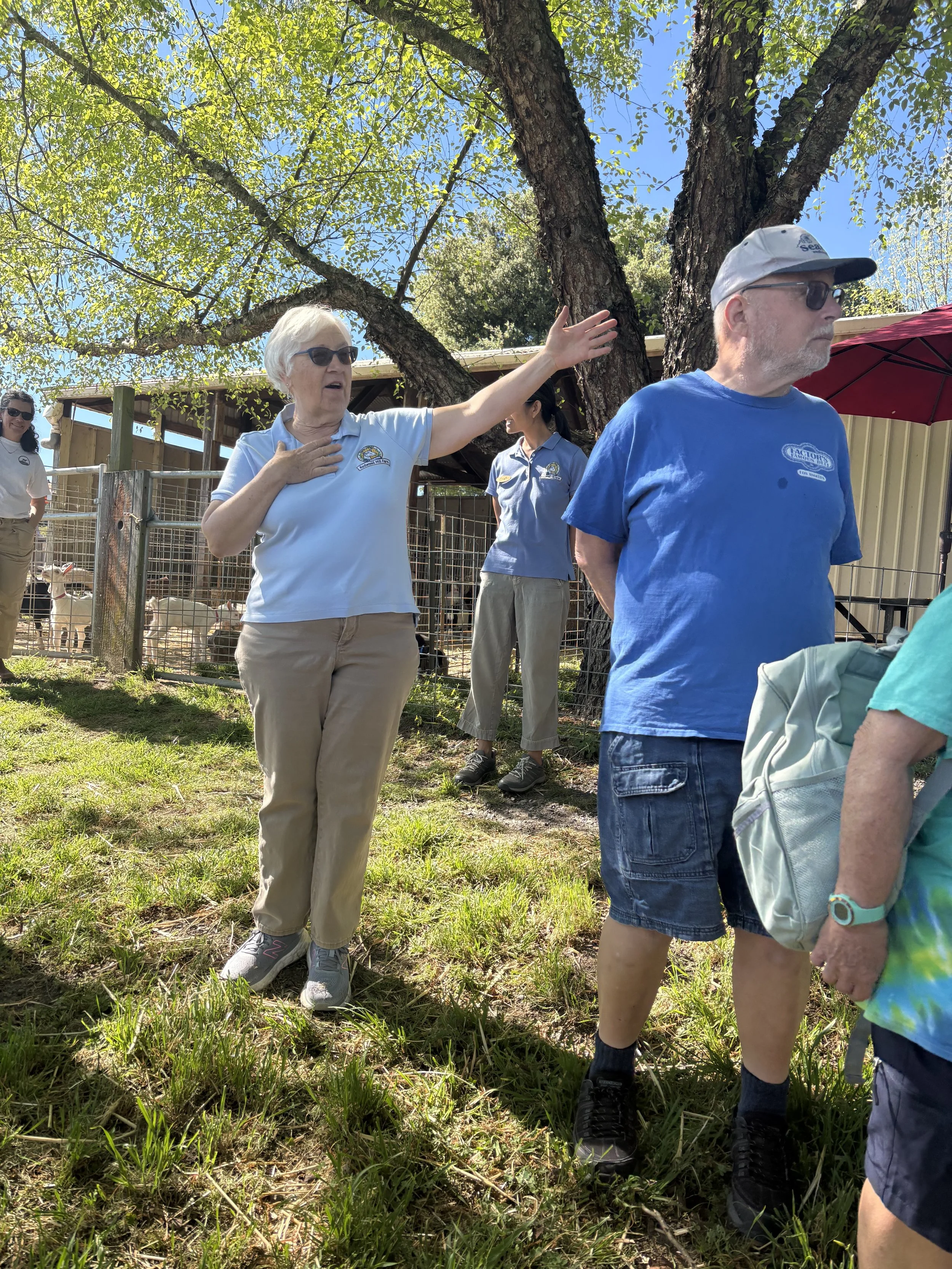
Jennifer Bice of Redwood Hill
Jennifer Lynn Bice, founder of Redwood Hill Farm & Creamery, offers another model.
Bice began thinking seriously about retirement as she approached 65, after 38 years in business. By then, Redwood Hill had grown from a small local operation selling primarily to health and natural food stores into a company with nationwide distribution and 90 employees.
Unlike many founders, though, Bice had inadvertently been preparing for succession for years. In the early 2000s, she built a modern creamery away from the farm where she lived and raised goats. That separation ultimately gave her options: She could sell the creamery while keeping the farm she loved.
Other decidedly unromantic choices proved just as essential: excellent bookkeeping, documented operating procedures, employee manuals and, crucially, profitability. “Succession planning for me meant the sale of the business, as I had no heirs to take over or employees that would have been able to purchase or operate [the] business,” Bice says.
When she sold the creamery in 2016, her priorities extended well beyond receiving a check. She wanted Redwood Hill’s goat milk products to remain available to customers and for longtime employees to keep their jobs and benefits.
The process was lengthy and emotional. Bice hired a business consultant and worked with her accountant and attorney. Selling a business that represented decades of her life also required a less tangible skill.
“Once sold, you must let go,” she says.
But letting go hasn’t meant leaving cheese behind. Bice kept Redwood Hill Farm, although she has downsized her goat herd. Today the farm sells its milk to Mt. Eitan—the same artisan cheesemaker taking over Adams’ former production facility. “I have immense pride that our goat milk is used in making their incredible cheeses,” Bice says. “I just don’t have to do it!”
What Might Come Next for American Cheese

Leslie Cooperband and Wes Jarrell with kids at their former farm
It’s a small circle, and perhaps a glimpse of what could help preserve American artisan cheese: farms, facilities, skills and relationships passing between people rather than disappearing altogether.
Cooperband has proposed taking that idea even further, arguing for regional cooperatives that could allow independent makers and mongers to share costs, infrastructure, expertise and marketing rather than each struggling alone.
Because the loss of a cheesemaker is bigger than the disappearance of one wedge from the cheese case. Small cheesemakers preserve knowledge about milk and microbes, animals and land, aging rooms and regional foodways. When their businesses disappear without successors, some of that knowledge can disappear with them.
Bice believes cheesemakers should start preparing long before they intend to retire: a plan for next year, a five-year plan and an eventual exit strategy, adjusted as circumstances change.
Adams, meanwhile, isn’t ready to decide what will happen to his brands or whether some of his best-known cheeses might someday be made again. A few cheesemakers have already expressed interest.
For now, that possibility is enough. “The crux of this for me,” Adams says, “is seeing the people that are still producing cheese succeed.”
Perhaps that is succession, too: not simply preserving one company exactly as it was, but making sure the cheesemaking continues.