
Discover Cheeses of Normandy on a Seine River Cruise
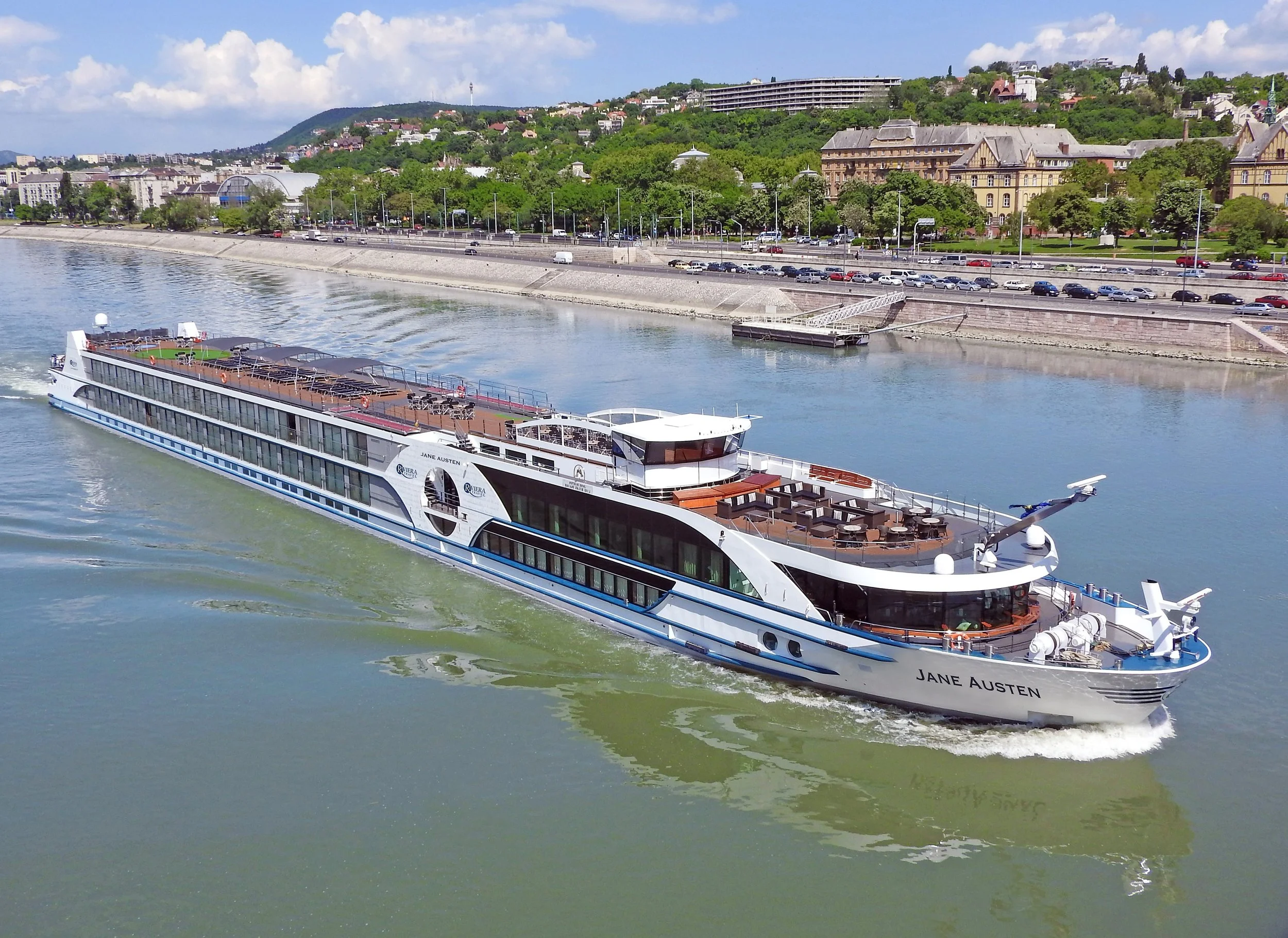
The Seine River is best known for romantic walks in Paris along the riverbanks, but the “Gastronomy of the Seine River Cruise” through Riviera Travel offers a more complete picture of this curvy river that winds to the English Channel. Photo courtesy Riviera Travel
Even those who don’t consider themselves “cruise people” acknowledge the attraction of European river cruises: peaceful moments floating by castles and daily life, stepping off the ship to explore a town easily, and a variety of food throughout the day. Cheese-lovers in particular should check out Riviera Travel’s “Gastronomy of the Seine River Cruise,” which takes guests on an eight-day roundtrip from Paris with stops along the Normandy region, where its cheese culture plays a starring role.
River Cruise Itinerary
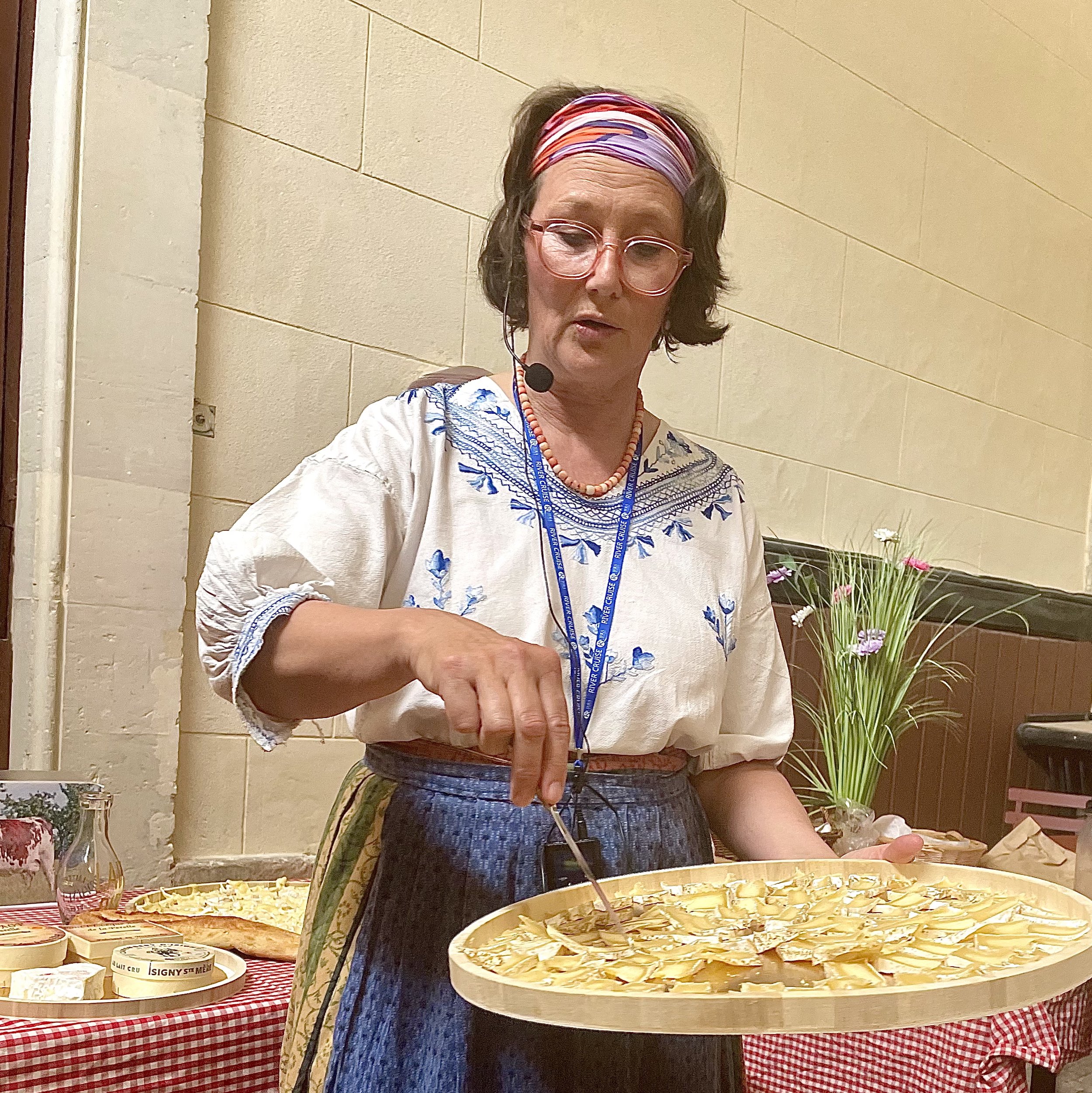
A local guide at 17th-century Bizy Castle teaches the well-known cheeses of Normandy in a former horse barn on the estate. Photo courtesy Lisa Mowry
The 140-room Jane Austen ship (all of their fleet is named after British authors, since Riviera Travel is a UK-based company) is small by river-cruise standards, and graced with a sundeck that lets you savor the views of French countryside along the way. On my recent trip, culinary highlights include a tasting and lesson about Normandy cheeses at Bizy Castle (followed by a cider tasting of local products), enjoying lunch at the oldest creperie in Honfleur, and visiting local farm and cider house Cidrerie du Mont Vine to sample an array of apple liquors and special cheeses. Other iconic attractions layer in history and culture to the week: a visit to Monet’s Giverny, a day at Normandy beaches and D-Day memorials, the charming town of Rouen with its history of Joan of Arc and gothic architecture, and—no surprise—a nighttime cruise by the sparkling Eiffel Tower to end the evening.
Cheese on Board

The four creamy cheeses that Normandy, France is best known for, Camembert, Livarot, Pont l’Evaque, and Neufchâtel. Their agricultural cousins, apples and fruit liquors, offer a sweet-salty combination when experienced together. Photo courtesy Riviera Travel
Every meal on board our river cruise offered a way to enjoy and honor French cheese, as well as options from neighboring European countries. True to culture there, dessert options always included a fromage plate, such as the one I had on my last night with a blue cheese Fourme d’Ambert, Reblochon and St. Nectaire, all of which are PDO cheeses, served with fruit and chutney. Lunch buffets always incorporated an array of cheeses—identified and thoughtfully paired with sides.
Normandy's Cheeses
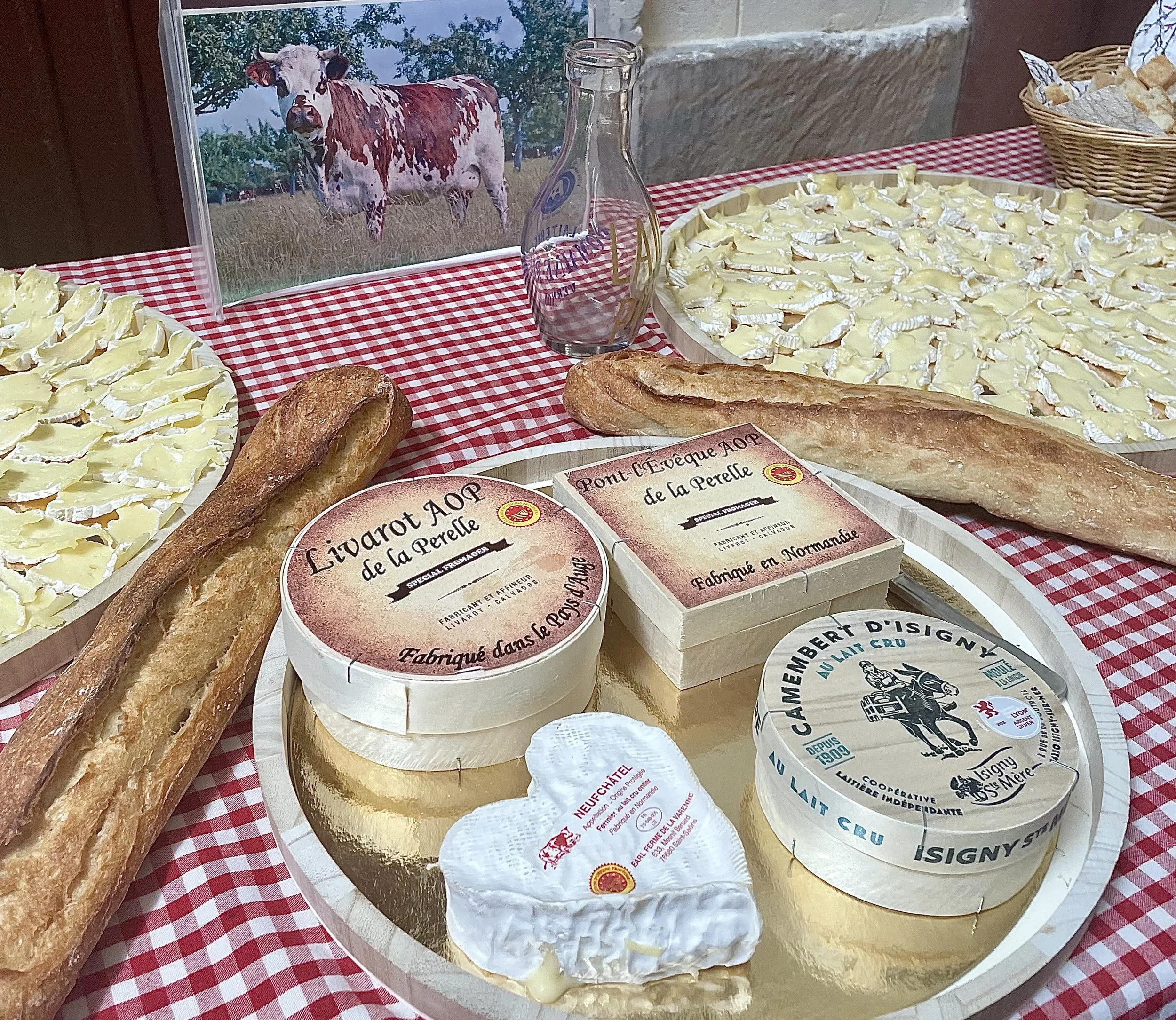
Livarot, Pont L’Eveque, Camembert D’Isigny, and Neufchâtel are all given the AOP (Appellation d’Origine Protégée) designation, which is the same as being labeled as PDO (Protected Designation of Origin). Both terms indicate that the cheeses are produced in a specific region using traditional methods. Photo courtesy Lisa Mowry
At our Bizy Castle lesson, we learned that Normandy’s creamy cheeses are a product of the cows that live in the area, specifically the region’s brown and white cows that eat a wide variety of grass and wildflowers. Normandy’s proximity to the ocean plays into the mineral-rich pastures, according to the Normandy Tourism board. As an interesting twist, the four PDOs are also villages: Camembert, Livarot, Pont l’Evaque, and Neufchâtel.
“Everybody knows Camembert” said the cheese instructor—noting its salty buttery taste as she passed around samples with baguette slices—although the American versions we know are modified types, she adds. Unpasteurized versions of Normandy cheeses are strictly forbidden to be imported to the U.S., but artisan cheese-makers such as Artisanal Cheese and Fairfield Cheese use local raw milk in a Normandy-style version. She educated us on the other three main products: French Neufchâtel cheese has a distinctive heart shape, Pont l’Eveque is grown with apple trees to give it a fruity hint, and Livarot is a pungent cheese wrapped in grass, she explained. After our cheese lesson, we headed to the grounds to learn about fruit ciders and liquors, the other Normandy products that—not surprisingly, considering the agricultural roots—pair well with the PDO cheeses.
American cheese purveyors can ship Normandy-inspired cheeses anywhere, but the best experience includes a visit to Normandy itself. Our guide said all the right things to promote French tourism, vis a vis cheese: “A lot of these cheeses you can’t import to America,” she said. “You have to come here to enjoy them.”