
Why I Left Cheesemaking After 20 Years
Editor's note: We interviewed cheesemaker Keith Adams in 2020, not long after Cheese Professor launched. So, when Keith told us he was shutting down his creamery, we offered him the opportunity to share his story. It’s brutally honest about the challenges facing today’s small cheesemakers, but also offers up some solutions.
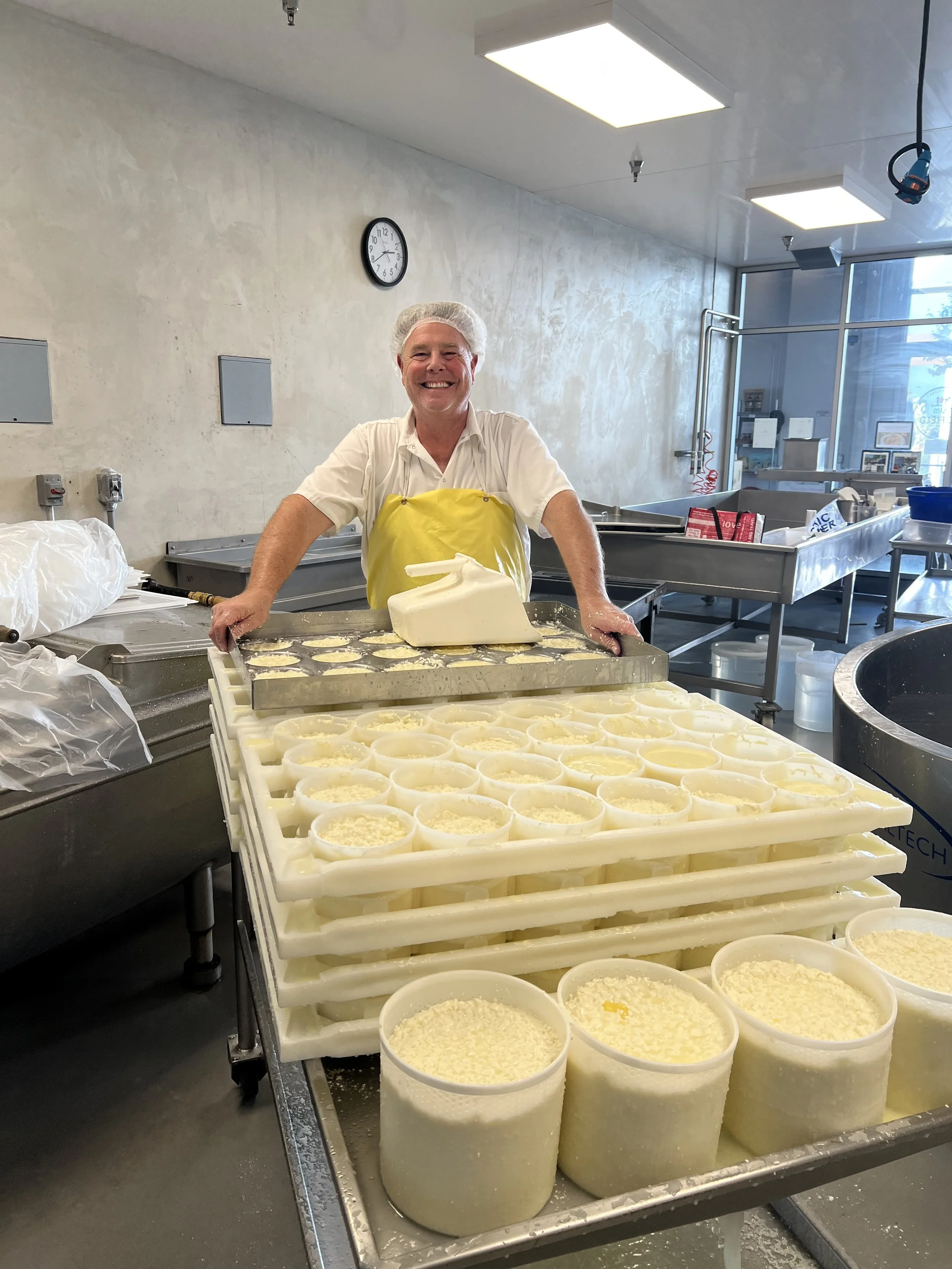
Keith Adams at the creamery
After 20 years as an artisan cheesemaker operating in Minnesota and California, I recently shuttered both Alemar Cheese and William Cofield Cheesemakers. Alemar became a bit of an industry darling and success, especially in its first decade, but Cofield, a much more ambitious (and expensive) project, never quite caught on. The last five years have been a constant struggle, not without reason for encouragement, but a stressful, arduous slog, which, sincerely, no sane person would have endured. The lessons learned are worth an exit interview. This is mine.
While I will dive into my personal experiences and observations, I hope the big takeaway is about the folks who are left, the smaller producers that are still out there doing exceptional work while swimming against a stream of increasing challenges.
There has been a fair amount of press in the community bemoaning this trend, but no one in the industry can be honest and transparent about the true root causes, because it would involve naming names that wield enormous power. I’m ready to say the quiet parts out loud.
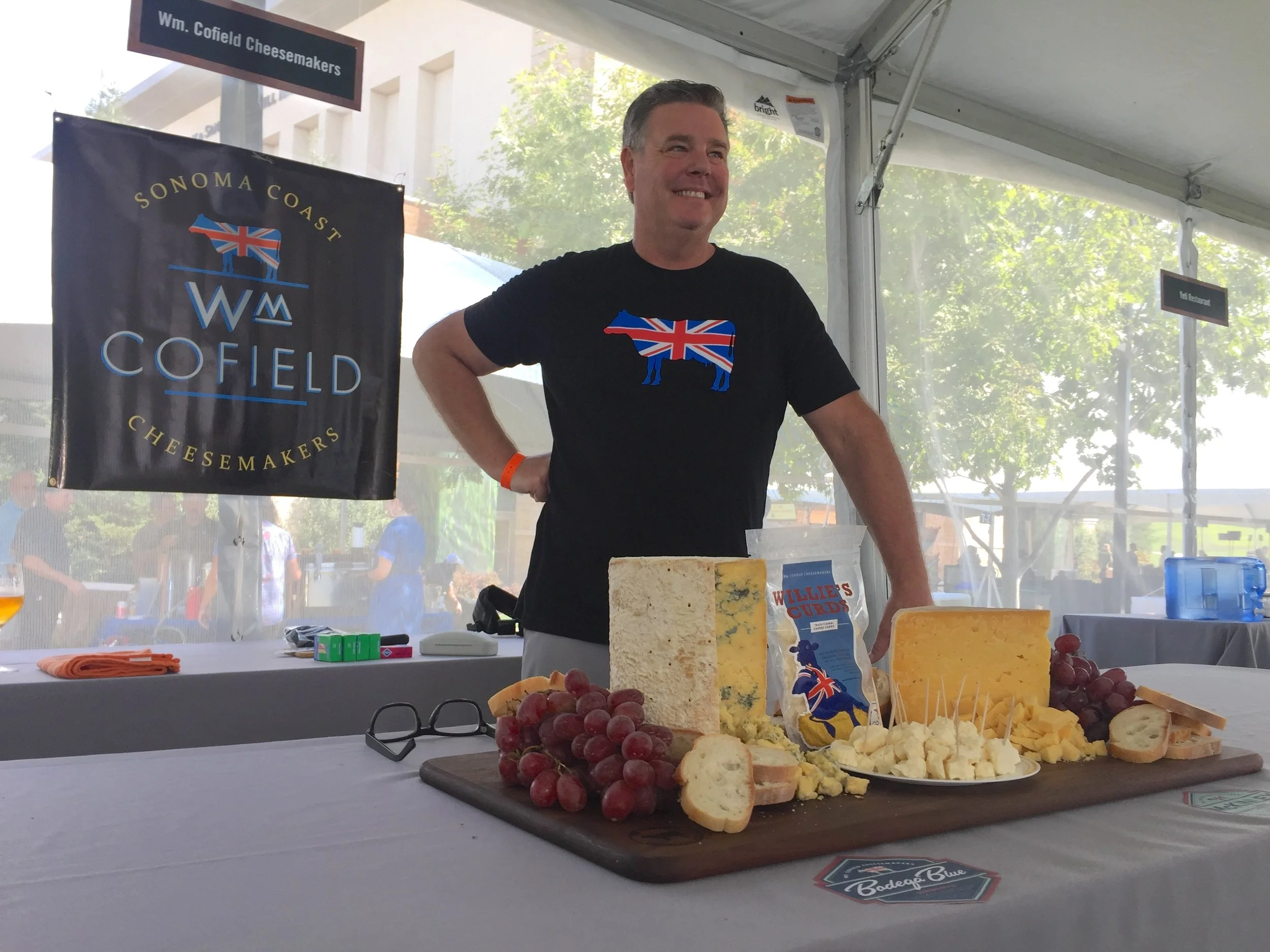
Keith Adams with Wm. Cofield cheese
Making a profit
Businesses need to make a profit to exist. A million years ago, I was a stockbroker, and I understand the concept of returning value to investors. The artisan cheese world has been the province of considerably less ruthless folk, primarily because there isn’t a huge payday and when the cheese we make is good, it has the power to change your evening–or your life. None of us got into it to make a fortune. There is this thing that we all share: a primal, visceral satisfaction of taking a vat of milk and turning it into cheese. Seeing cheese in molds at the end of the day has always felt like a profound accomplishment. If it’s in you, you will endure almost anything to keep doing it.
Over the last ten years, the landscape of our world has changed. Part of it has to do with changing tastes and interest, part of it has to do with inflation and buying power, part of it might have to do with our world gravitating to AI and the disconnect between humans and the value of creativity, part of it is still a mystery to me. But the big part, the thing that we don’t talk about, is greed. Greed, exacerbated by Covid, pushed large players in our community to make sweeping changes, and those changes filtered down, affecting our entire ecosystem.
The role of Whole Foods
Again, money needs to be made to keep any entity going. But during the first stretch of my life as a cheesemaker, the bigger players made an effort to support the small guys. There was an almost universal esprit de corps, where I felt like I had access to the larger buyers in our world and they wanted to see us succeed. It wasn’t just talk. Amazon bought Whole Foods in 2017. Like a number of these big corporate acquisitions, nothing changed immediately. Assurances were made. Whole Foods is, in some ways, the most important bellwether in this story. When I started out, they walked the walk. My read is that the cheese department was never a cash cow, but it was a point of pride within the organization that a strong cheese counter made the store a better experience. At least a third of the people who have gone on to start cheese shops or work in distribution or industry promotion got their start as a cheesemonger at Whole Foods. Our farm system, if you will.
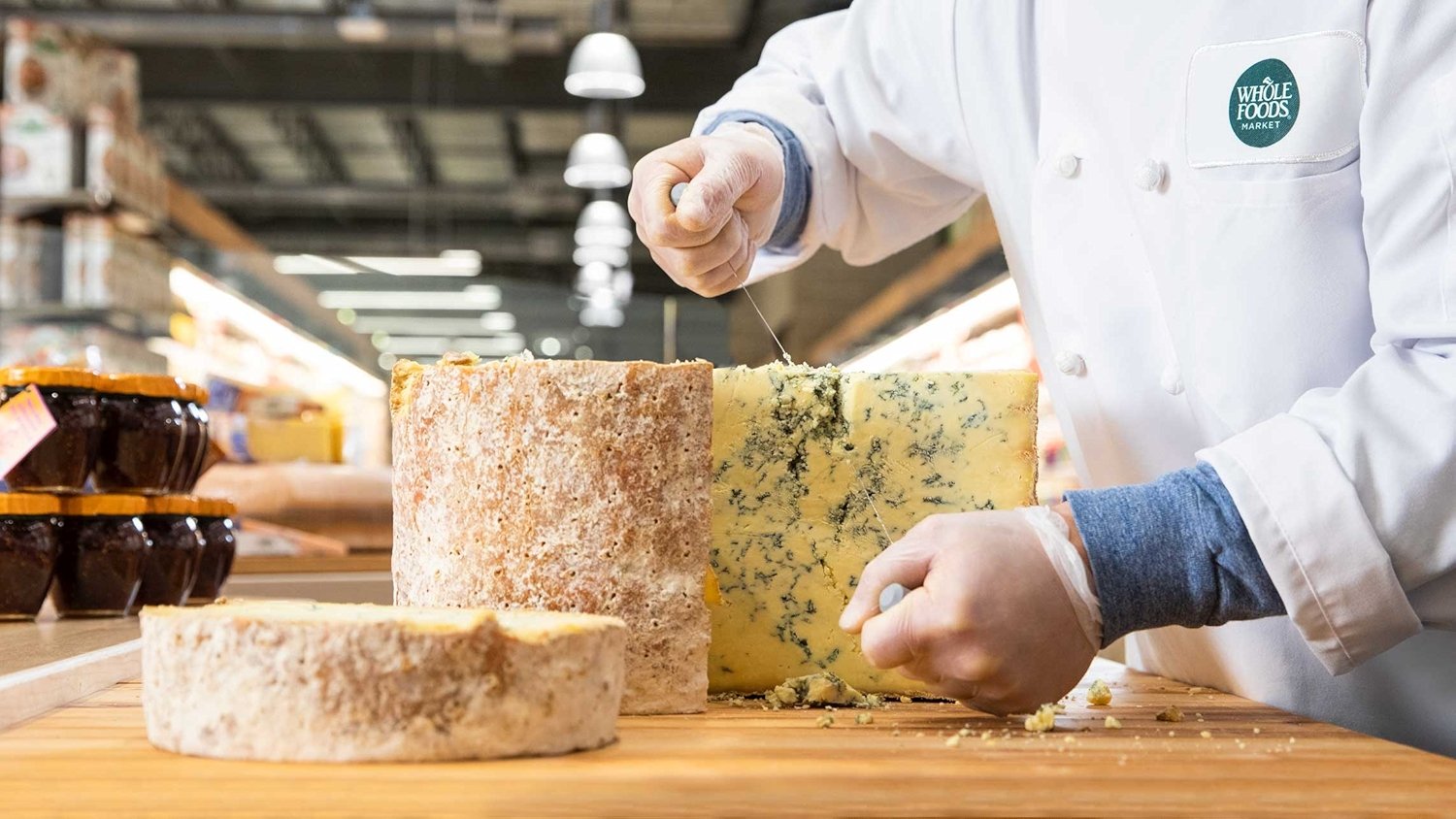
Whole Foods cheesemonger
Counters were well staffed, and cheesemonger education was more than a talking point. These folks lived and breathed cheese, and that passion was then passed on to the consumer, who might have just been looking for a hunk of Parmigiano Reggiano but encountered one of the faithful who perhaps convinced them to try a local cheese that was something special. This cumulative engagement impacted many of us small guys, and I certainly never forgot it. Keep in mind, in 2010, you could walk into any Whole Foods, and the store's cheese buyer had the power to put your cheese in their case–no long, drawn-out vetting period, no committee vote, just a simple yes, and you had a new customer. My favorite way to sell is "Yes, it’s more expensive, but it’s worth it and here’s why." Still a thing amongst the smaller guys, not so much with the big guys.
There were, and are, a significant number of smaller cheese shops and specialty stores preaching the same gospel, and their collective impact is greater than that of the big guys. But Whole Foods had muscle and a mission. They could write the big checks to the American Cheese Society, they could support state cheese guilds and regional events–and they did. Those dollars and everything else bought them respect and power.
After the Amazon purchase, things began to slowly change. And then Covid happened, and we entered a new and terrifying era.
The pandemic changed the course of many businesses, some for the good (hello pizza and booze). It went the other way for us: no home entertaining, no active or passive sampling (demoing, in industry parlance), and the restaurant world’s enthusiasm for cheeseboards and the like seemed to wane. Whole Foods made the correct business decision and cut staffing.
Kroger: the king
The big retailers pivoted, as any savvy organization would. Here we get the next industry giant, Kroger Markets. Really, all the big market chains, but Kroger is the king and heavy lies the crown.
You’re in upper management. You look at sales figures, and decisions have to be made. Labor costs are upside down, and sales have taken a dive. Consumers bought plenty of bulk pepper jack for their quesadillas, but that boutique maker down the way was just not making the grade. There is an old saying in our world, “it’s easy to get in the case, it’s hard to stay there.” The way I grew Alemar was through relentless demoing, which let me make contact with customers and, more importantly, gave me a few hours to bond with the mongers and tell my story. That was critical to our success, and that avenue had now been completely shut down.
But back to Kroger. They own more markets in the country than anyone else, accumulating regional chains by the handful to build the juggernaut they are today. Good business. Many of their stores never had ambitious cheese counters, but many did. What did Kroger do? They bought Murray’s Cheese of New York City, the unquestioned standard bearer of Manhattan fine cheese: lock, stock, and barrel.
Then they branded Murray’s at most stores, put in a large (and impressive) kiosk with no mongers to interact with the clientele. You can imagine how this affected the small guys.
I’m going to take a moment here to discuss precut, Cryovac-wrapped cheese. Go to any supermarket, you can’t miss it. Retailers, in an effort to reduce labor costs, insisted on this change. Simple: your team opens a box and puts the cheese in the case. Handy: all the pieces are uniform; the consumer doesn't have to waste time looking for the price that feels just right. Profitable: far less cheese went to waste, called “shrink” in the business. Is it good for the cheese? No. Cheese is alive, and the best of it deserves to be in wheel form right up until it is cut, wrapped and presented for sale.
I’ve Cryovac-wrapped cheese, grudgingly, and I don’t judge anyone in our community that has gone that route. But no one can argue it’s not detrimental to the final product. If you are buying in Cryovac, open it and let the cheese breathe for fifteen minutes minimum and come to room temperature–true of all cheese, but especially here. It’s like letting a fine wine breathe, and it matters.
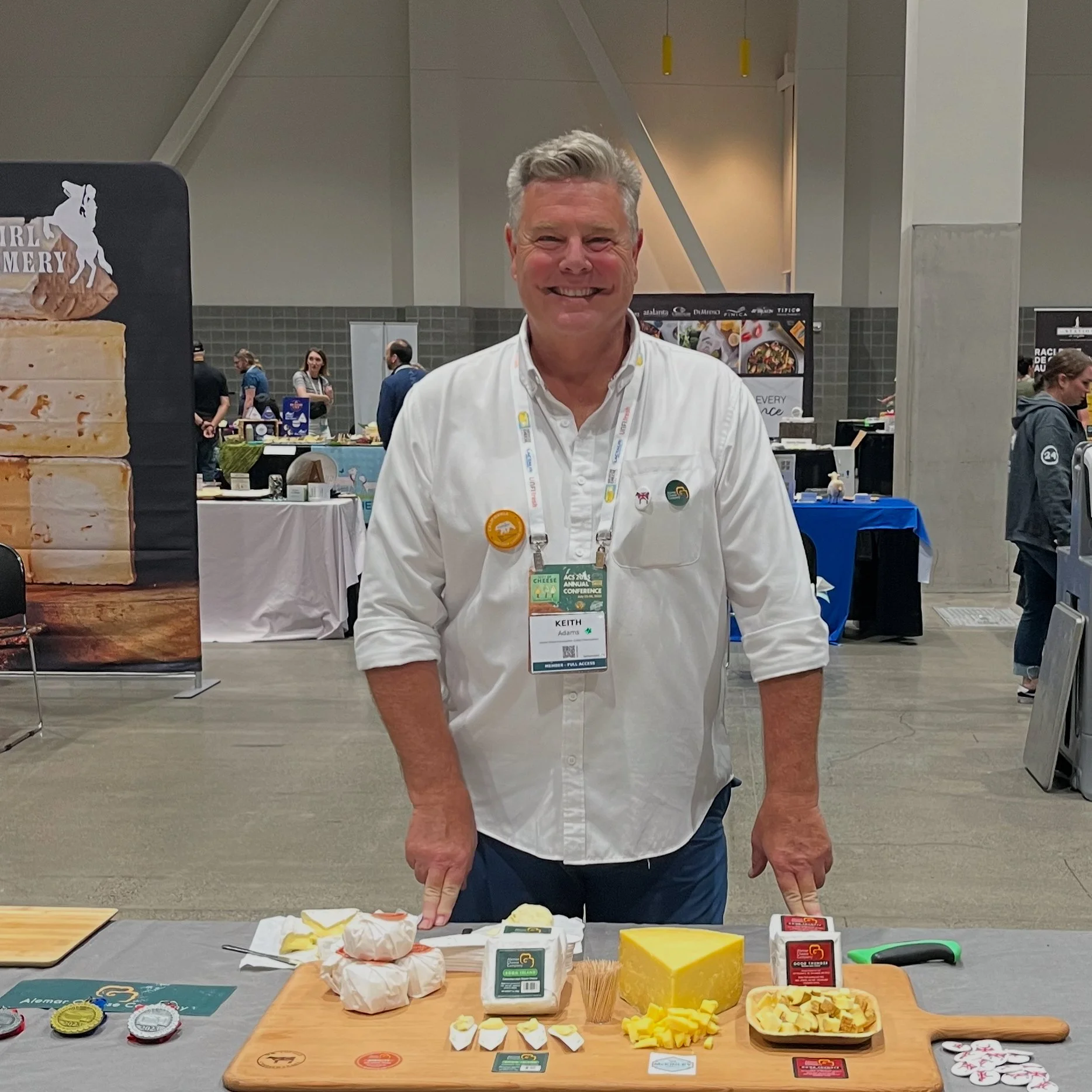
Keith Adams and his cheeses
Kroger has a large and very powerful right hand, their exclusive distributor, Gourmet Foods International, based in Atlanta. They are the largest distributor in our world, they move a mountain of cheese, and they answer to no one, except Kroger. An executive at Kroger (now long gone) who I’d met when he was just a guy at Murray’s, said “They do what we want.” You can’t fault GFI for running a good business, but you can for a shitload of other reasons. They are generally despised in our community for a variety of insulting behaviors, like making vendors large and small pay five thousand dollars to attend their buyer events, stringing cheesemakers along like a kitten with a ball of yarn, flat-out ghosting, billing back significant charges for any number of bogus reasons and generally acting like pompous pricks. And both Kroger and GFI pour money into our causes as goodwill, the unspoken agreement being no biting the hand that feeds you.
No one in the industry can say this, because they can make or break you. They contributed to breaking me. I’m out of the game, so fuck it. They won’t respond to any of this publicly, but they will whisper any number of excuses for their actions, or lack thereof. These folks are mostly concerned with bonuses and perks, like the rest of the corporate world, but they present as fierce advocates and say all the right words about us all being in the same boat, but sorry, that’s a load of bull. The actual answer is “Hey, we’re just doing what our customers demand,” and that seems reasonable, right? I’m sure their marketing departments wouldn’t want any piece of that.
When the big boys make moves, their smaller competitors (still giant, billion-dollar companies) have to follow along. That’s the mercenary part of business that I understand, but if this is applied to every industry, even the cheesemakers who touch your stomach, heart, and frontal cortex, you know where we are headed: cheese cases across the country looking homogeneous and safe. You know, boring and sad.
The future of American artisan cheese
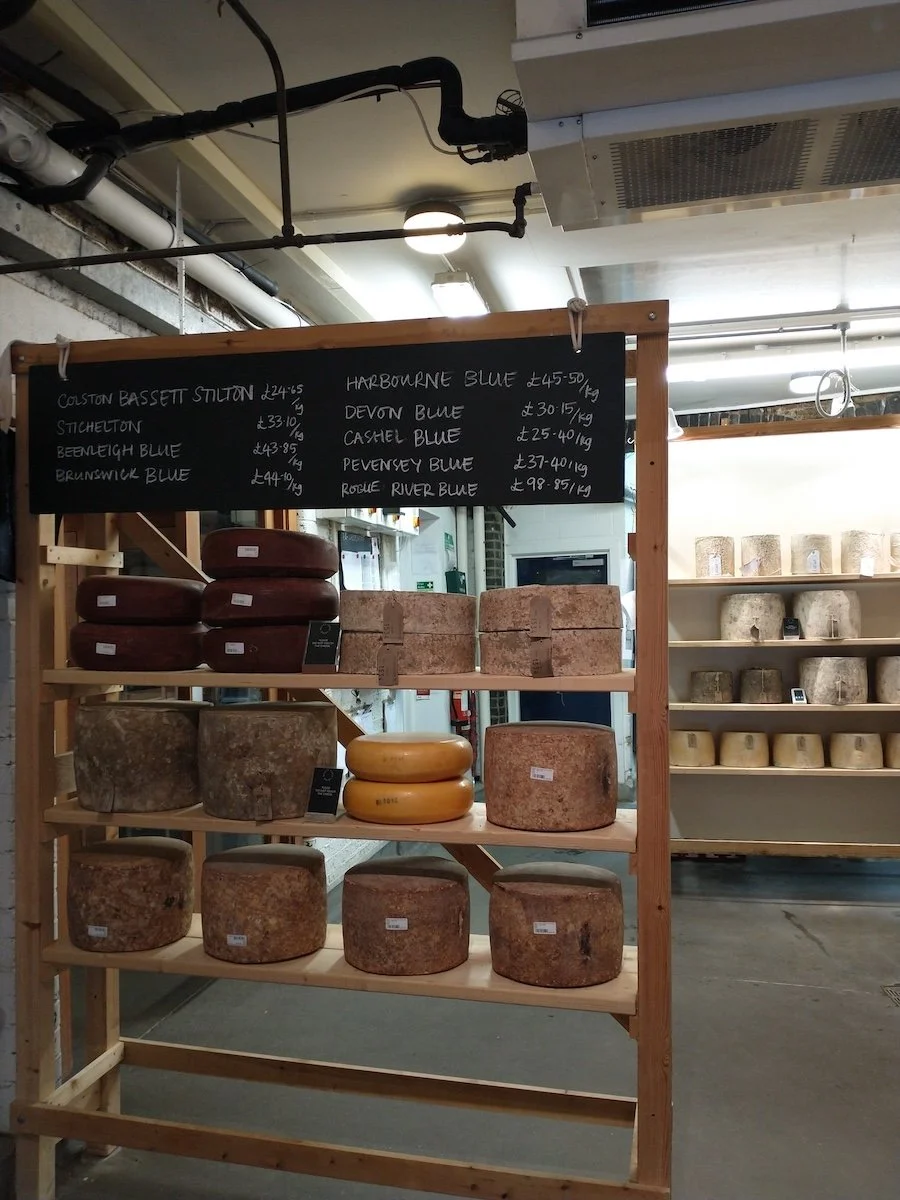
Neal's Yard cheese shop
American artisan cheese is worth supporting. We cannot compete on price with our European colleagues (that’s another story). But there are pockets in every part of the country where small producers are doing something special. Using the best milk. Taking whatever steps the big guys can’t because it costs too much, sincerely caring about each stage of the process. They are worthy of your attention and support.
And, even the cheese companies at the top of the mountain are facing challenges. I’m talking about multi-“Best in Show” winning outfits that are revered and beloved. Many of them reached out when I announced our closing. Every one of them said the same thing: “I’m sad but not surprised.”
How can you help? Find a local cheese shop, or someone like Oliver’s Markets in Sonoma County or Kowalski’s in Minneapolis/St. Paul, who are still walking the walk. You will find an educated person who will share their insights and opinions (many of today's cheesemongers would have worked in record stores back in the day, and I mean that almost wholly as a compliment). You will be impressed. You might have your mind blown.
If anything is going to change, the corporate leviathans will have to be part of the solution, or there needs to be a renaissance of customers embracing small artisan producers. I’m not particularly optimistic, but I still love and respect my colleagues out there fighting the good fight. Handwringing, lip service, and best intentions aren’t moving the needle. In England, this is happening as well. Neal’s Yard Dairy, cheese mongers to kings and commoners alike, recently launched a campaign, “Eat them or lose them.” What can the industry, collectively, do to change this trajectory of struggle? The big guys could put some sincere energy into featuring local and regional makers, and the upscale regional markets could do a much better job supporting us. A sliver of their dollars could save a bunch of cheesemakers. I’ve seen some encouraging press pieces on small producers recently, and that gives me a small measure of encouragement. As a whole, our community needs to decide what’s important; if small regional producers matter, then collective action must be taken.
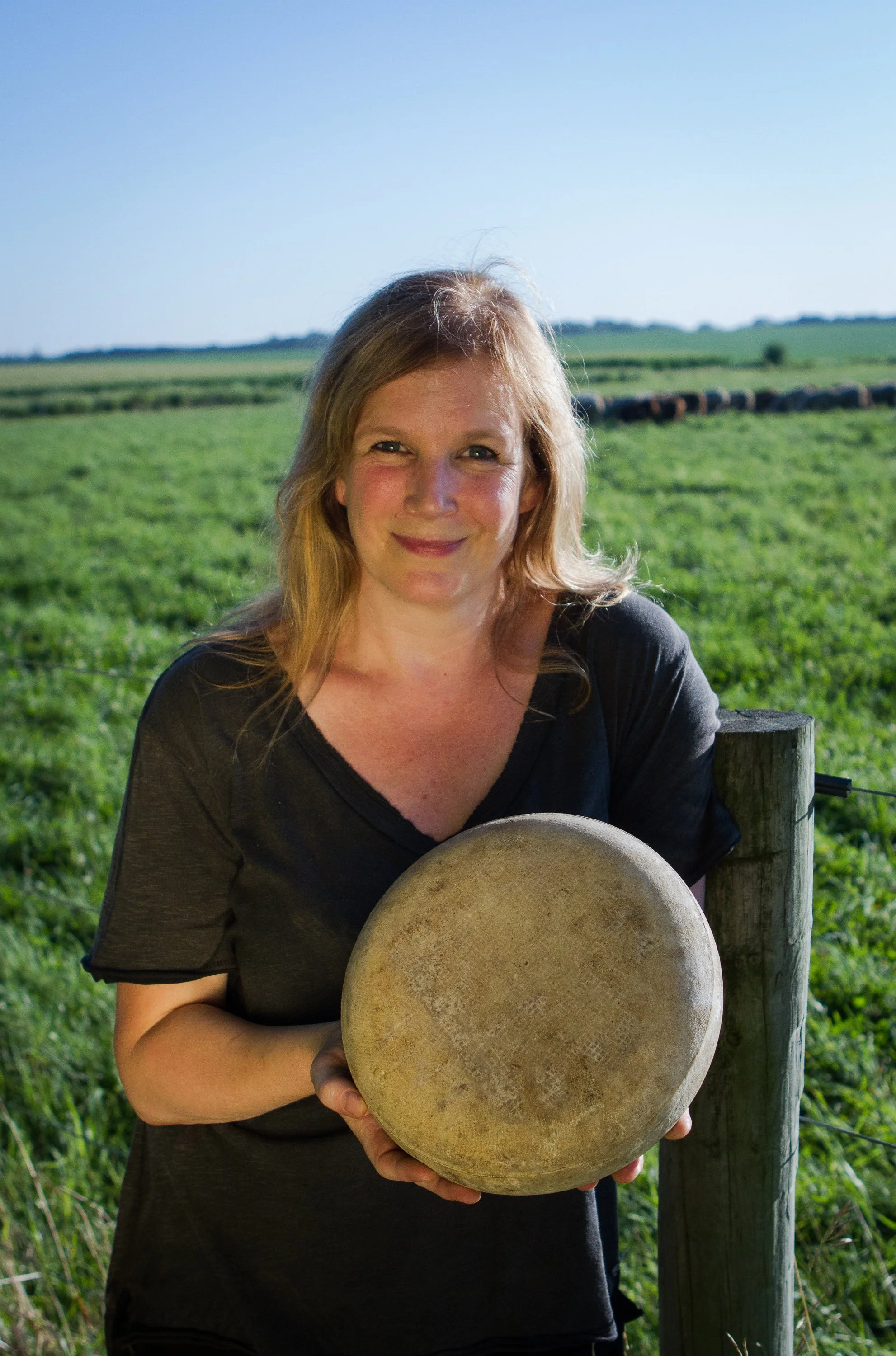
Jodi Ohlsen Read photo credit Shepherd's Way Farms
Shepherd’s Way Farms
There are a lot of stories about my comrades, stories of struggle, inspiration, and triumph against the odds. One that sits firmly at the top is Shepherd’s Way Farms, founded by Jodi Ohlsen Read and her husband, Steven. They bought 43 acres in rural Minnesota 30 years ago, and began farming and raising sheep–and four boys. Steven tended to the flock and handled farmers’ markets and the like; Jodi made cheese. Exceptional cheese, with a wall full of awards and the kind of press you can’t buy.
In 2005, an arsonist lit their barn on fire, trapping and killing the majority of the herd, almost 600 animals. How does anyone weather that and keep going? But they did. I can’t think of another couple who have banded together and done more with their lives. Jodi and Steve are a bit younger than me and have worked far harder and longer. If anyone deserves success and the right to a comfortable life in their golden years, it’s them. I spoke with Jodi a few weeks ago. They are still at it, with the boys pitching in when able, and sustained profitability is still a tenuous goal.
Shepherd's Way is the best example of raw determination to achieve excellence, but there are dozens of others who have made a decision to pursue a life of cheesemaking, knowing the commitment, passion, and energy required just to get to market. For these folks, I wanted to share my story and theirs, in hopes that it might have some small positive impact. That’s my exit interview. I am proud of what I did, especially the relationships I made along the way, but I’m sixty-four, and I’m pretty sure my back, battery, and bandwidth won’t ever recover enough to want to make cheese again.