
The American Cheesemakers Making Raw Milk Cheese
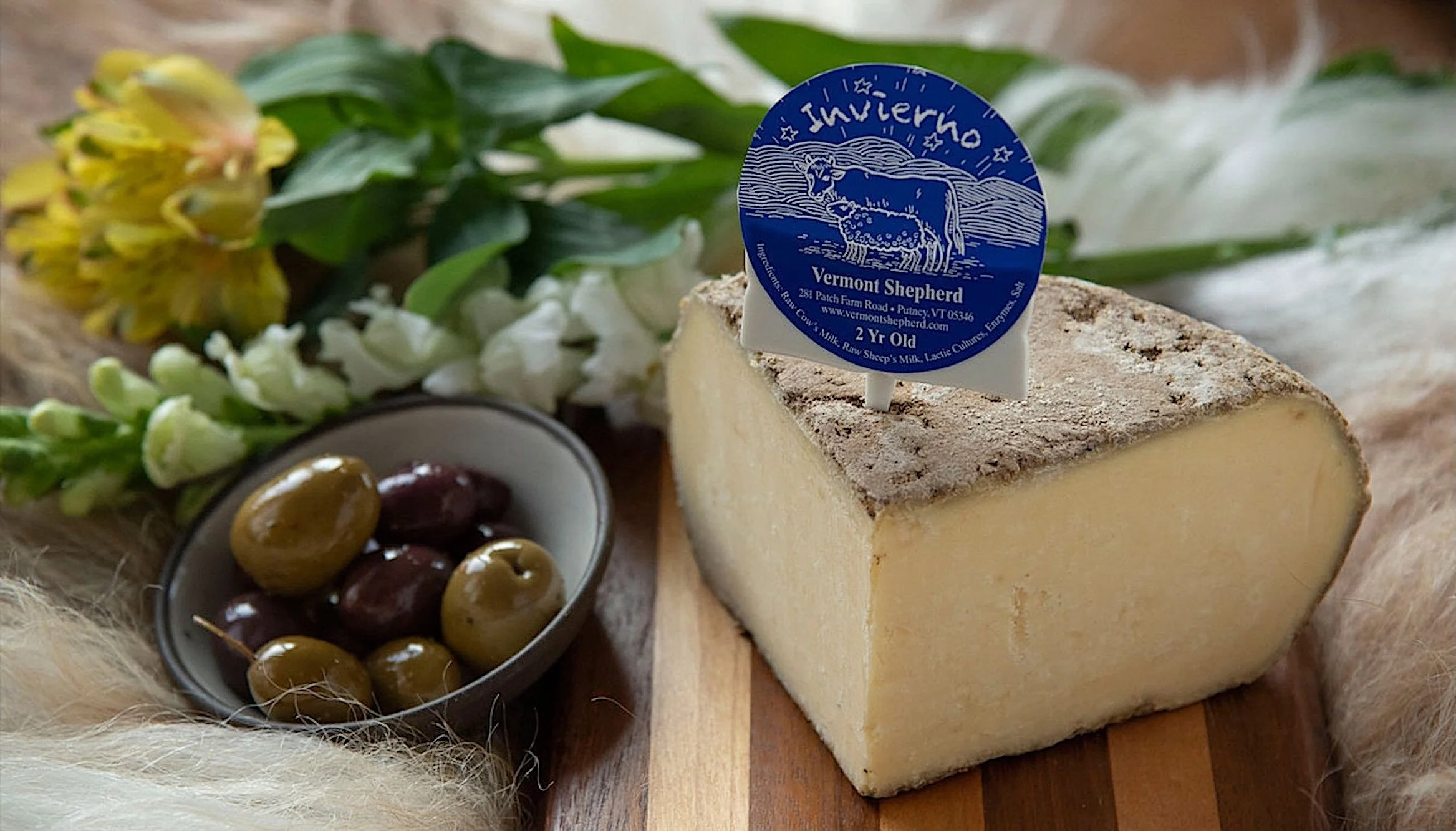
Invierno cheese from Vermont Shepherd
Raw milk cheeses are generally thought to be among the best cheeses in the world. Raw milk carries with it a broad array of microorganisms—a microbial ecology is how it is often described—that will have an impact on the finished cheese. For the most part these are beneficial bacteria intended to colonize the digestive system of a young calf, lamb, or kid. They contribute complexity to the flavor of a cheese. A handful of less friendly bacteria might also be in the milk, and if they are there in enough quantity, they can ruin the cheese or make people sick.
Globally, raw milk cheese is defined as cheese that is made from milk that has never been heated above the body temperature of the animal prior to the addition of rennet. In the United States, any cheese made with milk that has not been pasteurized (heated to prescribed temperature for a specific time) must be labeled as being made with raw milk.
How is Raw Milk Made into Cheese?
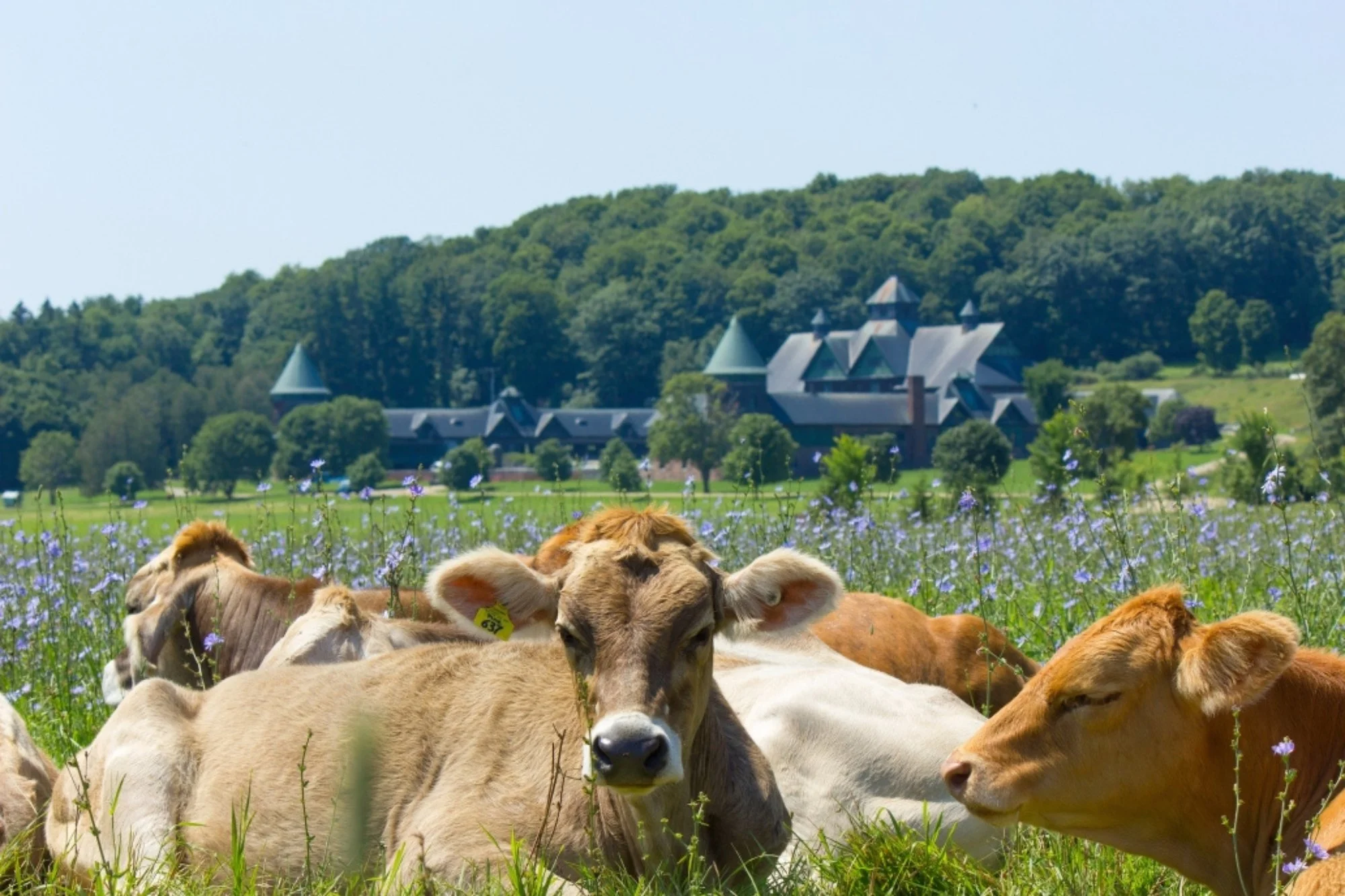
US artisans who make true raw milk cheese start by either producing or sourcing milk with outstanding qualities for making cheese. This requires strict attention to hygiene on the farm—with the animals, the milking environment and in the milking and transportation equipment. Once the milk is delivered to the creamery or sent to the cheesemaking room (generally in less than 20 hours) the cheesemaking process begins. It might then be no different than the process for pasteurized cheese, but some raw milk cheese producers use their own “clabber” culture rather than a packaged strain purchased from a culture house—a company that isolates, propagates and packages the cultures used in cheesemaking.
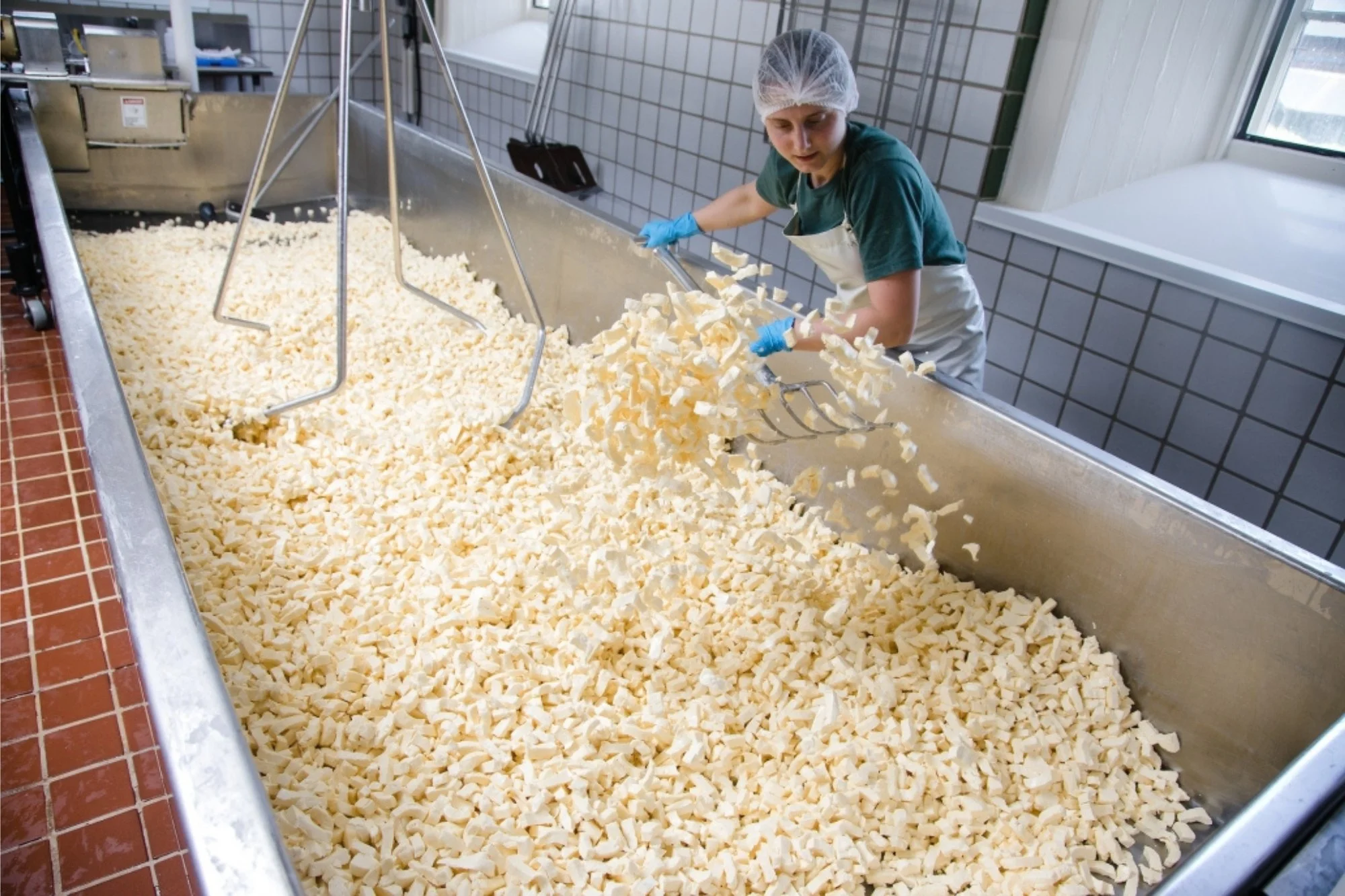
Making cheese photo credit Shelburne Farm
Throughout history, cheeses worldwide have been made from raw milk. Pasteurization was only embraced in the early 20th century, simultaneous to rapid changes in farming transportation, industry, and commerce. These include many of the world-famous cheese styles which were developed gradually for centuries prior to the modern era. If you have eaten Manchego, Parmigiano-Reggiano, Gruyere, Comte, Greek Feta, or traditional Cheddar from the UK, you most likely have already enjoyed raw milk cheese.
In the United States, a small, and perhaps shrinking number of cheeses are made from true raw milk. Among them are the renowned cheeses from Wisconsin’s Uplands Creamery—Pleasant Ridge Reserve, and Rush Creek Reserve. A number of the cheeses from Jasper Hill Creamery, Vermont, are made from raw milk, and Parish Hill Creamery also in Vermont, offers a full portfolio of raw milk cheeses. Parish Hill co-founder Peter Dixon has trained numerous cheesemakers in raw milk cheesemaking over the course of decades.
Why is Raw Milk Cheese Special?
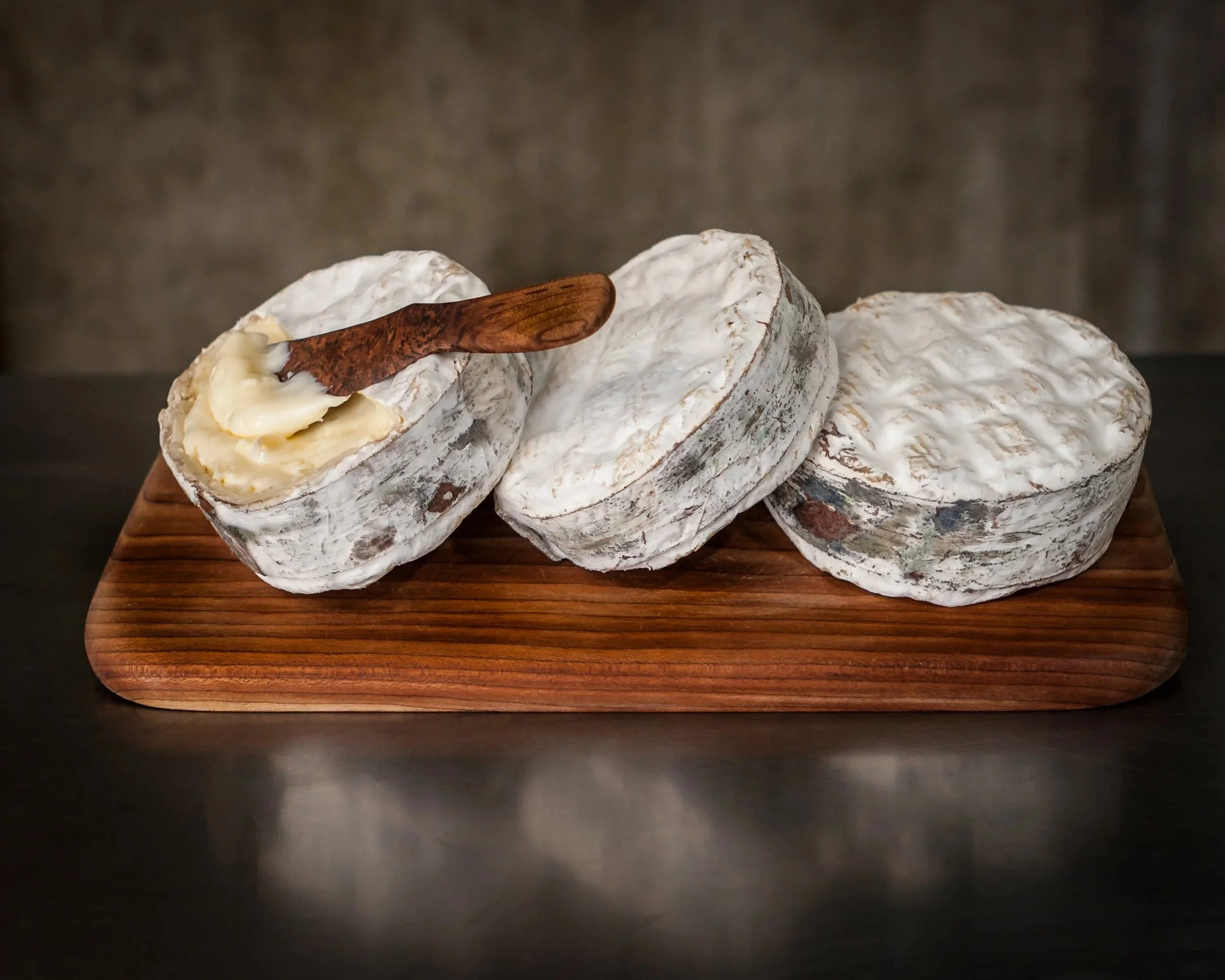
Harbison cheese photo credit Jasper Hill
The proven safety record of those great cheeses from Switzerland, France and Italy, was achieved through practices based on quality—with many small farms working in conjunction with numerous small creameries. It afforded a great deal of protection to the crucial and fragile raw ingredient, milk.
The model is anything but efficient. So, in 20th century North America, pasteurization prior to cheesemaking allowed for milk to be stored, pooled and shipped to where it could be safely used days later to make quality cheese. But, could that milk still make great cheese? The answer to that is mostly yes, but a qualified yes. Capturing the native biology in raw milk can make cheeses unique. The use of commercially-produced cultures on the other hand, can make a cheese from one maker a lot like a cheese from another.
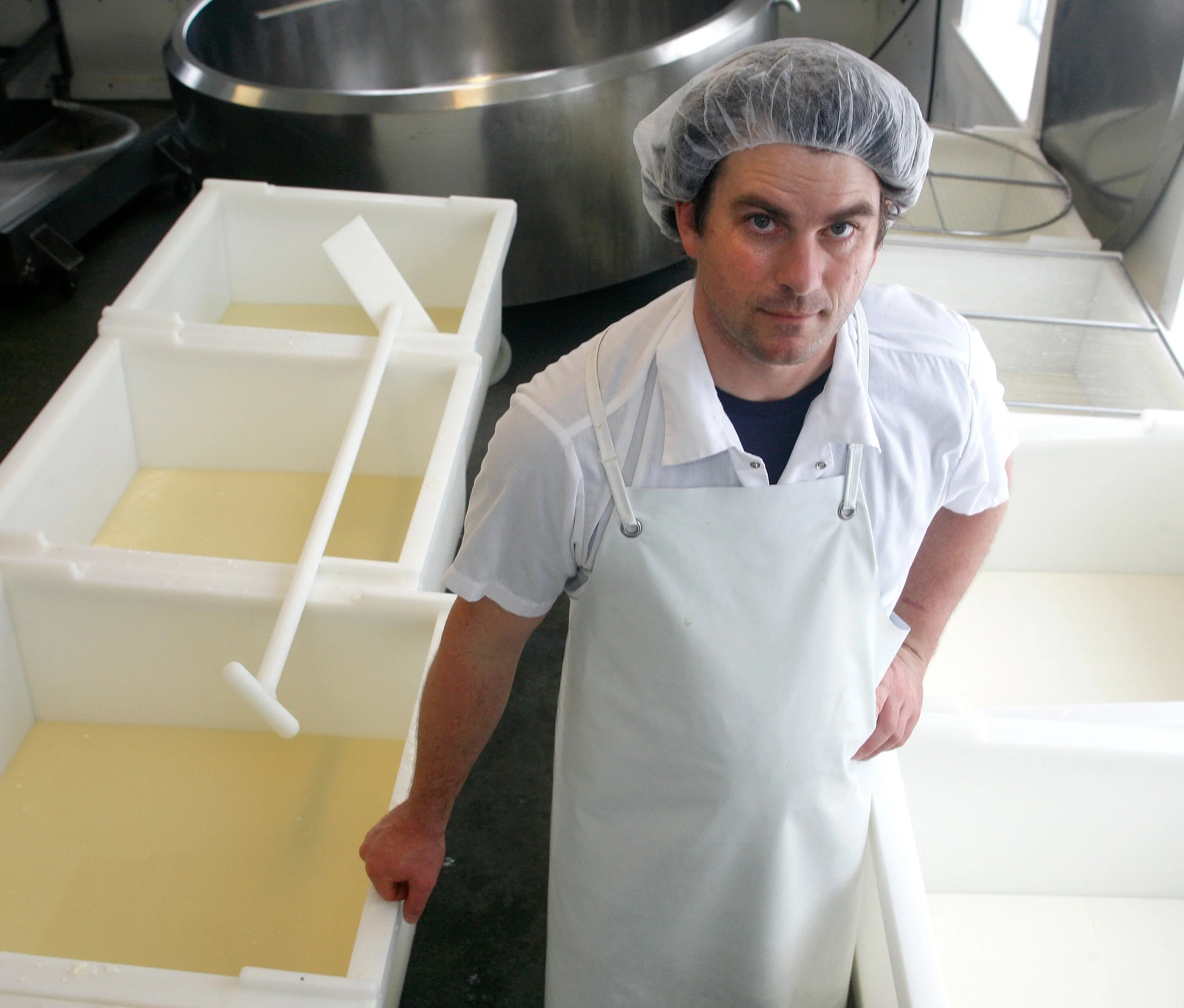
Mateo Kehler, co-founder of Jasper Hill
Mateo Kehler, co-founder of Jasper Hill, says using raw milk from the farm’s herd is not only safe, but it is a contributor to the nuanced flavors that have been heralded in cheeses like Bayley Hazen Blue, Alpha Tolman and Winnimere. He gets a bit philosophical about what great-tasting cheese represents. “I think of cheese as being a form of memory,” he says. “An envelope that encapsulates the sum of summer. Even with the winter cheeses, they started with the grass of that summer.”
Kehler is not alone in asserting that there is something extra special about raw milk cheese.
“If you compare a real Brie de Meaux or a Camembert de Normandie with the pasteurized versions they are not the same at all,” says Jennifer Greco, a Paris-based cheese educator and Cheese Professor contributor. “The pasteurization dumbs down the flavor so that it’s just milk and butter. A real Brie de Meaux or Camembert will have mushroom, and sometimes oysters and wet leaves.”
Ask Kehler about the importance of raw milk cheese to cheese enjoyment, and his answer involves more than flavor complexity, “In Europe there is an understanding that cheeses made from raw milk are more valuable because they are authentic and made generally with expertise and artisan techniques, and they almost always taste better than their pasteurized counterparts,” he says. Adding, “I think it’s fundamental, and it’s not that there are not good pasteurized artisan cheeses—we make them. But, in a raw milk cheese, you are capturing the essence of a farming system—the land the animals, and the people.”
Raw Milk Regulations
Cheese production in the US is federally regulated by the Food and Drug Administration (FDA), which requires that raw milk cheeses sold in the country must be aged for at least 60 days. This is why 21-day old raw milk Camembert is not sold in the US, while 12-month-old Gruyere (or Comte) is.
The 60-day rule, established in the 1950s, has since been shown scientifically to be less than a guarantee of eliminating dangerous microbes. This factor, along with the proven track record of young raw milk cheeses in other parts of the world, has brought the 60-day rule into question.

Dr. Catherine Donnelly photo credit Jennifer Francoeur
In her 2019 book Ending the War on Artisan Cheese, Catherine Donnelly, PhD., a leading expert on food science and nutrition, described a regulatory environment focused on commodity food manufacturing, and sometimes hostile toward the artisan cheese community’s return to traditional practices. While there is now an unconventional top leader in the Department of Health and Human Services, which oversees the FDA, Donnelly does not expect to see a lot of changes in how food safety is regulated. “The Food Safety Modernization Act (FSMA) will probably govern food safety regulations for the foreseeable future,” Donnelly said in a recent conversation with The Cheese Professor. “Cheese related outbreaks remain very infrequent when compared to other commodities that should require more attention.”
Donnelly says FSMA requires inspection of all food making facilities, as well as risk assessments, and abatement plans that are developed by the food manufacturer.
“I think now the whole approach to food safety is one of prevention rather than reacting to outbreaks when they happen,” Donnelly says. She adds that applying milk quality standards in addition to the 60-day rule would make sense, while noting that those measures are already a requirement in most states. “I think most cheesemakers follow those rules because if your business is going to survive you can’t have repeated outbreaks.”
Who Makes Raw Cheese in the US?
We might also note that well-established US artisans often employ some of the same guidelines practiced in Switzerland, France and elsewhere. These include excellent farm practice with small herds, the use of fresh milk sourced near to the creamery, and proper aging and testing. Consumers should get to know their cheesemongers, and where they can, they should try to visit the makers and ask questions about how milk is sourced and how it is used to make cheese.
In addition to the companies mentioned above, a few others produce true raw milk cheeses and there are a larger number making excellent cheeses with milk that is thermalized, meaning it is heat-treated but not to full 161-degree F pasteurization, often to around 130 degrees.
Leading cheesemakers producing true raw milk cheese in the US
Uplands Creamery, Wisconsin
Jasper Hill Creamery, Vermont
Parish Hill Creamery, Vermont
Birchrun Hills Farm, Pennsylvania
Cascadia Farm, Oregon
Cato Corner Farm, Connecticut
Cherry Grove Farm, New Jersey
Sage Farm Goat Dairy, Vermont
Shelburne Farms, Vermont
Vermont Shepherd, Vermont
Cheesemakers using thermalized/non-pasteurized milk in the US
Grafton Village Cheese Company, Vermont
Prairie Fruits Farm, Illinois
Roelli Cheese Haus, Wisconsin
Sequatchie Cove Creamery, Tennessee