
What Are Those Crunchy Cheese Crystals?
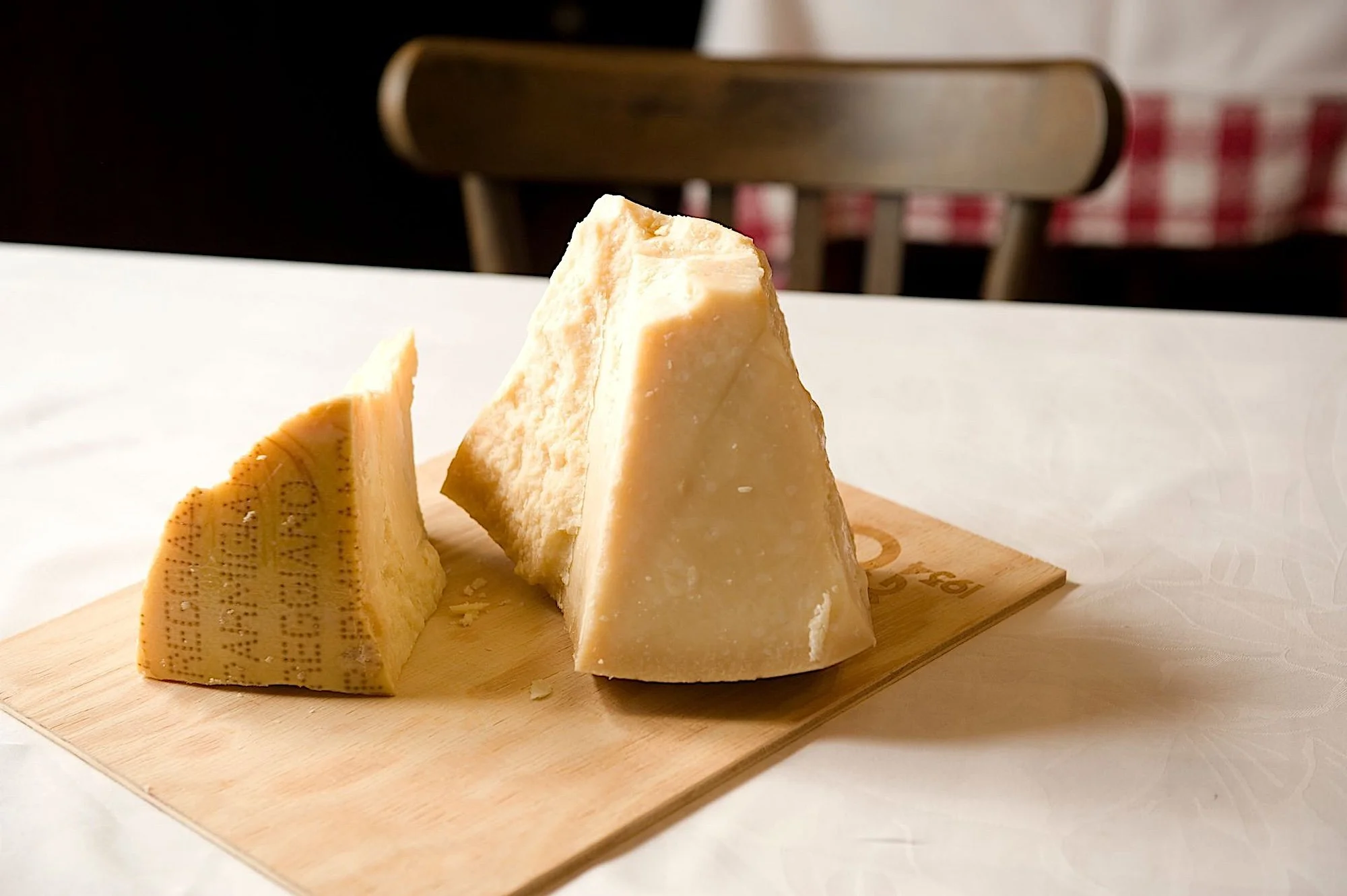
Punte di Parmigiano Reggiano
Cheese comes in a variety of textures, from oozy and runny, to a level of firmness that may require a chisel, or at least a microplane, to penetrate. Toward the end of the spectrum that harder cheeses occupy are those that start to express bits of crunch, while still being delectable and even easily sliceable.
If you’ve found that your cheese has got a little crunch, and not because you are eating it in Cheeto, Goldfish, or frico form, what you’re likely dealing with are certain types of crystals. While not the kind of crystals that you might employ to improve the energy field around you, these crystals are nonetheless often desirable in cheese. (And may improve the energy field around you, as a natural side effect of eating delicious cheese.)
We asked John Montez, ACS CCP, and Manager of Training and Curriculum for Murray’s Cheese — and our go-to source for all things cheese chemistry — to break down these enigmatic cheese structures. Here’s a primer on what cheese crystals really are, how they form, and where to go looking for them.
What Are Cheese Crystals, Really?
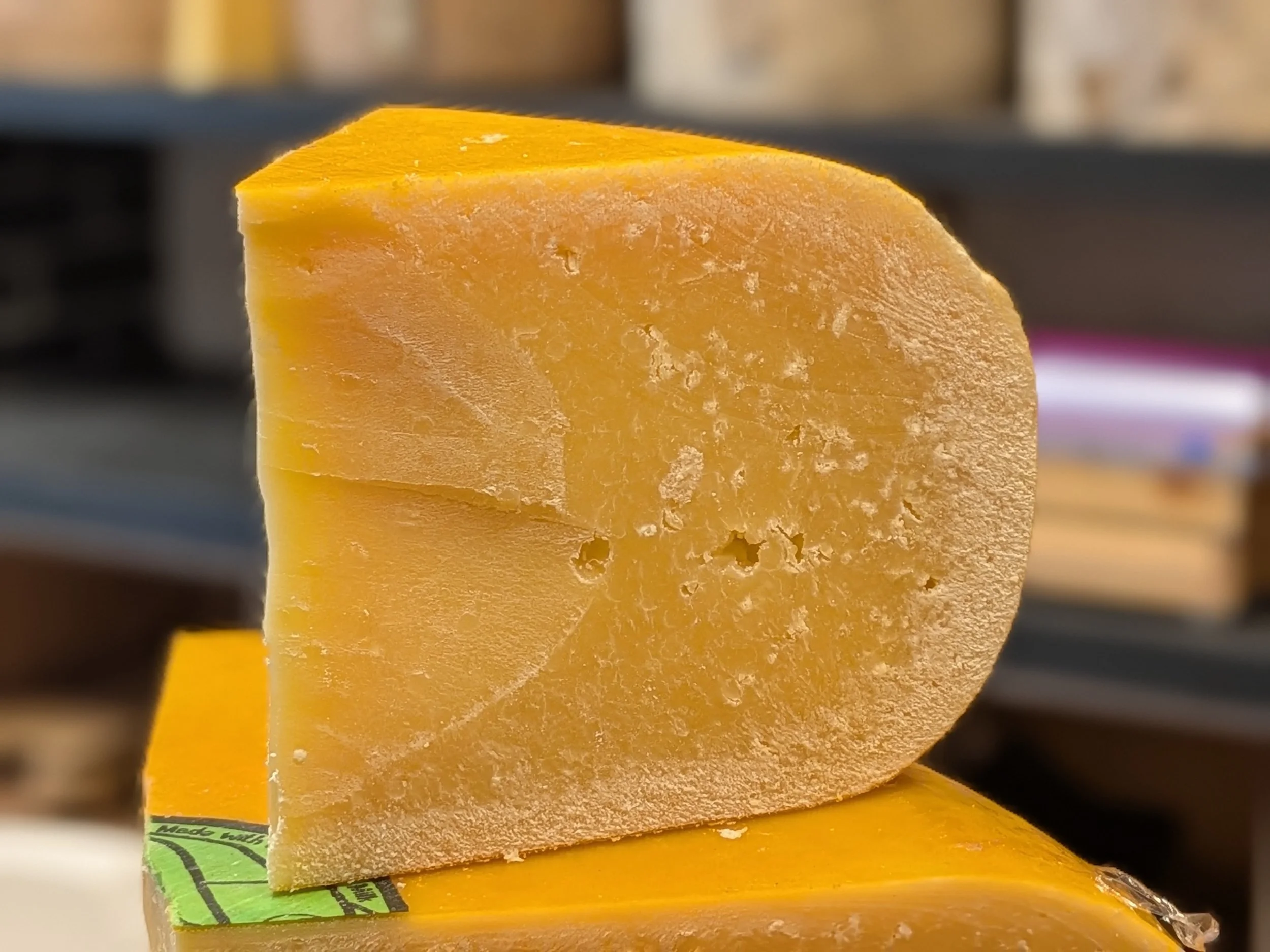
Leucine in Gouda photo credit Pamela Vachon
Consumers may assume they are encountering either a clump of undissolved salt or sugar when they encounter a bit of crunch in their aged cheese, but this isn’t the case. Crystals that form in cheese are typically of two different types. “The most common type of crystals are amino acid crystals, with tyrosine being the big one,” says Montez. Leucine crystals, another form of amino acid crystals, may also form in aged cheese, but less commonly so. Amino acid crystals can be found in the paste of an aged cheese, not necessarily just nearer the rind or the core, but distributed throughout.
Calcium lactate is the second type of cheese crystal which may be found on certain types of aged cheese, mainly on the surface. “Calcium lactate is just a regular mineral found in milk,” explains Montez. “This is the type of crystal you’ll often see on cryo-vac cheeses, pretty commonly on cheddars,” he says. While not an amino acid formation, mineral compounds of this kind are still crystalline in structure and can still express a slight textural contrast, though not as marked as tyrosine.
How Crystals Form During Cheese Aging

John Montez, ACS CCP, and Manager of Training and Curriculum for Murray’s Cheese
With a rudimentary understanding of what cheese crystals are, the more interesting question becomes: how did they get there? As we learned during Affinage 101, time, moisture loss, and microbial activity, both on the surface and within the body of a wheel or hunk of cheese are all contributing to its transformation and subsequent flavor development. During this process, protein and fat molecules break down over time given certain, highly regulated elements of temperature and humidity that allow starter cultures to work their magic.
Crystal formation is also a natural part of the cheese development process, mainly as a direct result of the breakdown of protein molecules specifically, during a process known as proteolysis. As there are two different types of crystals, however, they necessarily have two different origin stories.
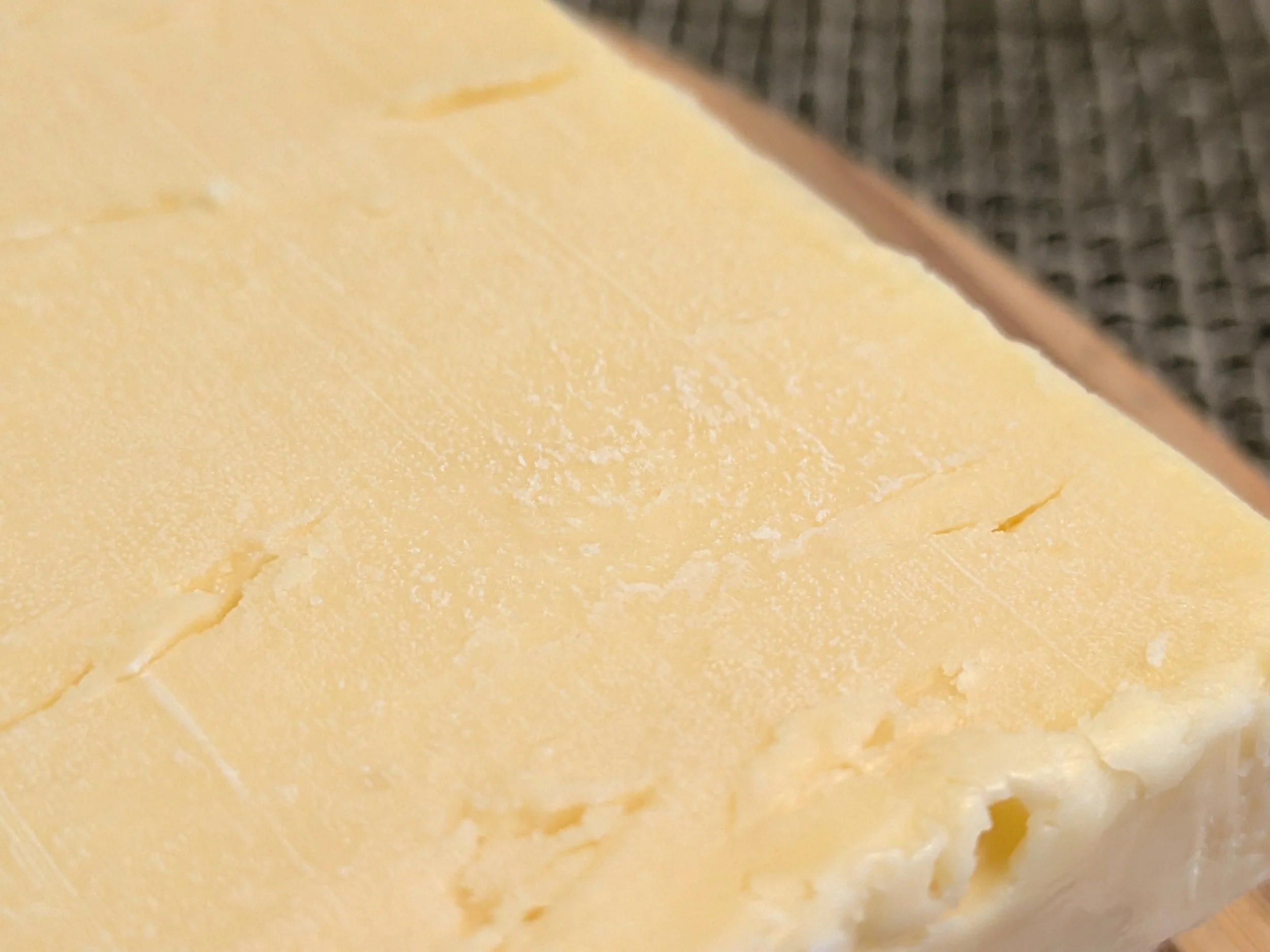
Calcium lactate appearing on Cheddar photo credit Pamela Vachon
For tyrosine or other amino acid crystals, age is the key component. “These are basically amino acids that were once part of a whole protein strand, and that protein itself is water soluble,” explains Montez. “But as the proteins break down over time, those individual amino acids break off of that chain of protein, and certain amino acids aren't water soluble on their own, so they precipitate out of the solution and bond together, forming crystals.”
With calcium lactate crystals, moisture has a larger role to play, as they form typically in cheeses that have been vacuum sealed and therefore retain more water content even while aging out. “When you apply the pressure of a vacuum, that can sometimes bring some of the whey to the surface, where it might dry out,” says Montez, “and then what you're left with are those exterior calcium crystals.”
Texture, Flavor, and the Appeal of Cheese Crystals
While cheese crystals obviously bring an element of interesting texture to certain cheeses, breaking up the homogenous paste with contrasting bits of pleasant crunch, they aren’t actually a vehicle for flavor, but are a flavor sidekick, so to speak.
“Tyrosine crystals shouldn't really have any flavor to them at all,” says Montez. “In a cheese that has tyrosine crystals, though, that's only occurring in a cheese that is aged for at least a year or thereabouts, so it's definitely the mark of a well-aged cheese,” he says. “It's a sign that there's gonna be flavor.” In short, tyrosine crystals don’t create flavor, but their very existence automatically goes hand-in-hand with flavor.
Texturally, they also aren’t limited to just being little bits of crunch. “When you start getting into cheeses that are aged for multiple years, tyrosine crystals can get to the size of gravel,” Montez explains. “With something like a five-year Parm or even certain blue cheeses you can even pop those crystals out of the paste of the cheese.” (A great opportunity to determine for yourself whether you think the crystals themselves have any flavor.)
Their appeal, of course, is both in the textural sparkle they offer, and also because they accompany cheeses whose flavors have capitalized with age. “Once people experience them for the first time, it's definitely something that they tend to seek out,” says Montez.
Misconceptions About Cheese Crystals
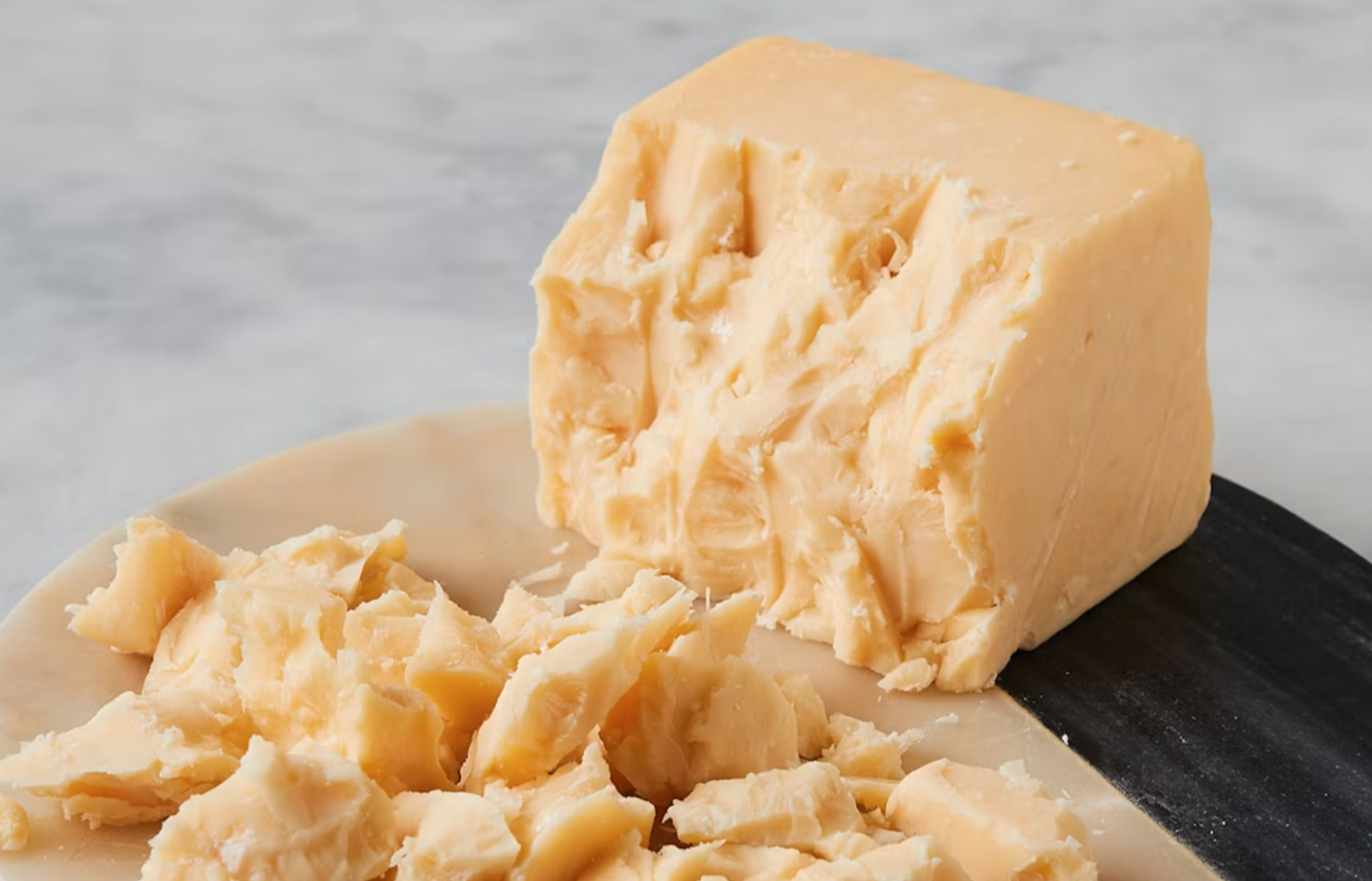
High Plains Cheddar care of Murray's
Beyond the elementary assumption that cheese crystals may be composed of salt or sugar, and that they are actually responsible for flavor in well-aged cheeses, other misconceptions can also haunt cheese crystals: mainly, that they represent something flawed about the cheese.
“Over the course of cheese history, there have been different points in time where crystals have been seen as a defect,” says Montez. While we now mostly know better, “calcium lactate is definitely still seen as a defect in the commodity Cheddar world, but something like Murray's High Plains Cheddar is always going to have that beautiful, kind of crunchy crust of calcium on the outside,” he says, “and I think that people who appreciate artisanal cheeses learn to love it.”
Among consumers, calcium lactate is also frequently likened to mold, since it appears as little bright patches on the surface of the cheese. And even lesser-known, amino acid leucine crystals can even throw practiced cheesemongers off. “It's one that you find in goudas more often, and it's not as bright as tyrosine,” says Montez. “It almost looks like a little tiny spot that's maybe a little discolored, and so I've known even some mongers ask whether there’s something wrong with the cheese when they first encounter it.”
While not necessarily indicative of a flaw, crystals are also not necessarily a mark of high quality, nor an expression of terroir, nor only limited to artisanal or handcrafted cheeses. On one hand, formation of crystals is more or less inevitable in some cheeses above a certain age, no matter who made them or how they are cared for during the aging process, especially when they have been inoculated with a specific starter culture. According to research by the Center for Dairy Research, tyrosine crystals are most typically found in Italian, Dutch, and Swiss hard cheeses that employ Lactobacillus helveticus, and there’s little that can be done to prevent their development above a certain number of months. Outside of those cheese categories, though, the formation of tyrosine crystals may still be considered a defect.
One final misconception chestnut: While eating good cheese may make you feel good for other reasons, tyrosine is also not a mood enhancer unto itself, though it is the biological building block for dopamine.
Cheeses Known for Their Crunch and How to Spot Them
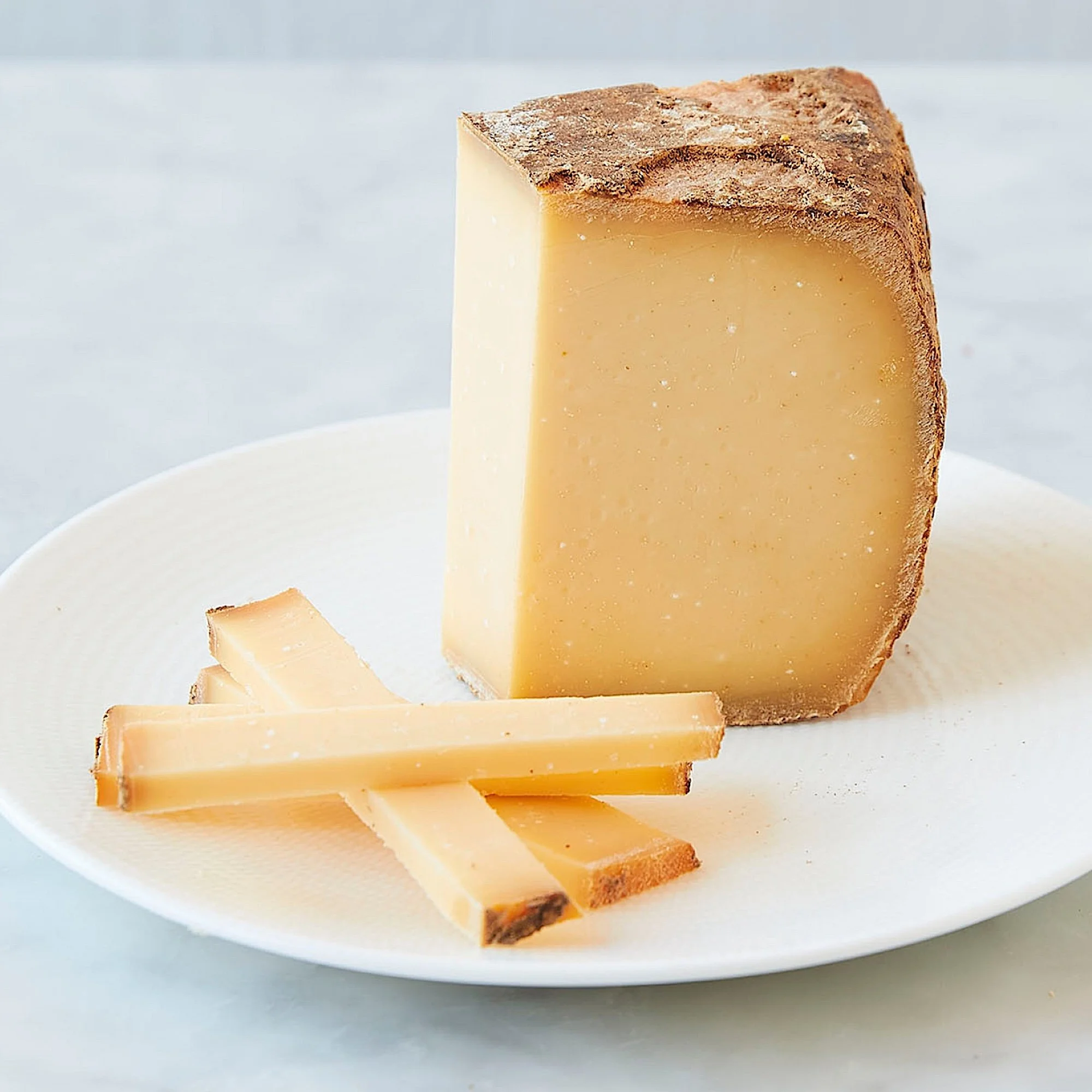
3 year Comte, photo credit Murray's
If you love cheese bedazzled with crystals, ask your local monger for specific suggestions that they have on hand, but the easiest place to seek out cheeses with natural crystal formation are in the categories above: Dutch, Italian, or Swiss hard cheeses.
Those that have a long minimum aging requirement, as with Parmigiano-Reggiano or Sbrinz are all but guaranteed to have tiny tyrosine nuggets. Cheeses that express or imply their age statement, as with 3-Year Comté, Piave Vecchio, or Roomano Extra Aged are also ripe for crystal formation.