
Farmstead Cheese Making in Laos

Susie Martin conducting a public tour of Laos Dairy Farm photo credit Ketki Gad
I could hear pigs squealing as I entered the dairy premises. In another pen were adorable bunnies. A little farther away, water buffalo were being washed and fed, seemingly oblivious that their milk was about to become mozzarella and ricotta cheese.
This dairy farm looked nothing like what I had imagined.
Buffalo originated in Southeast Asia and were brought to the Mediterranean in the Middle Ages, where their milk has been used to make cheese; milking buffalo is not a common practice in Asia. But near Luang Prabang in Laos, the Laos Buffalo Dairy is turning a beast of burden, into a culinary phenomenon. Today their buffalo milk is being used to make an ever-growing selection of cheeses and dairy products.
Buffalo Milk Cheese in Laos
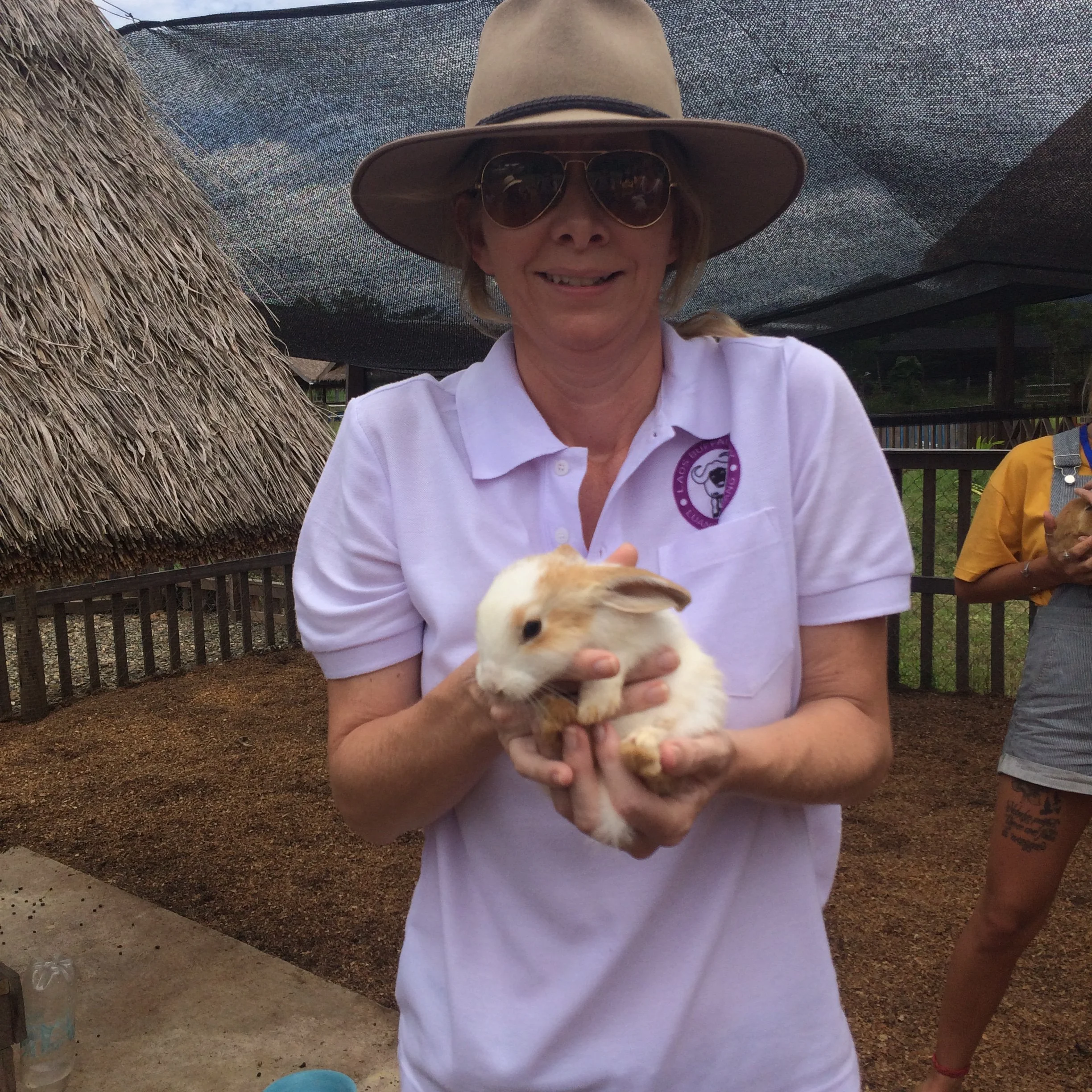
Susie Martin holding a rabbit at the farm, photo credit Ketki Gad
The idea began with a craving for cheese. When founders Susie Martin and Rachel O’Shea moved to Luang Prabang, they found themselves in a country with plenty of buffalo but almost no dairy industry. The idea of making cheese from buffalo milk began with a simple question: why not use what was already around them?
Susie Martin, CEO, Director of Sales & Marketing at Laos Buffalo Dairy, shares that, “The abundance of buffalo was striking, particularly when set against the almost complete absence of locally produced dairy products. What began as curiosity gradually turned into an experiment in whether buffalo milk could support a dairy business.”
The first experiment involved renting a few buffalo from a farmer nearby. Nobody in the area had milked a buffalo before, so the process involved plenty of trial and error.
Back home, Rachel O'Shea, Head Chef, General Manager Production recalls getting a cheese starter kit from back home to begin experimenting with the milk and started by making small batches in her kitchen, learning how buffalo milk behaved and gradually working out what could be turned into cheese. With no formal cheesemaking background, she initially tried working with recipes designed for cow's milk.
The early experiments were far from straightforward. Eventually, after seeking help, O'Shea got a buffalo mozzarella recipe from an Australian cheesemaker.
“That was the starting point,” she explains. However, the team still had to understand how their own buffalo milk behaved and how to adapt the process to their conditions. What started as a home experiment gradually became Laos Buffalo Dairy.
An Innovative Dairy Model
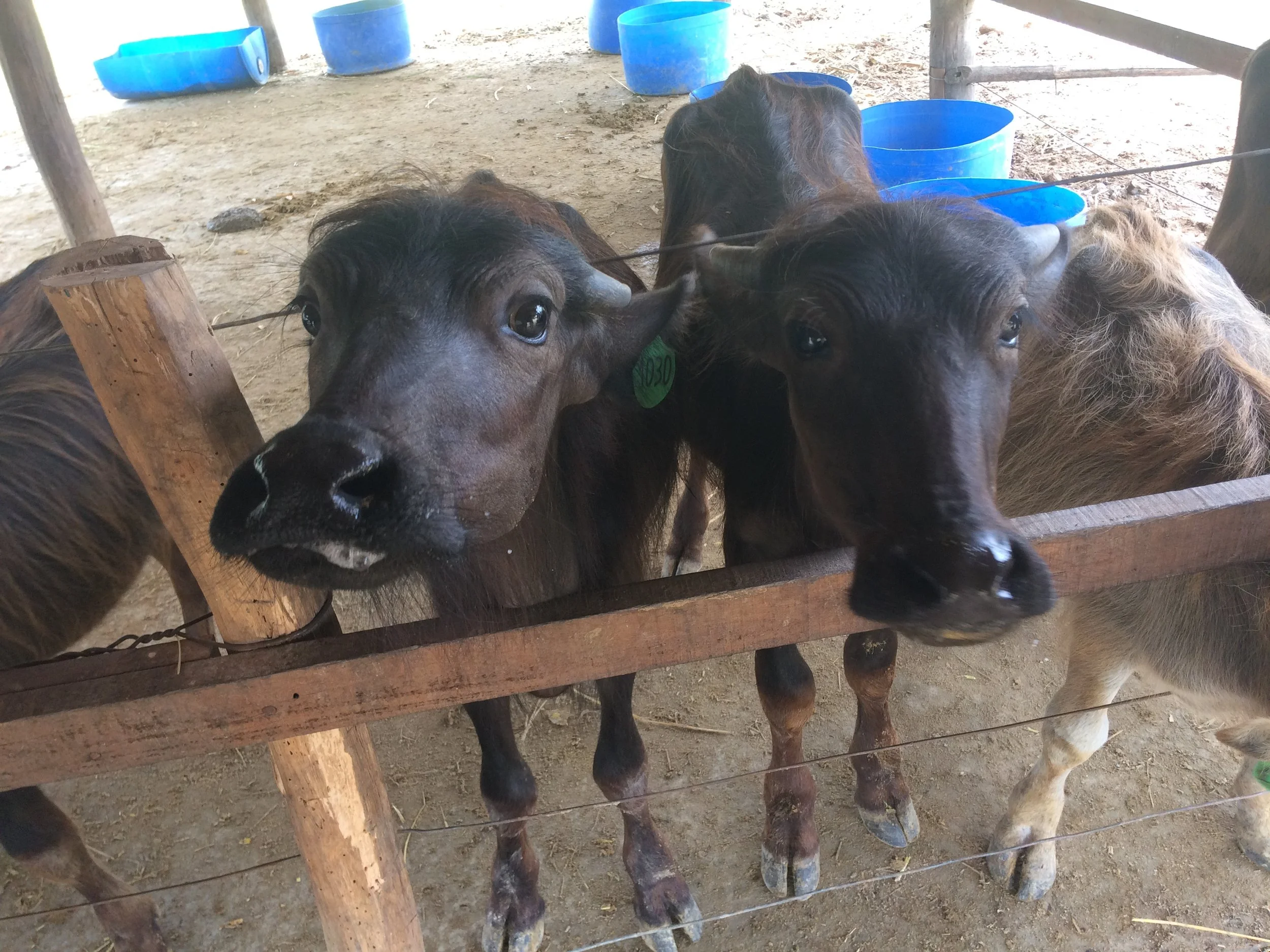
Buffalo on the Laos Dairy Farm photo credit Ketki Gad
Today, the dairy maintains just over 100 buffalo, although the number fluctuates with the tourist season. The ownership always belongs to the local farmers wherein they are rented and brought to the farm at 8 months pregnant (the gestation period being 10 months), for a period of milking and care before returning to their owners. The lactation period varies and can last up to 6-8 months per calf.
For farmers, this arrangement is profitable and turns an existing asset into an additional source of income, without giving away ownership. At the end of the milking period, they receive a lump sum payment averaging around US$110 from the dairy.
During their time at the dairy, the buffaloes receive nutritious feed, medications, vaccinations and veterinary care. Some buffaloes are also put through breeding programs that use artificial insemination to improve the genetics, with the aim of producing healthier animals and improving milk production.
Milking practices have also evolved over time. The buffalo were originally milked twice a day and produced 2-3 liters of milk as compared to their regular counterparts that produce 10 liters per day. They are now milked once daily, leaving more milk for the calf and allowing more time for bonding.
Learning the Craft
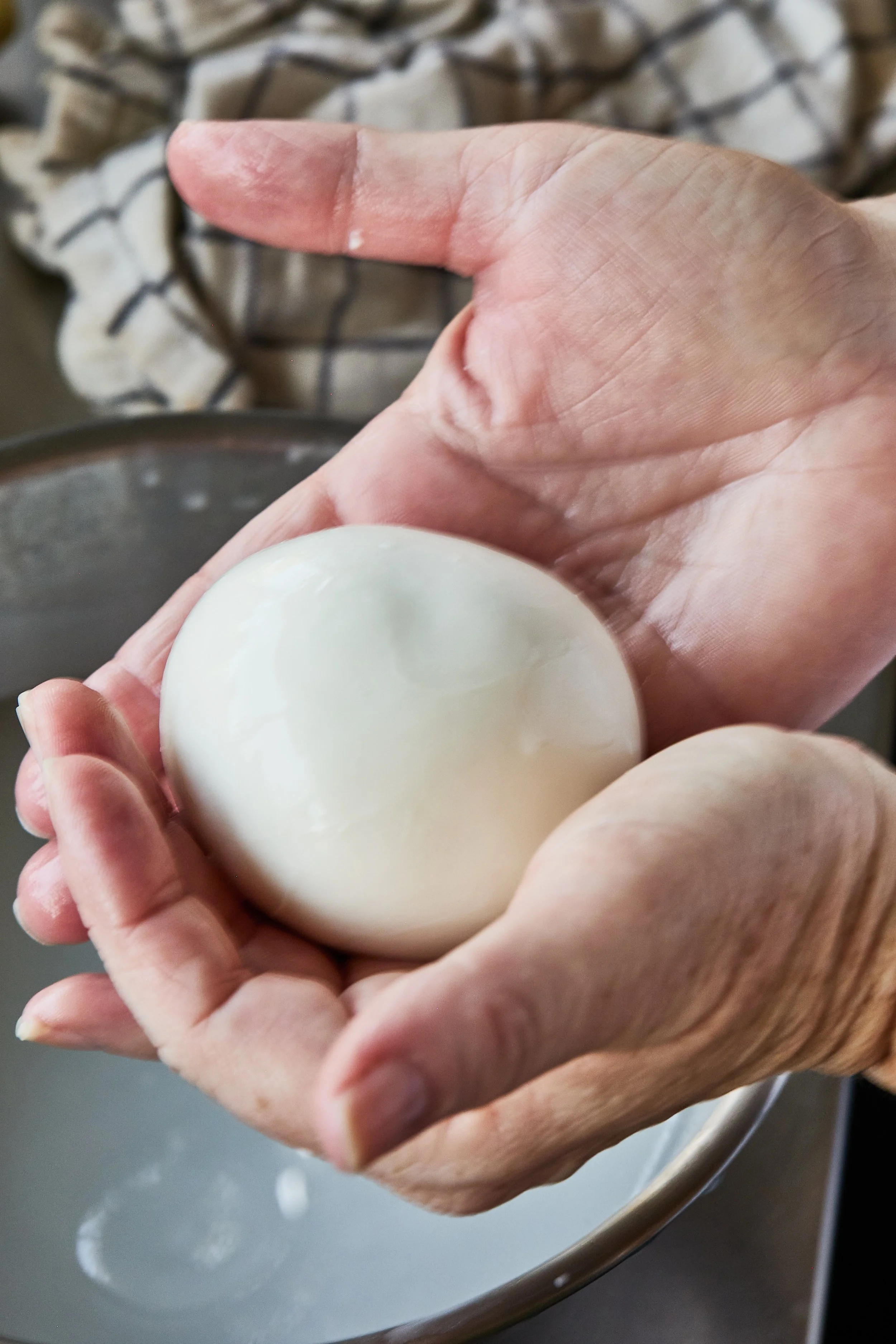
Making mozzarella in Laos photo credit Laos Dairy Farm
Moving from kitchen experiments to commercial cheesemaking took time. At first, O'Shea experimented with cow's-milk recipes, but buffalo milk had other characteristics: “I learned how to do it by experimenting in small batches and analyzing how the curd changes.” She adds, “An Australian cheesemaker provided us with a recipe for buffalo mozzarella. It was more like the beginning of the journey than the solution of all problems.”
The manufacture of mozzarella includes milk coagulation with subsequent formation of curds, cutting and whey separation, heating and stretching. Only the stretching process creates this cheese's distinctive texture. After that, the cheese can be formed into balls, or it can be made in burrata with a creamy filling inside.
It may seem simple from a recipe standpoint. But everything has to be done at once with precise temperature, acidity, timing and moisture content.
Much of the knowledge about cheese-making for Rachel was gained through the observation of milk behavior.
Making Cheese in the Tropics
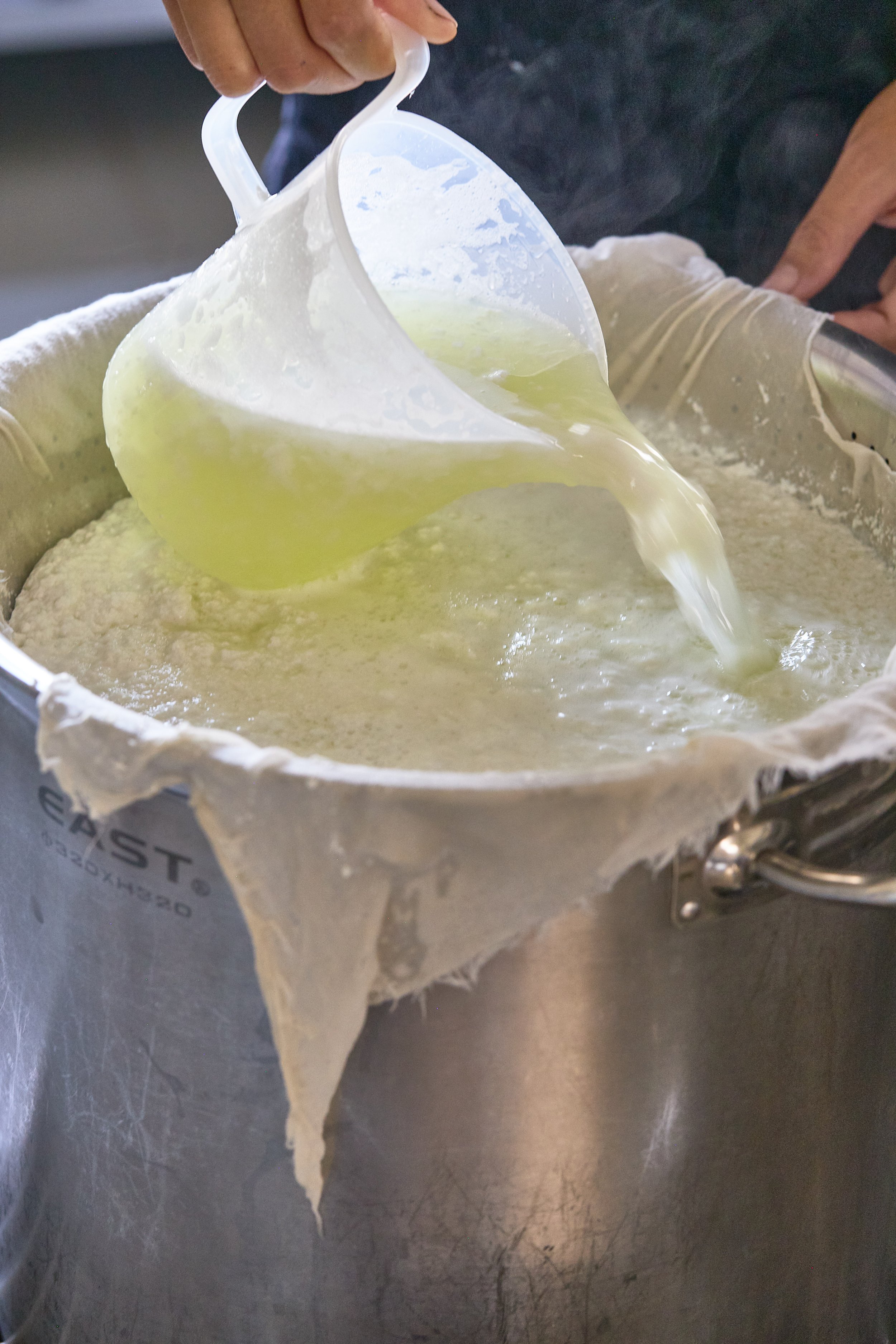
Making ricotta photo credit Laos Dairy Farm
Hot, humid weather affects cheese behavior differently than in cooler regions. Curds drain quickly, and cheesemakers need to carefully control timing during production. It is especially difficult with blue cheese. Too much time in warm weather may lead to melting of cheese and make its refrigeration necessary.
Speaking of blue cheese, O'Shea notes that “heat and humidity here are very unforgiving and cheese which would happily be left out in a cooler climate needs to be treated quite differently.” Furthermore, she explains that “there is not one recipe that can be simply applied without changes. The team has learned how to cope with milk in the particular climate conditions.”
A Growing Cheese Line
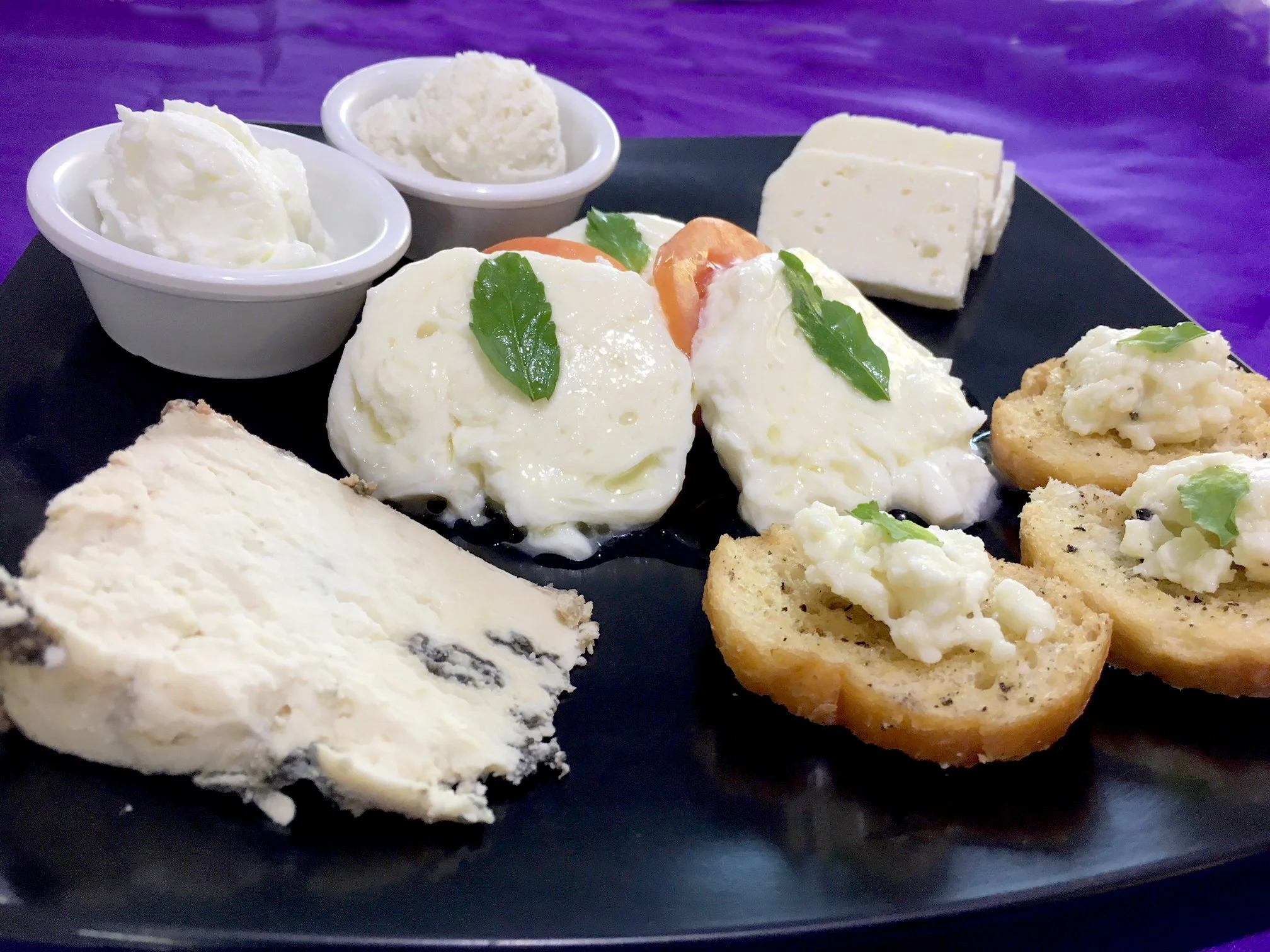
Farmstead cheeses photo credit Laos Dairy Farm
Years of experimentation have led to products such as mozzarella, ricotta, feta and marinated feta, blue cheese, and burrata. The buffalo milk is also used for ice cream and cheesecakes.
The next stage is likely to bring more European-style cheeses. Camembert, brie, parmesan and cheddar are planned once additional walk-in refrigerator and freezer space is available.
The product range reflects both the possibilities of buffalo milk and the limitations of producing cheese in a tropical country with developing cold-chain infrastructure.
Cheese meets Tourism
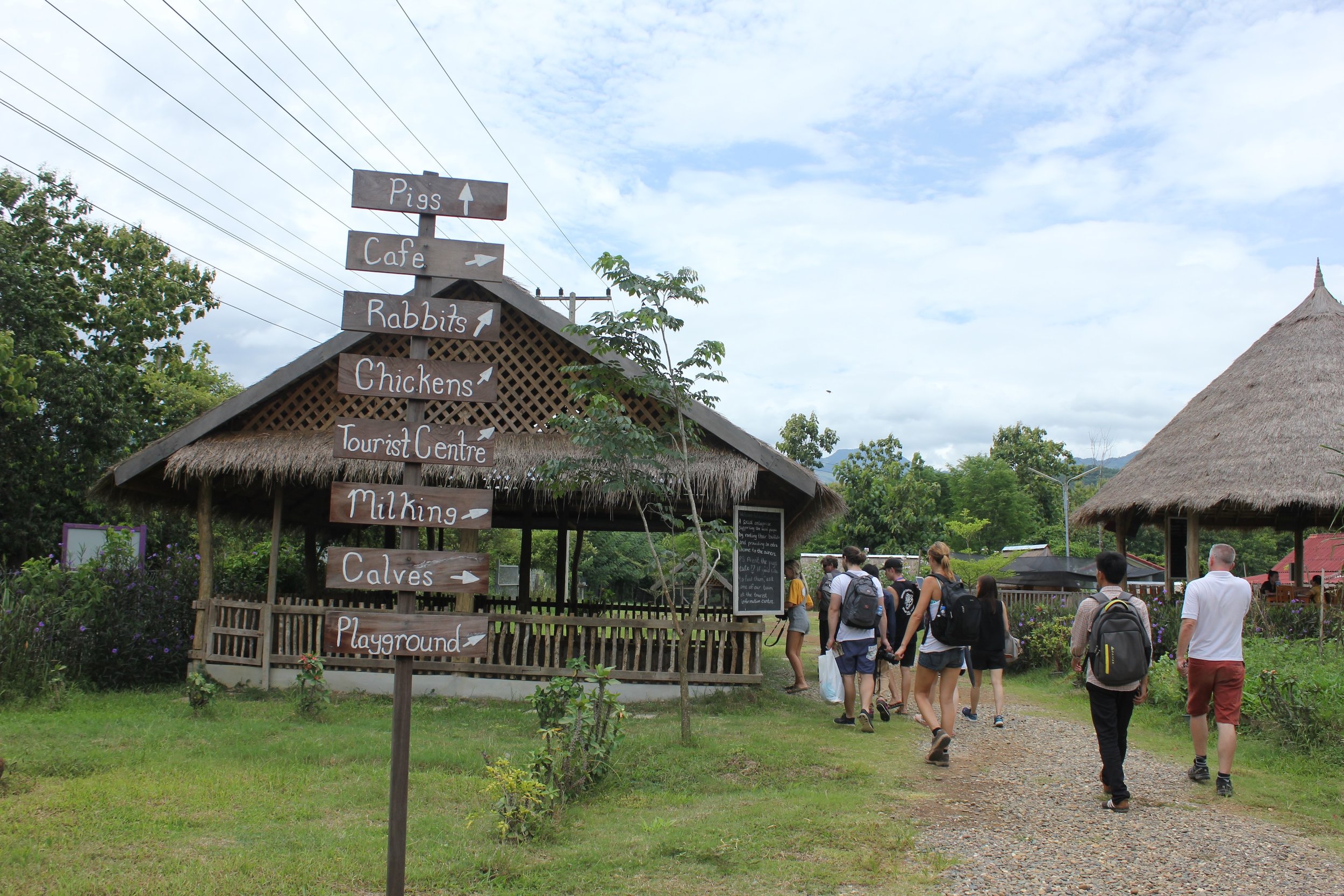
The dairy farm photo credit Ketki Gad
The dairy has become both a farm and a cheese shop, where one can see the buffalo, understand how they are being taken care of and the type of farming done there. The dairy feels less like a conventional cheese factory and more like a family-run farm.
Tourism also provides an important market for the products. The dairy supplies restaurants and hotels, while visitors can taste and purchase the cheeses and other products at the farm.
Martin says, “This connection between food, farming and visitors has always been important to the dairy. The idea was never simply to produce cheese, but to allow people to see the animals, understand the farming system and connect the final product with where it came from.”
Keeping It Local
Despite the interest in Lao buffalo cheese, practical limits restrict how far it can travel. Fresh cheese needs a reliable cold chain, and Laos does not yet have the infrastructure required for regular international distribution. As a result, the dairy's supplier base are local hotels and restaurants.
Beyond the Cheese
The dairy is now looking beyond food too. A buffalo-milk based skincare range is planned around the end of 2026, including soap, hand cream, body lotion and lip balm.
For Martin, the expansion is another way of finding value in the buffalo beyond its traditional agricultural role. But the essential point still remains: discovering greater value in the animal serves the countryside’s livelihoods.
What makes Laos Buffalo Dairy special is not just that the company produces European-style cheese in a tropical part of Southeast Asia; it is their sustainable process that supports the animals and the people of the region. Their efforts have not gone unnoticed. Laos Buffalo Dairy has won in the Neighbours and Employees category for their positive social impact on local farming communities at WTM (World Travel Responsible Awards), 2020 and The Natural Resource Management Award at the Lao Responsible Business Awards 2026.
Read more:
The Surprising Story of Artisan Cheesemaking in VIetnam