
The 5 Best Blue Cheeses for Beginners
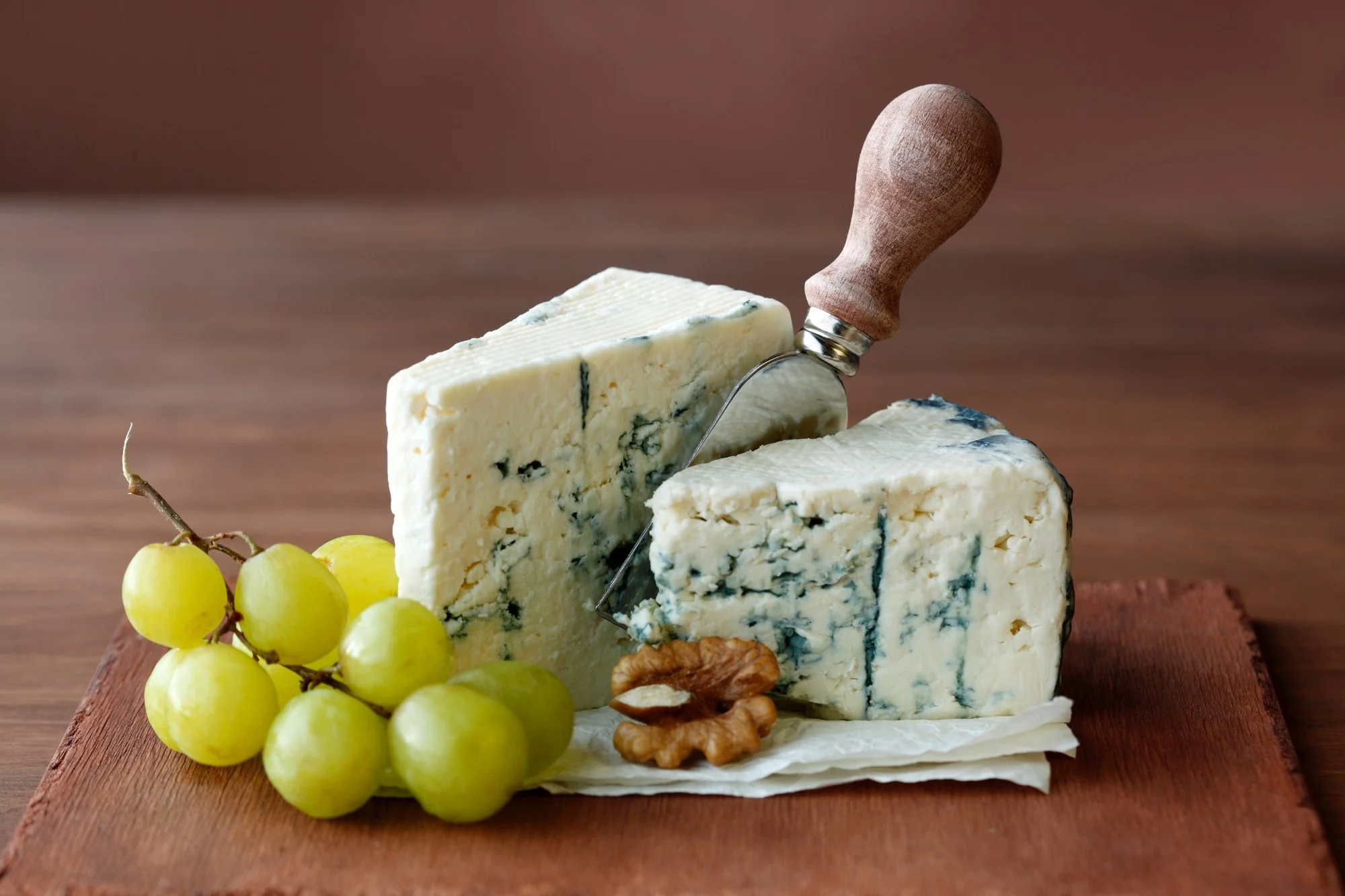
Blue cheese, with its bright, peppery bite and dark blue veins, can be intimidating. It doesn’t help that, in the U.S., blue cheese is typically paired with vinegar in the form of salad dressing or hot sauce, rather than served as a dessert as it is in Europe. This makes blue cheese even more pungent and intense, which can make some people cower. We’re taught that visible mold on food is something to run very far away from — but the mold found in blue cheeses is different. The cheese is inoculated with Penicillium roqueforti before the curd stage, and those veins you see actually come from the introduction of oxygen. The affineur, or cheese ager, will push a thin metal needle into the cheese (similar to a knitting needle) to introduce oxygen. In those passageways, blue cheese will grow.
But the intensity of a blue cheese relies on a few factors: the milk type used, the way it’s aged, the amount of veining, its salt content, and the introduction of other bacteria like Brevibacterium linens which can introduce some real funk to the party. Blue cheeses can be spicy and metallic, or buttery and mild, with a rich sweetness that reminds some of cocoa or peanut butter. If you’re typically anti-blue, don’t write the entire category off yet. There are several gateway blues ideal for beginners. They’re milder, less peppery, and exceptionally creamy, making them easy to love.
We spoke with cheese educators, cheesemongers and experts to round up five approachable blue cheeses that are perfect for beginners.
Fromager d’Affinois Bleu
Country of origin: France
Milk type: Pasturized cow’s milk
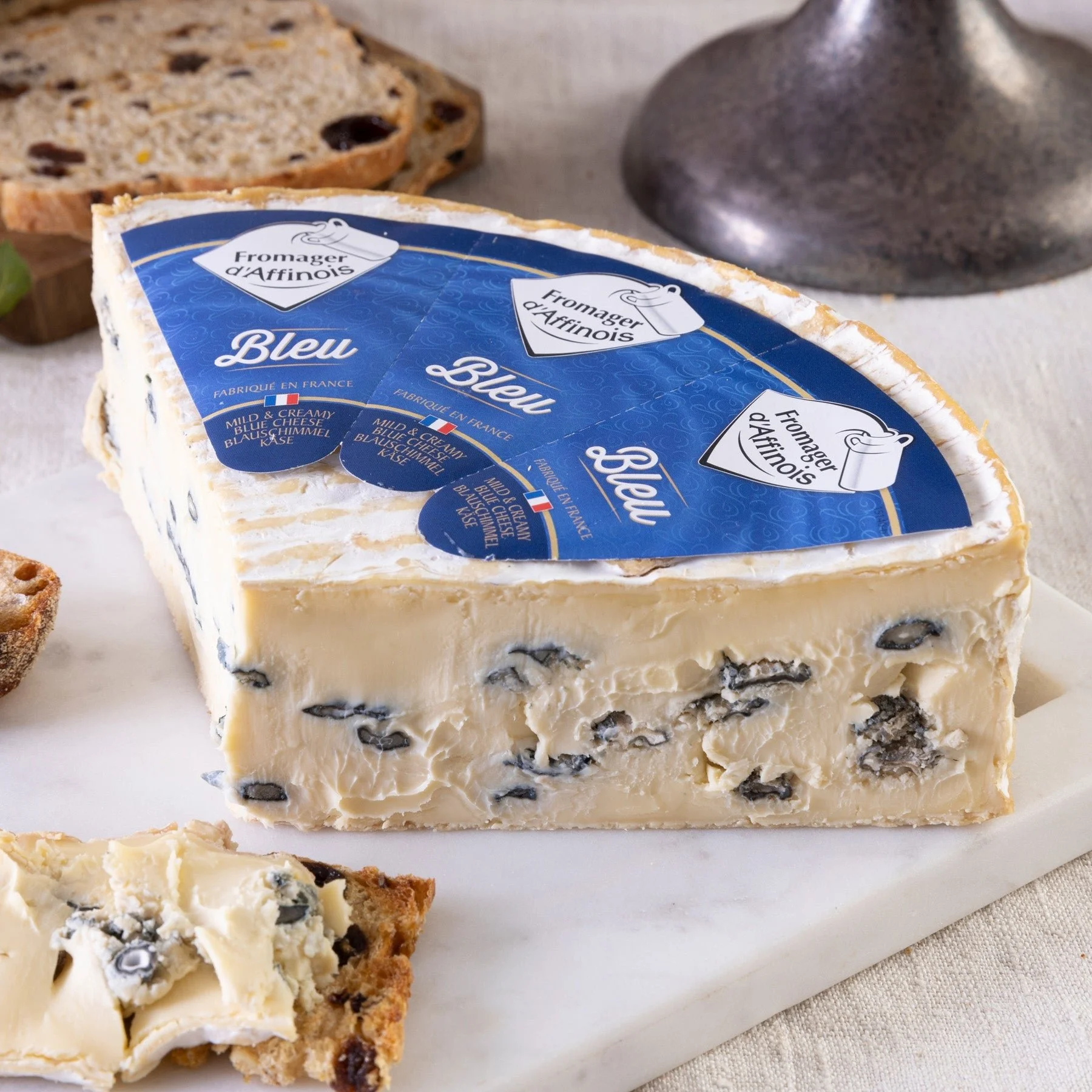
Fromager d'Affinois Bleu
The producer Fromager d’Affinois is known for its intensely creamy cheeses with a rich mouthfeel. That’s because they filter lactose and additional moisture out of the milk before the cheesemaking process even starts — a process called ultrafiltration. It concentrates the protein and fat in the cheese, giving it a texture that’s at once richly creamy and dense. This bleu takes their most famous triple creme bloomy rind cheese and adds Penicilium roqueforti to the milk after the ultrafiltration process. The result is a triple creme style blue with a rich paste that keeps the mold from feeling too sharp on the palate.
Cambozola Black Label
Country of origin: Germany
Milk type: Pasturized cow’s milk
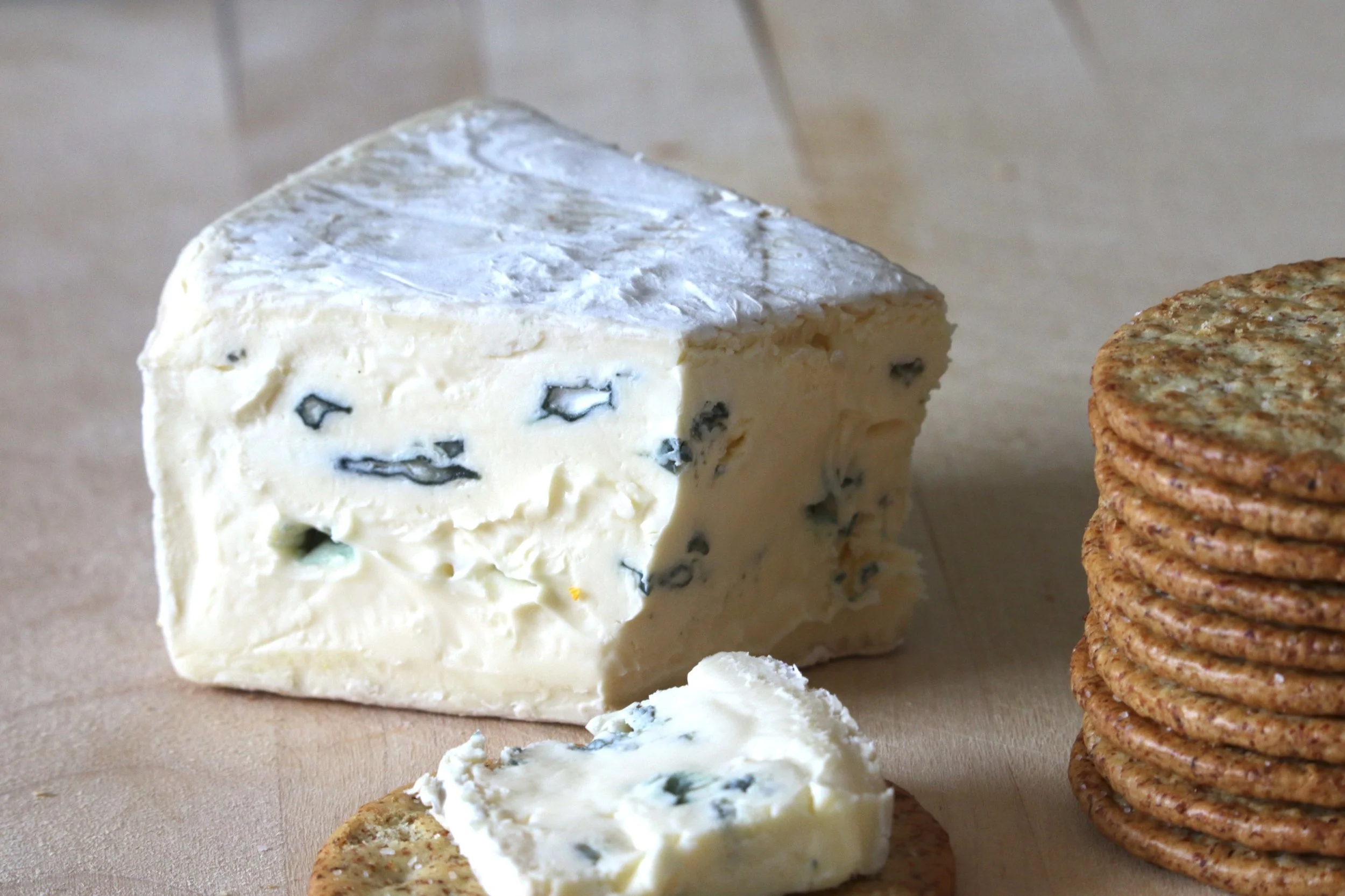
By Jorchr - Own work, CC BY-SA 3.0,
"Cambozola is a portmanteau of two other cheeses—Gorgonzola and Camembert," explains assistant manager of events and education at Murray’s Cheese, Isabelle Brosen. "This fact alone leads you to understand why it might be more approachable for a blue cheese novice."

John Montez and Isabelle Brosen
While standard blue cheeses are only inoculated with penicillin roqueforti, Cambozola is treated with penicillium camemberti, a mold that’s responsible for growing the white, fluffy rinds on brie-style, bloomy rind cheeses. "This gives the rind a milder, earthy, and mushroomy aroma," Brosen notes. "On top of that, this cheese is also triple cream, giving it a luxurious and milky texture. This extra fudginess also causes the paste to be less aerated, meaning that the blue veining is less pronounced—again making this a mild cheese perfect for a beginner!"
Rogue Creamery Smokey Blue
Country of origin: Oregon, USA
Milk type: Pasturized cow’s milk
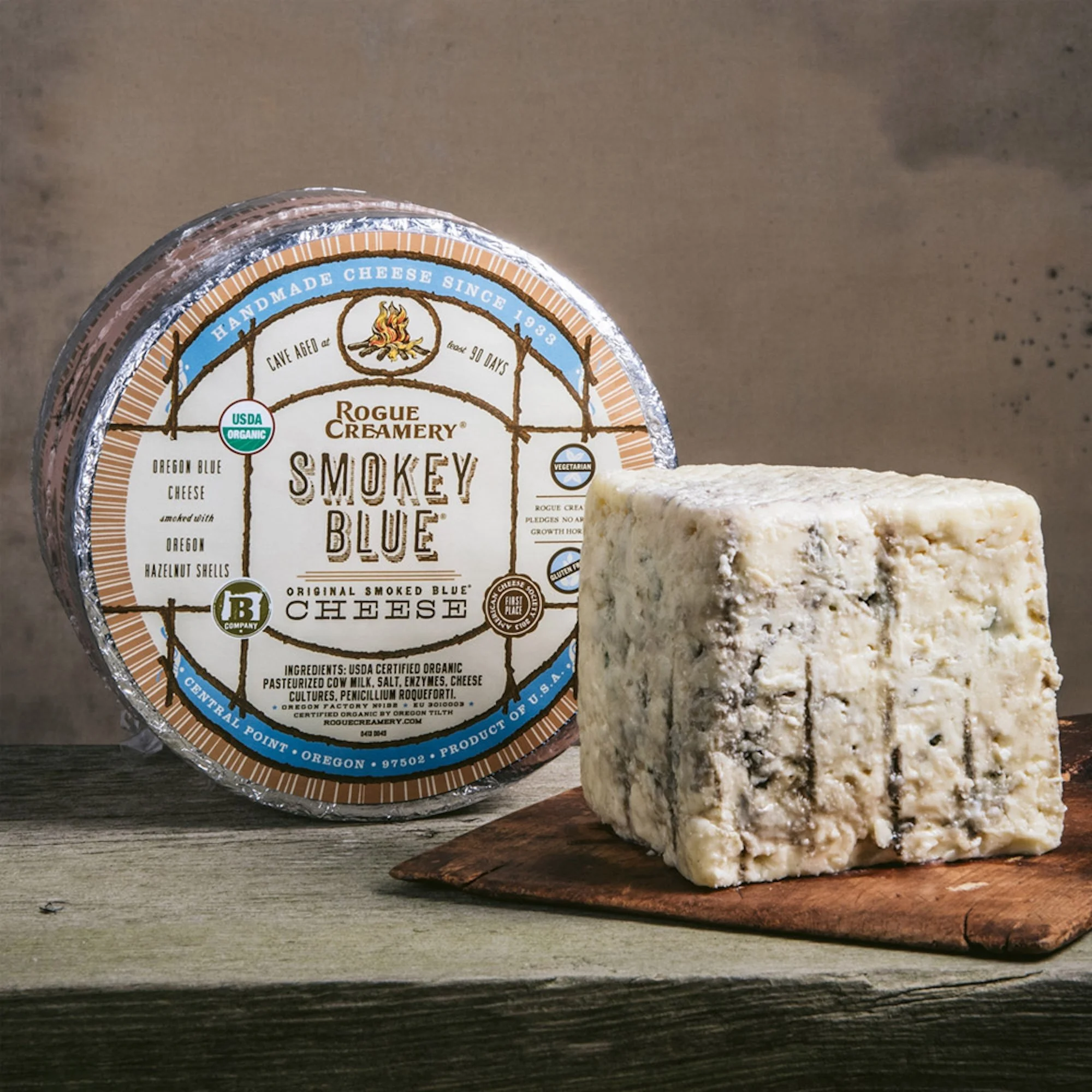
Rogue Creamery Smokey Blue
In 2015, Rogue Creamery became world-renowned for being the first American creamery to win “World’s Best Cheese” for their Rogue River Blue. While we adore that cheese, it’s seasonal, so not available year-round, and it commands a hefty price we’re not sure a beginner would want to pay. This blue, which is cold-smoked over hazelnut shells, has a campfire flavor to it that helps to warm up the metallic notes blue cheese can have. "For me, a perfect beginner blue has to be Rogue Creamery Smokey Blue," says training and curriculum manager at Murray’s Cheese, John Montez. "The addition of smoke plus the amazing velvety texture of the cheese makes it really beginner-friendly. It has a really approachable meatiness that balances the strong blue notes."
Mughetto
Country of origin: Italy
Milk type: Pasturized cow’s milk
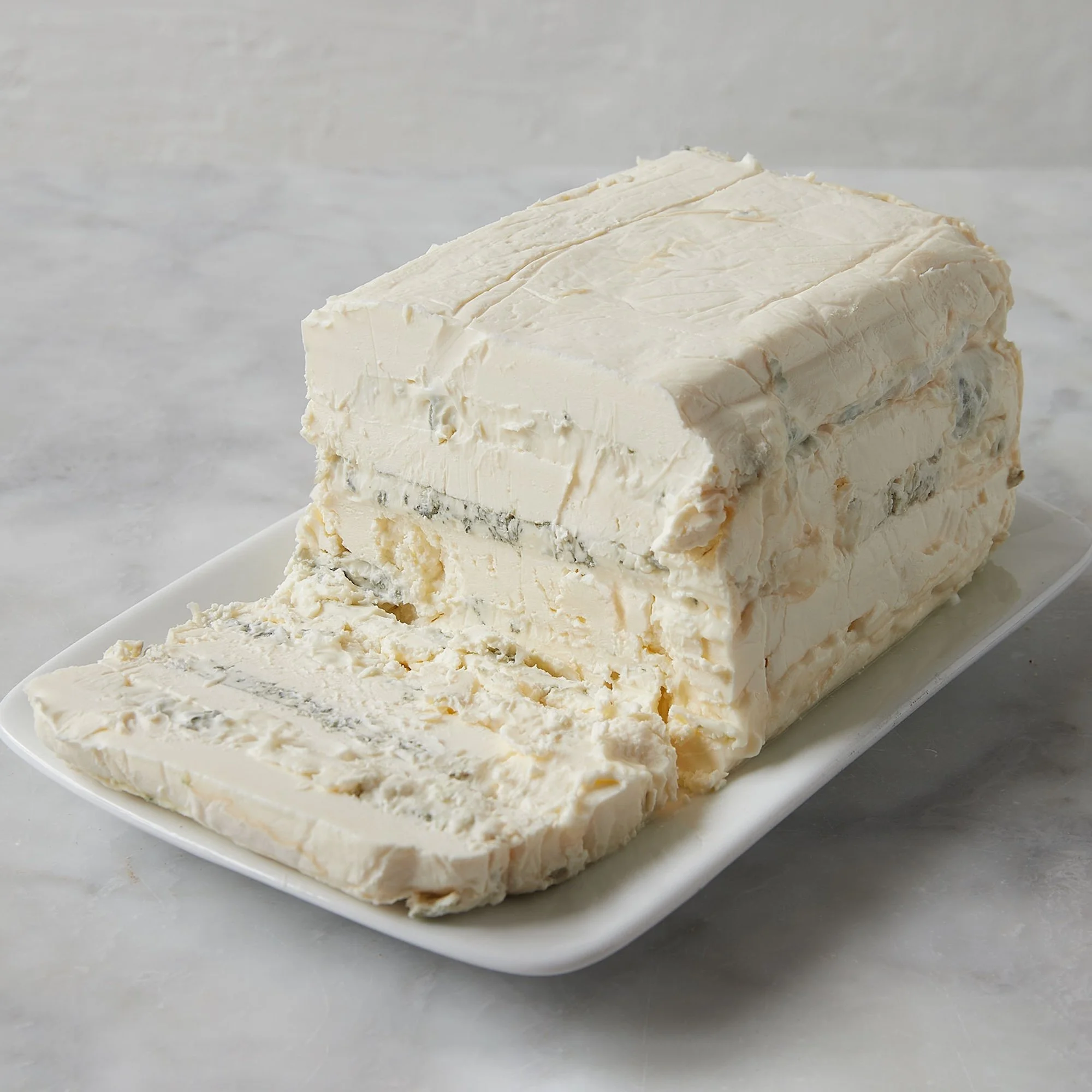
Mughetto photo courtesy of Murray's Cheese
"If one is searching for a cheese more off the beaten path but just as easily palatable for those new to the blue world, try Mughetto," suggests Brosen. Mughetto is akin to a layer cake, with alternate layers of mascarpone (a high-fat Italian spreadable cheese) as well as gorgonzola cremificato, a creamy, spoonable blue from Italy. "The latter is a sweeter, more pudding-like style of gorgonzola, and mascarpone on its own is a mild, lightly sour lactic-set spread," Brosen explains. "The layering of the mascarpone with this classic sweet blue really tempers down the blue flavor, making it a super easy gateway into this world of delicious cheeses!"
Colston Bassett Stilton
Country of origin: Nottinghamshire, UK
Milk type: Pasturized cow’s milk
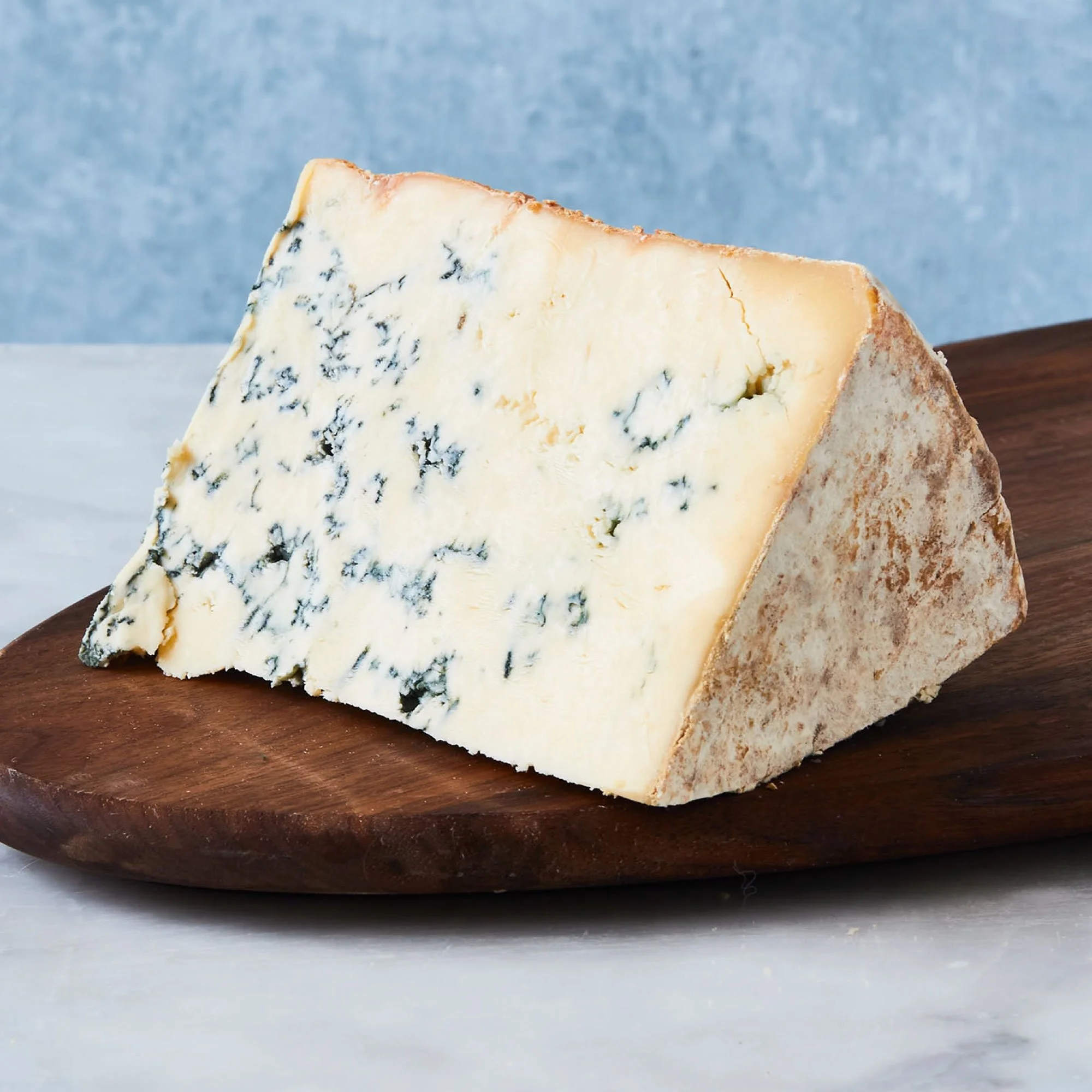
Colston Bassett photo courtesy of Murray's Cheese
Don’t let the word “stilton” scare you. While stiltons can be quite intense, Colston Bassett is made from a hand-ladled curd which makes the cheese exceptionally buttery. "Colston Bassett Stilton is one of my all-time favorites," says cheese expert and author of “I’ll Have What Cheese Having,” Anne-Marie Pietersma. "I think people who are just getting into blue cheese try to go for the softer, spoonable blues with less veining... but whenever I put CBS in front of a blue skeptic, they are especially surprised by how toasty and delicious the rind can be. That fudgy yet crumbly texture and the way the cheese showcases the character and quality of the milk is unreal."

Anne-Marie Pietersma
Pietersma has a secret weapon for converting skeptics: Golden Oreos (the vanilla version of the chocolate sandwich cookie). "It has turned many blue-haters into blue-lovers," she says. "Leading with the novelty of pairing it with something considered so 'low-brow' like Golden Oreos... intrigues people, and at best, softens them a little... As a general pairing rule with blues, pairing it with something sweet usually makes it more approachable and fun."