
Why You Shouldn't Skip High Fat Cheese
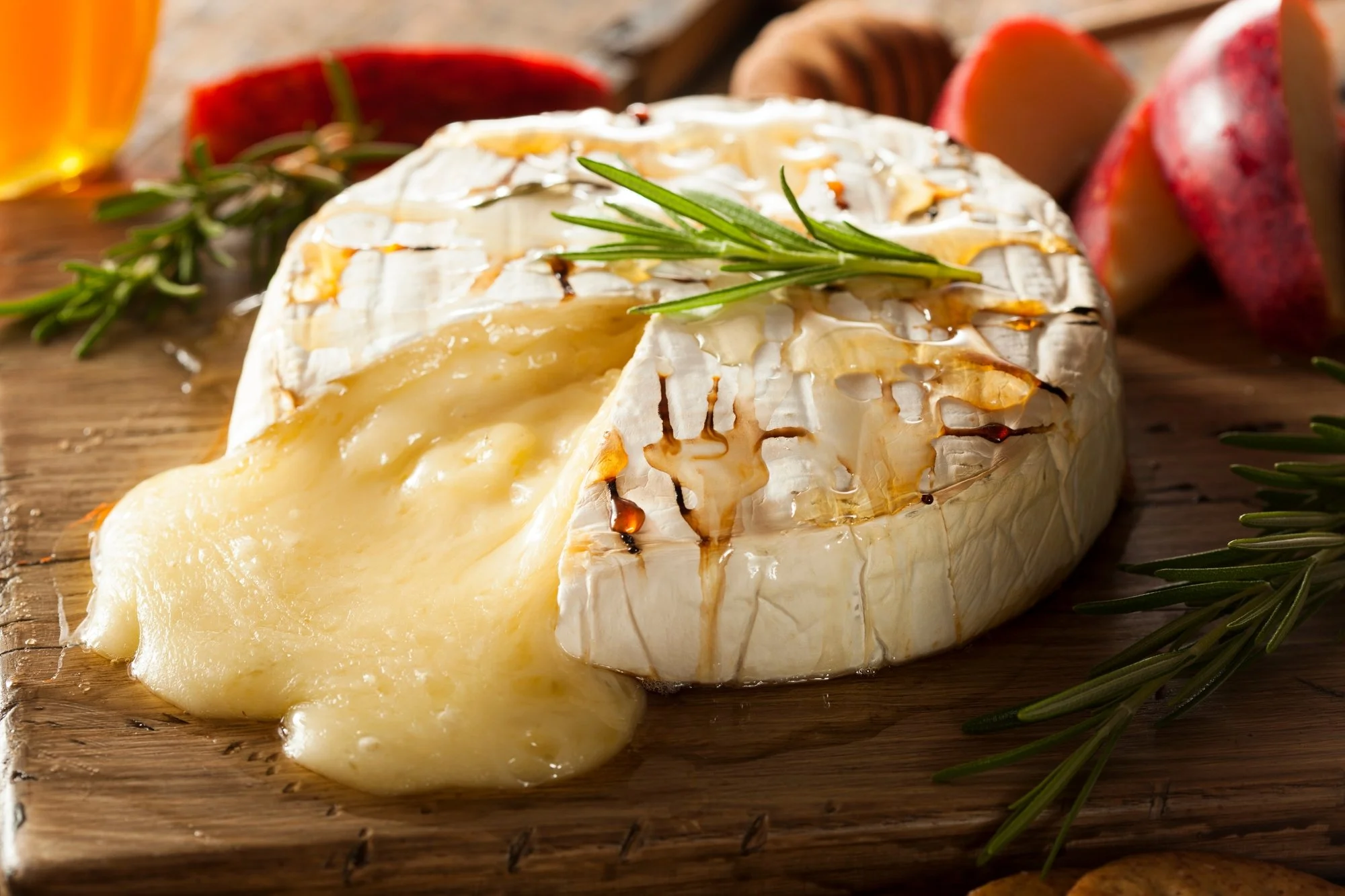
A look at the best high-fat cheeses on the market.
Cheese contains many nutrients – fat, protein, salt, minerals – but fat is a vehicle for flavor. It’s the butterfat in cheese that coats the tongue, that makes a triple cream so rich, that makes a stracciatella so decadent. It’s fat that brings everything there is to love about cheese together.
Naturally, there’s an entire category of cheeses that are known as high-fat cheeses. Sarah Koszyk, MA, RDN, NBC-HWC, a registered dietitian and author of the book 365 Snacks for Every Day of the Year, explains what actually defines a high-fat cheese and what a suggested serving should be (suggested being the operative word here).
What Is the Definition of a High-Fat Cheese?

Registered dietitian Sarah Koszyk. Photo credit Sarah Koszyk
According to Koszyk, high-fat cheeses generally tend to have about 25 to 35 grams of fat per 100-gram serving
“If a cheese has more than about 70 percent of the total calories coming from fat, it will be considered a high-fat cheese,” she says.
To get scientific, this all hinges on a measurement known as the Fat in Dry Matter index (FDM). Because cheese contains water, measuring fat by total weight can be misleading. For this reason, FDM measures the percentage of fat in the solids left behind if all the water were removed. A double cream cheese has at least 60 percent FDM, while a triple cream has at least 75 percent FDM.
While this may sound high, it’s actually less fattening than you think. Taking water into account (since soft cheeses are mostly water), it’s more likely that these cheeses have a total fat content closer to 30 or 40 percent, which is comparable to the fat content of a harder cheese like a cheddar.
How Are High-Fat Cheeses Made?
Most cheeses are made from just milk, so to have a fat percentage of 60 percent or higher, cream has to be added to the milk at the start of the cheesemaking process.
This process began in Normandy, France, in the mid-1800s as a way to make a luxury cheese that could be marketed to people of higher economic class for more money.
Once rennet is added to the milk and cream mixture, the curds are transferred to molds with little whey removed. This leaves the cheese with a lot of moisture, which helps support the fat structure. The resulting cheese is thick, spreadable, and can only ripen for several weeks compared to months or years.
Are High-Fat Cheeses Healthy?
Well, it depends on what’s considered healthy. For those on a keto diet, which focuses on eating high-fat foods and cutting out carbohydrates to induce ketosis, high-fat cheeses make a lot of sense.
“Cheese is primarily protein and fat with minimal to no carbs (depending on the type of cheese), so most cheeses can be used for a keto diet regardless of how much fat is in the cheese,” explains Koszyk.
But even for those not on a specific high-fat diet, Koszyk believes that high-fat cheeses can still have a place on the plate.
“The important focus is to consider the quantity of the cheese and remember that a little goes a long way,” she says. “A little high-fat cheese here and there in a moderate portion can be enjoyable and protein-rich.”
Koszyk also points out that because high-fat cheeses are so flavor-dense and satisfying, people naturally eat less of them: "When using strong cheeses like parmesan, blue cheese, and Stilton, one tends to use a smaller portion of it, so the quantity is minimal."
She recommends following traditional serving sizes when eating high-fat foods. For children ages 2 to 3, that’s a half-ounce per serving. For kids aged 4 to 8, that can be up to 1 ounce per serving, and for older kids and adults, around 1 ounce is appropriate. For reference, a standard serving of cheese — 1 ounce — equals roughly one slice of hard cheese, a 1-inch cube of cheese, one-quarter cup of shredded cheese or one piece of string cheese.
Another possible benefit of high-fat cheese? Lower risk of dementia. A recent study showed that a higher intake of high-fat cheese and high-fat cream was associated with a lower risk of all-cause dementia, whereas low-fat cheese, low-fat cream, and other dairy products showed no significant association. But before you indulge too heavily, study commentary notes that the benefits of high-fat cheese were most evident when it replaced red and processed meat in meals, suggesting that the cheese may not be beneficial in and of itself, just simply less harmful than meat.
At the end of the day, Koszyk says, the most important health consideration should be quantity: “Savor the flavor and balance out the cheese with other foods to make a complete meal or a combination snack.”
From fresh cheeses to soft-ripened cheeses, here are some high-fat cheeses worth trying.
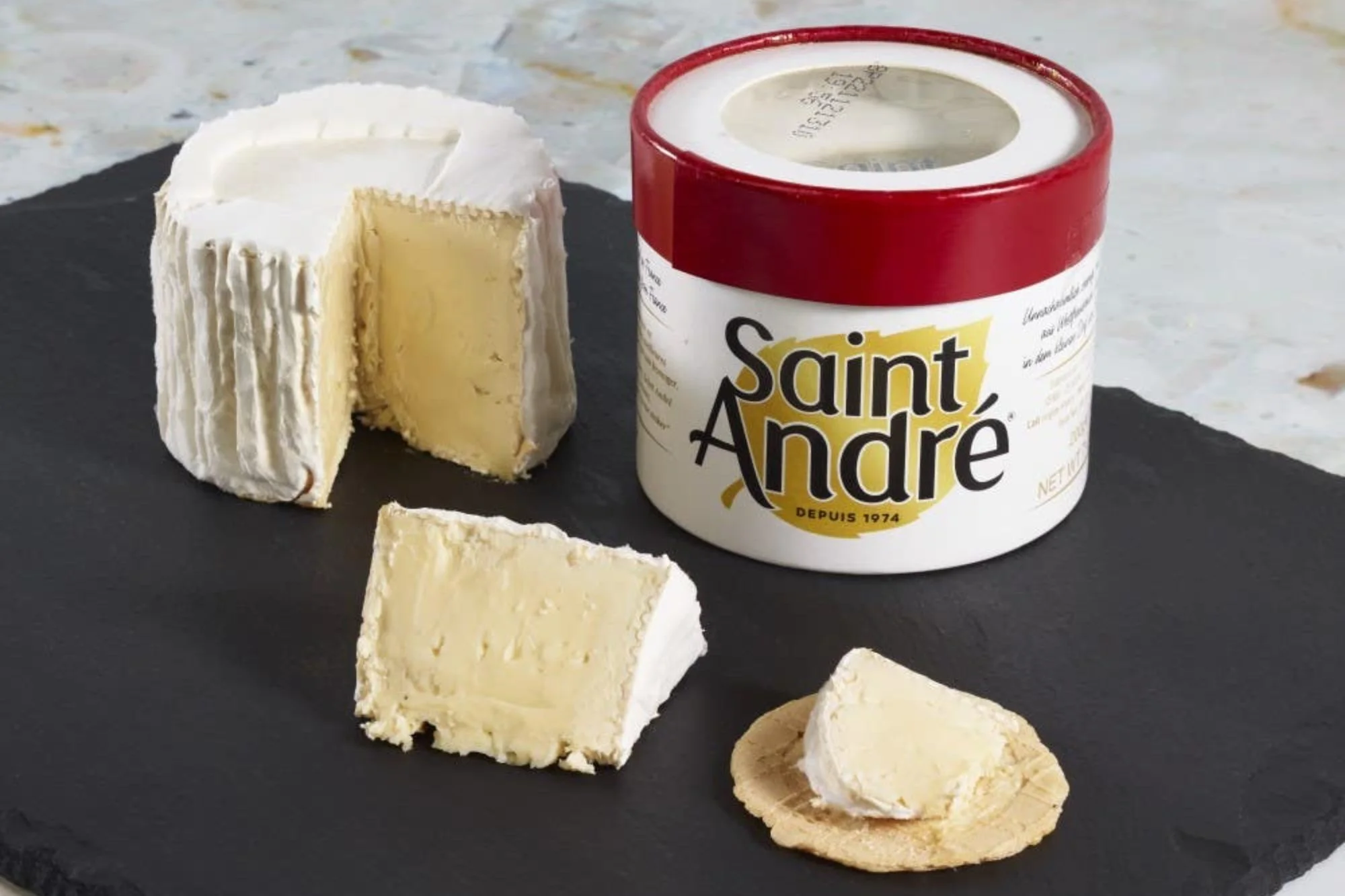
Saint-André. Photo credit Savencia
This triple cream cheese from Coutances, Normandy has 75 percent FDM. It’s a pasteurized cow’s milk bloomy rind cheese, but what makes it stand out from the rest is its density. This cheese is less soft and gooey than other triple cream cheeses and more dense in texture, similar to a stick of butter. It melts like one, too.
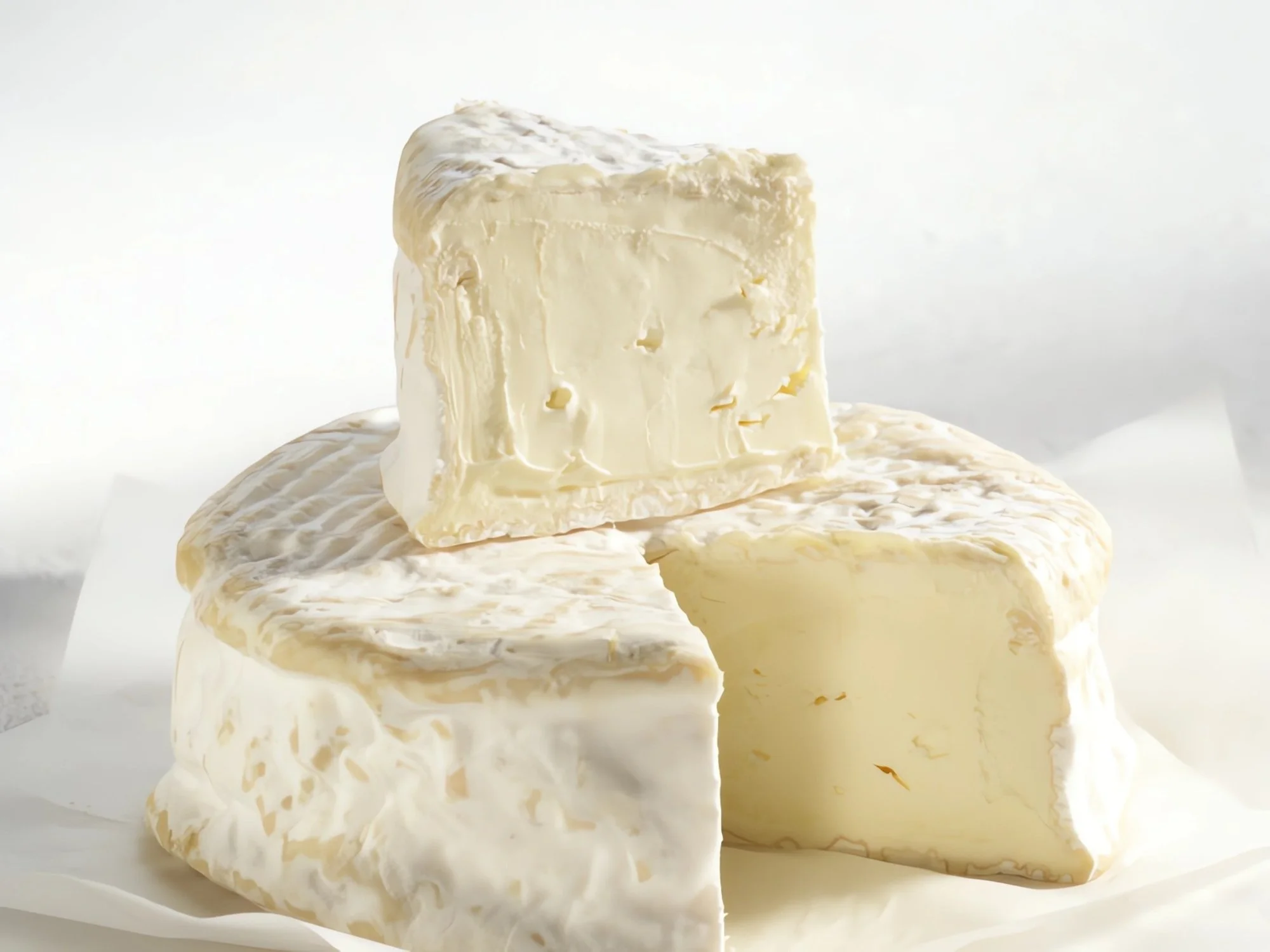
Brillat-Savarin
Brillat-Savarin is a Protected Geographical Indication (PGI) cheese from Normandy, named after Jean Anthelme Brillat-Savarin, the food author, who famously wrote, “Tell me what you eat, and I will tell you who you are.” Airier and lighter than Saint-André, Brillat-Savarin has the texture of Cool Whip within a hard, bloomy rind shell. Made by a few creameries including Lincet, it takes a minimum of 12 hours to coagulate, allowing for further acidification. The cheese is made from whole milk and cream, and draining is slow and natural, lasting at least 20 hours. It is then dried and unmolded for a minimum of two days. Maturing takes five days for small formats and eight days for large formats.
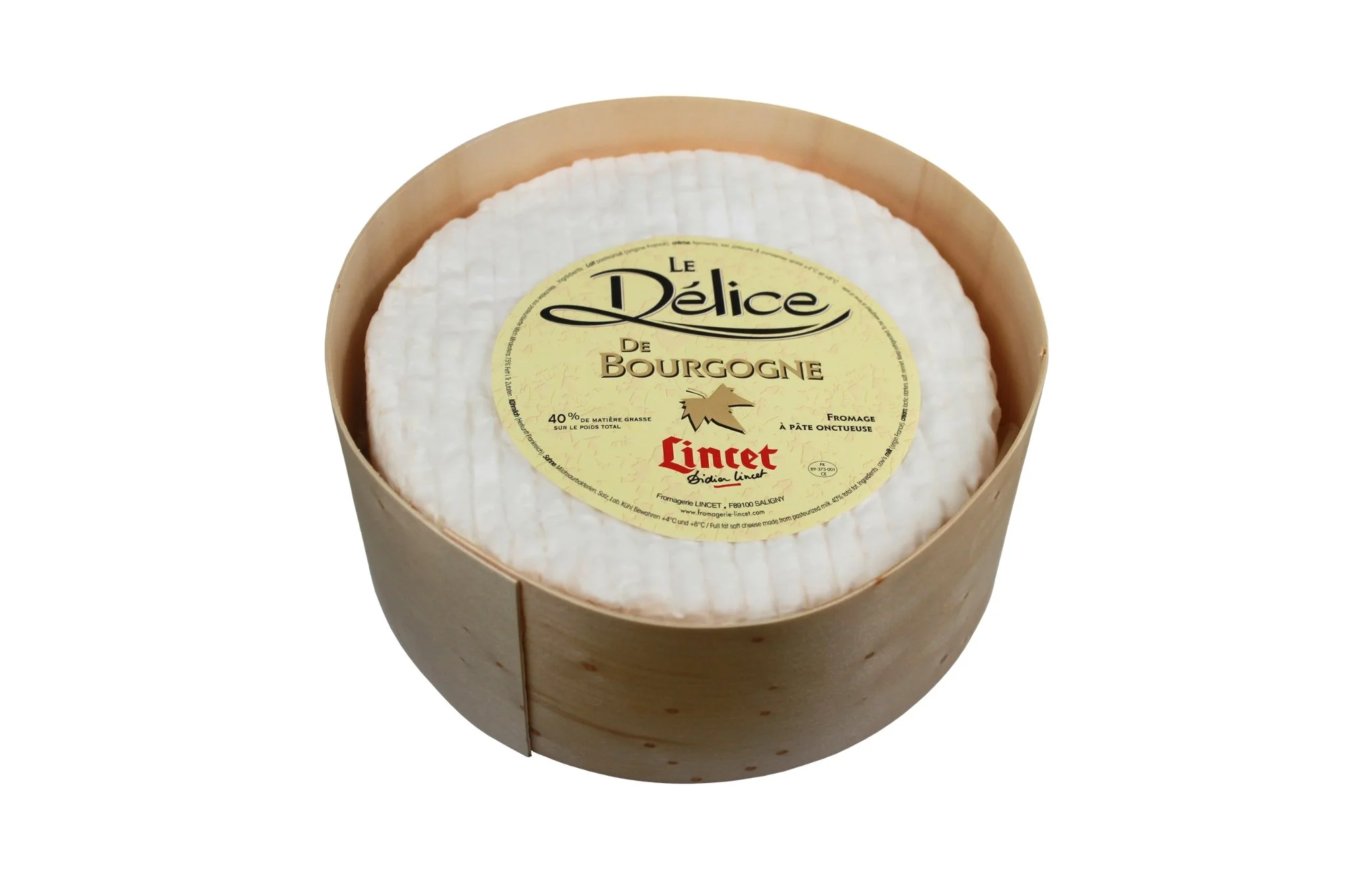
Délice de Bourgogne. Photo credit Lincet
Another French triple-cream made only by Lincet, this mushroomy bloomy rind from Burgundy is very similar to Brillat-Savarin but produced in a larger format. (In contrast to an entire wheel of Brillat, Délice is usually sold by the cutting.) It’s also newer to the market: While some French triple creams have been around since the 1800s, Délice was first created back in 1975, making it the youngest recipe of the bunch.
Mascarpone
Mascarpone
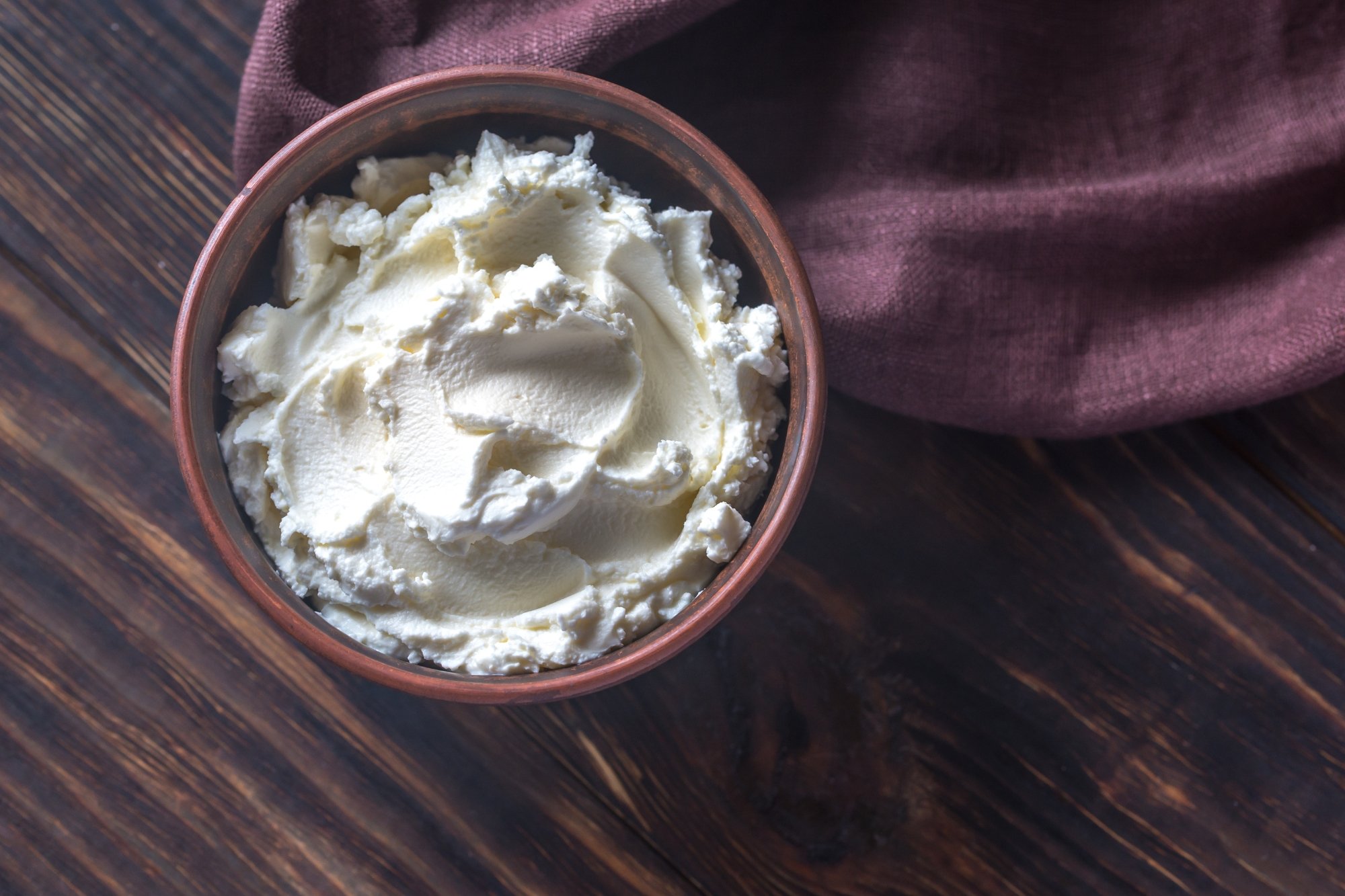
Mascarpone is a spreadable, fresh cheese from Lombardy, Italy. It’s essentially coagulated cream with around 70 to 75 percent fat, and it's mild and wet milky, without any funk. It’s made by gently heating heavy cream and adding a coagulant to form curds. To create its thick, spreadable texture, it’s finished by draining the cream in a cheesecloth for a few hours. It’s typically used in tiramisu or to finish creamy pastas and dips, but it can also be eaten on its own like any other cheese.
Burrata and Stracciatella
Burrata
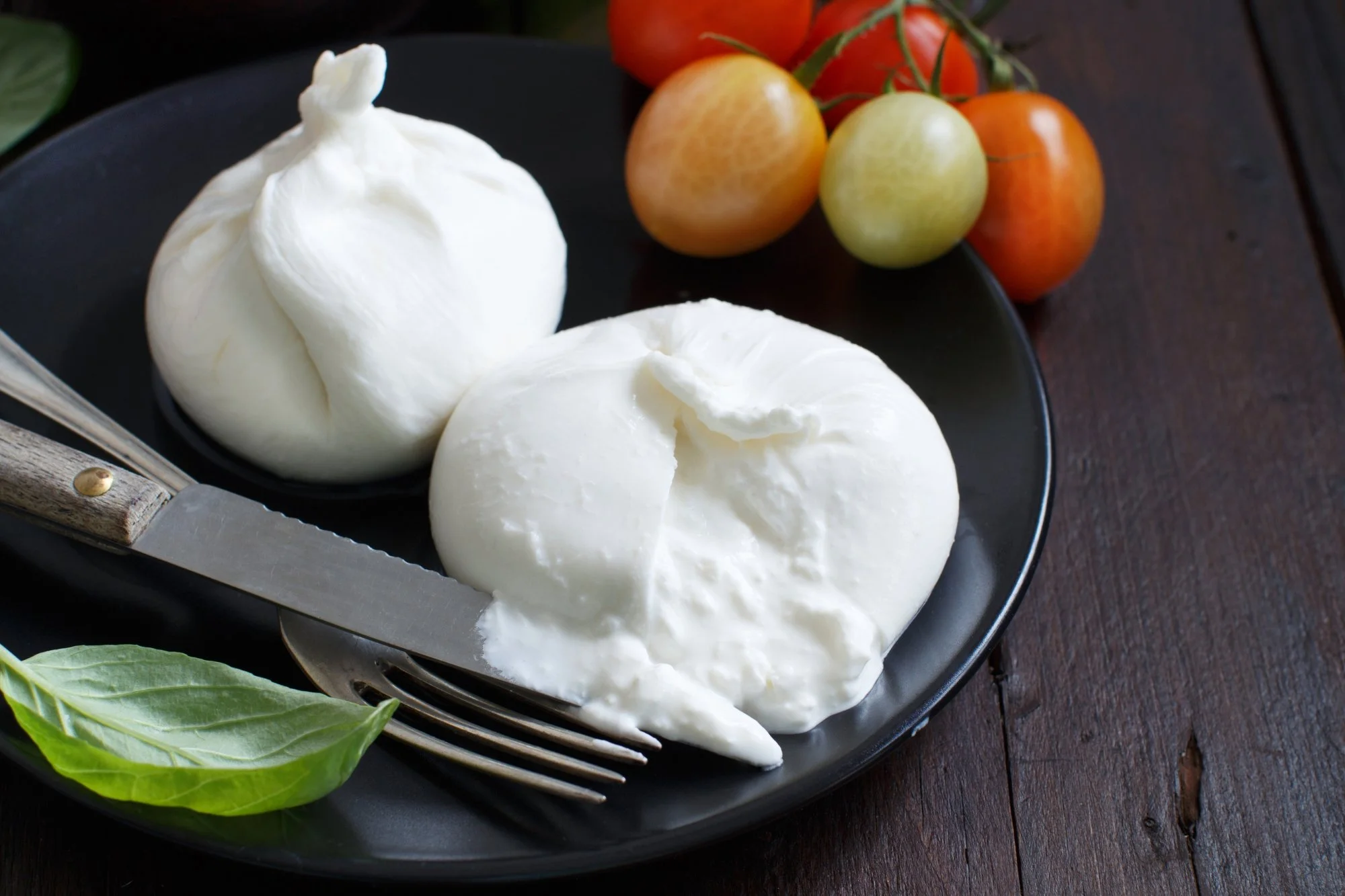
Originally from Puglia, burrata and stracciatella are both fresh cheeses that begin with mozzarella curds. Stracciatella is a mixture of small pieces of mozzarella and heavy cream, and burrata is mozzarella that’s been stuffed with stracciatella – think of it as a soup dumpling made entirely of mozzarella and heavy cream. The addition of heavy cream in both is what raises the butterfat level to high-fat cheese status.
Burrata was invented when mozzarella makers realized they could mix heavy cream with the small pieces of cheese leftover from stretching and rolling mozzarella into balls. It’s quite brilliant, really: They invented an entirely new cheese by reusing the leftovers of another.
Nowadays, with the popularity of burrata, it’s also relatively easy to buy stracciatella on its own, no mozzarella casing needed.