
Caring for Each Kind of Cheese Board

Every cheese board begins with a board. Those boards come in a wide variety of materials and serve the important task of showcasing a delicious spread, but they need some TLC. For both looks and hygiene, you want to keep your board in tip-top shape, free from scratches and chips. Here is how you should care for your cheese board depending on its material, whether slate, wood, plastic, or bamboo.
Slate Cheese Boards

Slate cheese board
To start, Avinash Sharma, account executive at BOSKA Food Tools, advises installing cork or rubber feet underneath your slate board. “Slate is super smooth, so it can slide off countertops and tables easily. Otherwise, always handle the boards with two hands, if possible.”
Don’t knock a board against anything as it can chip, especially on the sides and corners.
With cleaning, Sharma recommends using warm water and mild soap. Dry with a soft cloth or towel. “They should be laid flat to avoid tipping over and cracking and breaking. Try to avoid storing them on high shelves/cabinets to minimize the risk of them falling."
Once fully clean and dry, season them by rubbing in a few drops of a food safe mineral oil with a soft, lint free cloth (or paper towels, in a pinch). “The slate should be allowed to absorb the oil a day or two before using, but overnight can work in a pinch,” says Sharma. “A few seasonings a year is all it takes for a slate board to last forever.”
Replace boards when cracks and/or chips form or scratches are too deep. Sharp edges can lead to both an increased chance of a cut or dropping the board and causing an uneven and unstable board.
Wooden Cheese Boards
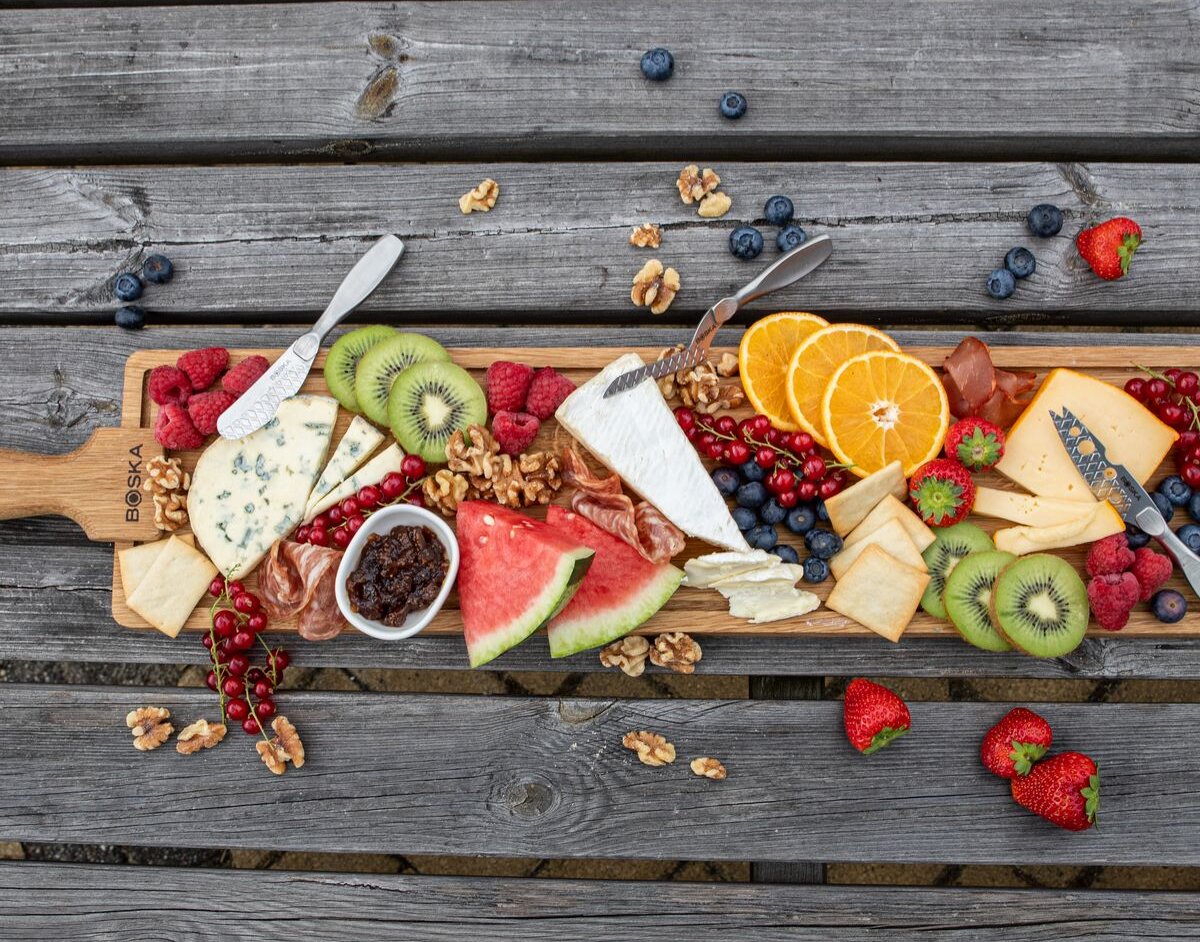
Wooden cheese board
Bill Strecker, marketing director at JK Adams, advises cleaning a wooden board by hand washing both sides with warm, dish soapy water. Rinse and dry with a hand towel right away. Avoid putting it in or near a dishwasher, as resulting steam can cause damage. “If you leave your cutting board propped up against your backsplash, to dry on a towel, I would say to leave it horizontal so the glue seams on the boards are not facing up and down. Because that moisture can just soak right up, and that's where you get splitting and cracking.”
Sharma recommends always dry wooden boards standing up in a well-vented area. Allow for airflow if storing multiples together.
Initially, season your board by saturating the wood with a food safe mineral oil and let it sit overnight to absorb well. “Apply a huge coat that seems like way too much and rub it in with a clean towel (use the same towel from now on),” explained Sharma. “The wood will be super thirsty so you should do this two to three times, letting it [sit] for ten minutes after each time. Once the board stops absorbing oil, it should be good to go.”
Onward, oil about once a month or every few months, if you’re using the board often. If not, do it two to three times a year.
“Pay attention to whether you have an end-grain versus an edge-grain board,” says Sharma. “The former requires more oiling but is better on your knife’s edge while the latter are more affordable but more susceptible to deep scratches.”
Replace a board if it’s cracked or chips or warped far beyond fixing. If there’s any off smells or mold, especially on porous wood, immediately discard it.
Plastic Cheese Boards
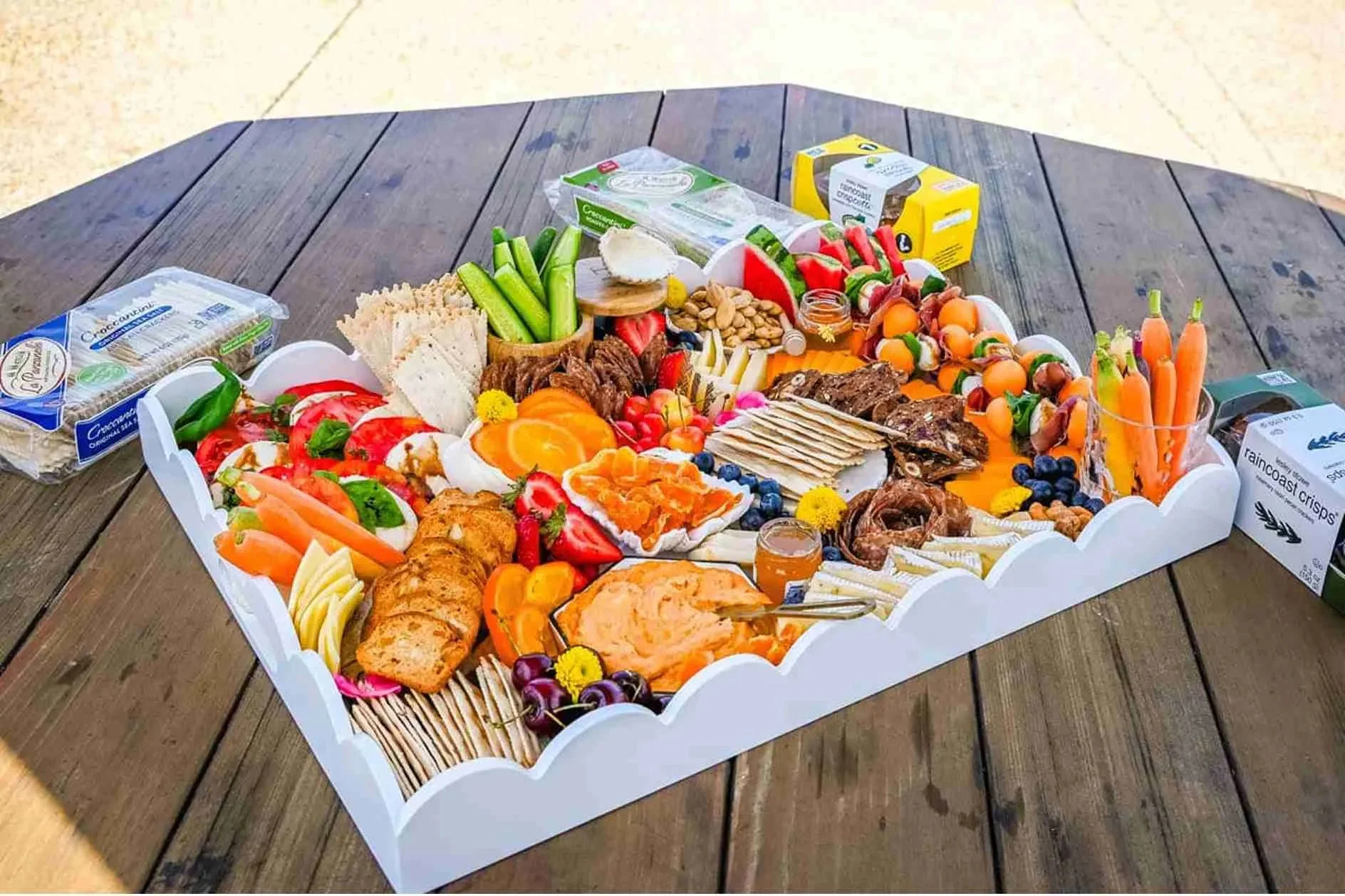
Plastic cheese tray
While it's not advisable to cut on a plastic board, unless it's specifically a cutting board, it can be used for serving cheese. For cleaning, Gevork Kazanchyan, a professor of environmental health at California State University, Northridge, and a risk management specialist at Los Angeles County's Chief Executive Office, advises scrubbing with mild dish soap and hot water, then let it air dry.
As an extra sanitizing step, spray on a three percent store brand hydrogen peroxide solution as a disinfectant. Leave it on for 5 to 10 minutes and then rinse off with water and air dry. Don’t leave the board near a dirty watered sink; this could cause re-contamination.
Try to store the board up on its side or standing up to keep its surfaces clean. “I suggest ‘sandwiching’ the board between a clean towel so that both sides/surfaces of the board remain in contact with a sanitary surface,” explains Kazanchyan.
Handle your board by picking it up by its edges or fringe to avoid possible surface contamination. Toss it if you see bending and discoloring. Scratch marks can draw in contaminants or food debris.
Use parchment or wax paper in placing gooey or semi-soft cheeses on the board. Try ramekins for spreads or preserves. Both tips which make sense regardless of the board's material.
Bamboo Cheese Boards
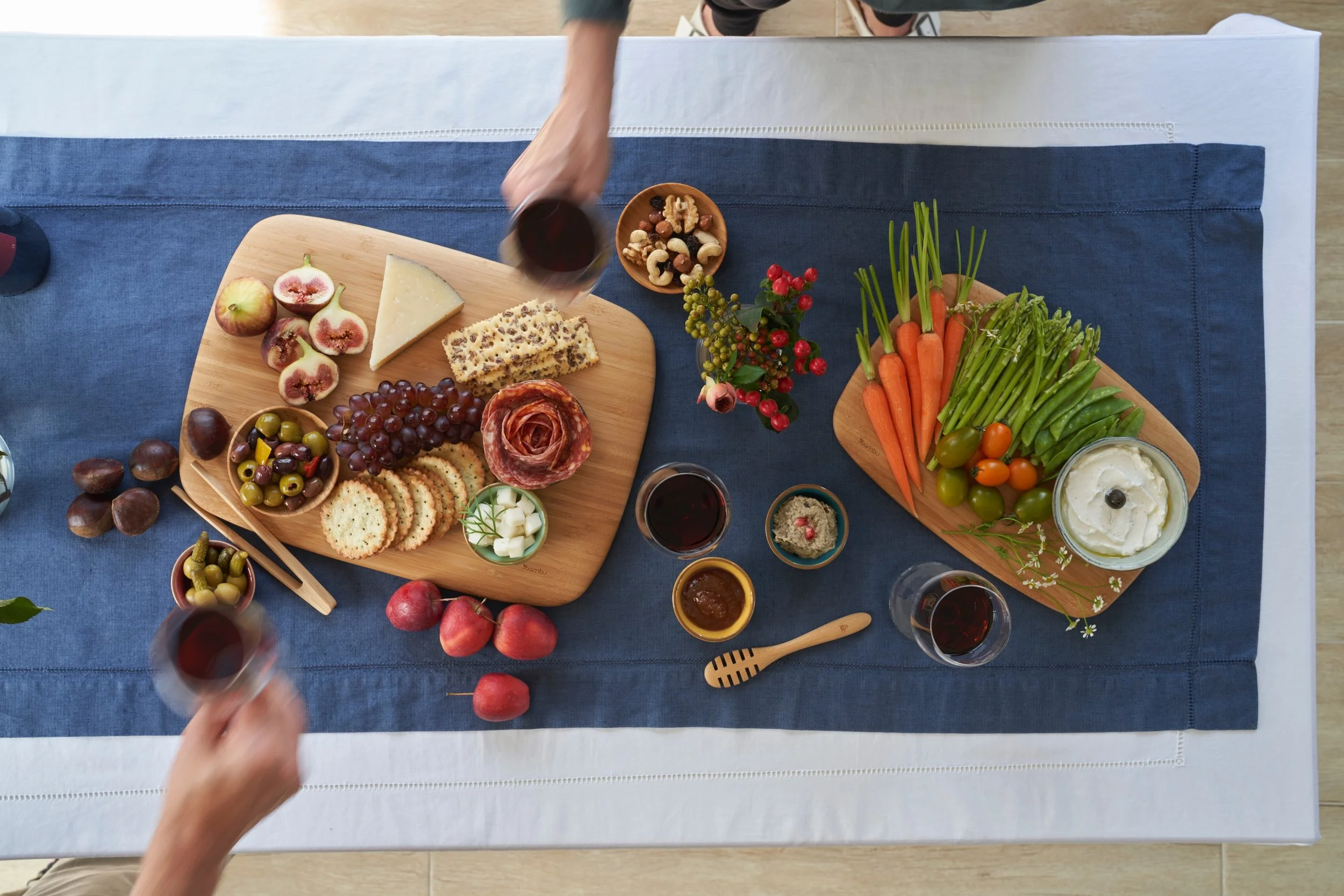
Bamboo cheese boards
Through their website, Bambu offers tips on caring for bamboo boards. Hand wash them with warm water and a dish soap along with a natural bristle brush for scrubbing; then air or towel dry.
Rub in about a capful of finishing oil with a soft cloth to give the board a new look. Avoid soaking this board in water or putting it in your dishwasher.
Last but not least, Kazanchyan recommends using parchment or wax paper under gooey or semi-soft cheeses on your board and ramekins for spreads or preserves. Both tips not only make clean-up easier but also make sense regardless of the board's material.