
Why Butter Belongs on Your Cheese Board
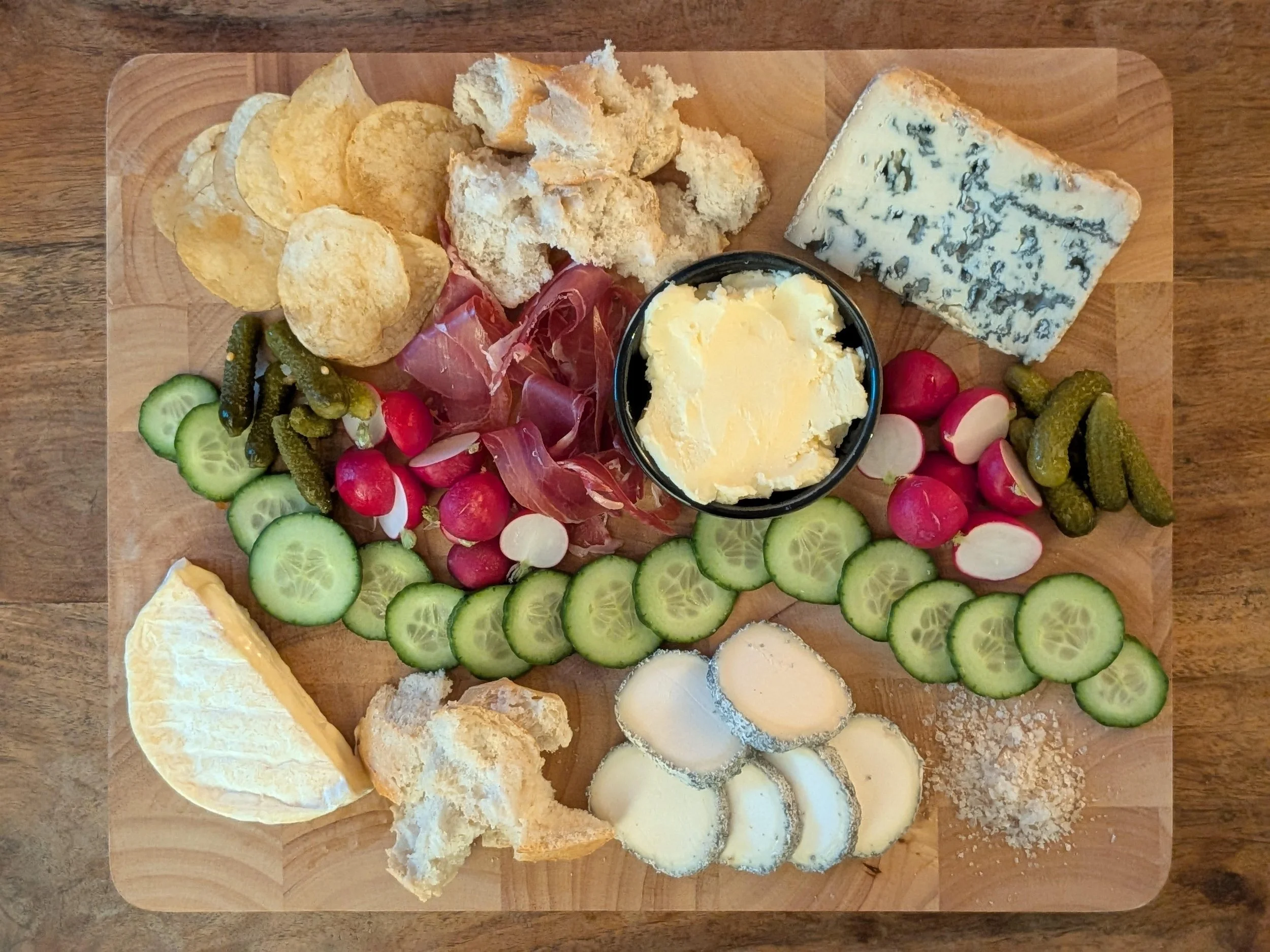
Butter incorporated into a cheese board. Photo credit Pamela Vachon
Butter had a big moment during the butter board craze of 2022, when it became the star of its own grazing board show. Aided and abetted by TikTok, butter was swooshed across serving boards and platters, decked with various accompaniments, and transformed into a snack in its own right, elevated beyond the rank of mere condiment.
For some veterans in the food industry, this newfangled trend was met with a level of doubt. Anna Stockwell, a recipe developer, culinary consultant, and author of the forthcoming cookbook The Butter Book, was a prime example.
“I was skeptical of the whole butter board thing when it first came out,” she says. “But when I started working on the book, I knew that I’d have to make a butter board, and it’s actually really fun.”
The Case for the Butter Board

Emilio Mignucci of specialty food retailer Di Bruno Bros. Photo credit Di Bruno Bros.
It is a universally acknowledged truth that butter makes everything better – and this also applies to occasions that typically call for cheese.
“In our world of specialty food, butter is treated like cheese, as a high quality product,” says Emilio Mignucci, Vice President of Di Bruno Bros., a family-owned specialty food retailer and importer. “I don't think there's any bad way to use butter, quite honestly.”
Stockwell found creating a butter board so enjoyable that it became inspiration for adding a butter component to other boards and platters like cheese and charcuterie boards. Then there’s another selling point that’s particularly relevant in today’s environment. “It's also usually cheaper than cheese,” she says.
With insight from these butter experts, here’s everything you need to know about giving butter a star churn on your next cheese board.
How to Add Butter to Your Cheese Board
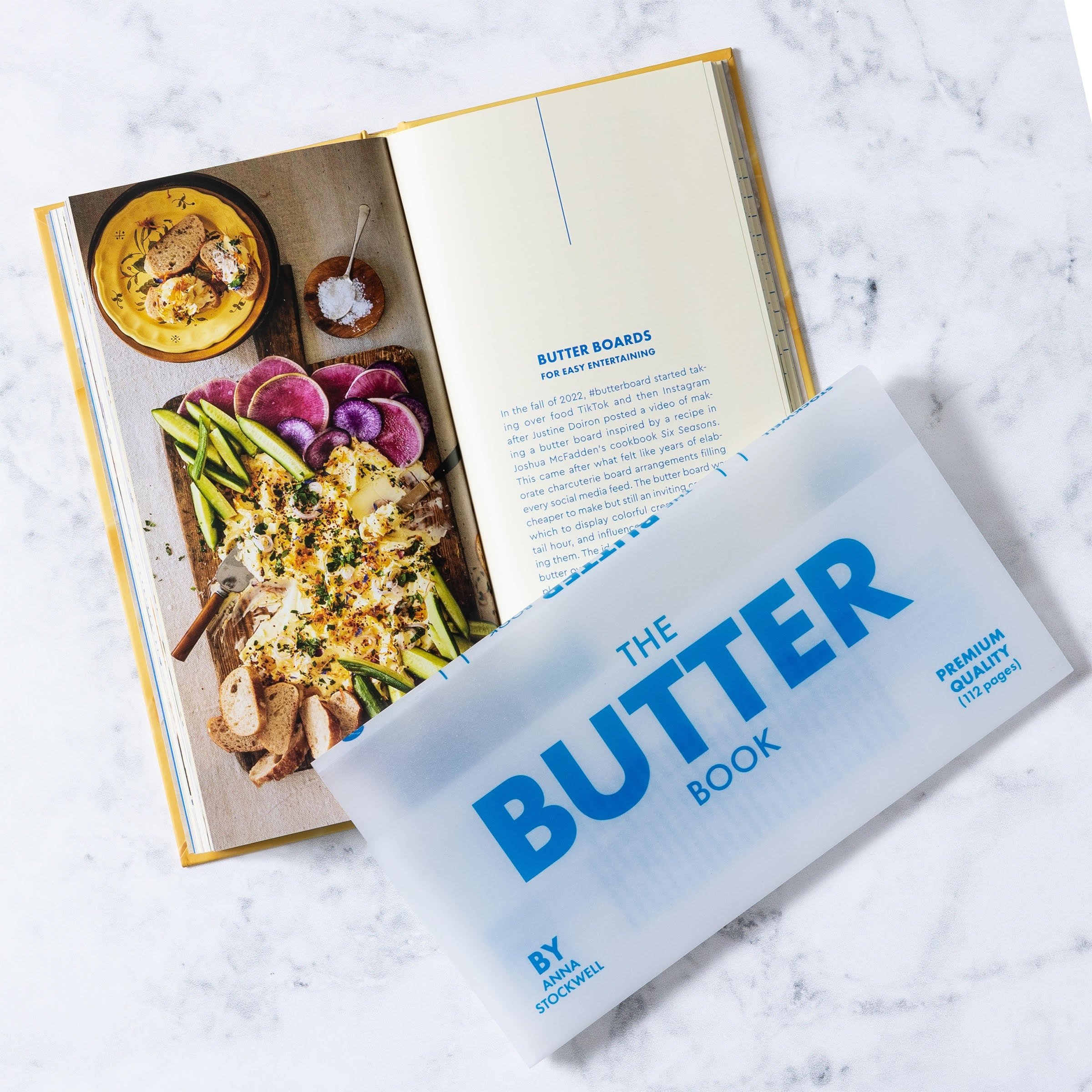
Anna Stockwell’s The Butter Book includes instructions for a butter board. Photo credit Chronicle Books
The butter board making process begins with curated offerings. We’re not talking about unwrapping a quarter-pound stick of conventional butter and setting it on your board. Look for high-quality selections, with the nuances of craft and terroir that butter is capable of expressing.
“Wherever you live, check what is available at the local specialty food or cheese shop,” says Stockwell. Despite the calming of the butter board craze, she thinks that now is still a golden age for butter.
“There is this trend of hyperlocal cultured butters emerging,” she adds, pointing out that these would be ideal for adding butter intrigue to a cheese board.
If possible, select a range of butters that vary from delicate to bold.
“High quality butters have unique flavors,” says Mignucci, who also suggests that you can even put more than one butter alongside your array of cheeses. “Butter can certainly be represented with two or three types,” he says. “Just like you would create your cheese board with mild to stronger flavors, I would do the same with butter.”
Butter can also be presented or arranged just as you would cheese: molded, spread, served in a crock, or as Stockwell suggests, serving butter in a big mound on a board. “I call it a butter mountain,” she says. (It’s ideal geography to complement cheese influencer Marissa Mullen’s “salami river.”)
Cultured, Flavored, and Compound Butters

Cookbook author Anna Stockwell. Photo credit Chronicle Books
Between its butterfat content, salt component, terroir, and seasonality, classic butters can already express an array of flavors, but products and creations such as cultured, flavored, and compound butters are also ideal candidates for cheese board selection.
Unlike today’s conventional butters, cultured butters are those that are made from milk that has had cultures introduced to spark fermentation before churning.
“Traditionally, all butter was cultured butter because of the process of making butter at home,” says Stockwell, explaining that cream typically sat out until enough was collected to churn. “The ambient bacteria would ferment the cream and give it that sour taste or tang. Basically, cultured butter tastes more like cheese.”
Stockwell also highlighted flavored butters as selections that showcase butter in an interesting way on a cheese board. Flavored cheese has been gaining traction, as evidenced by the winning cheeses over the past few years at the American Cheese Society judging and competition, and butter is also in this wheelhouse. Normandy butter brand Maison Bordier, for example, has a variety of flavors including offerings enhanced with yuzu, buckwheat, and locally harvested seaweed, to name a few.
“You could put out a board with a couple different flavors and colors of compound butter,” she says. Homemade compound butters – where butter is mixed with add-ins – can allow one to express culinary creativity on a cheese board as well as add an aesthetic element. There’s no limit to what can go in a compound butter. From alliums, herbs, and edible flowers to pickles and tinned fish, if it tastes good with butter, then it can become one with butter.
Butter Accompaniments
Radishes, especially French breakfast radishes and watermelon radishes, usually get top billing when it comes to butter accompaniments, but there are innumerable other components that can make butter shine on a cheese board. As a jumping-off point, consider those items that would generally join up with butter on a sandwich or toast.
“Jams, jellies, and conserves go well with butter, and could be interesting to add along with cheese,” says Mignucci. Jambon beurre, a classic French sandwich, can be deconstructed on a cheese board with baguette, Bayonne ham, and cornichons. For an English-inflected board spread, consider the tea sandwich of butter and cucumber for inspiration.
When butter is on the cheese board, it’s also an opportunity to include a variety of salts for flavor experimentation. “When you take butter and add black Hawaiian sea salt, or French gray salt, or smoked salt, you can really alter the flavor and add different nuances,” Mignucci says.
The variation options are endless.
“I’ve been craving potato chips with butter,” says Stockwell, explaining that it makes for a particularly decadent treat.
Alternatively, for the opposite approach, she also suggests an assortment of olives or pickles to get some relief from butter’s richness.
High Quality Butter Brands That Experts Recommend
Look to your specialty shops and local cheesemakers or cheese retailers for local butter worth showcasing, but Stockwell and Mignucci also highlighted several butter brands – both French and American – that may be more widely available and ready to join cheese on your next cheese board occasion:
Rudolphe Le Meunier: From a multigenerational cheese dairy in France’s Loire Valley, Rodolphe Le Meunier’s butters are made in a traditional wooden butter churn, and hand shaped. A variety of flavors are available, including a unique and fruity Passion Berry.
Maison Bordier: Maison Bordier’s butters, collected from small farms in Northwest France, are hand-kneaded after churning, with salt added during the kneading process. Wooden paddles employed to tap butter into its final slabs and shapes are behind the brand’s distinctive ribbing.
Isigny Sainte-Mère: A French dairy cooperative with over 100 years of history, its butters are probably your best bet for finding high quality, European-style butter in a conventional grocery store. Marine-based soils from Normandy create a natural salt and mineral character in the butters.
Échiré: Located in southwest France, Échiré uses locally collected cream that matures for 18 hours and is churned for two hours in traditional wooden churns. It is a producer of France’s oldest PDO for butter, Charentes-Poitou PDO, which dates back to 1979 and regulates specific geographical limits and production methods.
Vermont Creamery: Vermont creamery produces one of the most widely available, European-style but distinctly American cultured butters, a favorite for restaurants. The creamery’s recognizable cultured butter logs (perhaps reminiscent of its mainstay goat cheeses) come either plain or with sea salt.
Ploughgate Creamery: While butter is often a side project for American cheesemakers, Vermont’s Ploughgate is strictly in the butter business, crafting cultured butter that also comes in various flavors such as Cultured Balsamic Fig, Cultured Maple, and Cultured Seaweed.
Challenge Dairy: An American co-op since 1911, Challenge was created to better position small dairy farms against Big Dairy. Look for molded butter snowflakes around the holidays to add to festive boards.