
The Cheese Lover’s Answer to Afternoon Tea
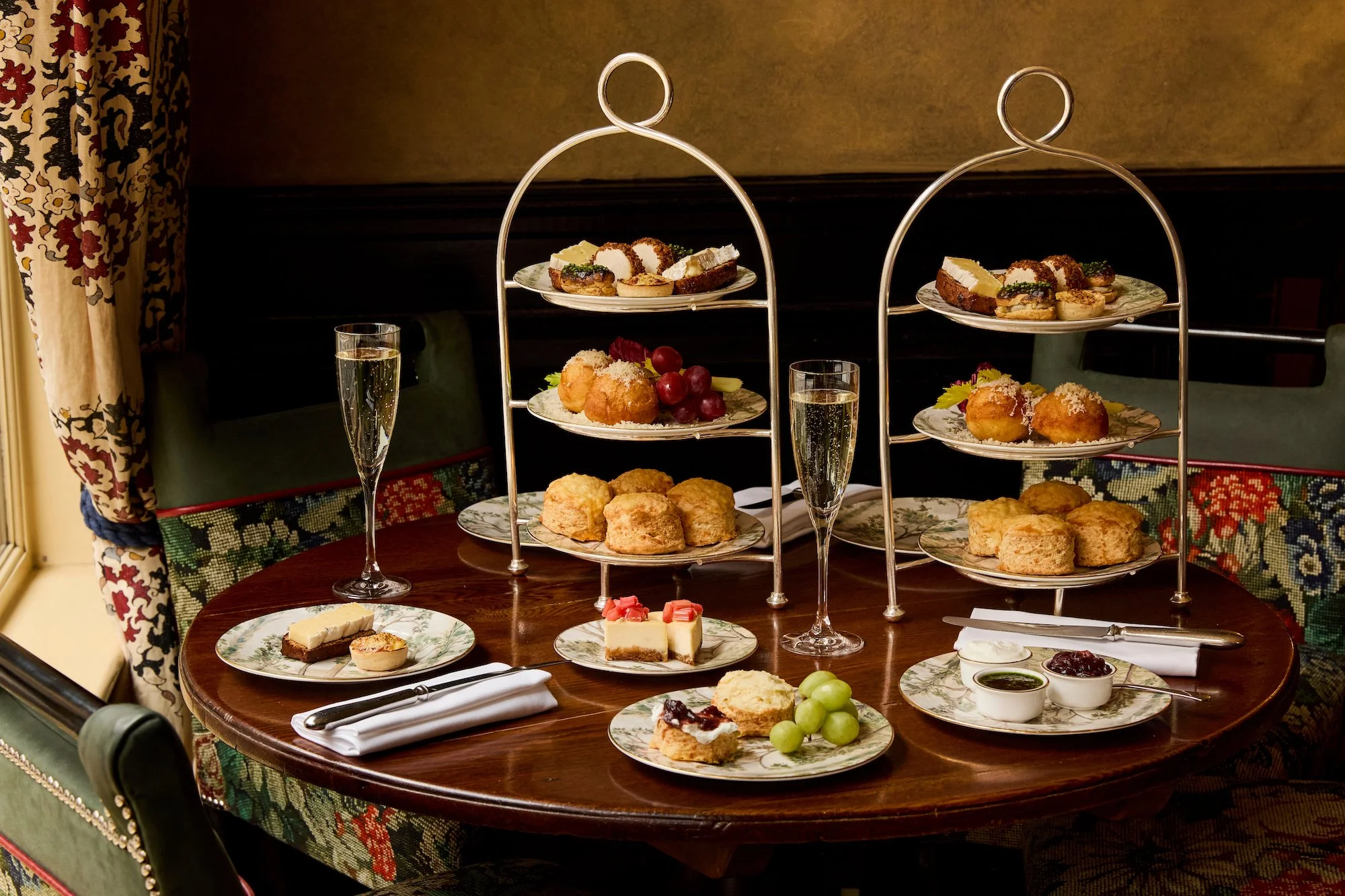
Brasserie Max’s Afternoon Cheese towers. Photo credit Firmdale Hotels
Afternoon tea is a revered tradition that began in the United Kingdom in the mid-19th century before transcending its original time and place to become a celebrated affair around the world. You can enjoy afternoon tea in London’s world-renowned hotels, in English country inns, and in destinations around the world that embrace the art of balancing ceremony, sophistication, and a little indulgence in the middle of the day.
Even in your own home: your finest teaware and table settings, laid out during the liminal space between lunch and dinner. A sense of poise and ritual. A multi-tiered centerpiece of dainty pastries and finger sandwiches, accompanied by a steaming pot of a flavorful, custom-blend tea, existing not as a meal, but as a moment.
Now imagine all of that, but instead of macarons, petits fours, and crustless cucumber sandwiches, substitute Stilton-filled éclairs, plum cakes topped with an oozy bloomy rind, and savory cheddar scones. Keep the macarons, but make them chèvre.
Welcome to “afternoon cheese,” a new way of participating in this hallowed tradition, tea optional.
What is Afternoon Cheese, and Where Can You Find It?
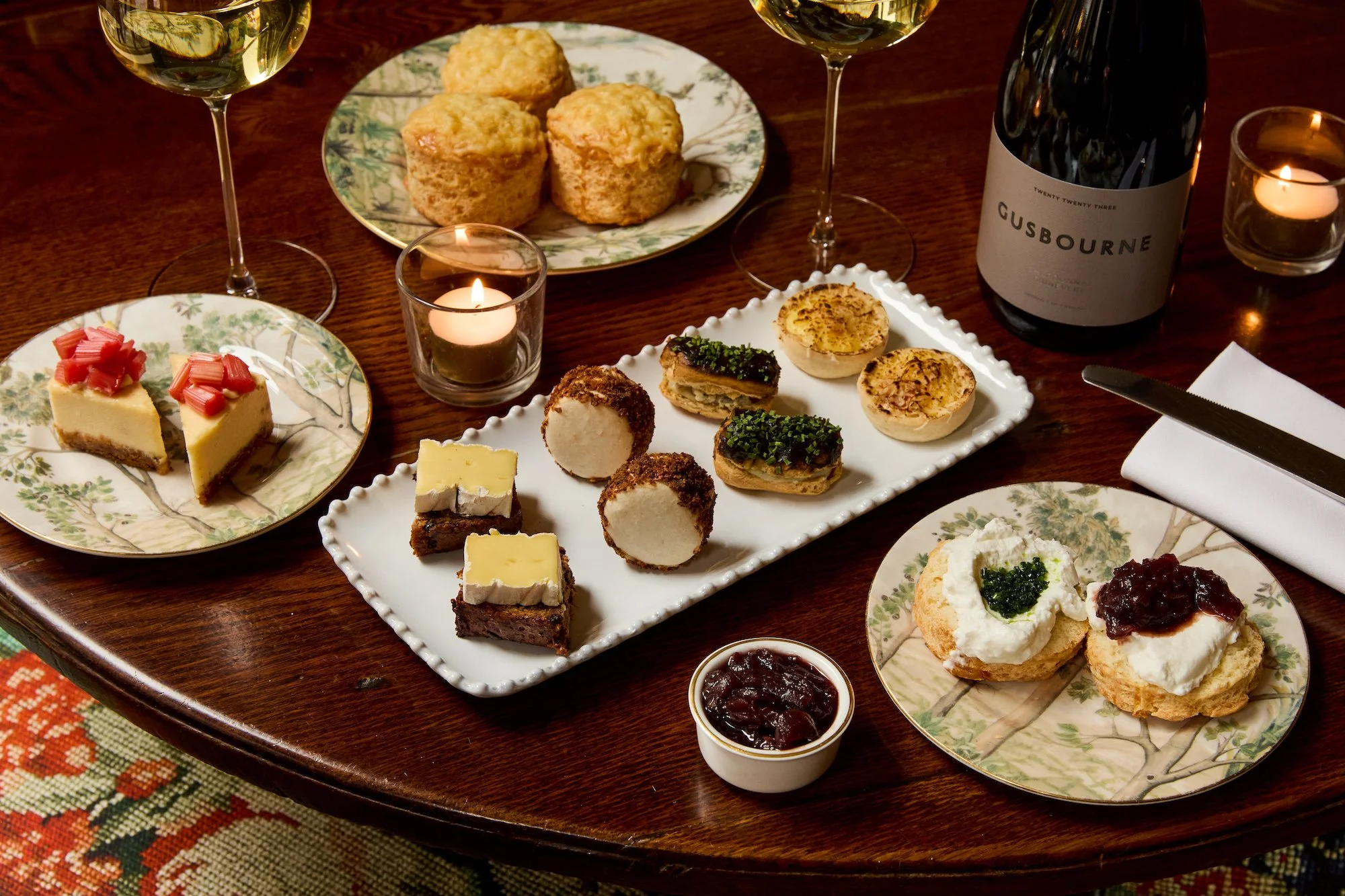
Afternoon Cheese bites at Brasserie Max. Photo credit Firmdale Hotels
England’s contributions to cheese are vast and undeniable: the sceptred isle gave us cheddar and its myriad variations, Stilton, and modern classics such as Baron Bigod. But when it comes to afternoon tea, you might be surprised to learn that cheese is rarely even a supporting character, much less in a starring role. At London’s most popular and hallowed tearooms like Claridge's, The Ritz, and The Savoy, cheese is all but absent, save for its cousins crème fraîche, cream cheese, and clotted cream.
“God bless afternoon tea, but people don't really mess with it,” says Martin Sweeney, head chef of London’s Brasserie Max at the Covent Garden Hotel. “There's only maybe a variety of seven or eight types of sandwiches and pastries that people will do. It’s so traditional in a very strict way.”
Regardless, Brasserie Max is among a very small handful of English establishments to flip the script on afternoon tea, and put cheese forward within the tea framework. “I’ve seen people serve cheese in a very nice way on tea stands, but nothing really in-depth,” says Sweeney. “We wanted to figure out what we could do that was different.”
With the original Neal’s Yard Dairy around the corner, Brasserie Max made the decision to really honor the cheese in their afternoon tea, so much so that the event got a name change. The restaurant’s new experience, called Afternoon Cheese, is perhaps the first official iteration of that title, putting cheese in the starring role while still maintaining the classic tea format.
To understand the significance of this, the event language really matters here. The Bath Soft Cheese Co. offers an Afternoon Tea that naturally includes a little cheese in the traditional tea setup, given the location. You can attend a Cheese Afternoon Tea, held at The Cheese Barge, which includes a cheese-heavy spread including six cheeses with accompaniment pairings, grilled cheese sandwiches, and curried cheese curds. It’s an indulgent cheese afternoon for sure, but it perhaps goes without saying that, given this hearty menu, there is no tea stand involved and nothing especially dainty about it. (Neither is tea even actually on the program, suggesting that “tea” is more the event itself than the necessary beverage.) The Georgian House Hotel offers a similarly-named Cheese Afternoon Tea, which does refashion many of the usual tea stand suspects with cheese, but still maintains tea as the event framework.
Key Aspects of Afternoon Cheese
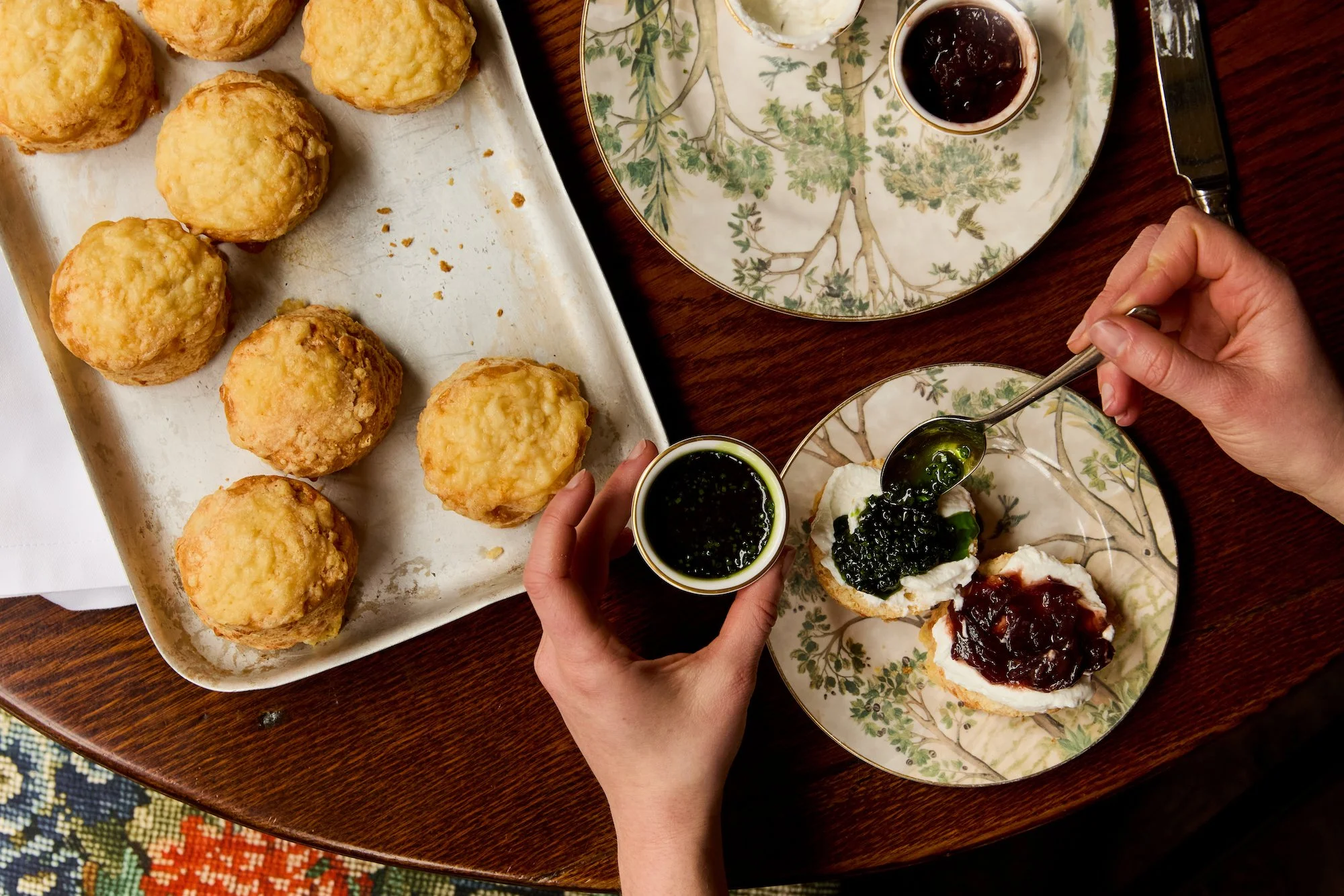
Savory cheese scones at Brasserie Max. Photo credit Firmdale Hotels
In making cheese the star, but casting it in an afternoon tea light, the goal for Sweeney and Brasserie Max was to keep the format as recognizable as possible. “We came up with a scope for it, which was to make things that look sweet, like an éclair, or like a macaron, but turn them on their heads a little bit,” says Sweeney, “making lovely savory versions of familiar afternoon tea components.”
The Afternoon Cheese menu at Brasserie Max includes Colston Basset Stilton éclairs with pickled walnuts and chives, Ragstone (chèvre) and caramelized onion macarons, Baron Bigod topped malt and prune loaves, Lincolnshire Poacher burnt cheese tarts, Hafod Cheddar Welsh rarebit doughnuts with Worcestershire sauce, and Montgomery’s Cheddar scones served with goat’s curd, caramelized onion jam, and chive oil. The menu is a dream for those who prefer something savory as an afternoon treat, but of course there’s a little something for those who like it sweet as well: cheese-filled ice cream cones offered as the ceremonial opening bite, available in either blue cheese or camembert options, and mini Westcombe Ricotta cheesecakes with poached rhubarb.
Presentation is a huge part of afternoon cheese, and what keeps it firmly within the “tea” paradigm. Having established that afternoon cheese is not simply classic afternoon tea with cheese added to the mix, neither is it a typical cheese board presentation with tea as the beverage of choice. “There’s a whole part of British culture that would wince if you try to serve them something on a board and call it an afternoon tea,” says Sweeney. “It has to have three tiers, it has to be indulgent, and it has to take your breath away a bit when you put it on the table,” he says. “There needs to be that wow factor.”
The showmanship and sense of occasion is arguably the defining characteristic regardless of whether you’re dabbling in afternoon tea or afternoon cheese. While tea is an excellent pairing for cheese, the tea itself is even somewhat optional in either format. In the local vernacular, “afternoon tea” is more about the sense of ritual, the presentation, and the necessary small bites than the beverage itself. Even in classic tearoom settings, many people forgo the tea altogether in favor of Champagne or sparkling wine.
Making Afternoon Cheese Your Own
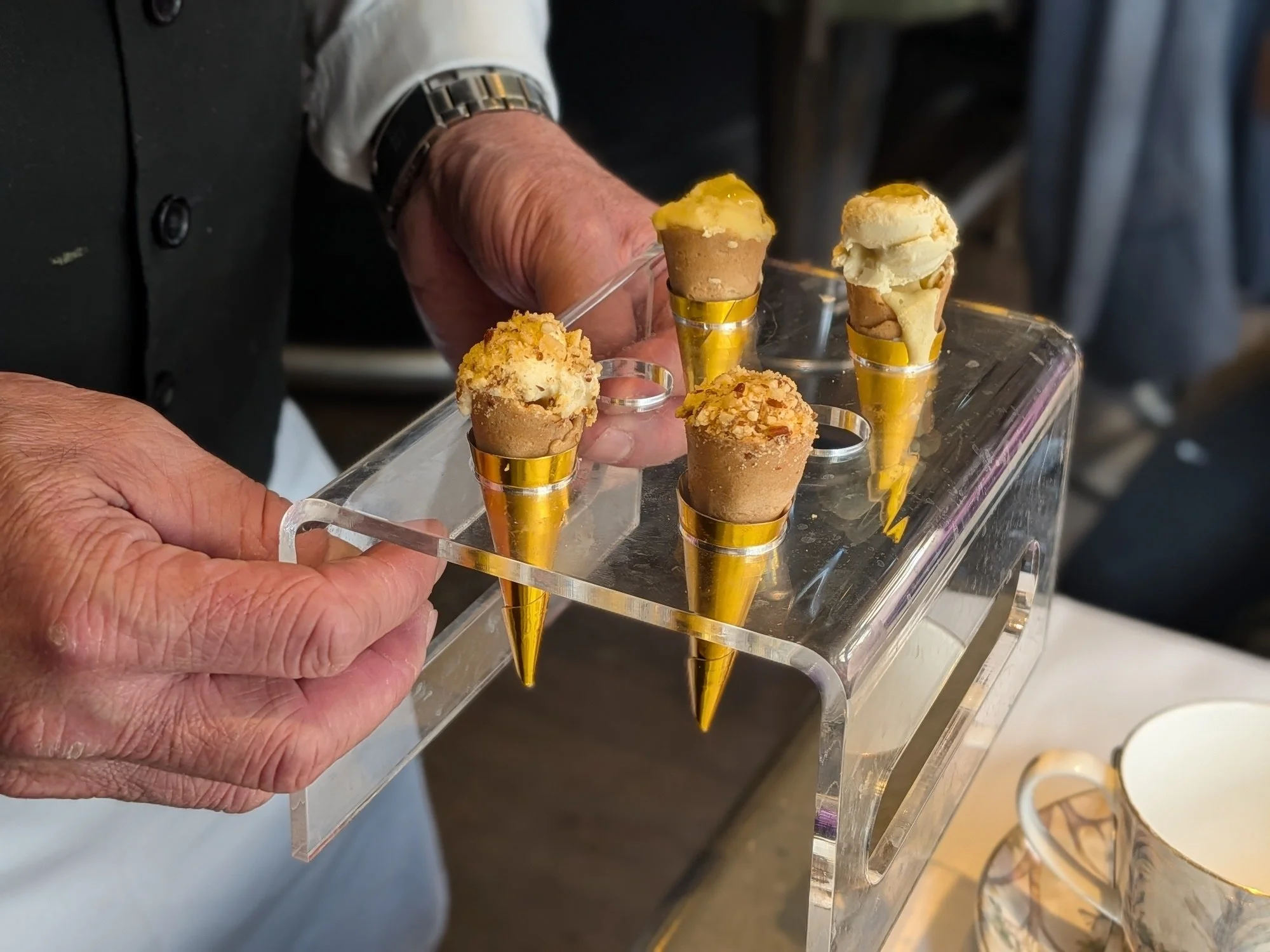
Mini cheese-filled cones at Brasserie Max. Photo credit Pamela Vachon
Of course Brasserie Max’s Afternoon Cheese may inspire people to do their own take on it, which is enthusiastically encouraged. “A lot of the feedback we get is people telling us how they would make it, which is fantastic,” says Sweeney. “I love that we’re the jumping-off point, and that they want to take this idea and run with it.”
Given the blueprint of Brasserie Max’s afternoon cheese, what is actually required? “There’s nothing stopping people from going out and just buying the best tea and the best cheese possible,” says Sweeney, which is certainly a formula for a terrific afternoon no matter what. But for a true afternoon cheese, put out your loveliest settings, and give the board and the maximalist aesthetic a rest in favor of a multi-tiered display of dainty bites. You don’t necessarily need to invest in a tea stand, per se, but create levels using small plates situated on overturned bowls, cake pedestals, and reimagined serving vessels like small gift boxes or stacks of books.
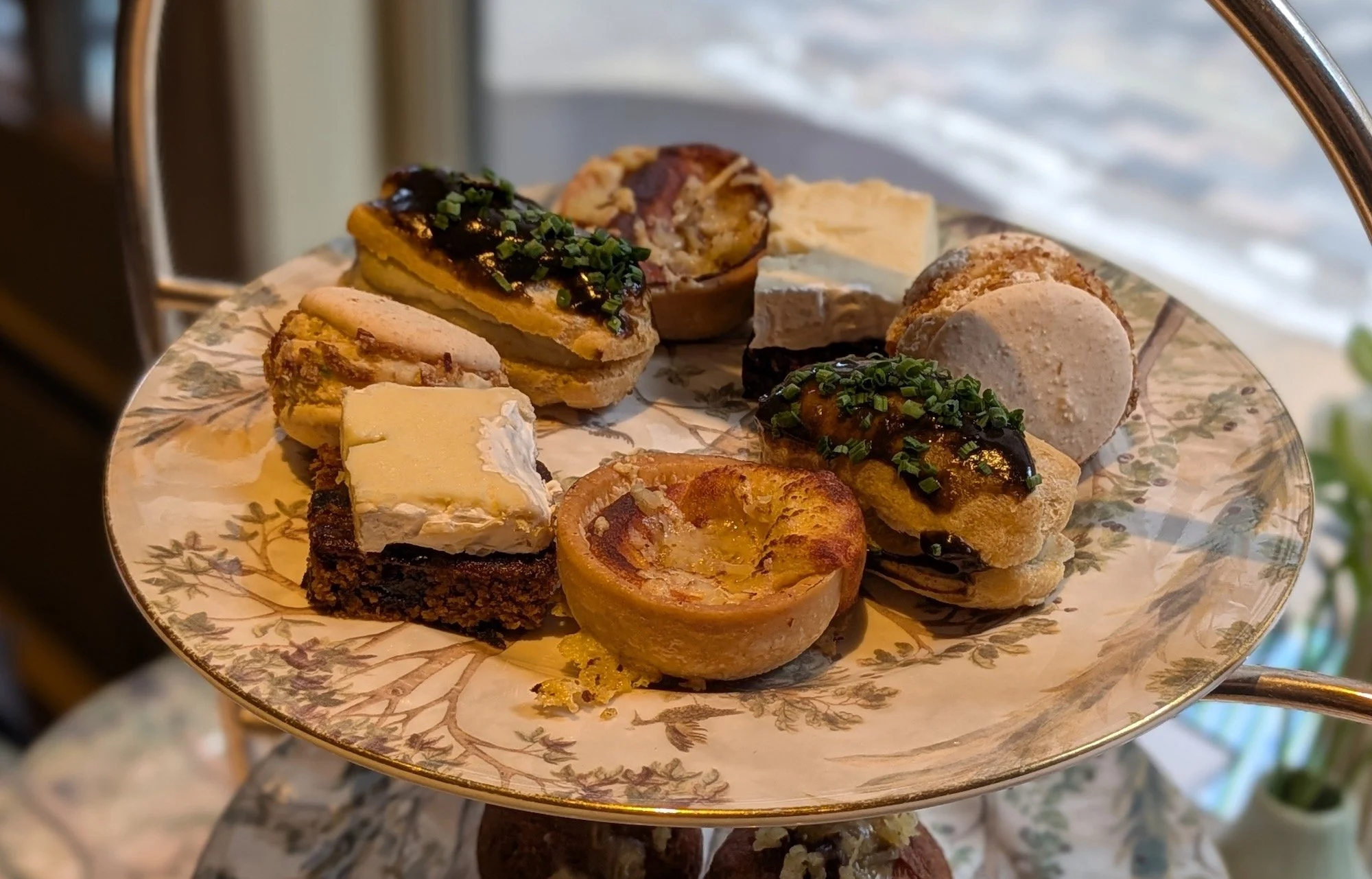
A close-up of the Brasserie Max cheese tier. Photo credit Pamela Vachon
The cheese should not only be the star, but should be transformed beyond the usual wedges, slices, or hunks. Think tiny versions of your favorite cheesy sandwiches or dishes, or prepared items like squares of quick bread or oatcakes topped with cheese and other creative accompaniments. (You can take inspiration from these composed cheese plates and the brilliant bites on Adam Jay Moscowitz’s podcast, “A Cheese Course.”) Empty shells meant for cream puffs, quiches, or macarons, or mini ice cream cones, are perfect for filling with a whipped cheese mousse or cheese spread instead.
“We came up with loads of different ideas,” says Sweeney, some of which made it into afternoon cheese, and some of which never made it out of committee, but the development process itself was part of the joy, which is the point of afternoon cheese whether you are hosting or merely enjoying. “It wasn’t a challenge at all,” he says, “because it was so much fun.”