
Beyond Gouda: A Guide to Dutch Cheese Culture
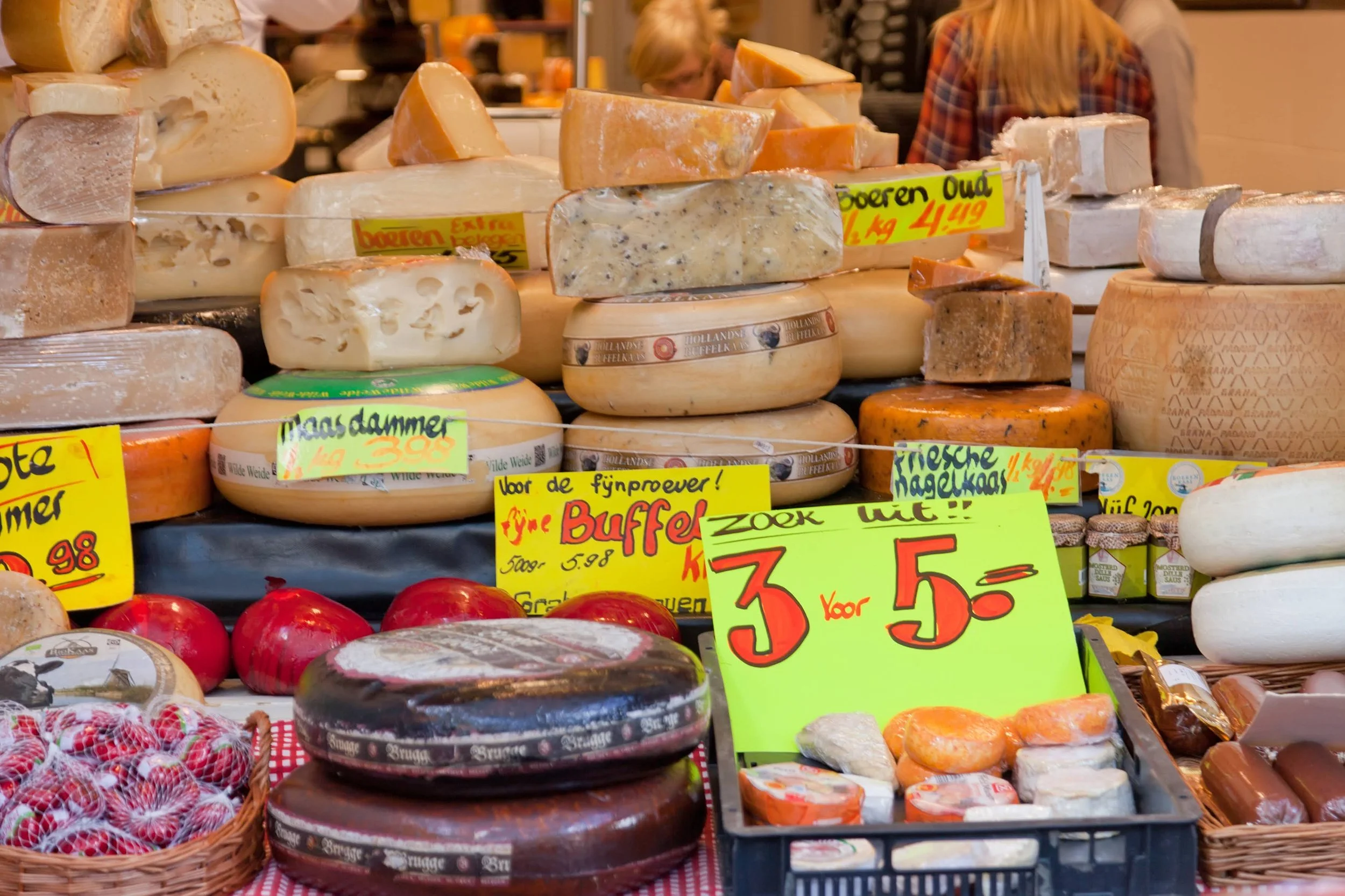
A Dutch cheese shop displays Nagelkaas, Maasdam, and other cheese varieties. Photo credit Dreamstime
Dutch cheese is one of the most misunderstood foods in the world — not because people don’t know it, but because they think they do. Ask anyone with even a passing interest in cheese to name a Dutch variety, and they’ll likely come up with Gouda. That answer isn’t wrong, but it doesn’t offer the full picture of cheese in the Netherlands, including how varied its cheese culture is becoming.
At shops like Kaas van Daan in Alkmaar, co-owners Daan and Jolanda Blankendaal say most customers still arrive expecting Gouda or familiar farmer’s cheeses. But once they start exploring the counter, they are often guided toward blue cheeses, abbey-style cheeses, and other lesser-known Dutch varieties that rarely feature in mainstream conversations.
Marike van der Werff, who runs Fromagerie Abraham Kef in Amsterdam, describes a quieter shift underway. Dutch cheese is no longer only about preservation and durability. A new generation of makers is experimenting with soft lactic cheeses and white molds that are not just an imitation of French cheesemaking traditions, but feel distinctly Dutch.
Geography helps explain the range: This is a small country with dramatic variations in its soil, centuries of trade influence, and a cheese culture more complex than its reputation suggests. Here's a guide to Dutch cheeses that goes beyond the waxed wheel most recognize.
Boerenkaas
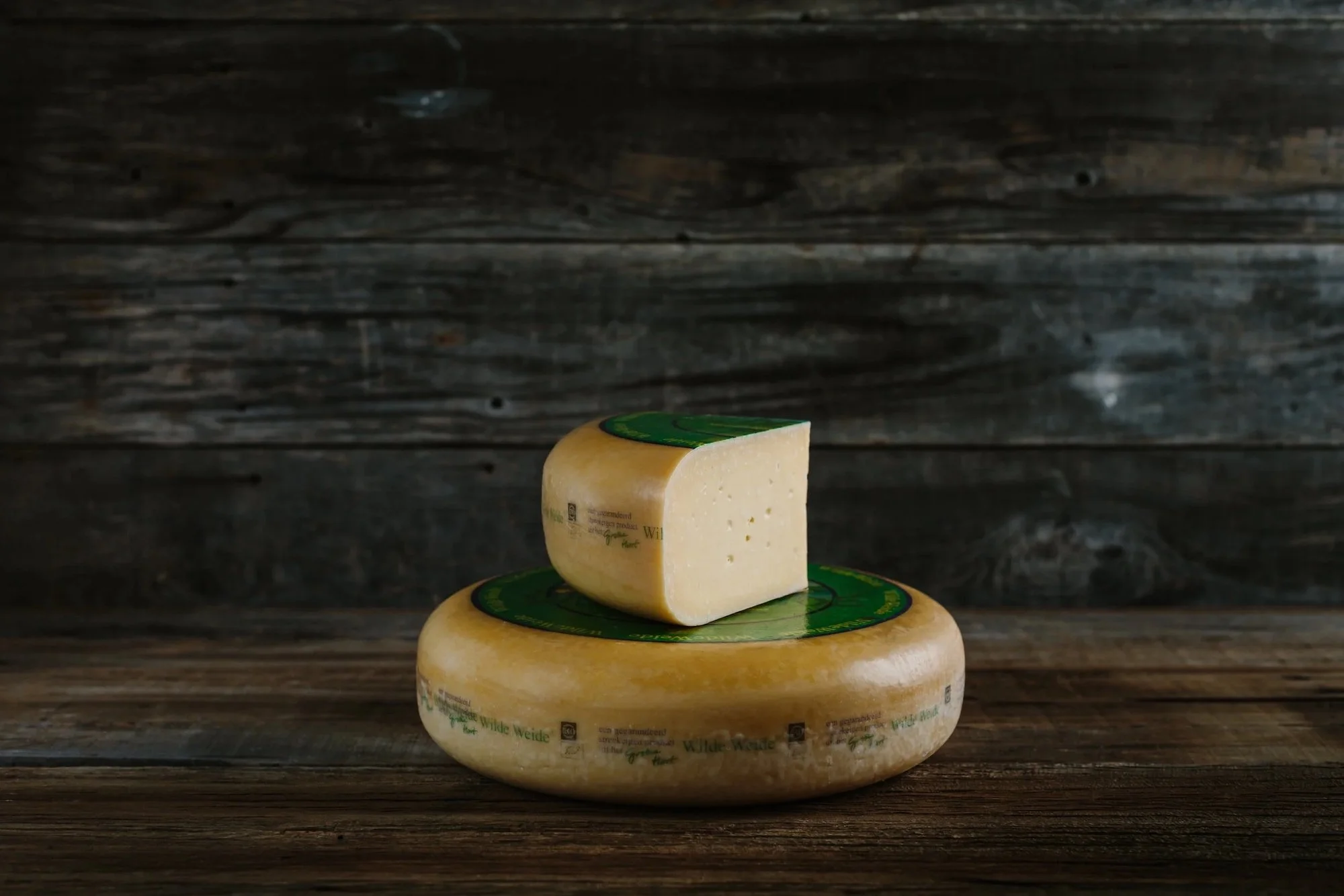
Wilde Weide is a raw milk cheese made in the Boerenkaas tradition. Photo credit Essex Cheese
Before any conversation about Dutch cheese makes sense, it helps to understand what separates farmhouse production from industrial cheese.
Boerenkaas translates to “farmer’s cheese.” It’s a Traditional Speciality Guaranteed (TSG) designation within the European Union, and it is most commonly associated with Dutch farmhouse cheese made from raw milk on the farm where the animals are kept. It’s seasonal, variable, and never fully standardized in the way industrial cheese is designed to be.
Betty Koster, owner of Fromagerie L’Amuse in Amsterdam, says a common misconception persists around how people view Dutch cheese production. She explains that there is a real difference between well-made pasteurized cheeses produced by larger companies working closely with their farmers, and more industrial cheeses where consistency and shortcuts often replace craftsmanship and depth of flavor.
Only a small fraction of Dutch cheese production falls into this category, which is why authentic boerenkaas tends to stand out for its depth, complexity, and variation from wheel to wheel.
Wilde Weide, a farmhouse cheese that Koster selects and ages at L'Amuse, is a raw milk cheese made in the Boerenkaas tradition. The most labor-intensive version is made from the organic milk of Montbéliarde cows kept on an island in a lake, where the hay is harvested from protected bird habitat maintained by the farmer. The finished wheels are rowed (or sent out by motorboat) to the mainland to be aged, arriving in limited numbers.
Gouda
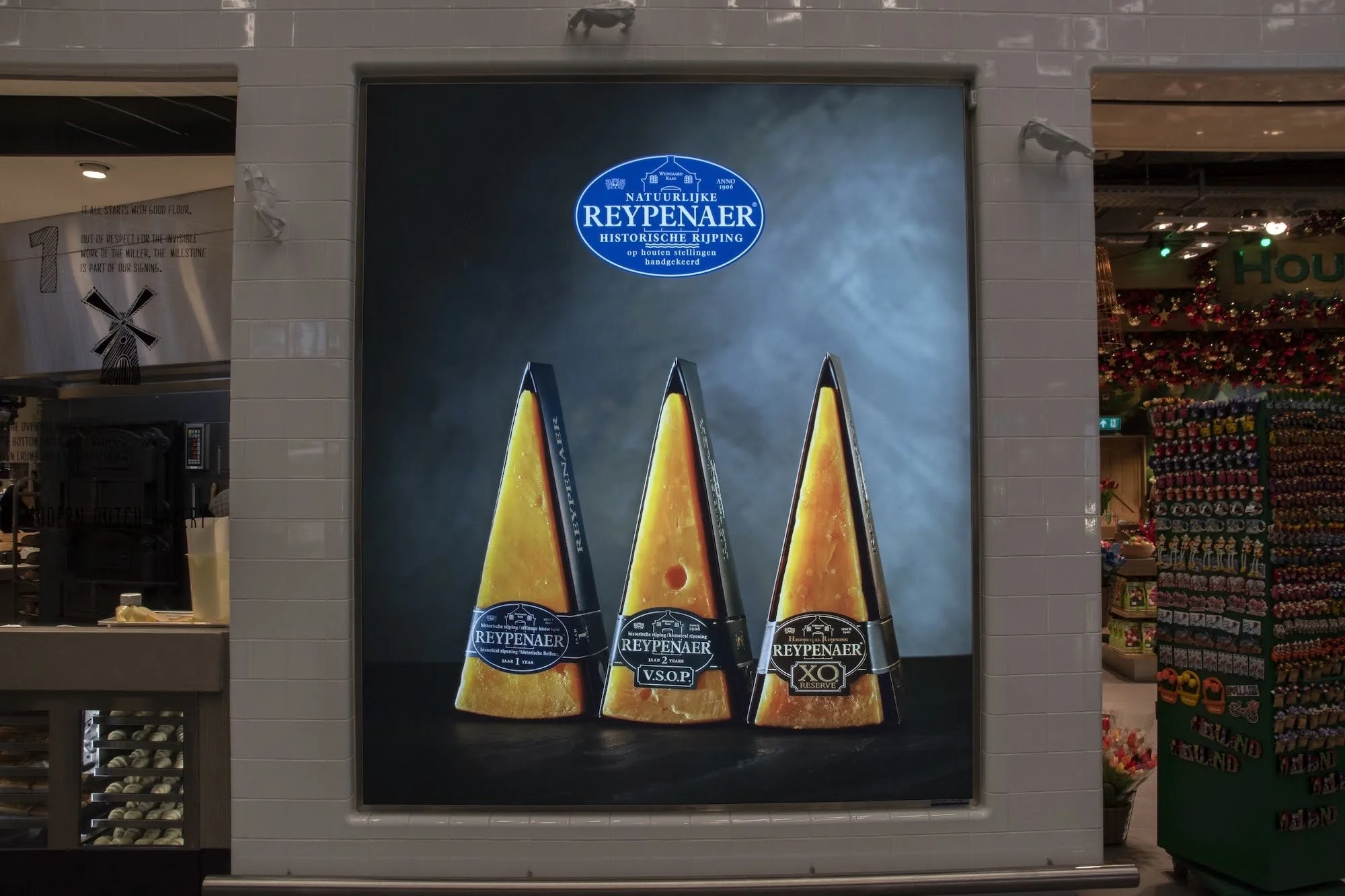
Reypenaer is an aged Dutch Gouda made by the Wijngaard family. Photo credit Dreamstime
Gouda is a widely used cheese name that has become generic in much of the world, which is why it now exists in many different forms outside the Netherlands. That includes large-scale production in countries like New Zealand and South Africa.
Within the EU, Gouda exists in protected forms. Gouda Holland is a PGI, referring to semi-hard cheese made in the Netherlands from Dutch cows’ milk with specific production standards. A Noord-Hollandse Gouda PDO is made exclusively from milk sourced in the province of Noord-Holland. It’s richer and slightly less salty.
The real distinction in Dutch Gouda comes with age. Properly aged examples, matured for 12 to 36 months in traditional conditions, undergo a significant transformation. As they age, moisture decreases, amino acids crystallize, and the texture develops that crystalline crunch.
For a benchmark of what serious Dutch affinage looks like, Reypenaer, aged in the Wijngaard family's centuries-old warehouses in Woerden, is worth seeking out. Wijngaard’s VSOP and XO expressions show where a Dutch wheel can go from the mild, commercial version most know best.
Beemster and Other Regional Gouda-Style Cheeses
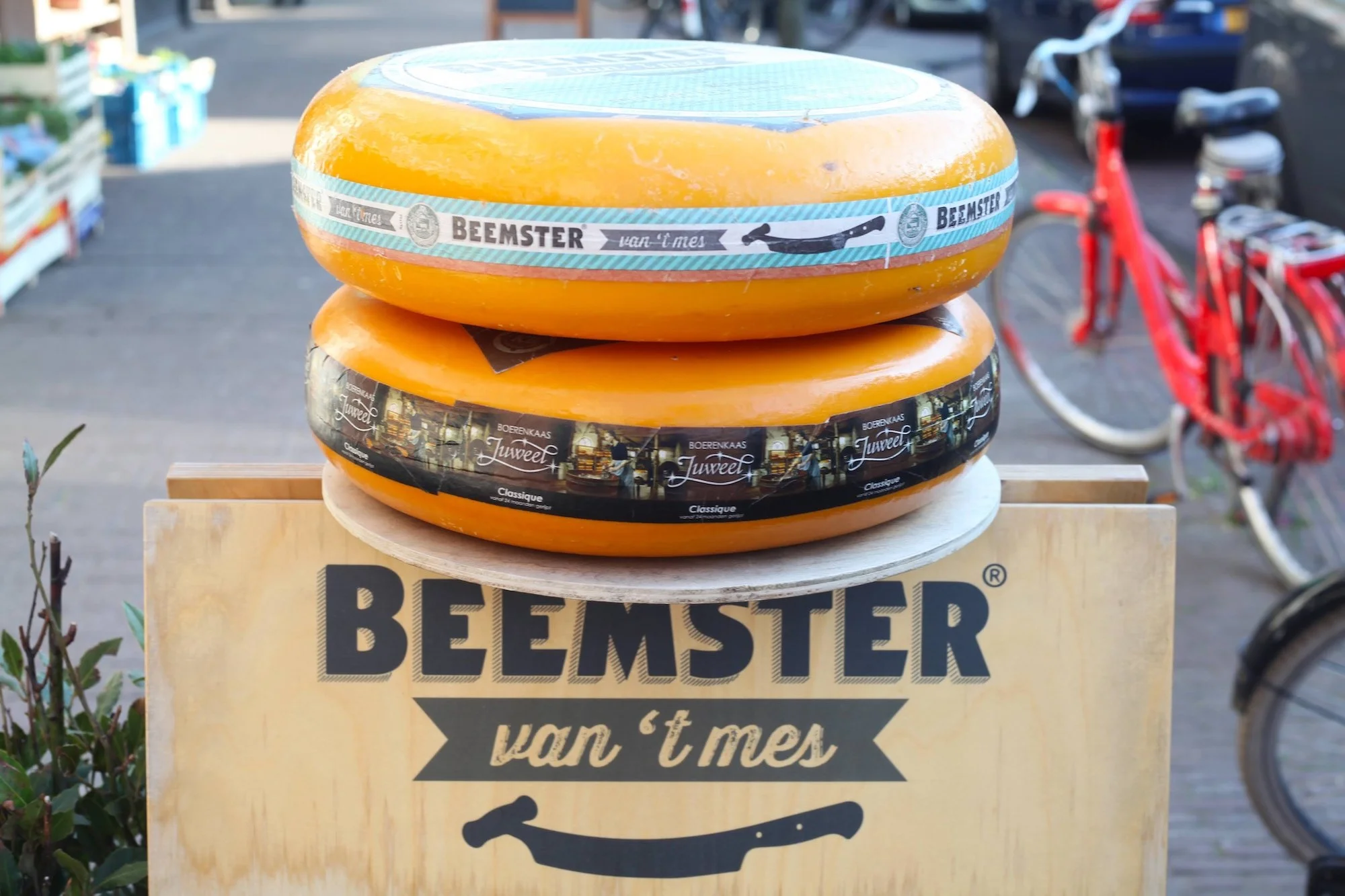
Beemster is an aged cheese made from the milk of Beemster cows and goats. Photo credit Dreamstime
Beemster is one of the most recognizable Dutch Gouda-style cheeses, shaped by its place of origin in the Beemster polder, land reclaimed from water in North Holland. The cows graze on mineral-rich clay soil that gives the milk a distinct richness. As it ages, Beemster develops deeper caramelized flavors and a firmer, more crystalline texture.
Rather than a separate category, it’s best understood as a regional expression of Dutch Gouda-making tradition, shaped by the landscapes and techniques. It also highlights that “Gouda” isn’t just one single cheese, but a family of styles that can differ shop by shop.
Edam
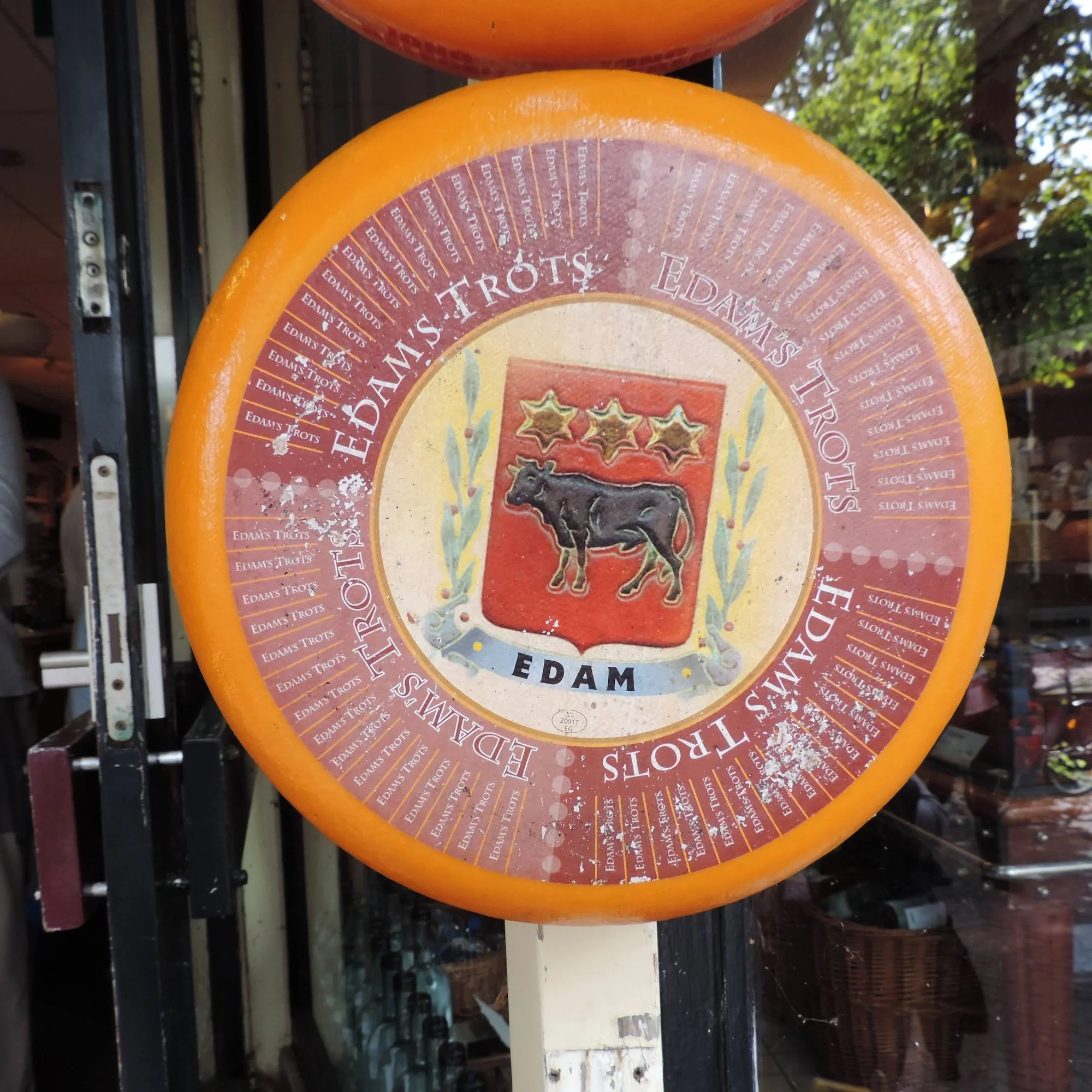
Edam is a semi-hard, mild cow’s milk cheese. Photo credit Dreamstime
Edam is one of the country’s most internationally recognizable cheeses. Exported widely since the Dutch Golden Age, it became a staple of maritime trade thanks to its durability and long shelf life. Its characteristic red wax helped give it an added layer of protection on long sea journeys.
Traditionally, Edam is a semi-hard, mild cow’s milk cheese with a lower fat content than Gouda. That gives it a lighter texture and a clean, slightly nutty flavor rather than the richer caramelized profile associated with aged Gouda. Industrial versions dominate export markets today, but aged versions are out there with a firmer texture and more concentrated flavor.
Spiced Cheeses
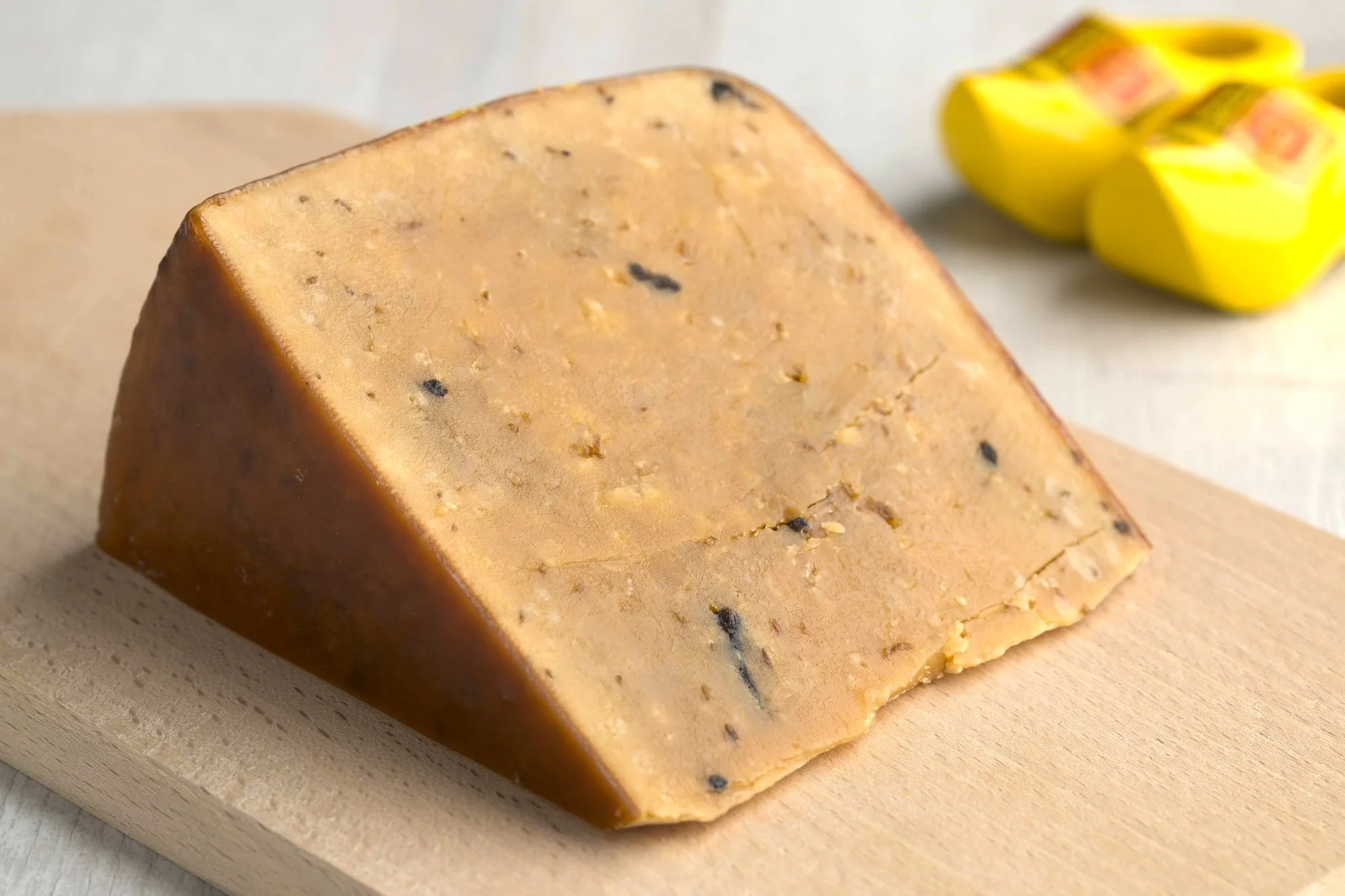
Nagelkaas is named after the cloves that it is spiced with. Photo credit Dreamstime
One of the oldest flavored cheese traditions in the Netherlands is cumin cheese, or komijnekaas, especially Leidse kaas from the Leiden region. The farmhouse version, Boeren-Leidse met sleutels, holds PDO status.
Dating back to the 1600s, these cheeses were influenced by spice trade routes. Ships left Holland empty and came back loaded, and spices such as cumin, cloves, and fenugreek were incorporated into cheese as they became more widely available. Cumin seeds also helped regulate moisture during aging.
Leidse kaas is traditionally made from partially skimmed milk, resulting in a firmer, drier texture than standard Gouda. The flavor is savory, slightly nutty, and distinctly spiced. Nagelkaas, or nail cheese, is spiced with cloves instead and named for the shape the cloves resemble. I once got a warning about this one’s intense flavor at a cheese shop in Utrecht. Bite into a clove, and you’re left with a sharp spiciness that will affect your palate for at least the next few samples.
These are not cheeses made for tourists. The lavender versions or the red wine-soaked wheels you see on the tourist drag are a different matter entirely, and “really something we make for tourists,” Koster says.
Texelse Schapenkaas (Sheep's Milk Cheese)
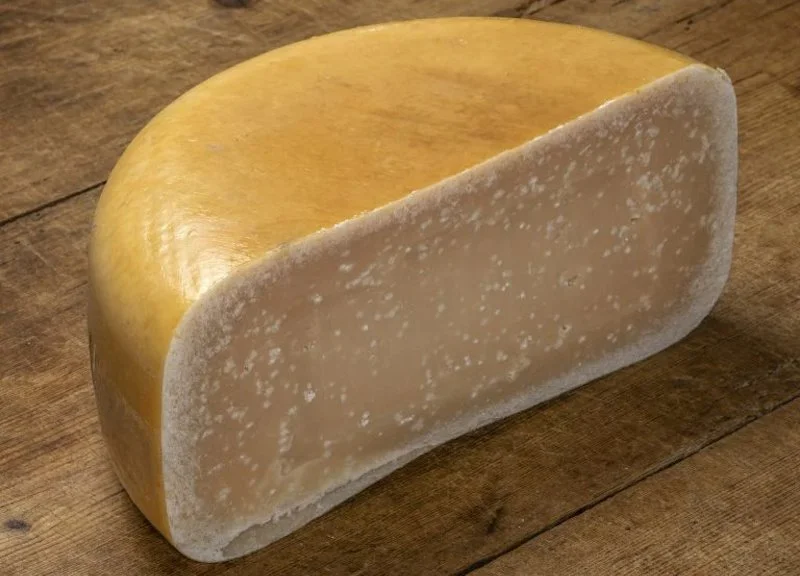
Sheep’s milk cheeses such as Texelse Schapenkaas are underrepresented in Dutch cheese. Photo credit Fromagerie Abraham Kef
Off the northwest coast of the Netherlands lies Texel, a windswept island in the Wadden Sea that is home to a special breed of sheep grazing its pastures. The firm, dense Texelse schapenkaas is made from their milk, with a nuttiness and mild sweetness shaped by the island’s grasses. Cheese production on Texel dates back to at least the 16th century, and many producers on the island still rely on traditional methods today.
Sheep’s milk cheeses are one of the more underrepresented parts of Dutch cheese production. As van der Werff noted, Texel stands out among Dutch regions for its sheep’s milk and ewe’s milk cheeses, reflecting how varied the country’s terroir can be even within a small geographic area.
Maasdam
Maasdam is a semi-hard Dutch cheese developed in the 20th century as a response to Swiss-style cheeses like Emmental. It’s mild, slightly sweet, and easily recognized by its large holes. It’s one of the most widely used Dutch cheeses for its meltability. Much like Edam, this one isn’t going after prestige, but earns its place here for its popularity as a perennial sandwich favorite.
Abbey Cheeses
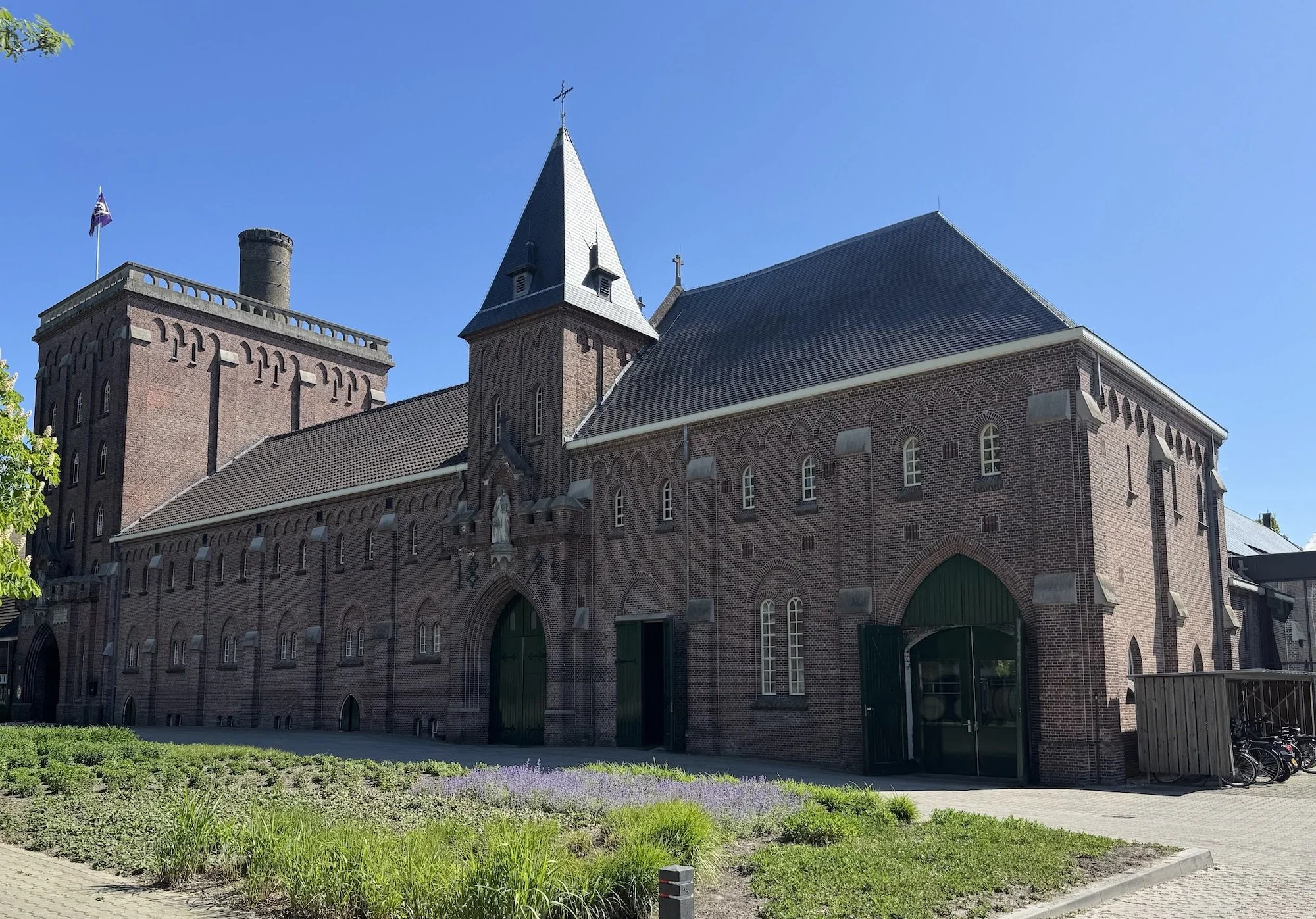
Koningshoeven Abbey, where monks produce cheeses washed with their abbey ales. Photo credit Agnes Groonwald
Several Dutch monastic communities produce cheese alongside beer and other agricultural goods. At Koningshoeven Abbey near Tilburg, where La Trappe beers are brewed, monks produce cheeses washed or flavored with their abbey ales, including cheeses inspired by the deep, dark malt character of their Quadrupel beer.
Dutch abbey cheeses don't have the international profile of Belgian Trappist varieties, but they share the same philosophy of cheeses rooted in monastic self-sufficiency, not commercial production. That also means they rarely travel far, and the best way to find them is at the source. La Trappe has an abbey shop and restaurant where you can buy cheese alongside the beers that flavor it. A handful of specialty cheese shops in Amsterdam carry abbey-style Dutch cheeses as well, but the selection is inconsistent.
Limburger and Other Washed-Rind Cheeses
Limburger sits at the border of Dutch, Belgian, and German cheese cultures, but that’s not what it’s known for. This is one of the most aggressively aromatic washed-rind cheeses in the world. Some describe it as gym socks. Connoisseurs may say there’s a tangy earthiness to it. That aroma comes from washed-rind bacteria.
Another warning: the Dutch version, rommedoe (or Herve in its Belgian form), skews even more pungent. While in Maastricht, my husband and I took two varieties home with us, and although the texture was soft and creamy, it was difficult to get beyond the smell. This one defeated us; it isn’t a gateway cheese!
The New Dutch Soft Cheeses
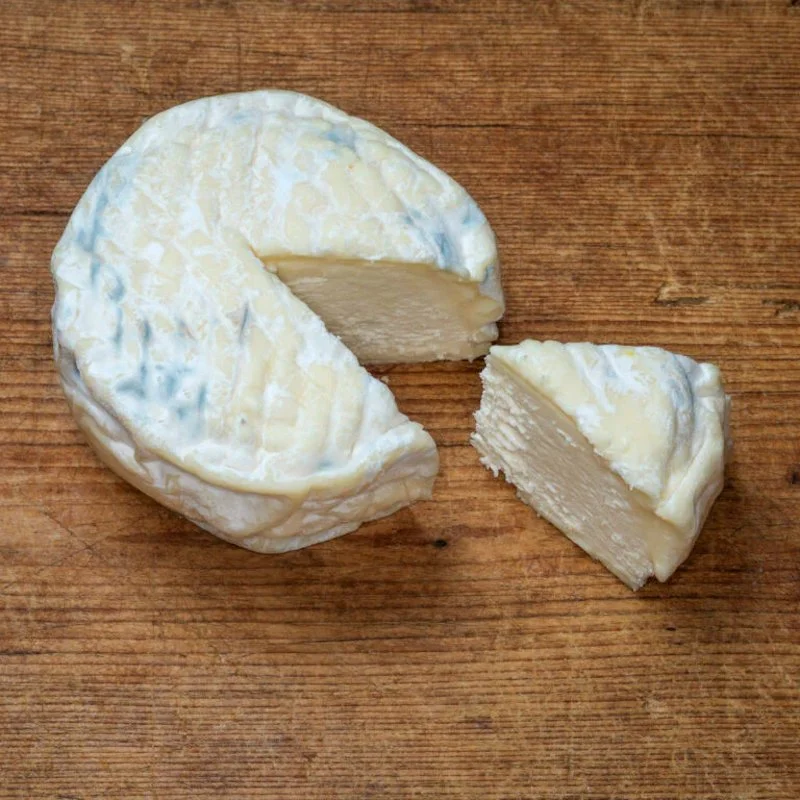
The Netherlands is increasingly becoming known for its soft, white-mold cheeses such as Fransje. Photo credit Fromagerie Abraham Kef
Traditionally, Dutch cheese culture prioritized hard, durable wheels designed for storage and transport. But a small but growing number of artisan makers, many of them without their own animals, are buying raw milk from neighboring farms and making soft, white-mold cheeses. While inspired by French lactic traditions, the results are distinctly Dutch.
Van der Werff described cheeses like Fransje and Rooie Neel, made by cheesemaker Mathilde van Otterloo with milk from farms in Kockengen. Fransje is a lactic-fermented white-mold cheese with a creamy texture. Rooie Neel is a washed-rind cheese with a pronounced aroma. Together, they reflect a broader shift among new Dutch producers, where the focus is on craftsmanship and process rather than branding or commercial positioning.
Other small producers are creating farmhouse wheels and experimental soft cheeses that rarely leave specialty shops. It makes them difficult to access but important to the evolution of Dutch cheese culture. Dutch cheeses are becoming a tradition that rewards the curious and keeps the very best things for those willing to look.
Where to Find Dutch Cheeses
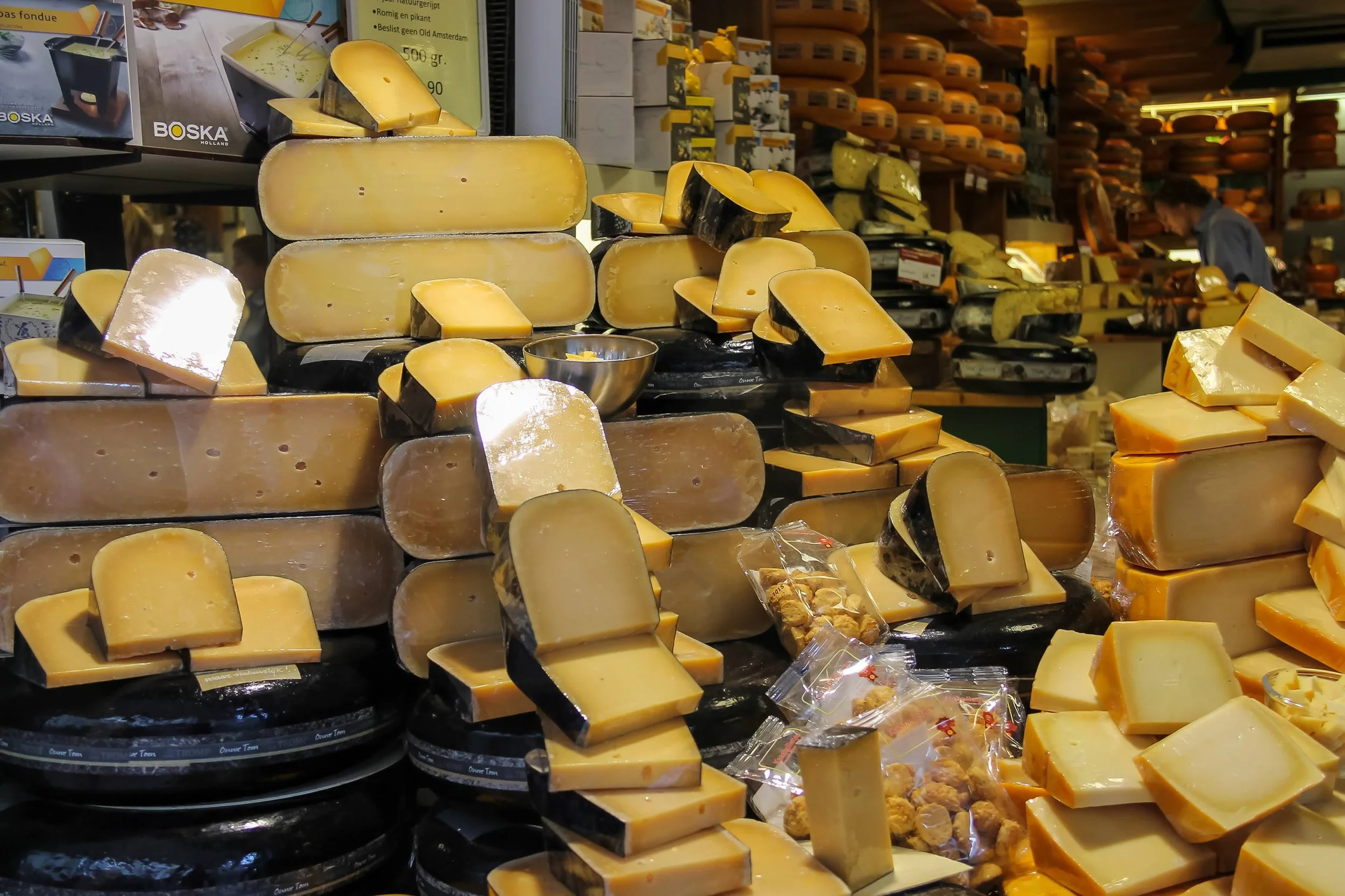
Inside the Netherlands, Amsterdam has the largest selection of Dutch cheeses. Photo credit Dreamstime
Inside the Netherlands, Amsterdam has the deepest selection. Shops like L'Amuse and Fromagerie Abraham Kef offer a big assortment. Smaller shops and markets across the Netherlands, like Oud Enkhuizen Kaas in Enkhuizen, are the best bet for artisanal selections direct from the producers within those regions.
Outside the Netherlands, most international availability is limited to aged Gouda, Beemster-style cheeses, and select industrial varieties. Farmhouse and experimental cheeses don’t travel much, which is part of what makes them worth seeking out locally.