
Romeu e Julieta: Brazil’s Cheese & Guava Love Story
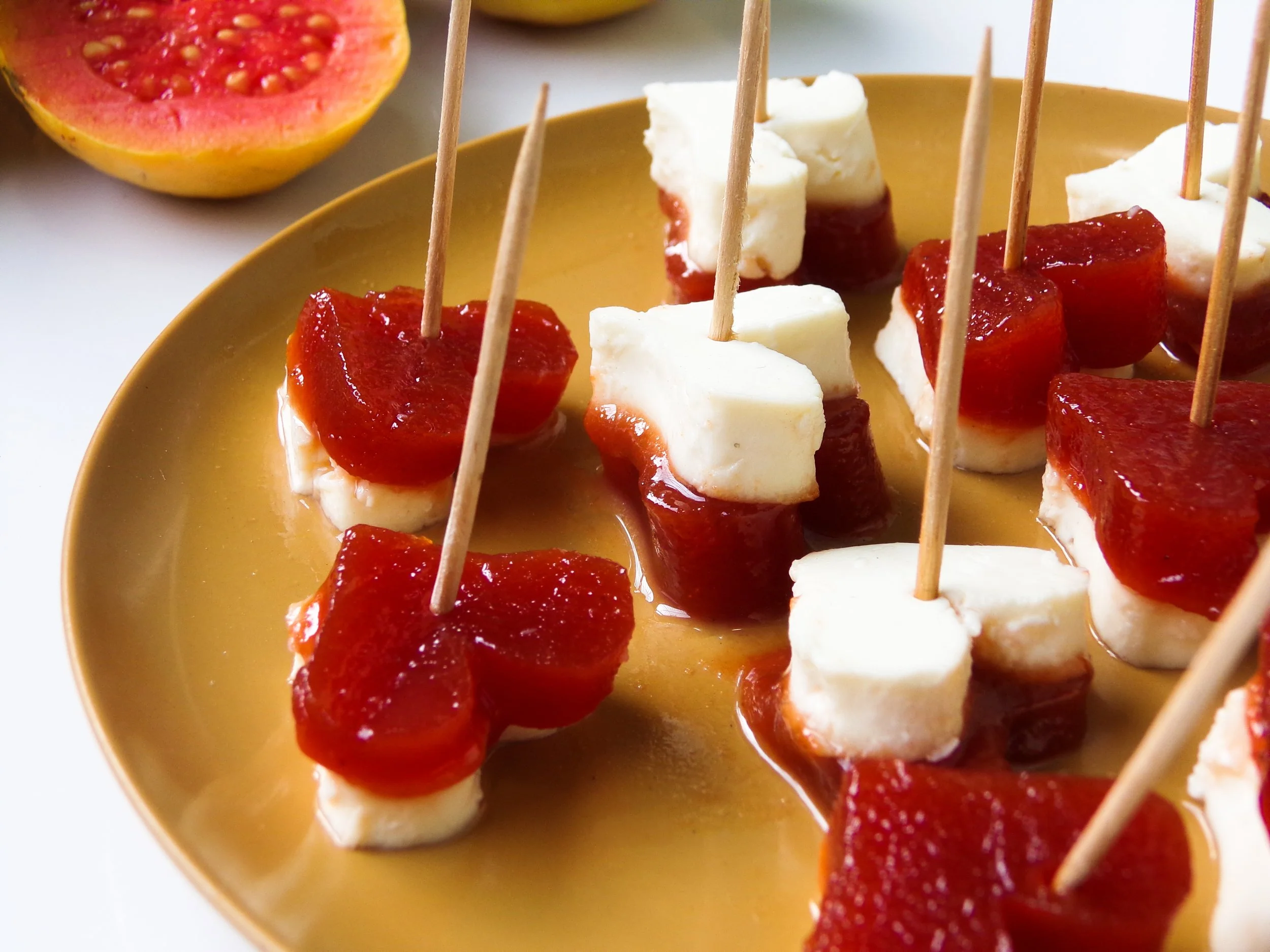
Romeu e Julieta
Few desserts require less explanation than Romeu e Julieta for a Brazilian. In its simplest form, it pairs a slice of goiabada (guava paste) with a slice of salty cheese. But across Brazil today, that humble household classic has found new life in restaurant kitchens, where chefs are transforming it into elegant plated desserts, gelatos, cheesecakes, and soufflés.
Cheese & Guava

Jaíne Mackievicz
Long before anyone called it Romeu e Julieta, Brazilians had been pairing fresh cheese with preserved guava for generations. The combination appeared on tables simply because it worked: the creamy richness of cheese balanced the concentrated sweetness of the fruit, creating a dessert that felt complete despite having only two ingredients. “As far as I know, it comes from the old European habit of eating fruit paste with cheese, adapted to the tropics through whatever fruit was available. In this case, guava, which grew in abundance. So, if you have ever had membrillo with Manchego, for example, this follows the same line,” says Jaine Mackievicz, a Brazilian food writer, recipe developer, and Le Cordon Bleu–trained chef based in California.
Cheese & Guava, Brazilian Style
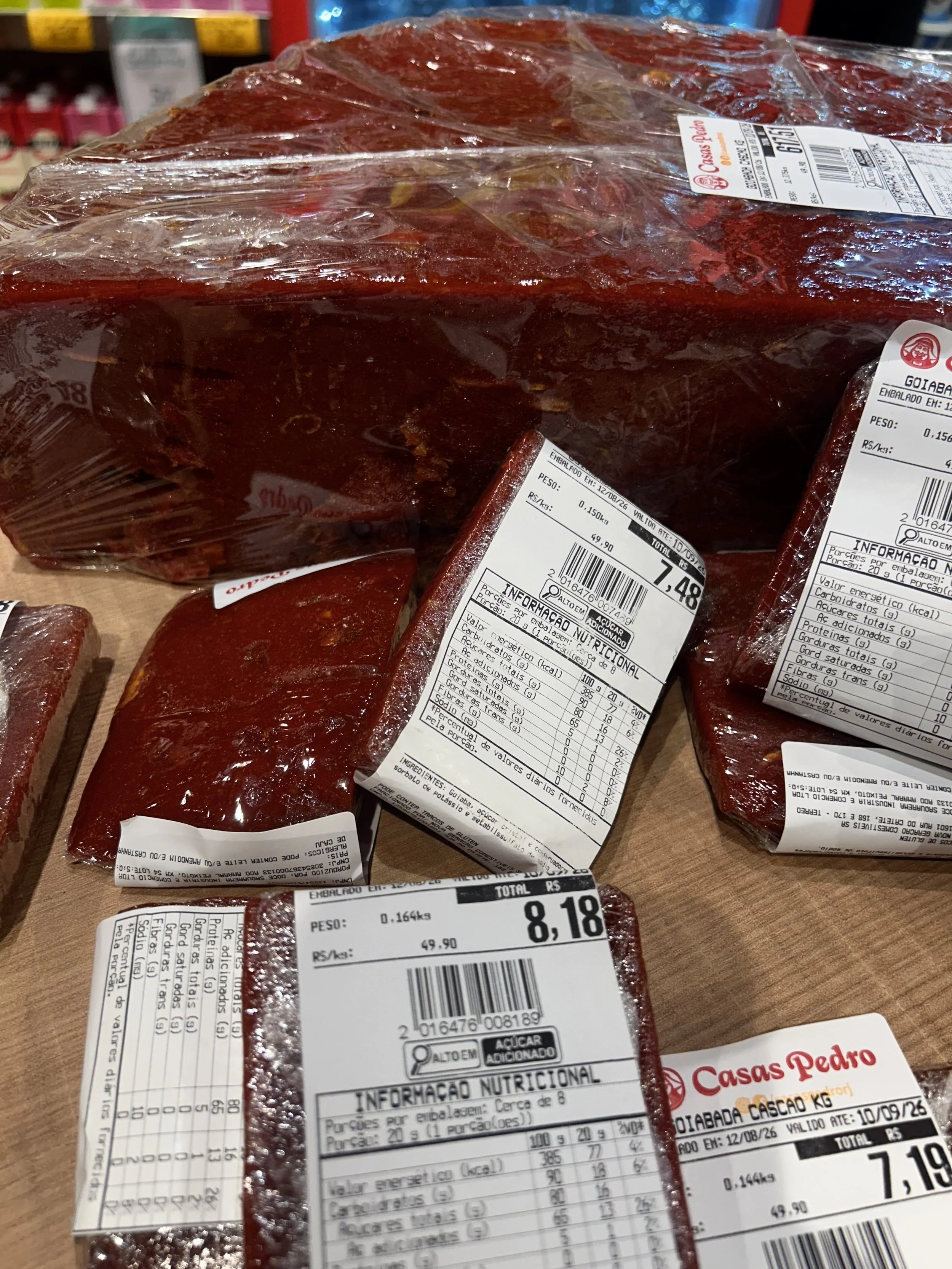
Guava paste in the store
Brazil's version reflects its own landscape and cheesemaking practices. Guava trees flourish across much of Brazil, producing fragrant fruit that ripens quickly and spoils just as fast. Preserving guavas with sugar transformed an abundant yet fleeting harvest into goiabada, a dense paste that could outlast the fresh fruit. The same instinct that inspired jams and fruit preserves around the world gave Brazil one of its most enduring pantry staples.
Meanwhile, the rolling hills of Minas Gerais were becoming the heart of Brazilian cheesemaking, and an abundance of fresh cheese became part of everyday life. "By the time this pairing became popular, Brazil leaned toward fresher cheeses that adapted better to the climate. A firmer, more aged cheese, heavier on the salt, works beautifully with most fruit pastes, but the fresher, softer, milkier white cheeses make it all so interesting, with their beautiful contrast of pale, sweet milk against the dense, ruby-red, floral intensity of the fruit,” says Mackievicz.
The origin of the name is uncertain, but it is widely and affectionately called Romeu e Julieta, a nod to Shakespeare’s star-crossed lovers, in this case, a culinary pairing meant to be.
Which Cheese?
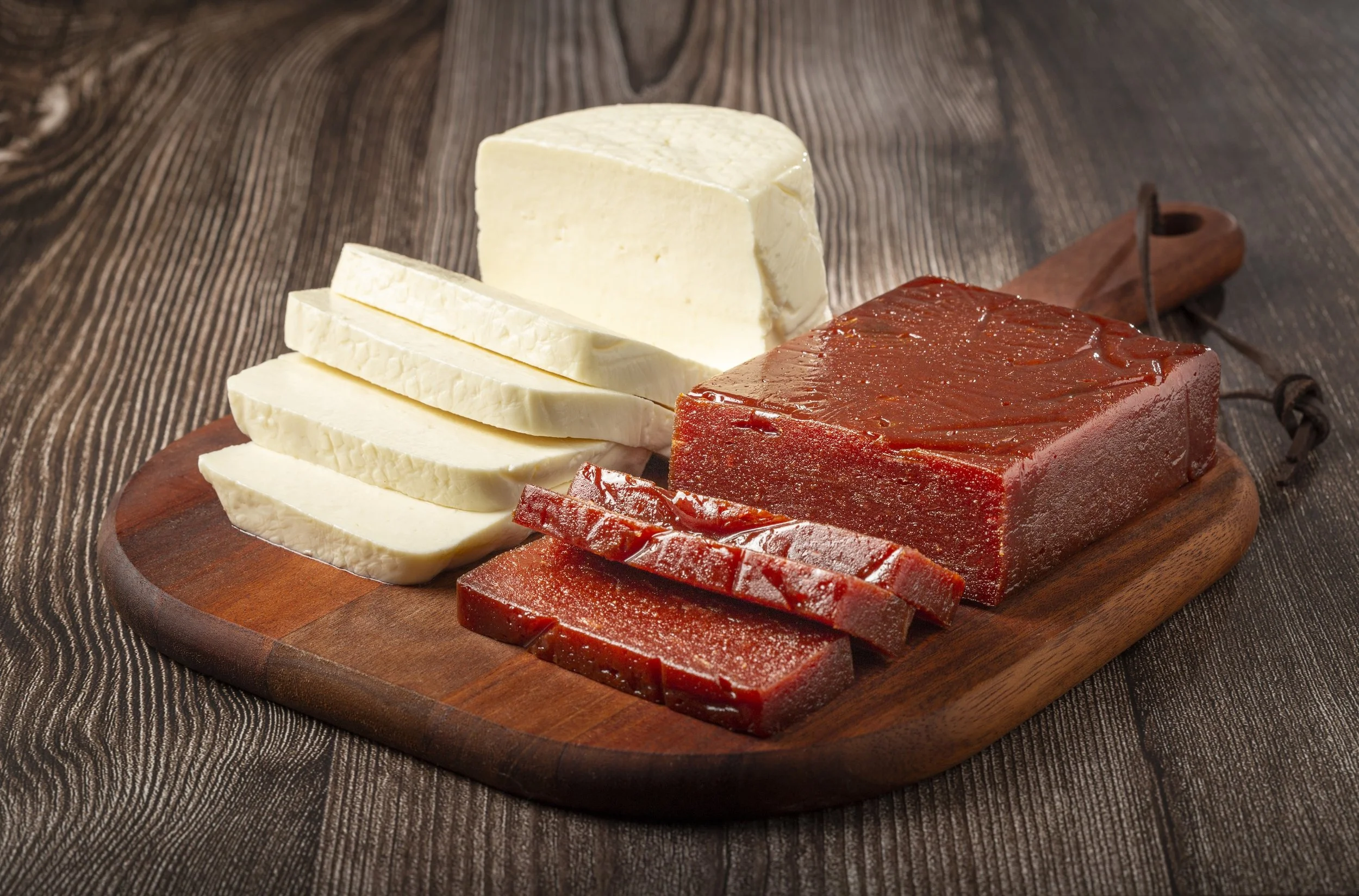
Slices of cheese and guava paste
Traditionally, the dessert is made with queijo Minas, a fresh, lightly salted cheese whose mild, milky flavor lets the goiabada take center stage. But in recent years, another cheese from Minas Gerais has become a favorite of contemporary chefs: Canastra.
Produced in the Serra da Canastra using raw milk and natural starter cultures passed down through generations, Canastra is one of Brazil's great artisanal cheeses. For decades, traditional Canastra producers found themselves caught between heritage and regulation. Modern food safety laws favored industrial, pasteurized cheesemaking, leaving many raw milk producers unable to legally sell their cheeses beyond local markets. One of Brazil's finest cheeses became something of an underground delicacy, traveling from farm to city through friends, relatives, and devoted food lovers rather than formal distribution channels.
Today, Canastra has undergone a remarkable transformation. Protected by geographical indication status and recognized internationally for its quality, it has become one of Brazil's defining artisanal cheeses. It has also become the luxury upgrade for Romeu e Julieta in contemporary interpretations.
Modern Riffs on a Classic

The author enjoying a Romeu e Julieta dessert in Rio
Gelateria Momo's Casamento Mineiro transforms the pairing into a creamy gelato made with Canastra cheese swirled with artisanal goiabada. Chef Claude Troisgros, one of the pioneers of contemporary Brazilian cuisine, has also reimagined the classic in a cheesecake featuring Canastra and goiabada. Around the country, pastry chefs continue to reinterpret Romeu e Julieta as mousses, soufflés, ice creams, and plated desserts. The presentations may become more elaborate, but the conversation between fruit and cheese remains unmistakable.
Jaine Mackievicz’s cooking is deeply rooted in Brazilian food memories for those living abroad. When asked how to enjoy this traditional pairing here, she recommends buying the real ingredients online or using “a good farmer’s cheese, queso fresco, or a young, mild goat cheese can get you close. If using cream cheese or mascarpone, I would add a little salt and citrus to give the dairy some edge. For the guava paste, most Latin markets carry solid pasta de guayaba, which you can slice as-is or gently melt with a splash of water and lime juice into a glossy sauce. When buying guava paste, read the ingredients carefully. Look for one made with cane sugar rather than high-fructose corn syrup, and ideally avoid anything with artificial coloring.”
Once ingredients are in hand, she recommends keeping it "embarrassingly simple” as the original dessert once was. “A generous spoonful of whipped cream cheese, loosened with just a drop of cream, a ribbon of guava jam, and crumbled sugar cookie over it… that alone can be enough.”
Perhaps its simplicity is why the pairing has endured. Romeu e Julieta carries generations of Brazilian food tradition while remaining endlessly adaptable, whether served on a family table or reimagined by the country's most celebrated chefs. It tells a story of resourcefulness, craftsmanship, and regional pride through just two ingredients.
Sometimes, great love stories really do end up happily ever after.