
Eat Burrata Like an Italian in Puglia
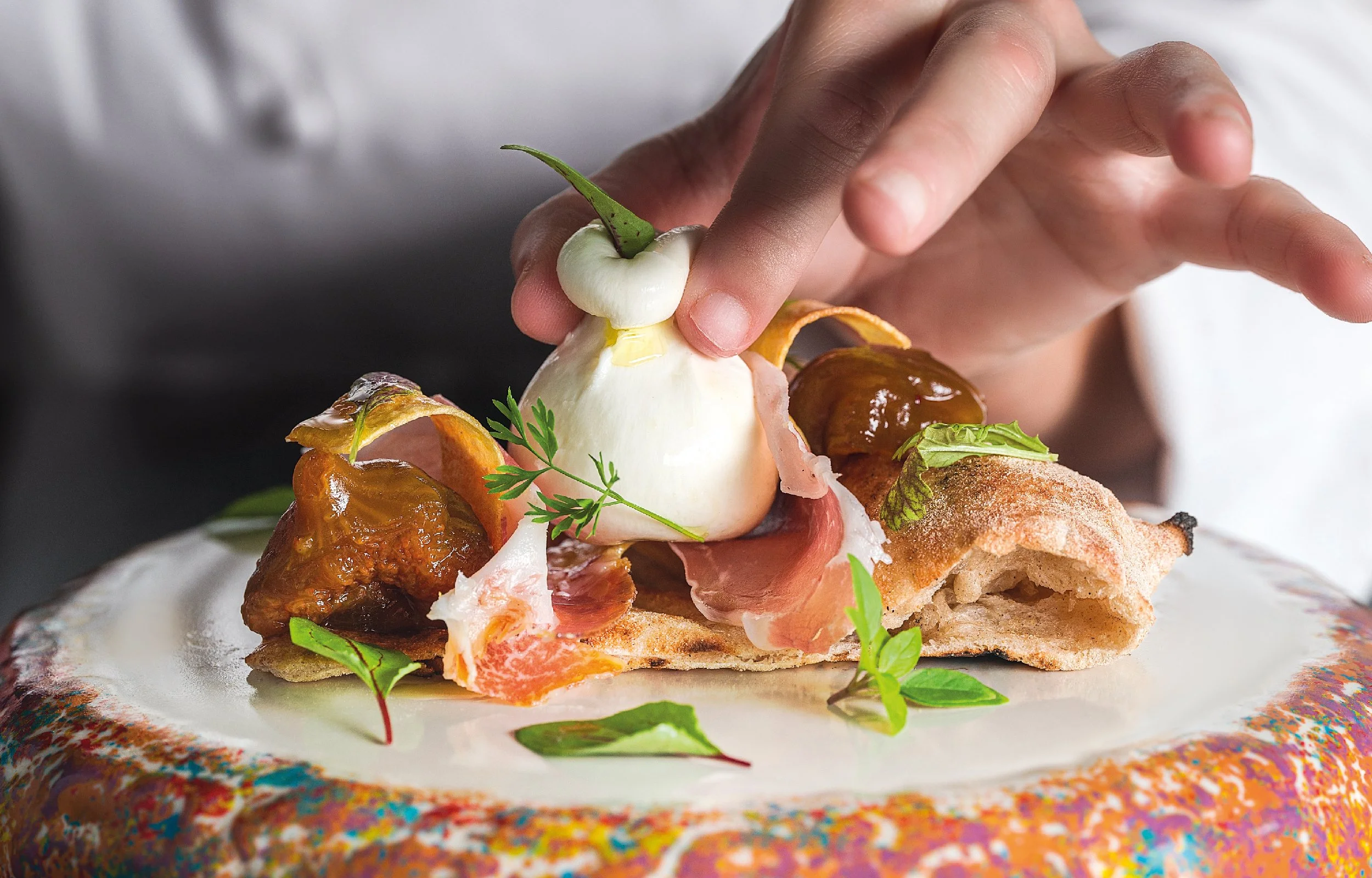
Burrata with figs and prosciutto, photo courtesy of Gioiella
The origin of burrata still holds some mysteries: was it created – as many locals say – in 1956 when, due to a mighty snowfall which whitened the whole Italian peninsula, the farmers had to find a way to preserve the fresh milk a little longer, turning it into small shreds of stretched curd and shielding them, along with the rich cream formed on top of the morning milking, into a mouth-blown, rich shell made with the same stretched cheese, originally closed using the edible stem of the asphodel plant, typical of the Murgia area. Or was it actually created in the 1920s by Lorenzo Bianchino Chieppa, perhaps during another major snowfall in 1929? This could explain why an Italian Touring Club guide mentioned burrata in 1931.
Is it also true that a similar method—shaping stretched cheese to preserve and contain—goes back at least to the previous century? Very probably, but such historical dilemmas will never be solved; and there are plenty of stories. For example, people say that in the 1970s, one of Andria’s oldest dairies shipped burrata every day to the Persian coast to satisfy the cravings of the Iranian crown prince, Reza Pahlavi.
Burrata on the Map
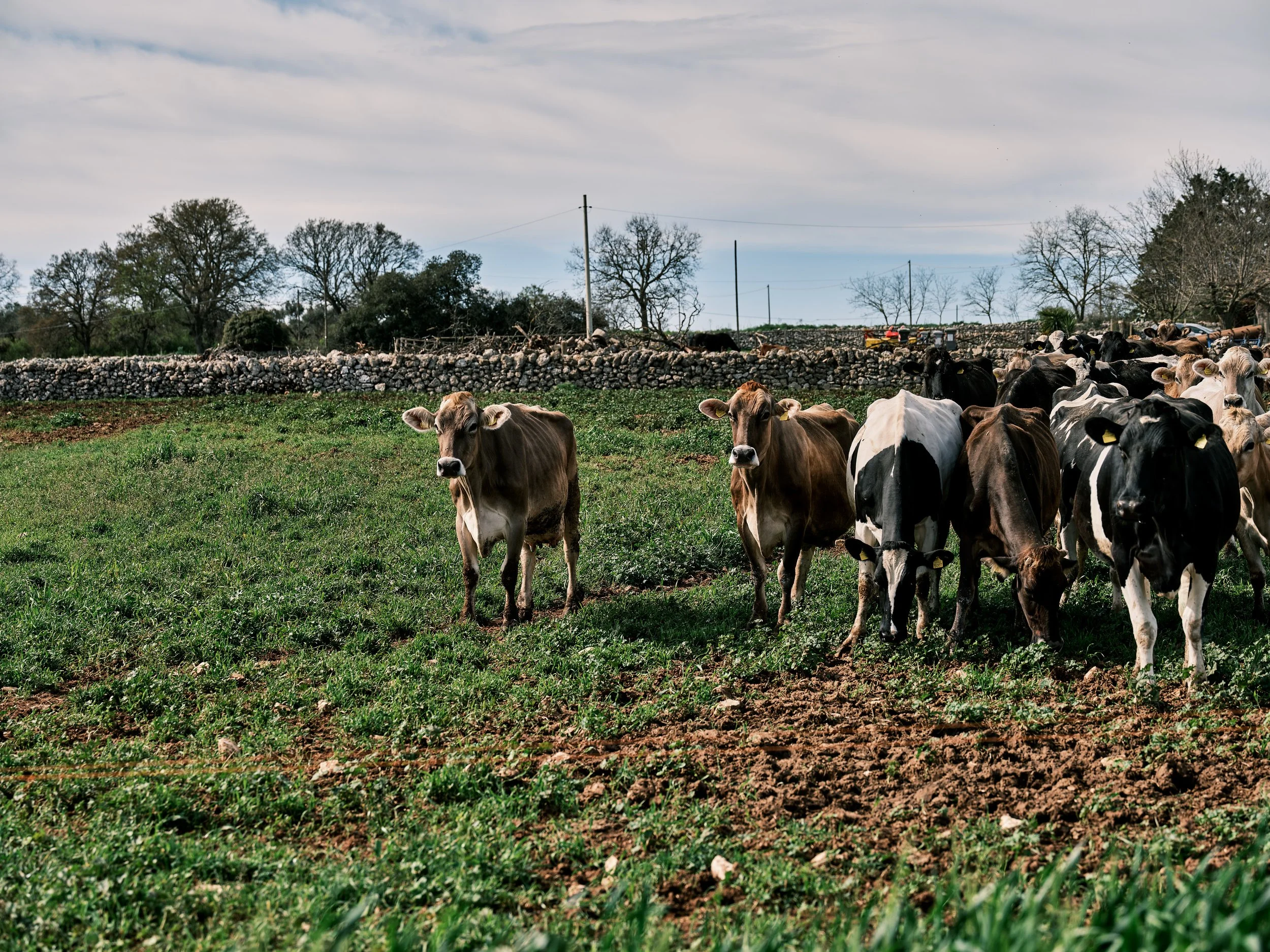
Cows in Puglia, photo courtesy of Gioiella
Burrata's geography, by contrast, is fairly certain: the richer, showier version of cow's milk mozzarella was born in Puglia, the region stretching over the heel of the Italian Boot. More precisely, in the vicinity of the glorious Castel del Monte, one of Italy’s most charming and enigmatic masterpieces, in the olive-tree-covered countryside surrounding the town of Andria. Unquestionable geographic data, confirmed by the PGI status of Burrata di Andria which was granted in 2016. (This covers the whole region and allows the use of milk from different regions).
The recognition came at the peak of the cheese's international popularity, when it became one of the most acclaimed (and ubiquitous) ingredients of all times, even starting to erode the market share of buffalo mozzarella and to oust it from pizzas, aperitivo plates and summer salads: a pervasiveness which didn’t fail to raise more than a few eyebrows.
But in Italy, burrata’s popularity is still unmatched. Many Mozzarella di Bufala Campana PDO producers now make their own buffalo-milk version. This market-driven choice may not be new. In the past, cows were rare in Puglia, sheep mostly arrived during the winter migration from Abruzzo, and buffalo were much more common, as Nicola Curci, a journalist and vice president of the regional Slow Food branch, explains.
"About 200 years ago, the Castel del Monte hill was a vast pastureland solely inhabited by water buffalo, animals that sought relief in the local waters. It was only later that a sheep-washing station was established along the 'tratturello 94', a secondary sheep track near the Appian Way», he says, hinting that crafting techniques could have got here alongside breeds and shepherds. Yet burrata is proudly a local product today, with some variations in other regional areas," Curci explains, adding "Every dairy in Andria and the surrounding area produces it, be it small family-run businesses or large companies,"
That is why the quiet Apulian town that gives the cheese its name is still the best place to eat it at its best and freshest: given its fragility, it has a very short shelf life and should be eaten the same day it’s made, without refrigeration. "If you don't consume it fresh, the cream turns yellow; the refrigerator ruins it: it dries out on the inside and turns sour on the outside. Ideally, you buy it in the morning and eat it at midday," Curci suggests.
This is why, alongside a visit to the majestic Castel del Monte – built by Frederick II, Holy Roman Emperor, both as his favorite mansion and as an esoteric path towards knowledge, with plenty of symbols hidden inside its imposing octagonal shape – and to the many local churches, one of the main reasons to get to Andria is buying, and eating, a true fresh burrata.
The Cheesemakers
The debate over which caseificio is best is open: here, every family has its own favorite. The most recurring names are Montrone, Fratelli Nuzzi and Famiglia Olanda (all of them associated with the Consortium).
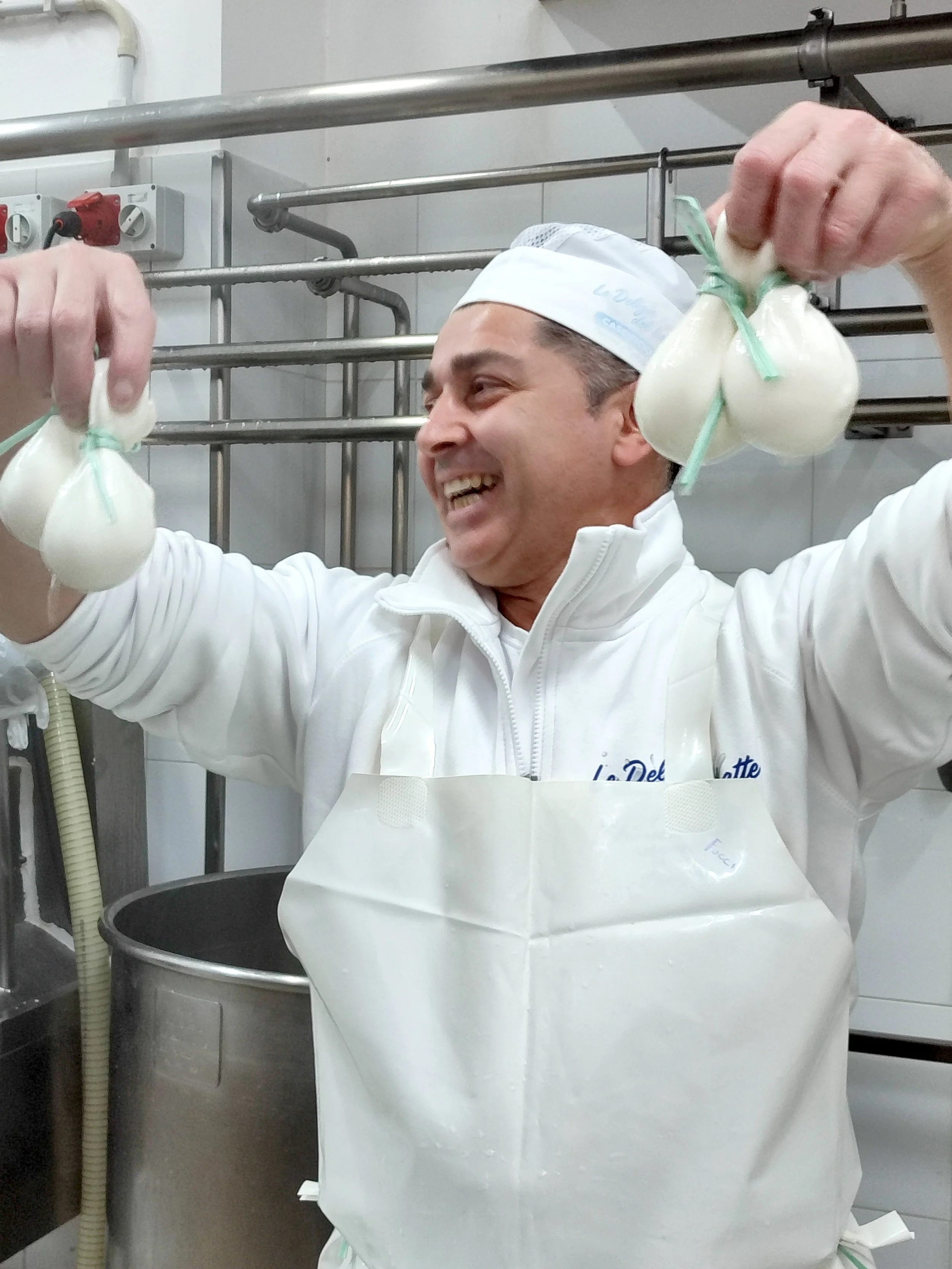
Vicenzo Fucci of Delizie del Latte
We visited Le Delizie del Latte, and we loved it although it’s out of the Consortium. It is a small urban dairy and shop now run by Vincenzo Fucci, who continues his family’s tradition. He uses only milk from Puglia and, with his team, makes burrata every day. They even prepare the cream in-house to keep the flavor rich but not overwhelming. The shells, which come in different sizes for sharing or single portions, are shaped by hand using a wooden peel, fingers, palms, and boiling water—just like with classic mozzarella, which is also made into “nodini” (knots) or “trecce” (braids). Each shell is filled with “stracciatella,” which is shredded curd mixed with cream and often sold on its own.
Alongside their standard range, they also produce the so-called "Sixties-style mozzarella": made by adding a whey starter to the cow's milk, rather than using citric or lactic acid, as was common in the Sixties. The result is a fuller flavor and a firmer texture – delicious in any shape.
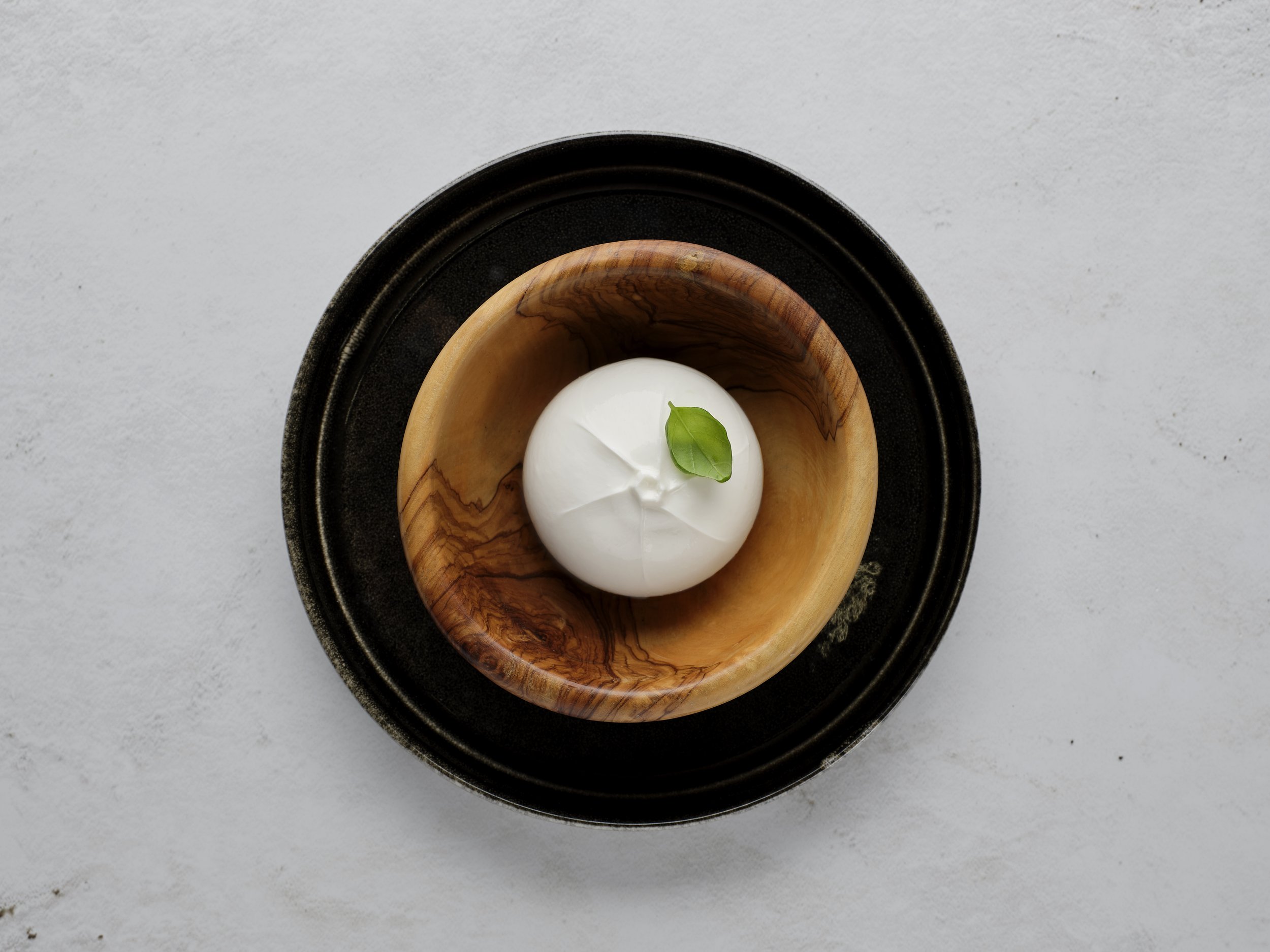
Burrata al pesto di basilico from Gioella
In larger dairies such as Gioiella, the leading local brand which also distributes burrata in many Italian shops and supermarkets and supplies restaurants and pizzerias in Italy and abroad, the scene is very different: huge vats, compressed-air molding, automated filling, and a production organization as precise as a Swiss watch. Yet, the result is no less satisfying.
How (and where) to eat burrata like a local
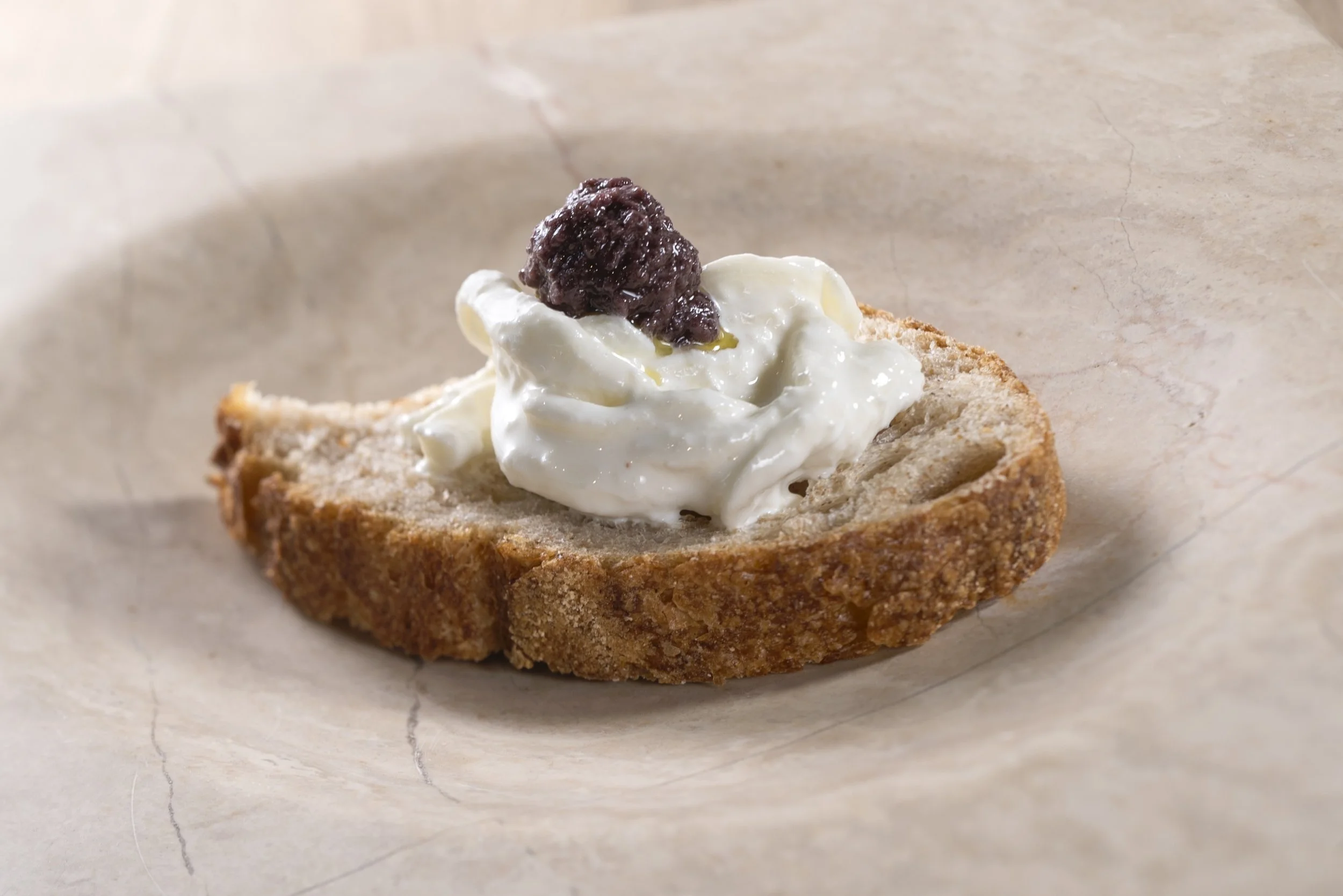
Burrata crostino from Pietro Zito of Antichi Sapori, photo credit Giuseppe Tricarico fotografo
Burrata is a must on local tables, eaten fresh and usually “plain.” Both Nicola Curci and Pietro Zito, “agro-chef” and owner of the renowned Antichi Sapori restaurant in Montegrosso (approximately a 20-minute drive from Andria), agree on this: "Burrata should be eaten as fresh as possible, and ideally just as it is, to respect its identity. It is a versatile ingredient that, over the years, has replaced cream in cooking; adding a little is an easy trick to fix a dish that hasn’t turned out quite right. It should always be added cold, never during the cooking process. Even on pizza, it should be added out of the oven, and you might let it cool down slightly first," restaurant owner Pietro Zito says.
Appointed Ambassador of Italian Cuisine in the world, Zito is one of the most passionate experts on local biodiversity, and a visit to his restaurant is a masterclass on local and Mediterranean food culture. He orders the best, freshest burrata only when he’s sure it will not be wasted: more often in summer, and always when he has guests from abroad, who love it so much. "I love to serve it as a starter, along with a bit of good, fresh bread or vegetables: maybe a carrot stick, fresh herbs, some ripe tomato and oregano in summer or sautéed 'cime di rapa' broccoli in winter. And sometimes it will arrive on the table on a toasted loaf of bread: a curl of shredded curd, with only a hint of cream, flanked by the bitter and fresh note of a pâté made with grilled Coratina olives." The photogenic drizzle of olive oil? Unnecessary, the chef and the journalist agree: it would only mean a double dose of fat.
Alterego Pizza Boutique
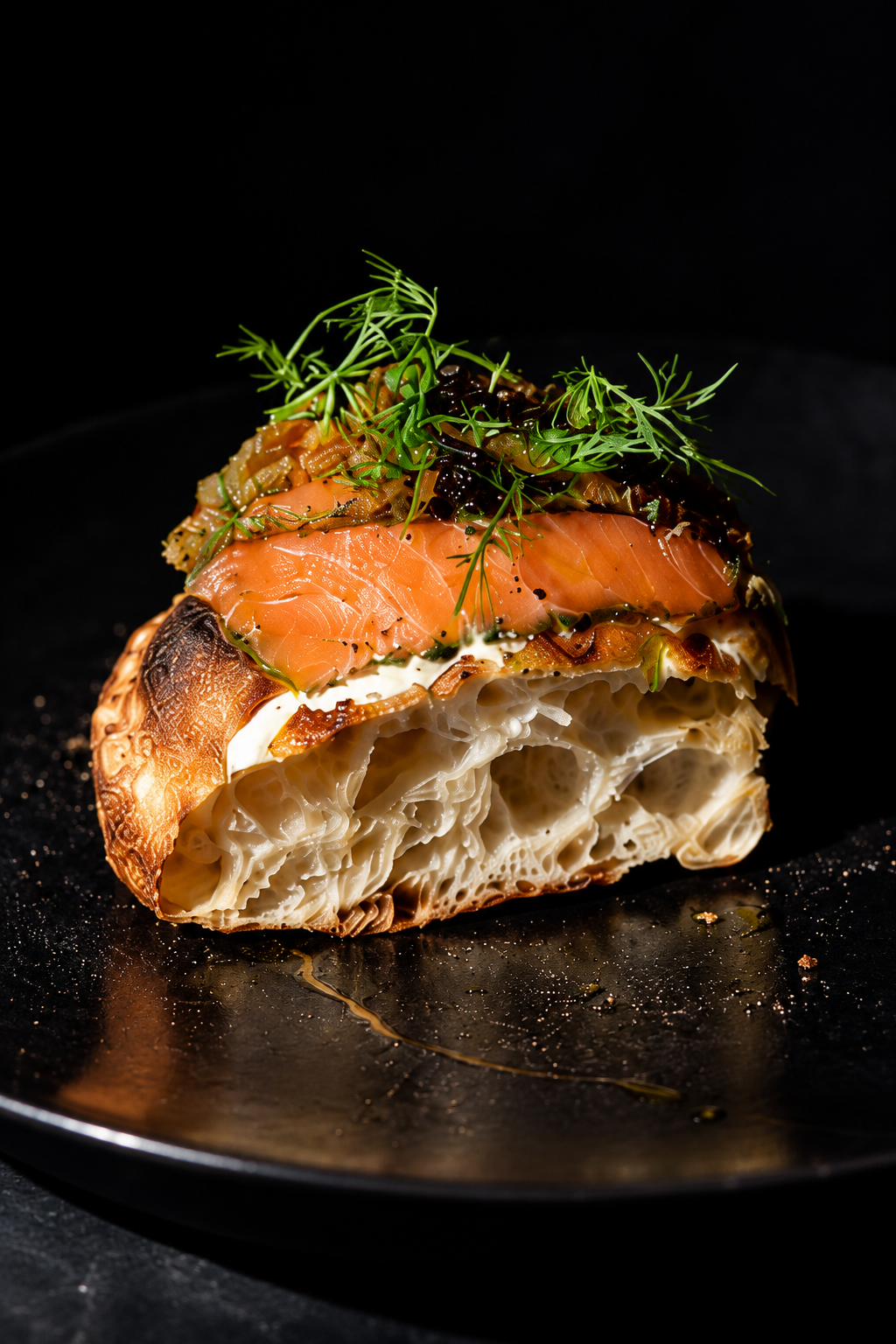
Alterego Coincidenza
Simplicity seems to have become the norm around here. In previous years, it was everywhere, piled generously onto many pizzas or added in abundance to all sorts of recipes; now, many local establishments seem to have opted for a more restrained, wiser approach. In Andria, at the acclaimed Alterego Pizza Boutique, Davide Di Chio has only one pizza featuring burrata on the menu: Coincidenza (coincidence, or connection), inspired by a layover in Brazil during a trip to Chile, features a crispy, pan-baked crust – made with dough enriched with Brazilian coffee – topped with burrata di Andria, salmon marinated with lemon leaves, the intense notes of fermented black lemon, dehydrated olives, and the fresh touch of dill.
Est Vinum et Cibus
Via Troya 11
Andria
At Est Vinum et Cibus, a cozy wine bar in Andria’s historic center, owner Michele Muraglia and chef Luca Gallo carefully choose the best local, seasonal products, including burrata, and pair them with excellent wines.
Antica Cucina 1983
Piazza Marina 5
Barletta
In nearby Barletta, a signature dish at the elegant Antica Cucina 1983 is Delarolle risotto. Here, the earthy flavor of roasted pepper sauce combines with the fresh creaminess of stracciatella, the saltiness of caper powder, and a special touch of edible gold leaf.
Brando Pizza Bistrot
Via Roma, 70
Gioia del Colle
At Brando Pizza Bistrot in Gioia del Colle – which she launched together with Andrea Brandonisio, CEO of Gioiella – the multi-awarded pizza lady Roberta Esposito, from Campania, proposes the Margherita Assassina (where assassina, killer, is a nod to the famous spicy pasta recipe from Bari), with spicy sauce, burrata, cave-aged caciocavallo, basil pesto and extra virgin olive oil from Puglia. At the same time, the menu mostly focuses on another dairy specialty by Gioiella: Gioia del Colle PDO mozzarella made from cow’s milk.