
How to Use Every Kind of Mozzarella From Buffalo to Burrata
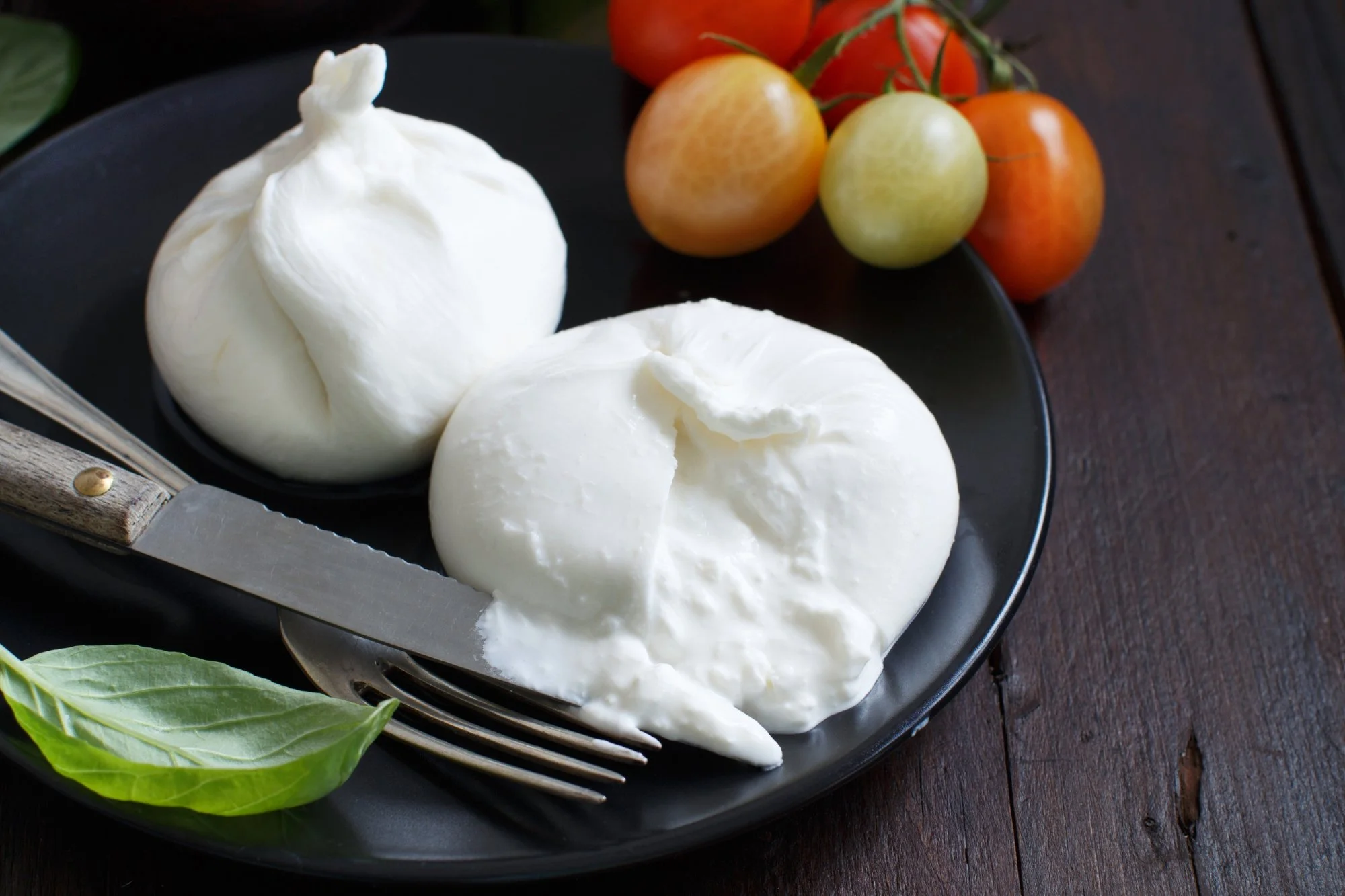
Burrata
Imagine a cheese that resembles a snowball and oozes like a pierced, poached egg. Or a cheese that browns and blisters when exposed to the 800-degree fire of a wood-burning brick oven. That’s mozzarella, of course, or should I say these are the mozzarellas. There are several variations on its mild creamy theme, but each type of mozzarella is fairly distinct, and knowing which one works best with which foods is crucial to getting the most from the famous pasta filata.
In her 2017 work, The Book of Cheese, author and cheesemonger Liz Thorpe describes the allure of mozzarella and adjacent cheeses. “Fresh cheeses are simple, but the good ones are never boring,” she writes in the lead-in to the chapter. “They’re amazing foils for other flavors, cheese to be eaten instead of meat—sauced with pesto, oil, or roasted red pepper puree.”
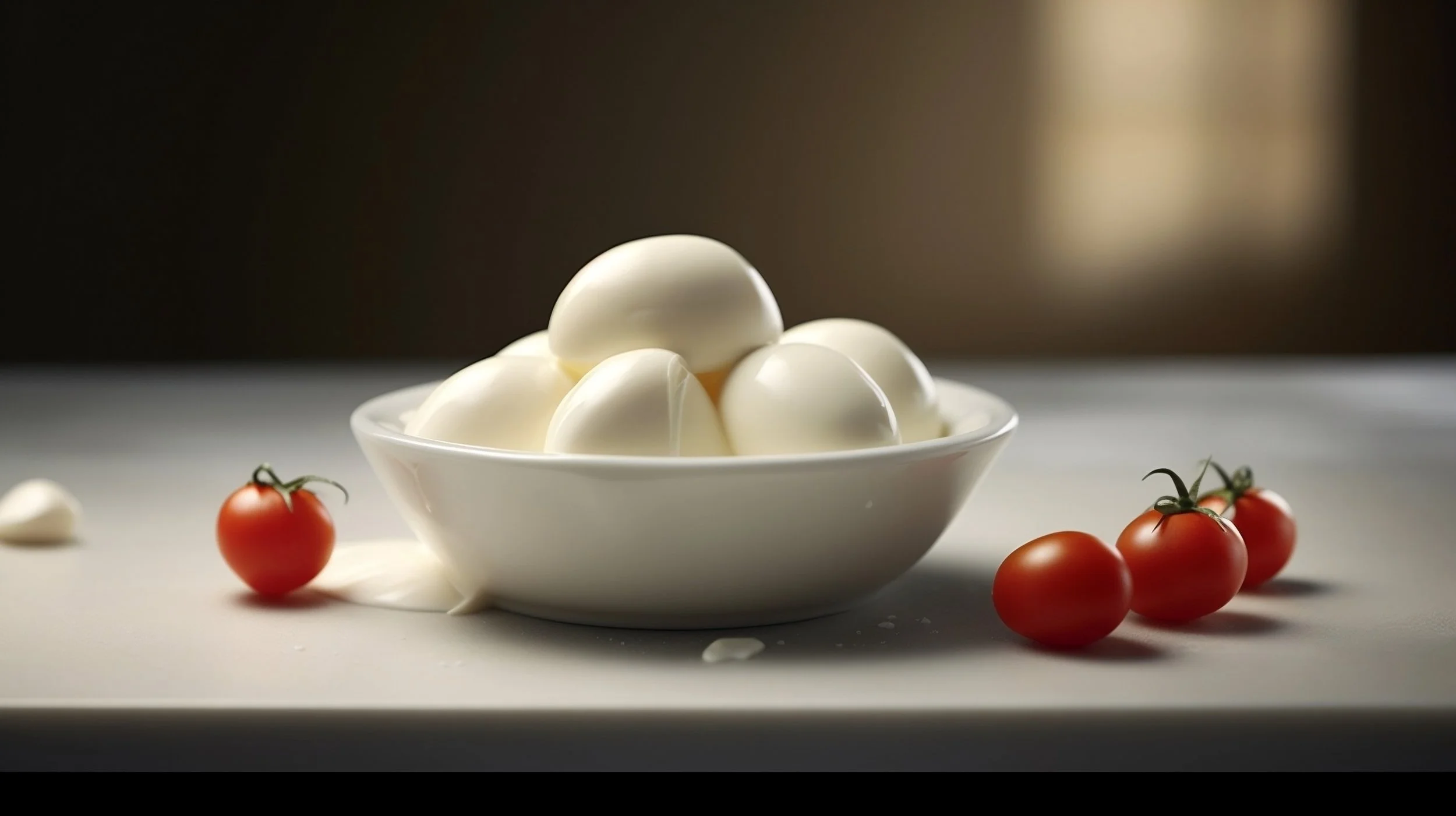
Mozzarella in a bowl
Mozzarella is familiar and confusing for many consumers. Customers at a cheese shop or a fine Italian-themed grocery store in the U.S. often ask, “How do I use this burrata?” or “Is mozzarella best for a caprese salad?” In her discussion of mozzarella types, Thorpe suggests which pairings work best. Among her ideas are:
Pairing spiced and smoked nuts with fresh high-moisture mozzarella
Pairing ‘Nduja (spicy spread made from pork trimmings of prosciutto) with more flavorful types like bufala
Pairing candied citrus peel with briny mozzarella, which might also include bufala
Types of Mozzarella
Low moisture mozzarella
Buffalo mozzarella
Fresh mozzarella
Burrata
Smoked mozzarella
Low-moisture can be made with whole milk or part skim, and is commonly used for pizza. For convenience and sometimes to the detriment of quality, it can be purchased pre-shredded. Best used for cooking, try in pizza or lasagna.
Buffalo Mozzarella is the “original” mozzarella, made from the milk of water buffalo, it became common in parts of Italy in the late 18th century. Mozzarella di bufala campana (PDO) is also registered as an EU and UK protected designation of origin. The milk from these animals is quite rich in fat, and the flavor of a buffalo mozzarella is more pronounced than those made with cow’s milk. Best used in salads or sandwiches. Can also be used as a topping for cooking dishes such as pizza or pasta.
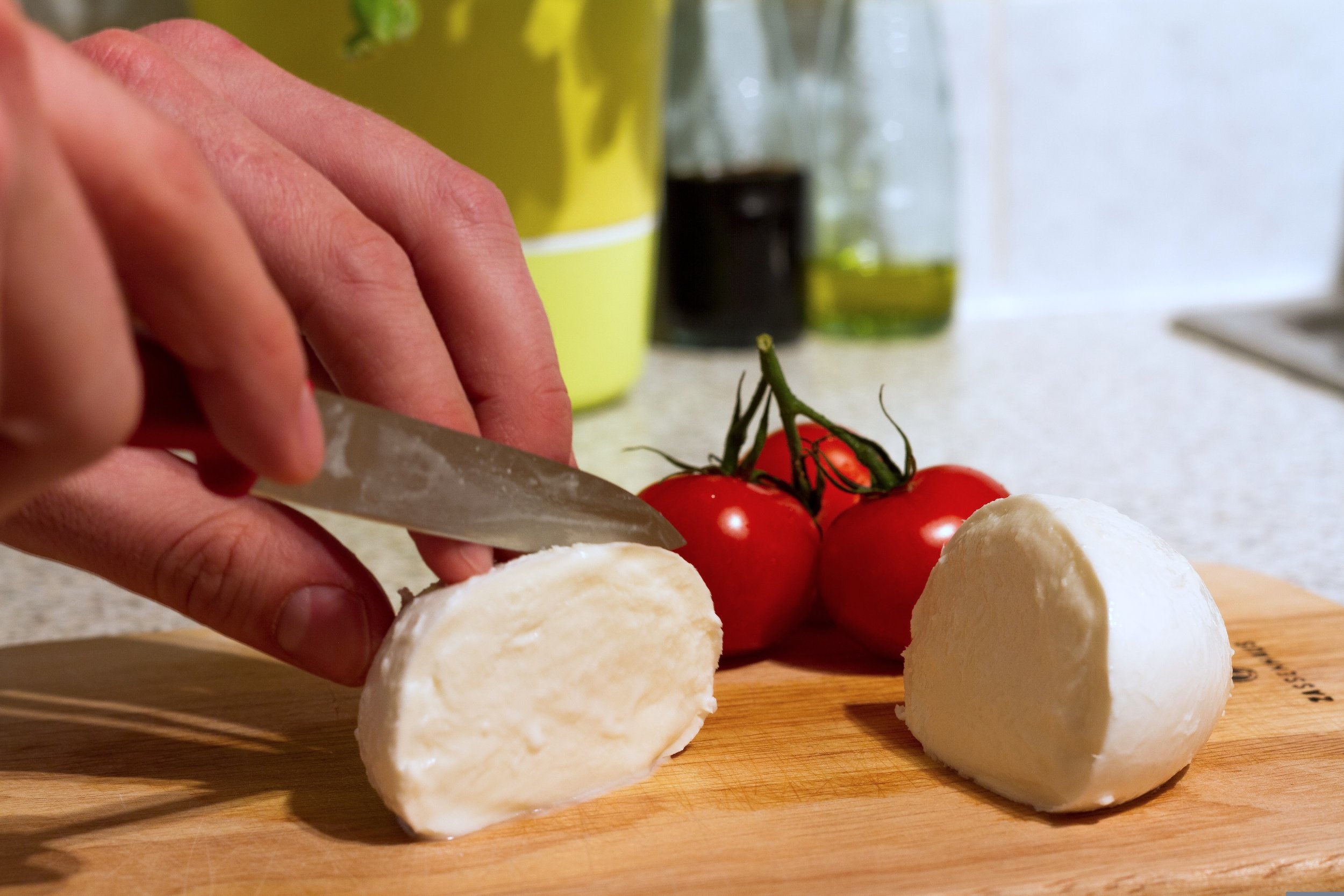
Slicing fresh mozzarella
Fresh mozzarella comes in various sizes and is usually made from whole cow’s milk, and kept in a brine solution. It has a high moisture content, and a very mild flavor of fresh milk. Best used for salads or antipasto.
Burrata is a fresh mozzarella formed in a pouch that is stuffed with stracciatella (tiny bits of torn cheese suspended in cream). It oozes, and also has a fresh, clean flavor. Best when torn or served whole on top of a cooked pizza, pasta, or vegetables.
Smoked mozzarella is usually made from low-moisture scamorza (but sometimes from fresh or even from burrata), it has a hint of smoke overlaying the milky flavors and aromas. Versatile and can be used in antipasto or cooked dishes such as baked pasta.
Which Mozzarella for Pizza?

Bethany Johnson
“While pizza cheese, low-moisture mozzarella, and fresh mozzarella all fall under the same umbrella, they are quite different in how they’re made, how they taste, and how they function on a pizza,” says Bethany Johnson, a licensed Wisconsin cheesemaker who serves as a technical sales manager for the cheese unit of Canadian-based Saputo, Inc.
“When most Americans picture a pizza, they’re thinking of low-moisture mozzarella cheese, either part-skim or whole milk. These cheeses have a standard of identity that must be met for fat and moisture content. The term pizza cheese refers to cheeses made specifically for performance on a pizza. The main difference between this and low-moisture mozzarella is there is no standard of identity for pizza cheese, so brands can innovate to make a cheese that works for the application. These cheeses can be solutions for customers with specific ideas for melt, stretch, or browning.”

Jason Herbert, cheesemonger at Caputo Cheese
Jason Herbert, is the head cheesemonger and works in research and development for Caputo Cheese, Melrose Park, Ill., a company that is heavily focused on making award-winning pasta filata cheeses. Herbert says those variations in moisture and fat content lead to noticeable differences in a finished pizza.
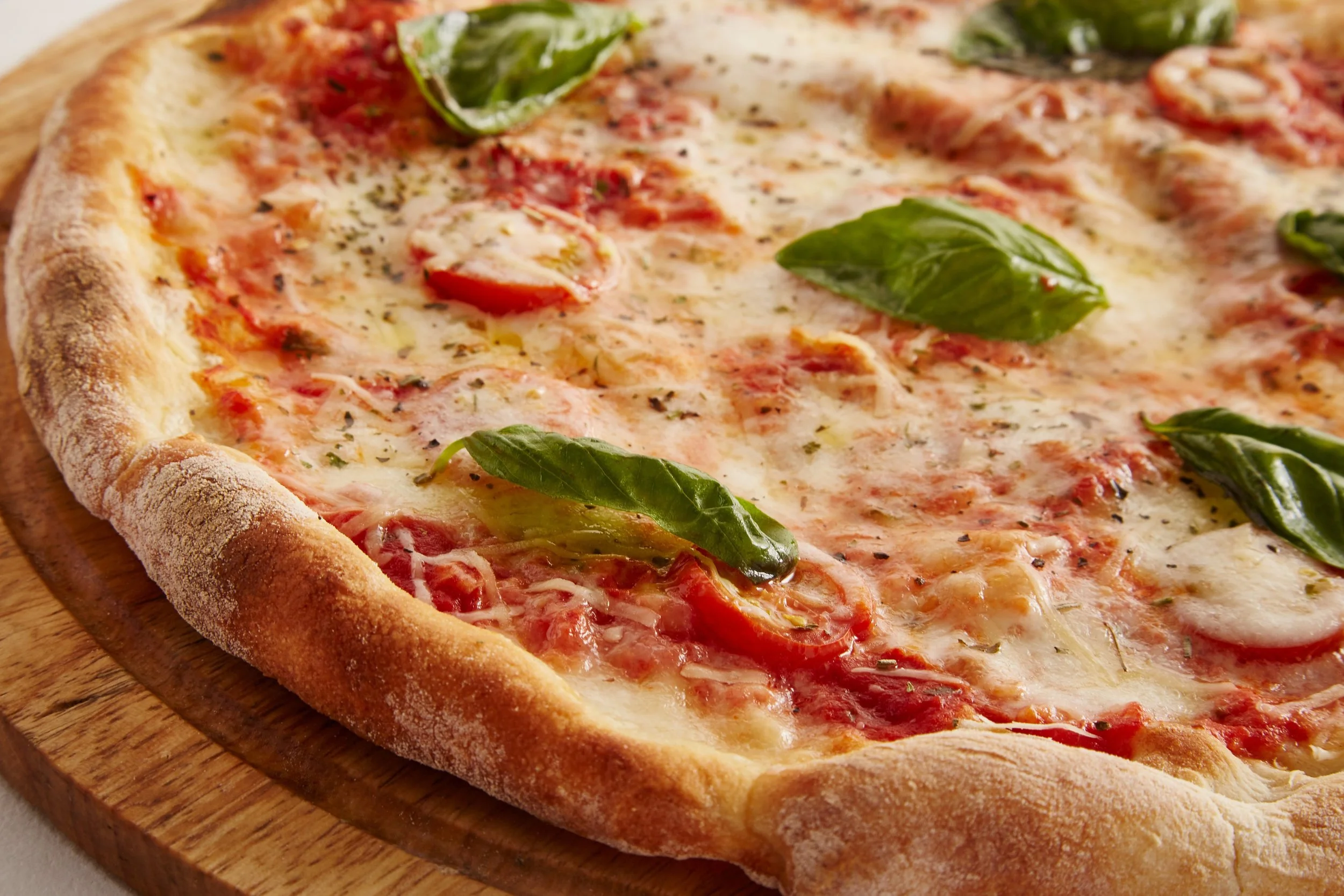
Pizza with low moisture mozzarella
“Whole milk low-moisture mozzarella is the beautiful topping on a NY-style pizza—pale white with dark brown spots, and a glistening sheen of oil across the surface with the oh-so photogenic stretch,” Herbert noted. “The cheese has an ideal balance of fat, moisture, and acidity for high temperature cooking, the proteins get Maillard-reaction browning while remaining flexible and tender. Low-moisture part-skim mozzarella, in contrast, behaves more politely. Its benefits include a decent shelf life, mild kid-friendly flavor, versatility, and universal availability at retail and wholesale.”
Experts also note that mozzarella can pair well with other, more assertive cheeses like provolone or fresh chevre when crafting a more innovative pizza.
What to do with Burrata and Bufala?
Salads
Sandwiches
Pizzas
Herbert describes burrata as “the most elegant” of the mozzarellas ,“A thin shell of fresh mozzarella barely contains the stracciatella,” adding, “Almost unheard of a decade ago and only available by air shipment from Italy or directly from the makers’ vat, burrata now permeates menus across the country.”
Truly indulgent but simple, burrata appeals to aficionados and novices alike, he adds.
Burrata has become popular as an addition to salads. It is also great when used carefully on an adventurous sandwich. A sprinkling of balsamic does wonders for burrata in a variety of salad and sandwich dishes.

Chef Michael Mayer of La Fuga
Chef Michael Mayer oversees the cuisine at La Fuga, a pool-side Italian influenced restaurant in Ft. Lauderdale, Fla. Mayer finds that buffalo or whole milk low-moisture cow’s milk mozzarella has some great applications for the upscale pizzas on his menu. “I use buffalo mozzarella on some of our pizzas because it’s softer and it has a little bit of a tangy flavor.”
Where he uses low-moisture cow’s milk, Mayer prefers whole milk rather than part skim, finding that it offers more flavor.
Buffalo milk has nearly twice the fat of cow’s milk, but is much lower in cholesterol. As Mayer notes, the cheese has a full flavor that is sometimes described as tangy, mossy or grassy.

Austin Coe Butler, cheesemonger at France 44
At France 44, an expansive cheese shop in Minneapolis, fresh pulled mozzarella and burrata are made in house from Easter to Halloween when demand is elevated. But Austin Butler, one of the shop's cheesemongers says mozzarella has applications year-round.
“Burrata in a warm salad of lentils and roasted squash is a favorite of mine in the autumn, he says. “A salad of fresh mozzarella, winter citrus like Meyer lemon, grapefruit, and blood oranges with balsamic is delightful.” See Winter Citrus Caprese Salad recipe.
The shop offers popular classes on making fresh mozzarella and burrata, Butler says, and customers also seek low-moisture block mozzarella for pizza.
Let Shape Be Your Guide
Small (bambini, perline, ciliegine)
Medium (bocconcini)
Large (ovoline)
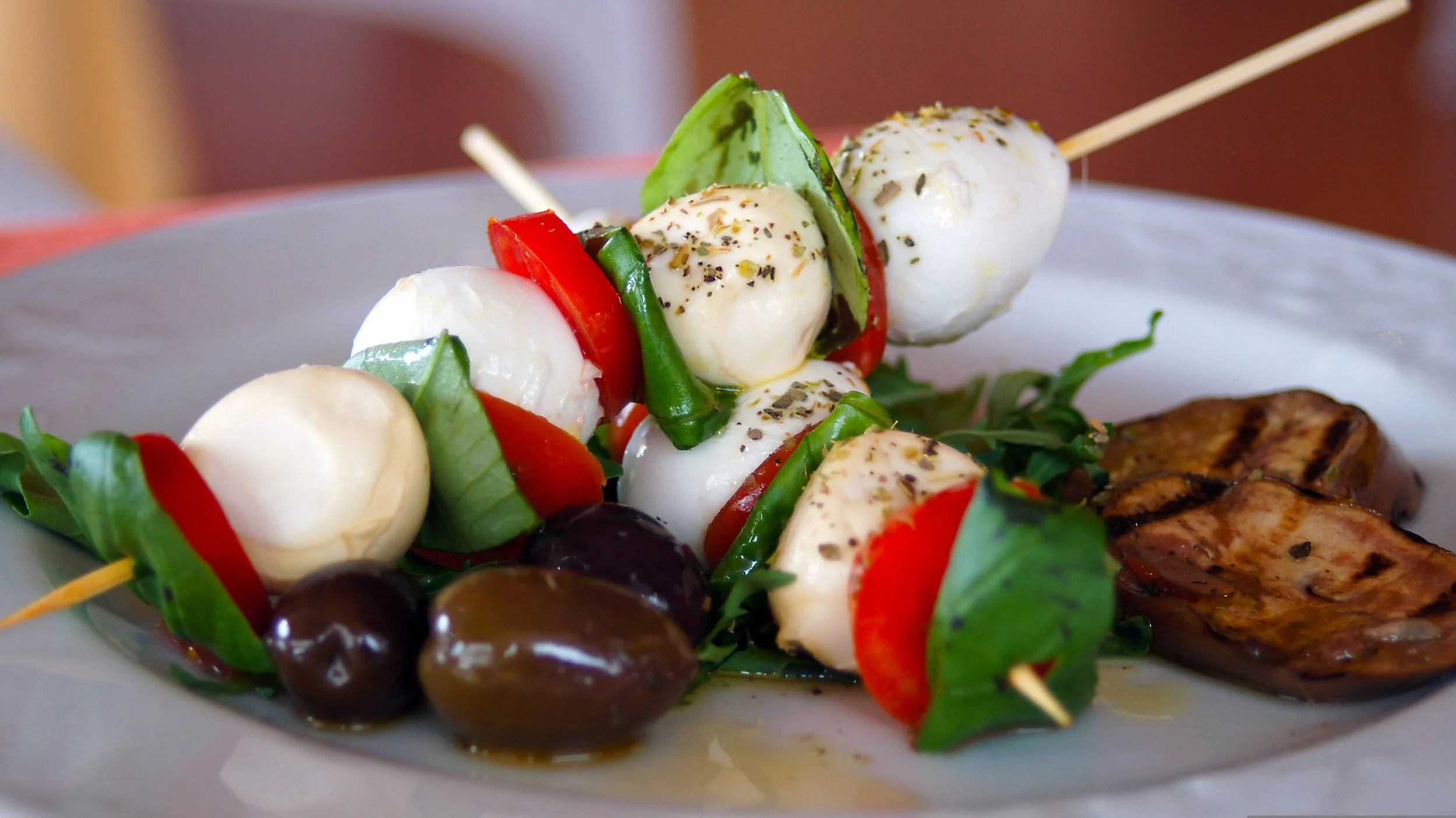
Bocconcini
The smallest sizes of fresh product (ciliegine or perline/bambini) are popular for salads.
Bocconcini (golf ball-sized) work well for caprese skewers.
Larger egg-sized ovoline is perfect when sliced with a similarly sized home-grown tomato for the three-colored caprese salad.
All of these guidelines are mere suggestions, of course. Home chefs in particular should feel free to mix things up. Try using burrata in pasta dishes or sparingly on a pizza, or putting low moisture cheeses to work when fresh options are not easy to come by.