
6 Regionally Distinct European Butters to Know
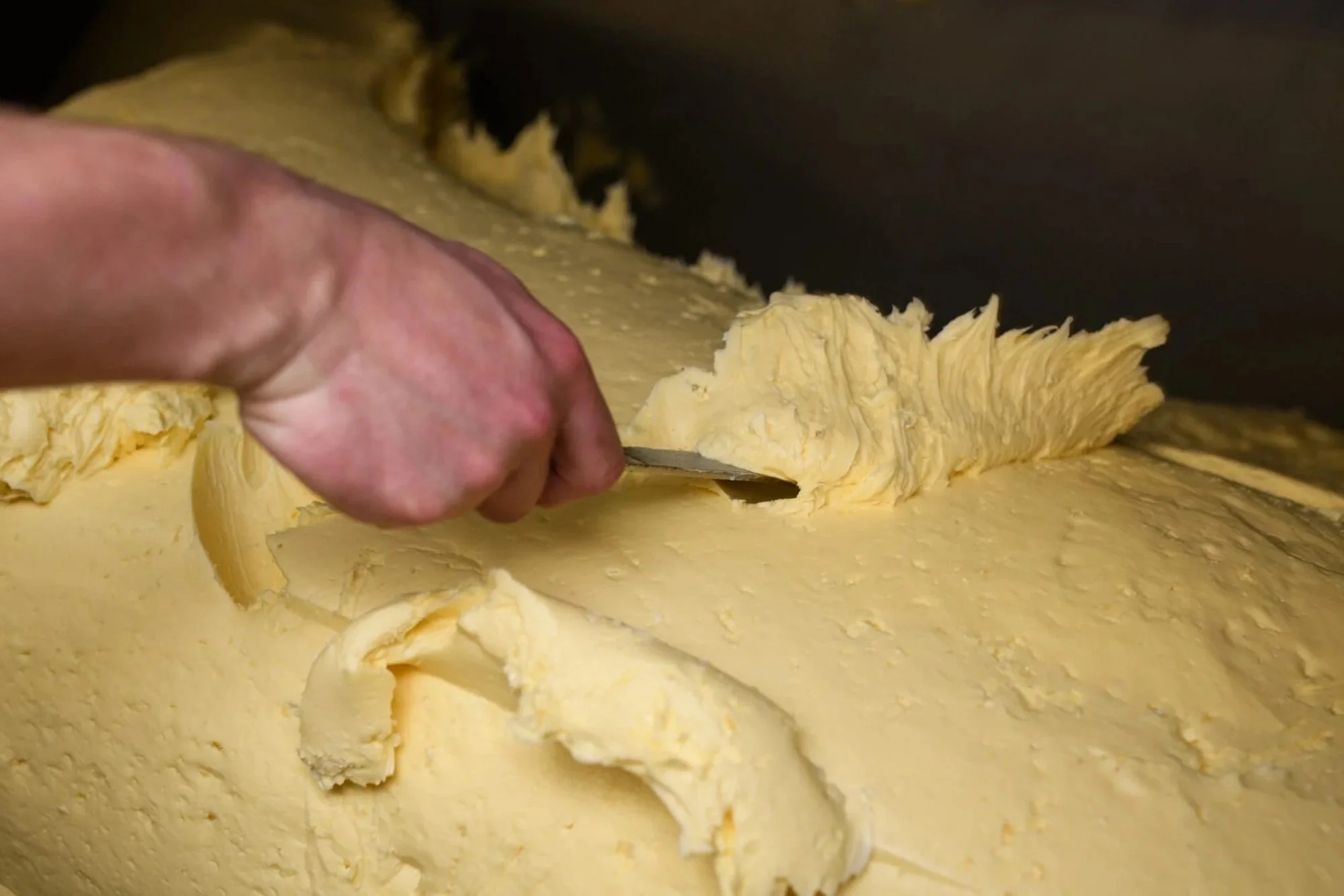
A fresh batch of Isigny Sainte-Mère Beurre d’Isigny PDO
Just as many of us have had a revelatory moment crossing from commodity to artisan cheese, butter can inspire a similar revelation. Anyone who has graduated from mass-market American supermarket butter to European-style butter has already tasted that difference; the latter are often richer simply by regulation, with higher butterfat minimums, even when produced on the same scale.
Imagine, then, what epiphany awaits in Europe’s name-protected and regionally specific butters. Like Brie de Meaux or Beaufort, there are butters across the continent whose sense of place and adherence to quality are so exceptional that they carry protected designation of origin, or PDO, status. Opening a package of butter of this quality is like unleashing Époisses on your senses, except the resulting waft is buttercream rather than basement.
While France has a stronghold on name-protected butters, other countries have selections worth knowing, too. Although many are available in the United States, others — because of their fresh raw-milk pedigree or small production — are not imported, making them worth seeking out next time you’re abroad. Here are six regionally specific European butters you should know.
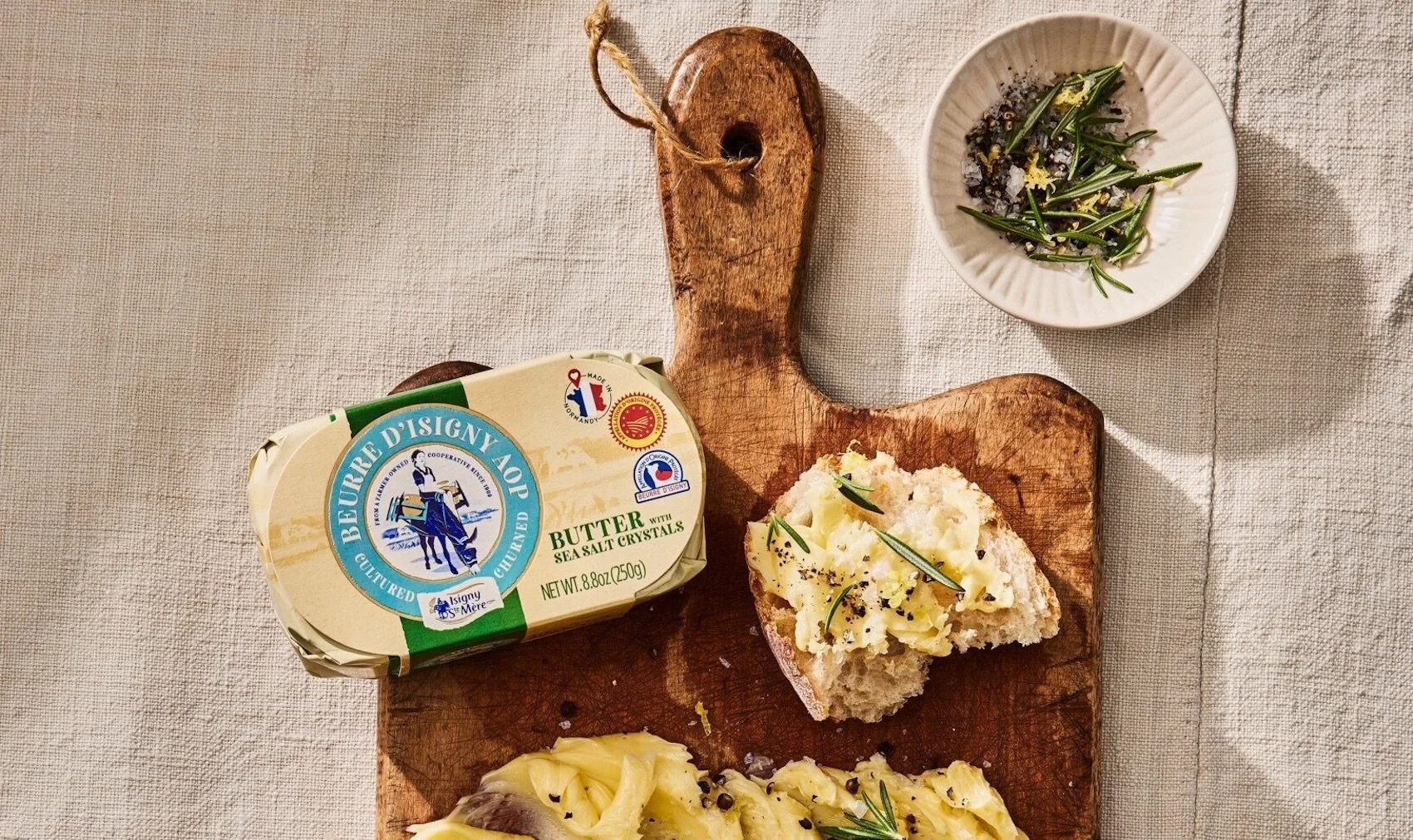
Beurre d’Isigny PDO. Photo credit Isigny Sainte-Mère
Coming from Normandy, the fertile northern French coast that also gave the world Calvados and Camembert, Beurre d’Isigny PDO begins with cream that has PDO status unto itself. The region’s favorable maritime climate allows extended grazing for Normande cattle on grass saturated by the sea air, resulting in milk rich in minerals and beta carotene, and a butter so yellow it is likened to buttercups.
While Isigny butter is cultured — meaning cultures are added through fermentation to contribute flavor — it is also pasteurized, making it the PDO butter most readily found in U.S. grocery stores, primarily through the brand Isigny Sainte-Mère.
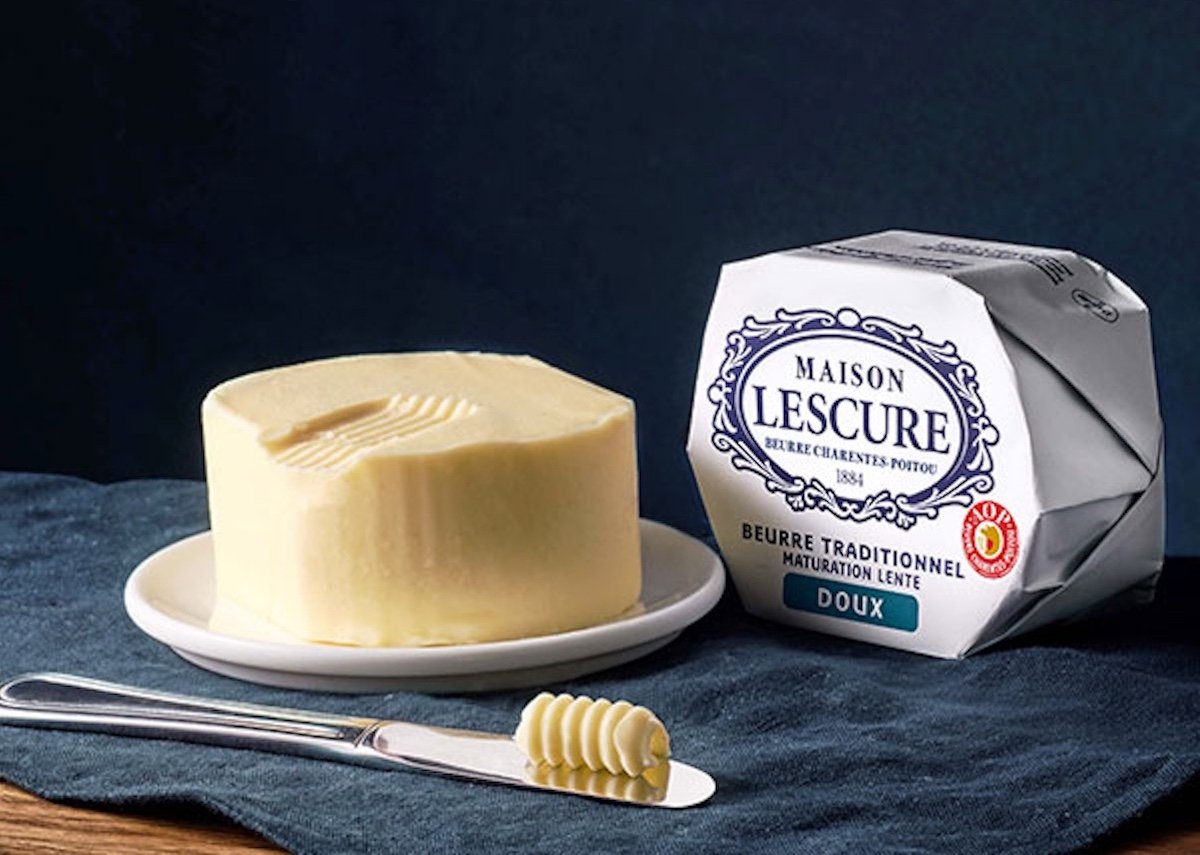
Beurre Charentes-Poitou PDO. Photo credit Maison Lescure
Just north of Bordeaux, Beurre Charentes-Poitou comes from the country’s western, Atlantic-influenced coast. Rich soils and a mellow climate contribute to its distinctive character, with pastures that are more inland than coastal. Its hallmark is an extended fermentation — a mandated 12 to 16 hours of biological maturation — yielding a deeply cultured flavor redolent of hazelnuts.
Charentes-Poitou butter boasts the oldest PDO among French butters, first established in 1979. Also pasteurized, it can be found stateside from producers such as Maison Lescure, Échiré, and Rodolphe Le Meunier.
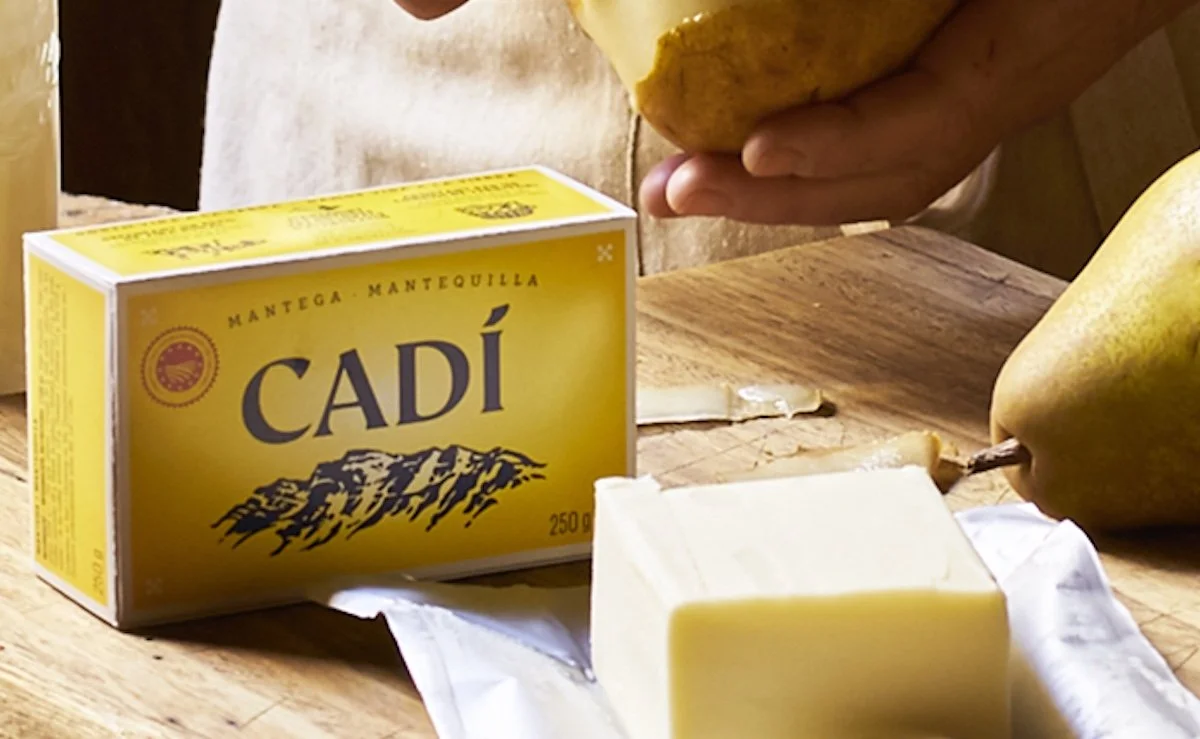
Cadí PDO butter. Photo credit Cadí Societat Cooperativa Catalana Limitada
While seaside pastures offer certain desirable qualities in exceptional butter, so too do mountainous conditions. Spain may be better known for its olive oil and sheep’s milk cheeses, but the Spanish Pyrenees also claim a unique butter with PDO status. In this case, Cadí is both the protected name and the sole producer, which has been crafting the butter in the region since 1915. A pasteurized, cultured butter made from milk sourced only in certain counties and requiring 48 hours of ripening, it has an aroma of rich cream and a flavor with a hint of tang and nuttiness.
Cadí is imported to the U.S.; look for it especially at gourmet grocers or Spanish speciality markets.
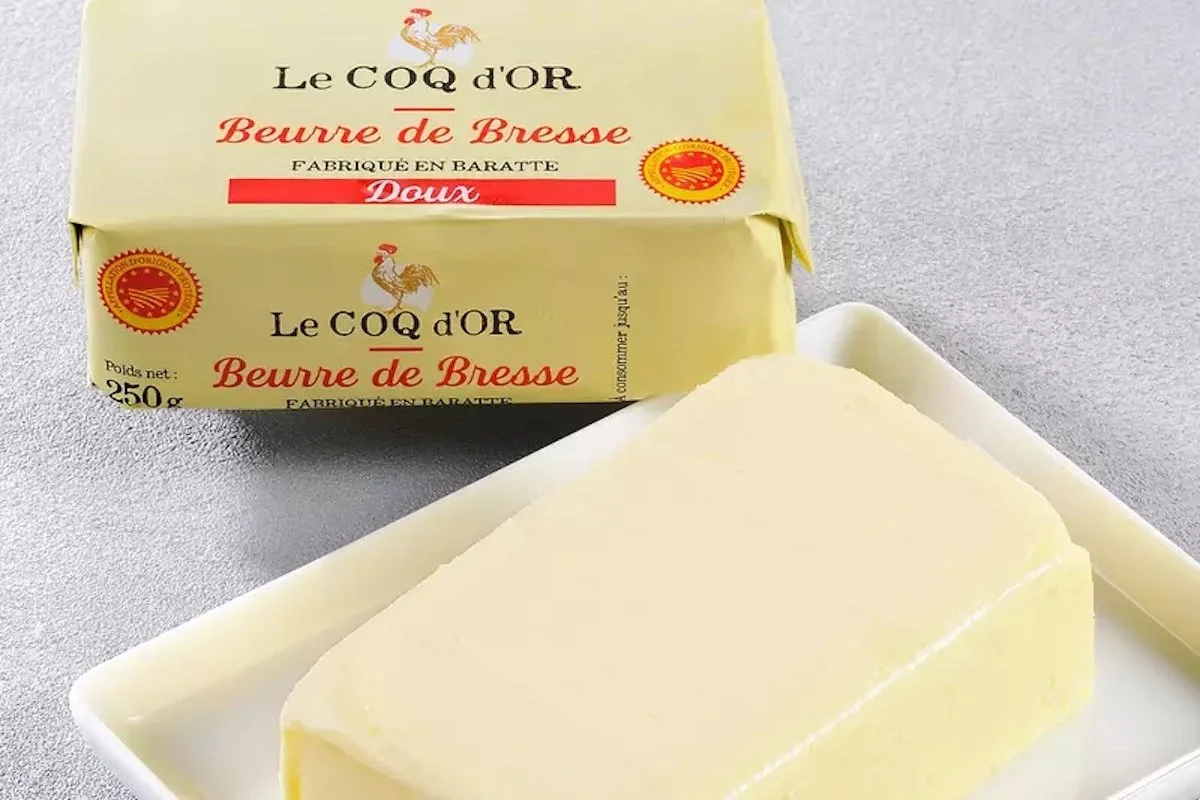
Le Coq d’Or Beurre de Bresse PDO. Photo credit Laiterie Coopérative d'Etrez-Foissiat
Also a mountain butter, produced in the foothills of the French Alps near the area that produces Comté, Beurre de Bresse comes from cows that graze on diverse mountain flora for at least 150 days of the year. Their diet also includes corn and cereal, contributing extra fat to the milk and yielding a soft, rich butter with a whopping 84 percent fat content. Cultured and pasteurized (or sometimes thermized), Bresse butter is lightly tangy, with flavors that lean grassy, floral, and fruity.
While Beurre de Bresse is not widely imported, especially compared with the aforementioned French butters, it can sometimes be found in specialty cheese shops and gourmet retailers, including under the Le Coq d’Or label.
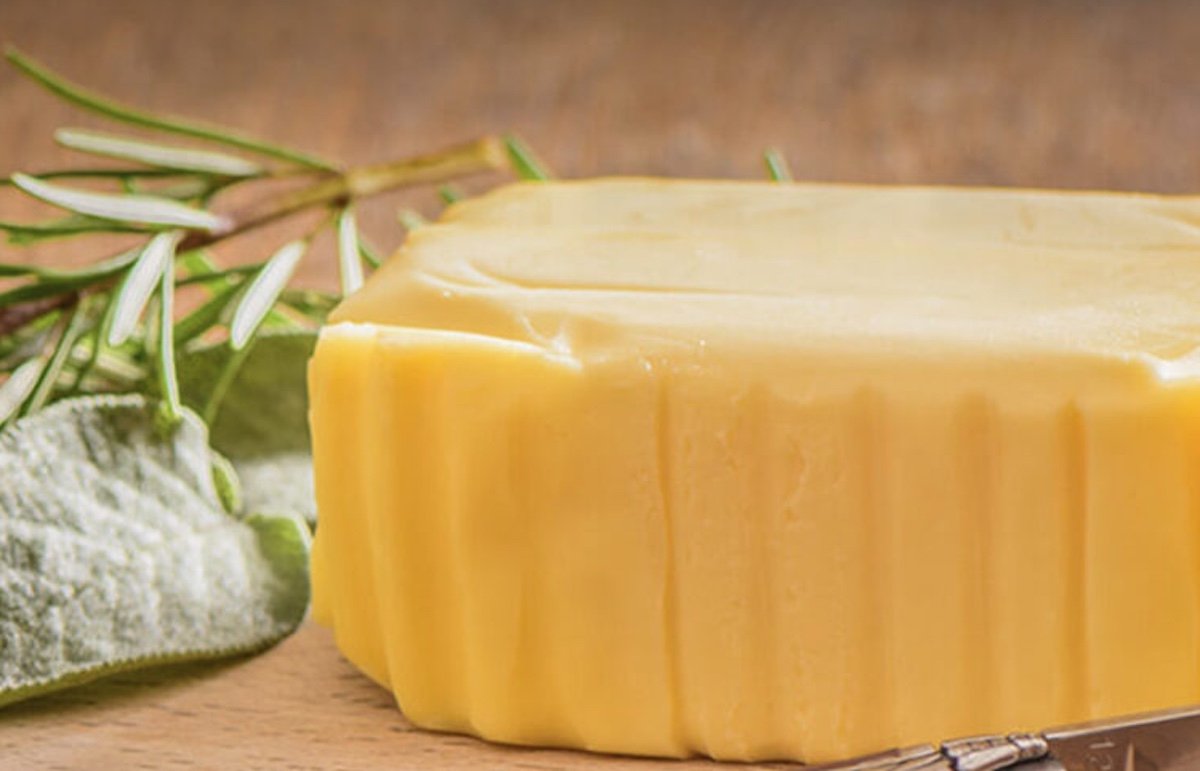
Beurre d’Ardenne PDO. Photo credit Carlsbourg
The Ardennes is a heavily forested region of rolling hills spanning parts of eastern France, southern Belgium, northern Luxembourg, and western Germany. Beurre d’Ardenne comes from districts across the region, mainly in Belgium and Luxembourg. Heavy rainfall contributes to lush pasture growth, while slightly acidic soils in the foothills of the Belgian Ardennes lend a subtle tang that carries through to the butter. It is not widely exported, but highly prized within the region.
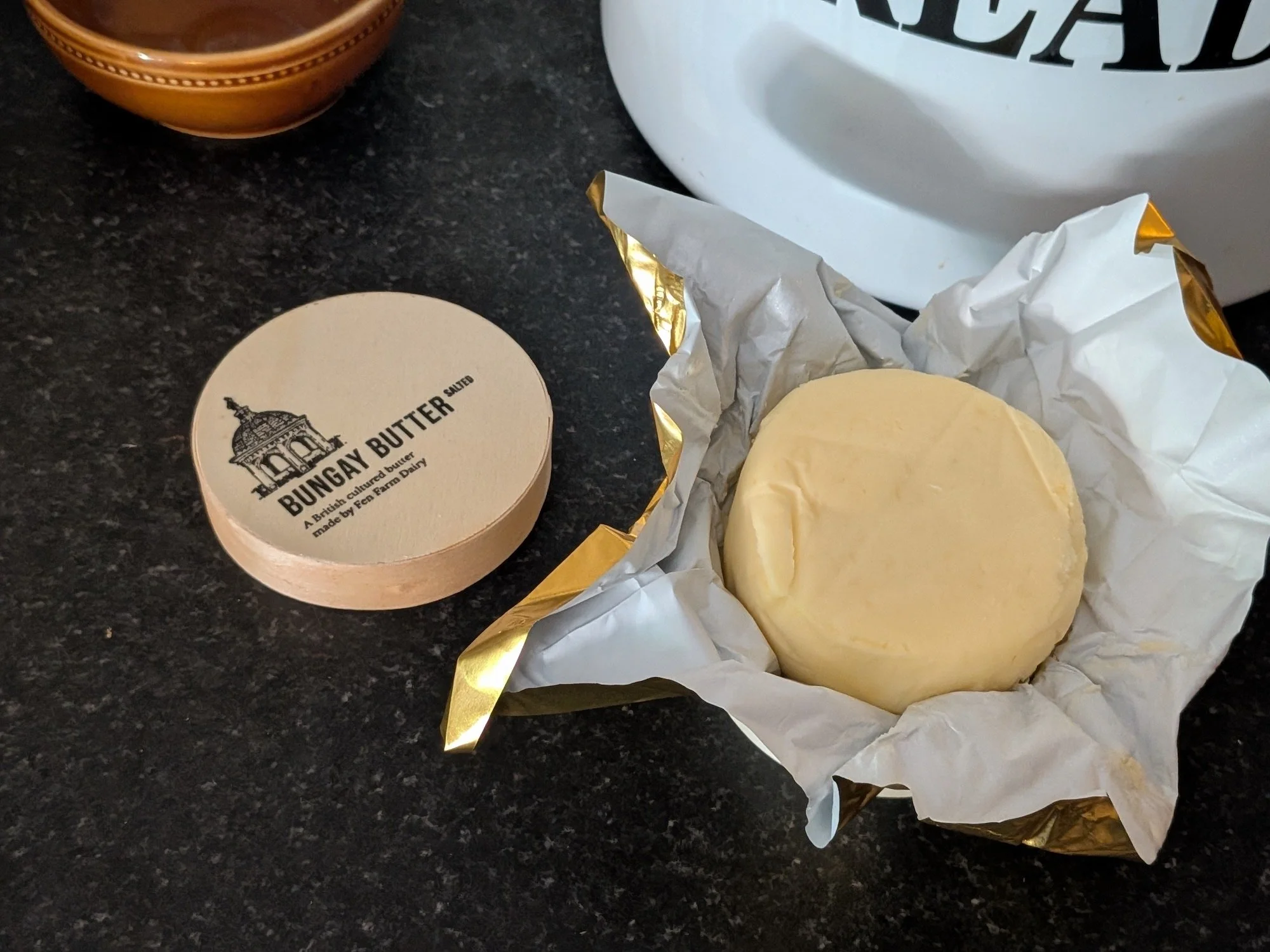
England’s Bungay Butter. Photo credit Fen Farm Dairy
While not a PDO butter, England’s Bungay Butter, introduced in 2015, deserves an honorable mention. Made by Fen Farm Dairy in southeastern England’s Suffolk, the creamery behind craveworthy Baron Bigod cheese, Bungay butter is an homage to a 300-year-old recipe from the region. (Bungay is the historic market town where Fen Farm is located.) Handmade, cultured, and made from raw milk, its careful packaging preserves an incredible sweet cream aroma. For a taste of what Nigella Lawson referred to as “edible gold,” seek it out in cheese shops and markets the next time you’re in England.