
5 Spring Cheeses to Try This Season
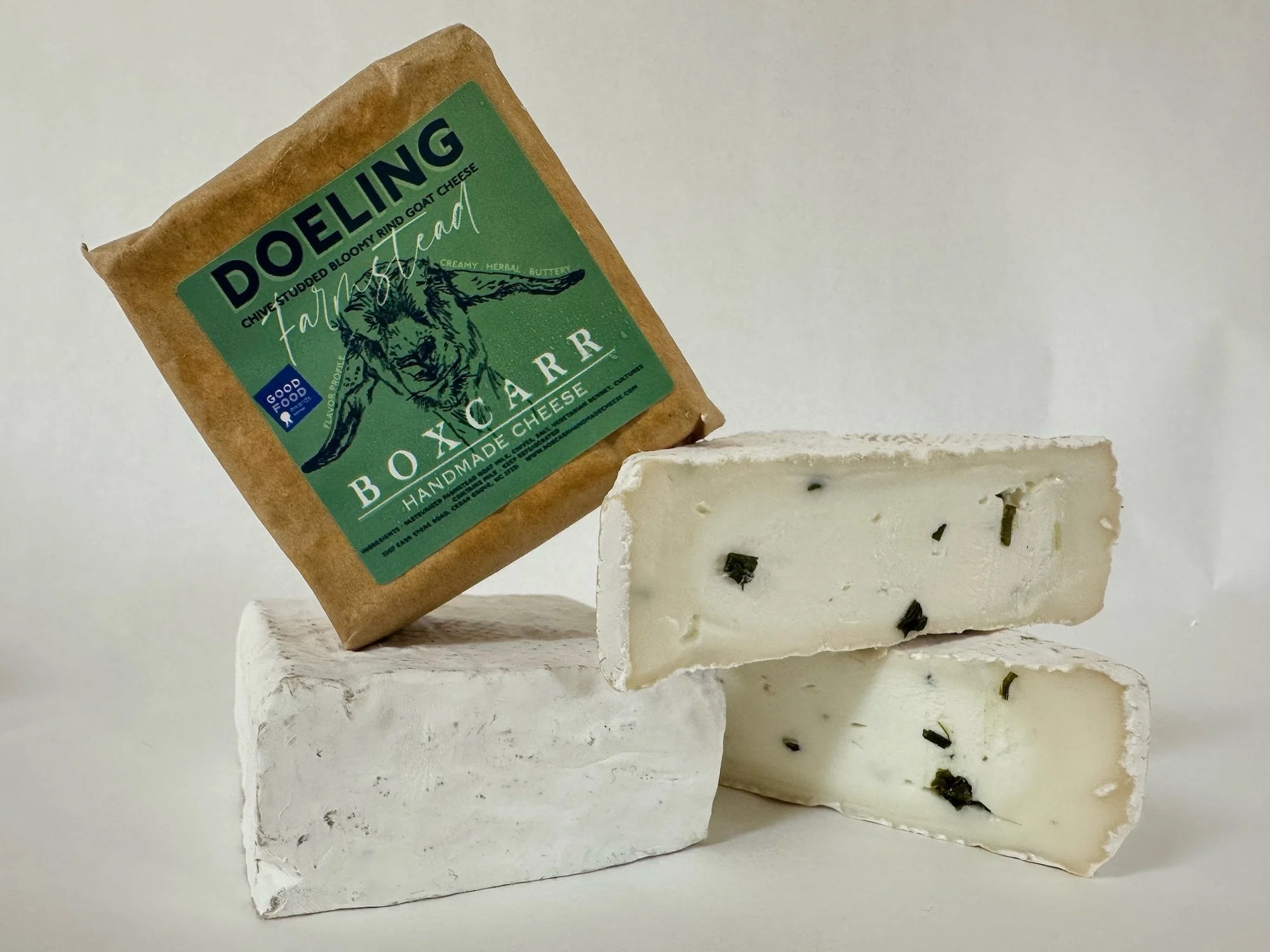
Boxcarr’s Doeling farmstead cheese. Photo credit Boxcarr Handmade Cheese
In story and in song, spring is the season of brightness and hope. In the cheese world, there are a small number of bright cheeses that emerge from the covers toward the end of winter and might be available only while flowers are in bloom. Some of these cheeses come out of the shadows as the milk supply flushes for the season. Others reflect the season with herbs, blooms, and flavors that complement the taste and textures you would expect in any great cheese. Below are five of the best spring cheeses; get them while you still can.
Doeling, Boxcarr Handmade Cheese, North Carolina

Boxcarr’s Austin Genke. Photo credit Boxcarr Handmade Cheese
Boxcarr has produced fantastic artisan and farmstead cheeses in eastern North Carolina for just over ten years. Doeling, a bloomy-rind, chive-influenced, goat’s-milk number, was developed in 2020 by cheesemaker Samantha Genke.
This square farmstead cheese is one of the first the creamery makes after its goats finish kidding in early spring. Genke blends dried organic chives with the curd before the cheese is formed, and a sturdy yet tender Penicillium camemberti rind develops during a few weeks of aging. The cheese can be eaten young and springy or matured and oozy. Either way, the chive aroma and flavors mingle with the citrus and earthy expression of the goat’s milk.
“I like it young — when the milk is fresh and clean and crisp and there is a nice acidity of the goat's milk,” says co-founder Austin Genke, Samantha’s brother. “Here in North Carolina, as I’m sure it is elsewhere, the pastures are covered in chives in the spring, so we like to think of it as a spring cheese.”
Doeling is available throughout the Southeast, on the coasts, in the Great Lakes, and in select markets elsewhere from May until winter. South Carolina cheese retailer American Cheese Purveyors recommends a beefy application for Doeling: Drape a few slices over some just sliced, still warm, charred steak and marvel as the Doeling oozes into every nook and cranny.
Morcella, Shepherd’s Way Farms, Minnesota
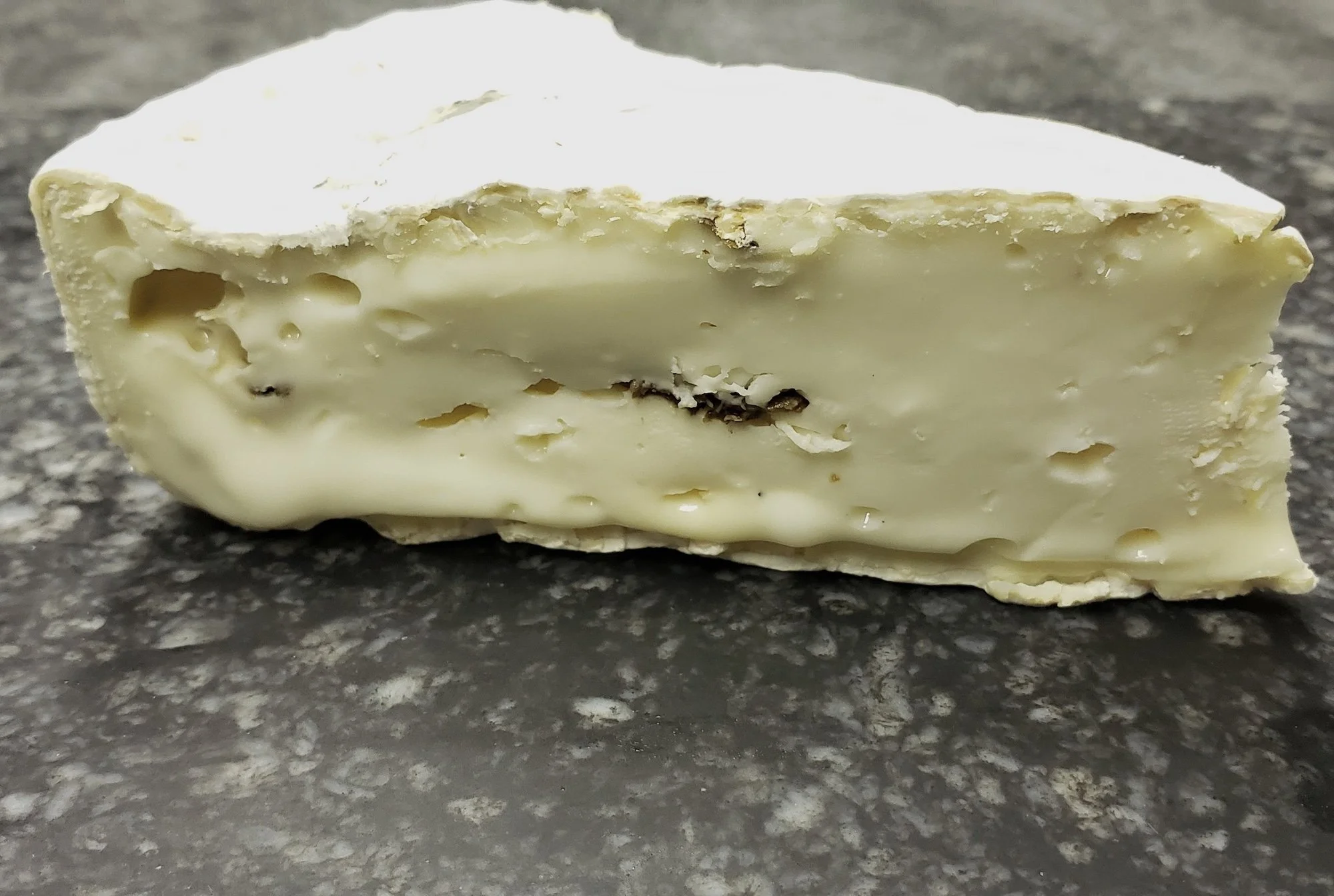
A wedge of Morcella. Photo credit Shepherd’s Way Farms
Morcella is a soft-ripened sheep’s-milk cheese studded with morel mushrooms. The cheese began as a way for the folks at Shepherd’s Way to celebrate the new season.
“I really wanted something to look forward to in the spring,” says Jodi Ohlsen Read, cheesemaker and founder at Shepherd’s Way, which has been making farmstead cheese south of Minneapolis since 1998. “Morels grow in the [Nerstrand] Big Woods park across from us, so morels remind me of spring, and they inspired me to make this cheese.”
Morcella has a mottled, bloomy rind, the result of the mold in the cellar’s aging environment as well as the inclusion of morels. Bits of the morels are distributed throughout the cheese, adding texture to the dense creamy paste and a distinct forest floor flavor and aroma.
“I like it best when it ages and it gets more and more creamy. I like it when you almost need a spoon,” Ohlsen Read says, noting that Morcella has more citrus notes when it’s young. “Sheep milk is very rich anyway, and in the spring it might be just a little higher in fat.”
Morcella is made in small batches with spring and early summer milk, and available from April to July in Minnesota, adjoining states, and in select markets elsewhere.
Raedwald, Fen Farm Dairy, Suffolk, UK
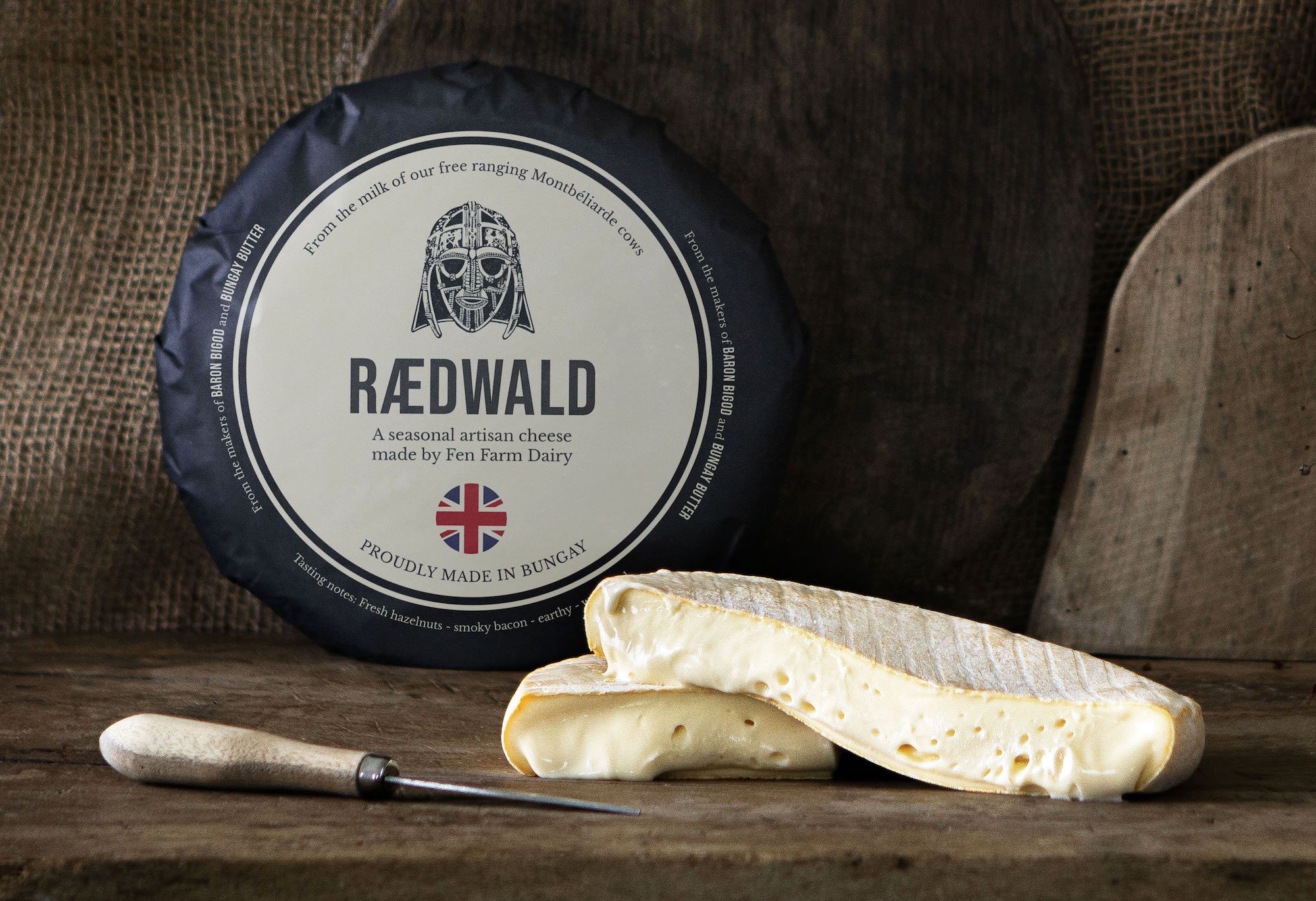
Raedwald. Photo credit Fen Farm Dairy
Fen Farm owner, farmer, and cheesemaker Jonny Crickmore first began making cheese more than 12 years ago. Since then, it’s gotten lots of notice.
Located in Bungay, Suffolk near England’s North Sea coast, the farm has been operated by Crickmore’s family for more than 80 years. Fen Farm’s cheesemaking portfolio began not with a traditional British style, but with a cheese inspired by French Brie de Meaux. Fen Farm’s Baron Bigod has become one of the most favored cheeses in the UK, and until just last year, it was the only cheese produced by the farm.
Then came Raedwald.
Using the milk from the farm’s Montbéliarde cows (but only the rich winter milk from afternoon milkings), the Fen Farm team produces this Reblochon-inspired cheese for release in February, and through April.
Named for the 7th-century king of East Anglia, Raedwald is described as a decadent washed-rind whose flavors reflect the variety of grasses and herbs that grow in the Waveney River Valley, where the farm is located. In winter, the cows feed exclusively on hay produced on the farm. The milk is pasteurized, and the cheese is aged for four to five weeks. Fen Farm’s tasting notes describe a “crunchy, toothsome rind and smooth oozing paste of a classic Reblochon” with “flavours of briny sea air, smoky bacon, fresh hazelnuts, mushrooms and mossy bark.”
If you are in the UK in spring, Raedwald can be purchased at either of the farm’s two shops, ordered online for local shipping, and at select British retailers, including the Fine Cheese Co. in Bath. In the US, Baron Bigod has some distribution, thanks to importation through Neal’s Yard Dairy, although Raedwald is not yet being shipped across the Atlantic.
Ramp-Flavored Quark, Urban Stead Cheese, Cincinnati
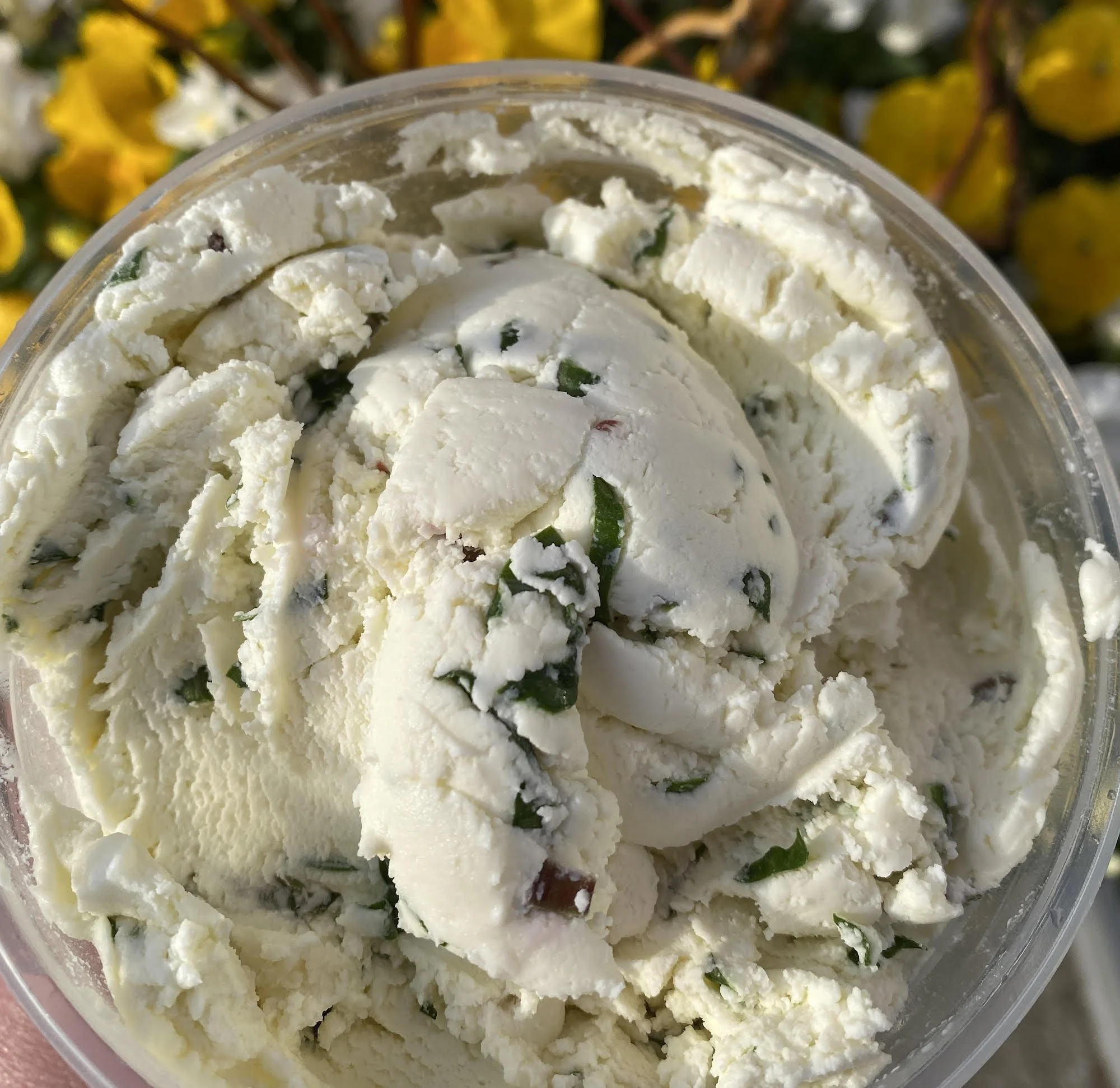
Urban Stead’s seasonal quark is often ramp-flavored in spring. Photo credit Urban Stead Cheese
Quark is a fresh, usually unsalted cheese that is largely synonymous with farmer’s cheese. Urban Stead produces a full line of cow’s-milk cheeses from its creamery in the Evanston/East Walnut Hills neighborhood of Cincinnati. Co-founder and cheesemaker Angela Robbins says the plain and flavored quark products, sold only at the company’s cheese shop, are immensely popular with local customers. Yet no other cheese, she notes, evokes the optimism of spring like Urban Stead’s ramp-flavored quark.
“Take the quark, a highly approachable cheese, and the deliciousness of the ramp, and I really don’t think you can go wrong,” Robbins says, adding that ramps “have a sweet, onion and garlic flavor, and with the quark, it’s like the best onion dip you can imagine.”
Allium tricoccum is a wild forest plant (also known as ramps or wild leeks). Its leaves emerge in spring and those leaves, as well as the plant’s stalks and bulbs, are prized for their flavor and aroma. Culinary interest in ramps has accelerated in recent years, and because it can take years for the bulbs to develop usable shoots, they are foraged rather than cultivated. Urban Stead sources responsibly from local and regional foragers, and Robbins says the variability in flavor and aroma is expressed in the finished product throughout the season.
Urban Stead typically makes the cheese beginning in April, and for as long as the key ingredient is available. “I wish I could have it more, but that’s kind of the beauty of it,” Robbins says. “To me it’s a sign of spring.”
Quark is great as a breakfast cheese and has numerous cooking applications, including as a filling for cheese pierogi.
Special Edition Maple-Washed Willoughby, Jasper Hill Farm, Vermont
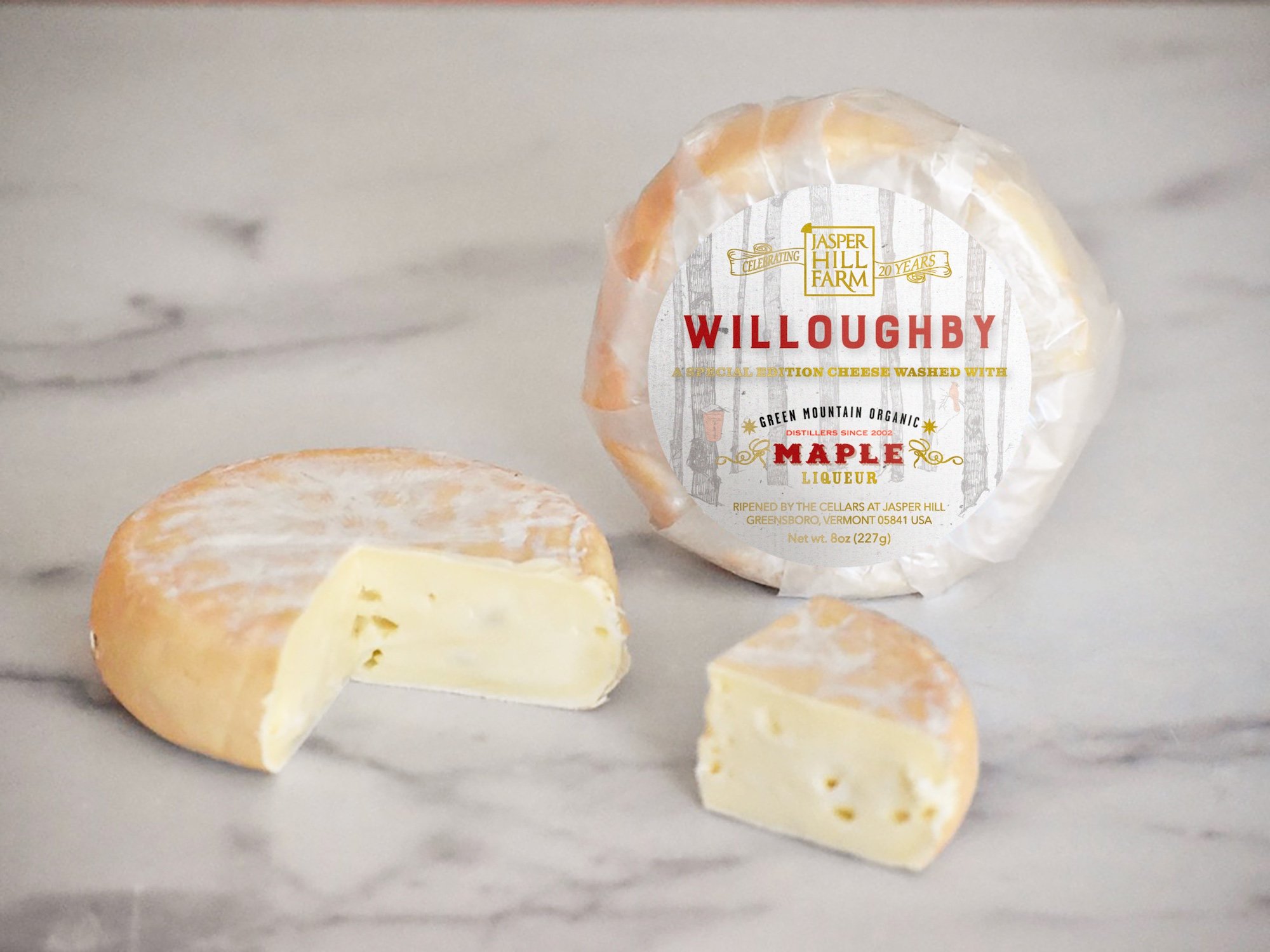
Jasper Hill’s Special Edition Maple-Washed Willoughby. Photo credit Jasper Hill Farm
Willoughby is a small-format washed-rind cheese first created by neighboring Ploughgate Creamery. After a fire at Ploughgate in 2011, Jasper Hill purchased the recipe and has crafted this lovely soft cheese ever since.
Willoughby is formed in a round mold and has a thin and tender coral-colored rind that becomes sticky and more deeply colored as it ages. It offers meaty flavors with notes of smoke, sautéed onion, and ripe peaches. Like Raedwald, it might also draw comparisons to Reblochon, and it pairs well with dry white wines and crisp, bitter Pilsner.
To commemorate its twentieth year of cheesemaking in 2023, Jasper Hill also developed a Special Edition Willoughby bathed in a locally-made maple liqueur from neighboring Green Mountain Distillers. March is peak season for sugaring in Northern Vermont as the weather warms and the sap begins to flow. The maple wash adds a hint of earthy sweetness to the mix that is especially evident in the rind. Some tasting notes mention hints of smoked ham in the aroma and flavor, mingling with the maple. As a serving suggestion, Jasper Hill also suggests drizzling Vermont maple syrup over the cheese, warming the wheel until it is bubbly, and topping it with maple-glazed pecans.
While base Willoughby is available throughout the year, the maple-washed edition of Willoughby is available at select retailers nationwide beginning in March, and should be around throughout spring and possibly until early summer. It will also be part of the April Cheese Club box offered on Jasper Hill’s website shop.