
Why Being Called a Scamorza Isn’t an Insult—If You’re a Cheese
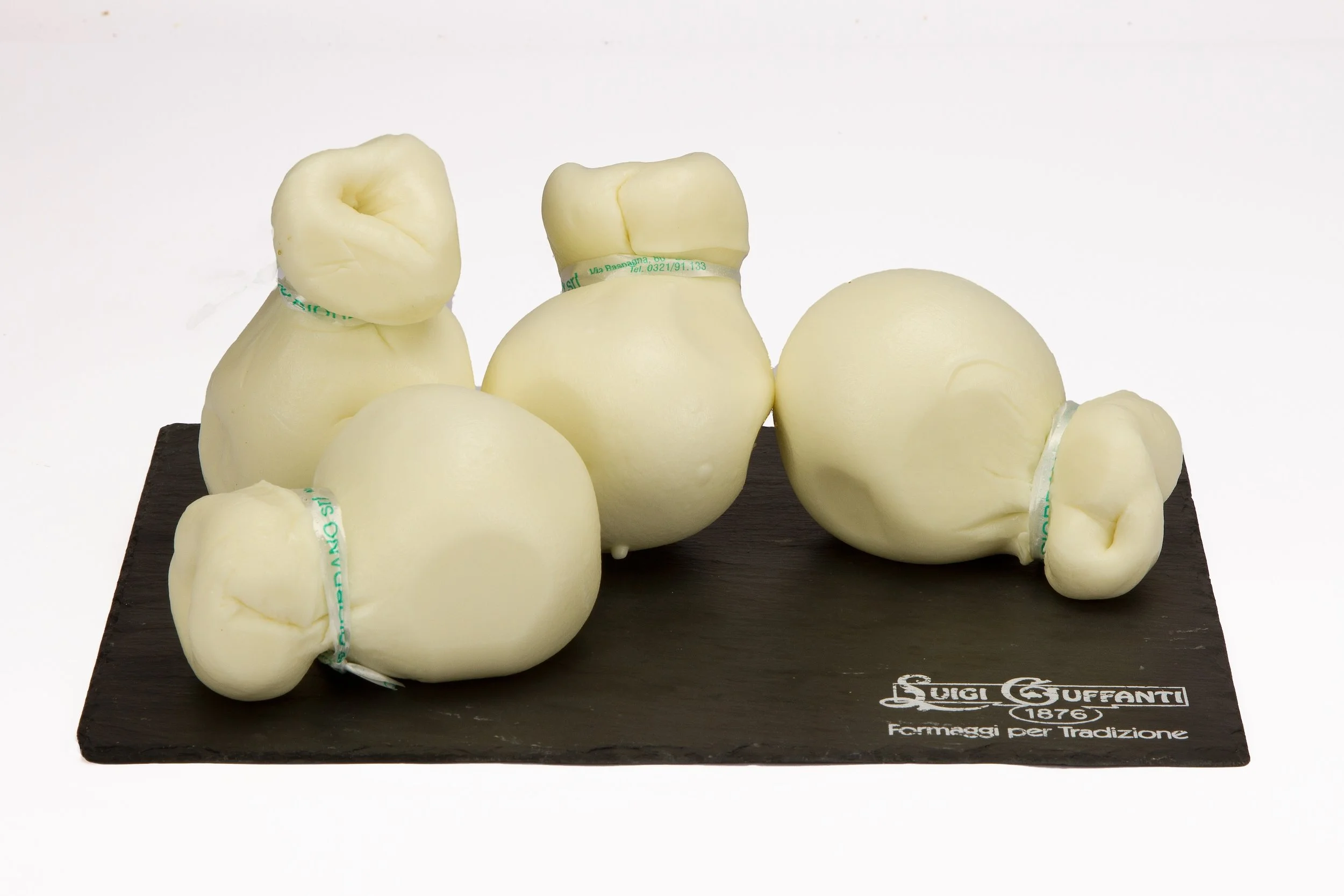
Scamorza bianca
If an Italian calls you una scamorza, you might want to toughen up a bit—the nickname suggests you’re being weak or wishy-washy. As brothers and cheese experts Davide and Giovanni Fiori of Guffanti Formaggi in Piemonte explained, the playful jab isn’t a slight at the cheese, but a reference to its semisoft texture.
Keeping it in the (pasta filata) family
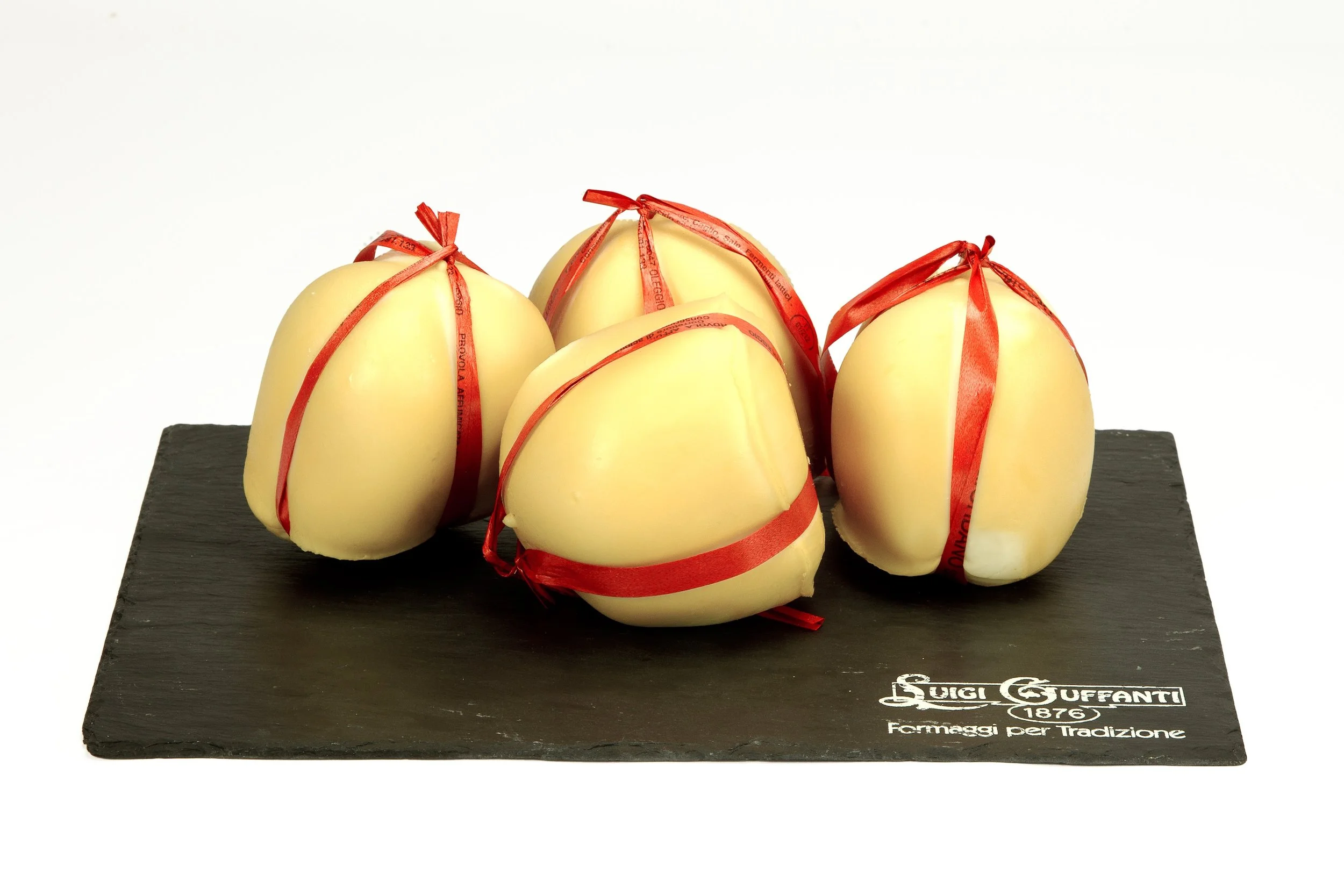
Scamorza affumicata
Scamorza belongs to the pasta filata family, like mozzarella, but it has a personality all its own. Originating in Southern Italy, this cow’s milk cheese takes its name from the Italian word scamozzare, “to decapitate.” Both mozzarella and scamorza are formed from a mass of elastic curd after the stretching process, but the typical distinctive shape of scamorza is a ball with a little head, often tied with a string and hung to dry.
Scamorza also has a firmer, denser texture than mozzarella, and is aged a bit longer, often a few weeks to a month. The typical size is between 150 to 300 grams, and while in the last few decades there are also versions made with sheep or water buffalo milk, the traditional scamorza was made with cow’s milk, clarified Davide.
Smoking Scamorza
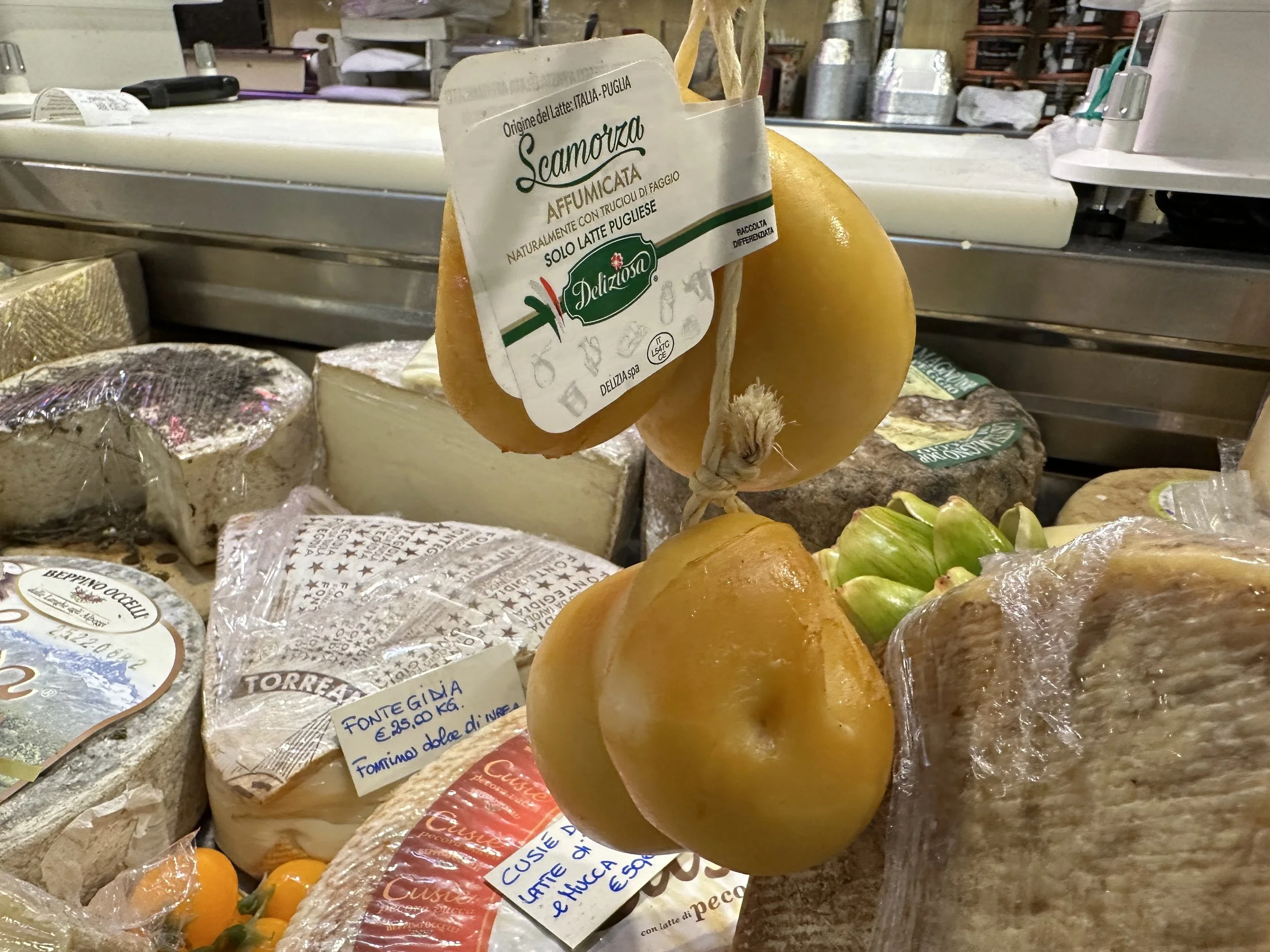
Pugliese smoked scamorza
Another characteristic of this cheese is that it is frequently smoked, a technique that is more prevalent in southern Italy than in the north because of the warmer climate. “Smoking was one of the first preservation methods, and smoked scamorza was a primordial cheese—the shepherds needed to make something that could last for a long time without spoiling. Smoked scamorza was durable and able to travel,” explained Alessandro Grano, a native of Puglia and Head Chef at La Fromagerie in London.
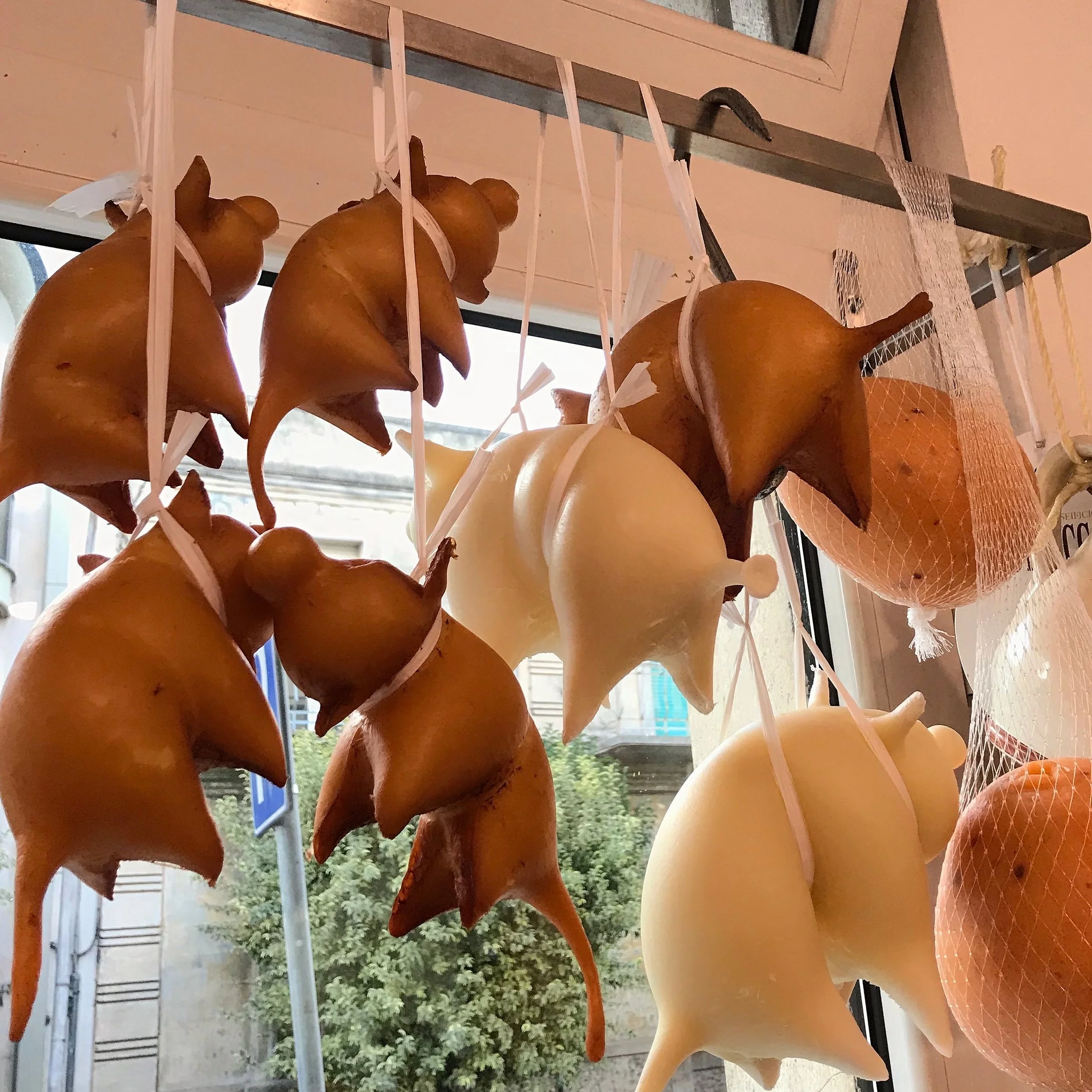
Piglet shaped scamorza
The smoking also adds complexity and depth to the flavor. But both Grano and the Fiori brothers point out the distinction between synthetically smoked cheeses, which have a uniform color, and in the case of liquid smoke, can have a very intense smoky flavor that masks the taste of the cheese itself, and naturally smoked scamorza, which is more subtle in flavor.
“In Puglia, in Martina Franca, it’s more common to see scamorza unsmoked,” commented Grano. “And you’ll see cute things with different type of shapes, like little piglets.” I encountered those animal-shaped scamorze hanging in the window at Caseificio Dicecca in Altamura
How to Enjoy Scamorza
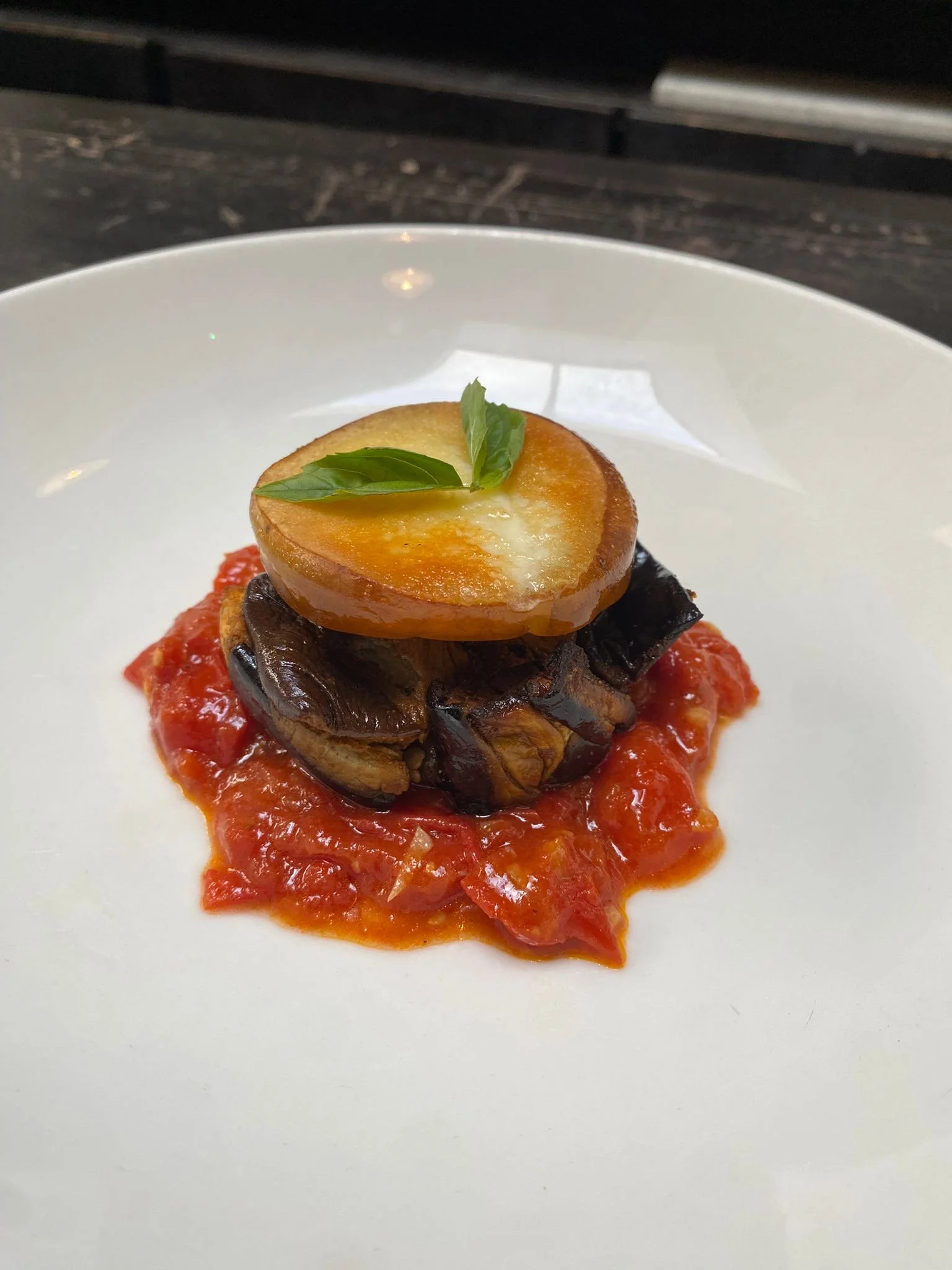
Scamorza timabale
One of Grano’s favorite ways to enjoy scamorza is by searing a big slice in a pan with a drizzle of honey on top, until it becomes nice and crusty, and serving it was crunchy bread. Some classic southern Italian dishes with scamorza are pasta al forno, baked pasta with rich tomato sauce and melted cheese, and pasta e patate alla Napoletana, a creamy pasta with potatoes and smoked scamorza. In northern Italy, Giovanni says it’s frequently used in salads or on pizza. “People here tend to think of it more as an ingredient in cooking, rather than something you’d include on a cheese plate.”
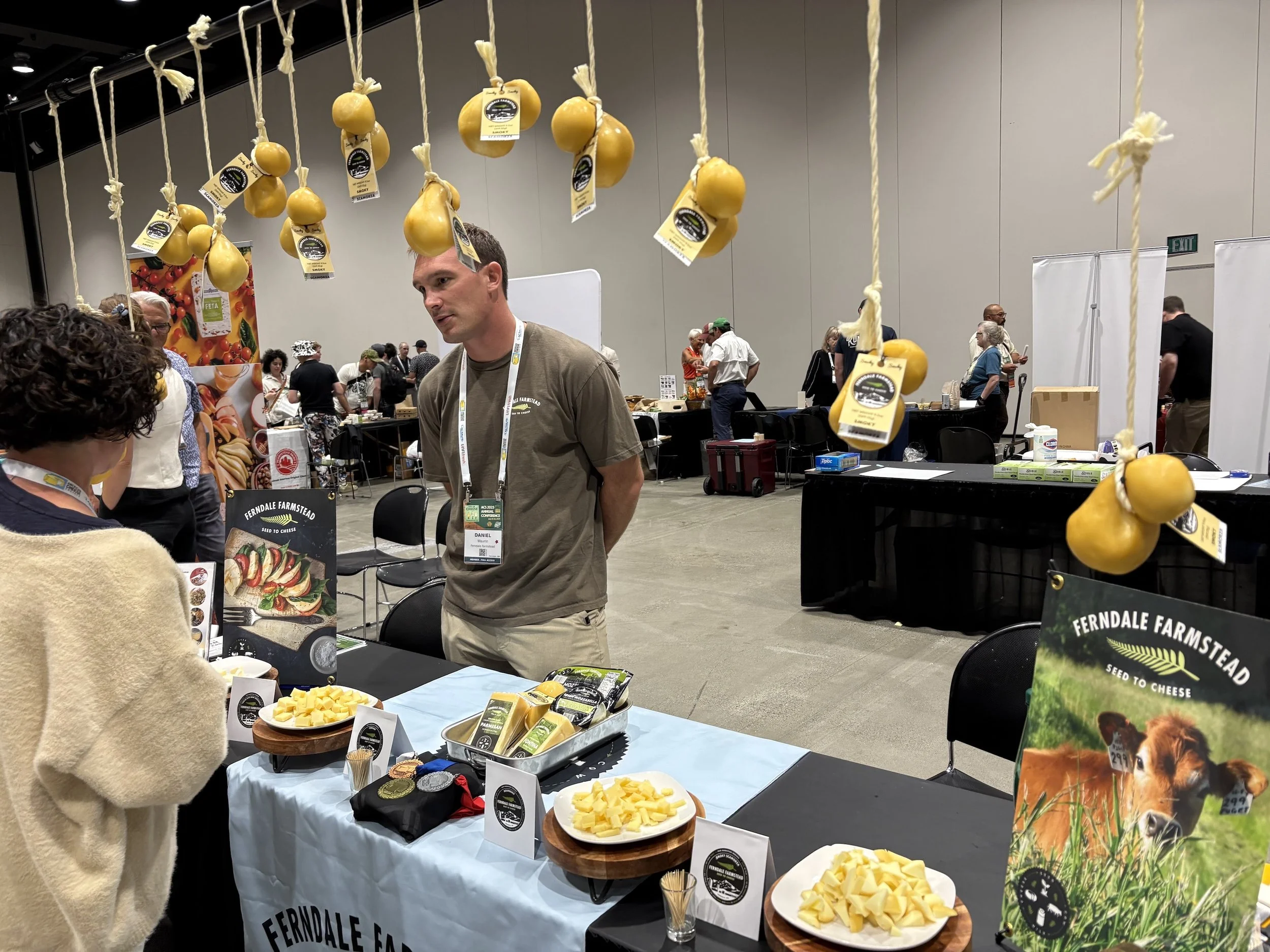
Ferndale Farmstead scamorza
American makers also have their own interpretations of scamorza. One notable example is Ferndale Farmstead in Washington State, which has earned multiple awards for their scamorza, both smoked and unsmoked, produced with their own milk in a traditional hanging style. Try their smoked scamorza melted on a burger or added to avocado toast.
So while una scamorza may jokingly imply weak character in a human, the cheese itself has proven to be anything but. This versatile cousin of mozzarella has stood the test of time, and it’s not going anywhere.