
7 Top Charcuterie and Cheese Pairing Examples From Experts
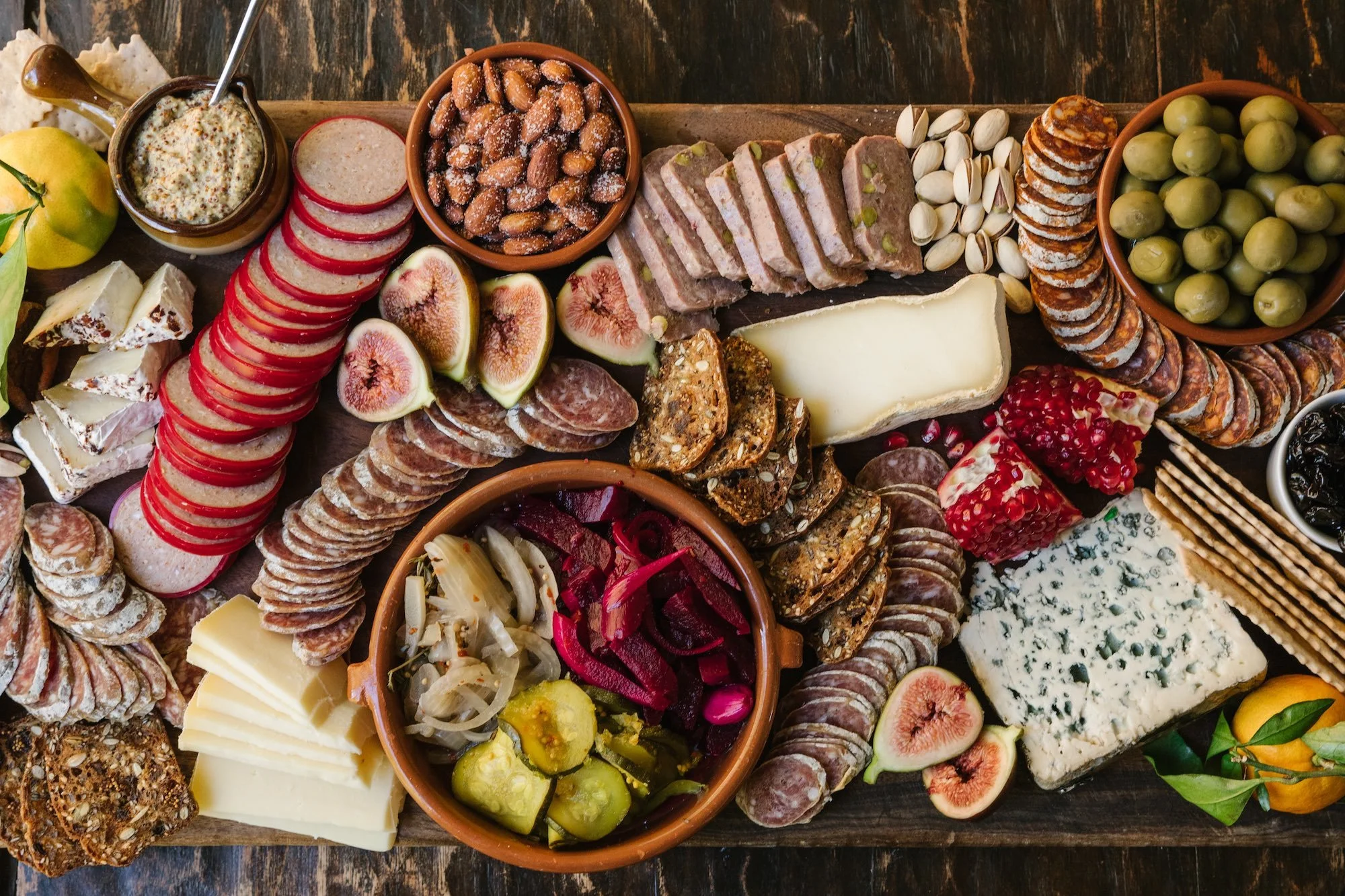
Olympic Provisions charcuterie with cheese
“Charcuterie” is often the headline that is used to describe an artfully displayed board full of a variety of edible goods, but the word itself is rooted in a particular kind of edible good: In French, char cuit refers to “cooked flesh.” In short, if it isn’t meat, it isn’t charcuterie. In modern vernacular, the cooking method used for most of which we’d call charcuterie is curing: preserving meats through various means including salt, sugar, smoking, or drying, to give the meat a longer shelf life. While a platter full of cooked hamburger patties technically qualifies as charcuterie semantically, it doesn’t quite have the same effect.
Since cheese also represents the careful preservation of otherwise ephemeral material, it obviously goes hand in hand with its meaty brethren, frequently enjoying a co-starring role on a charcuterie board. So long as there’s also meat involved in anything labeled charcuterie, that’s fair play to us. Here, however, we celebrate the actual charcuterie for a change. From classic European Protected Geographical Indication (PGI) selections to exceptional American producers reinvigorating the category domestically, here are nominations for top charcuterie, with specific cheeses for some exceptional pairings, according to experts.

Butter Hill Pepperoni and Quicke’s Oak Smoked Cheddar
Pepperoni is America’s favorite pizza topping, but its ubiquity doesn’t mean it doesn’t deserve a place on the list of top charcuterie, especially when made with exceptional care.
“Butter Hill is a family farm in Ohio that is all about regenerative and ethical practices,” says Aubrey Gallegos, Program Manager for Good Meat Project, which aims to educate consumers about better choices when it comes to the meat they buy. “They raise a heritage breed of pigs called KuneKunes, specifically selected for their gentle impact on the land and their ability to convert grass and weeds into richly marbled, flavorful pork not found in conventional markets,” she says.
The range of products at Butter Hill includes a wide variety of European-inspired salami and ham, but the farm’s Heritage Pork Uncured Pepperoni (available in a spicy version as well) is a standout, especially compared to conventional pepperoni. “Their salami is unlike any I’ve ever eaten,” says Gallegos, “buttery and rich, but not at all greasy. The Uncured Pepperoni pops with paprika, cayenne, and allspice, while maintaining the classic flavor everyone loves.”
Pairing perfection: Given its place of honor atop pizza, mozzarella is never the wrong answer for pepperoni. On a charcuterie board, however, Barbara Marriner, owner of Rochester, Michigan’s The Cheese Lady, suggests something different.
“I would lean into the smoky aspect,” Marriner says. “Something with a touch of sweetness as well to balance pepperoni’s salt. So for me it has to be Quicke’s Oak Smoked Cheddar.” This smoked clothbound cheddar is a classic English selection whose buttery sweetness comes from grass-fed cows and extended aging.
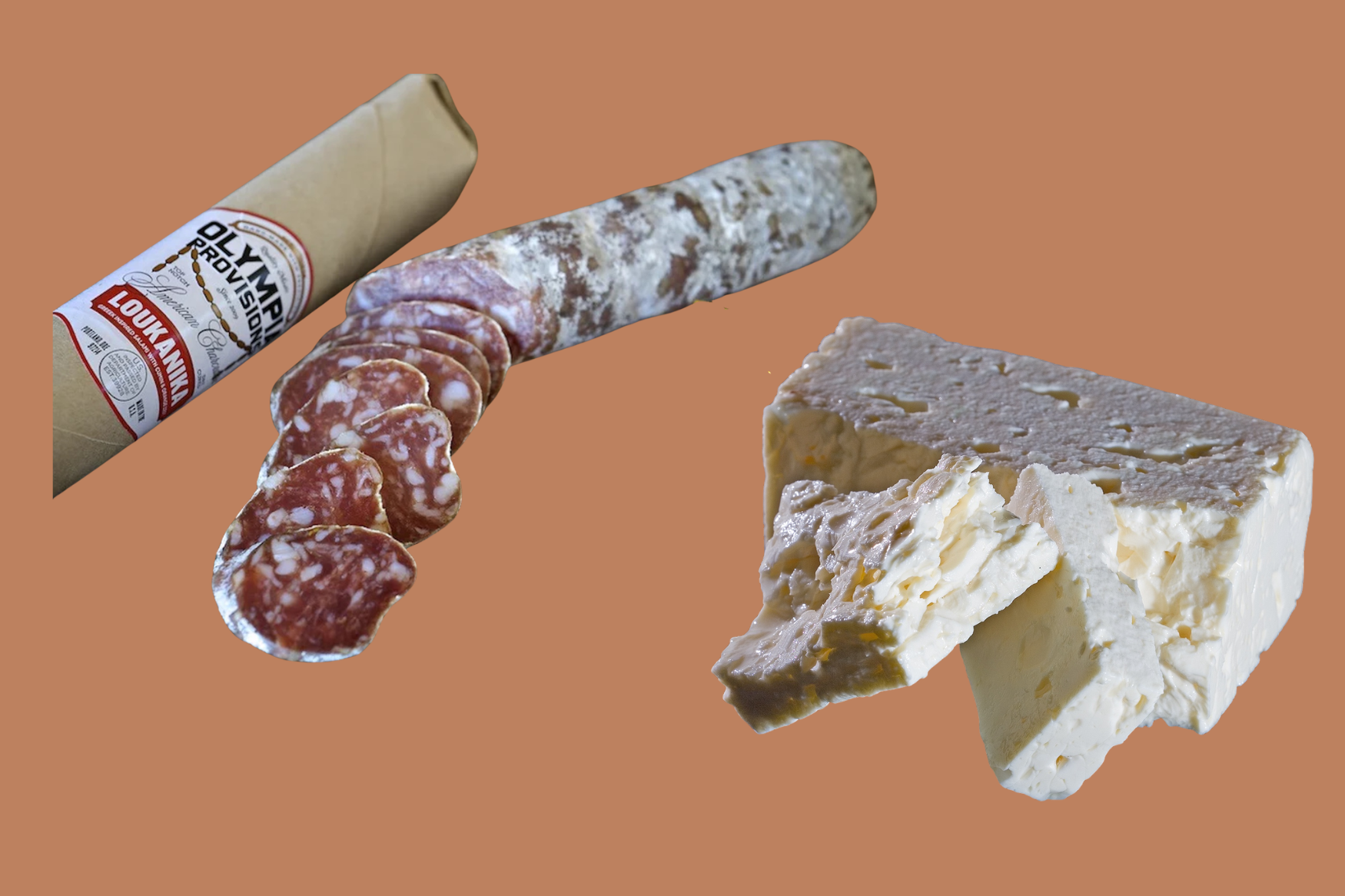
Olympia Provisions Loukanika and Feta
I’m always dubious of claims of expert consensus when it comes to recommendations for a particular product, but Oregon’s Olympia Provisions nearly made me a believer, so consistent was the praise from experts I spoke to.
“Olympia Provisions isn’t your average charcuterie, or retailer,” says Gallegos. “They’re working to upend a system where 98 percent of pork comes from factory farms by building a model rooted in transparency, nose-to-tail utilization, and sourcing from small, independently owned, GAP-certified, regenerative farms across the Pacific Northwest.”
Olympia’s charcuterie canon includes selections modeled after European salamis and hams from across the continent, including French saucissons aux noisettes and Greek loukanika. “I love their Salami Bouquet,” says Gallegos, describing it as “a festive assortment of European-inspired salamis, each chewy in all the right ways, with that satisfying bite we crave in a salami and rich, deep flavors that aren’t overpowering.”
Pairing perfection: Loukanika isn’t everywhere in the way that many other salami styles are, so it’s worth seeking out, especially from the highly regarded Olympia Provisions. A lesser-known rustic Greek sausage that’s seasoned with garlic, oregano, and orange zest, loukanika can go up against any aged cheese that loves a full-flavored sausage, but its natural partner is a full-flavored fresh cheese, none other than classic feta. The hit of orange zest echoes feta’s natural tang, and the sturdy, salty richness of feta amplifies the garlic in the cheese, just as it would the garlic in any Greek dish.
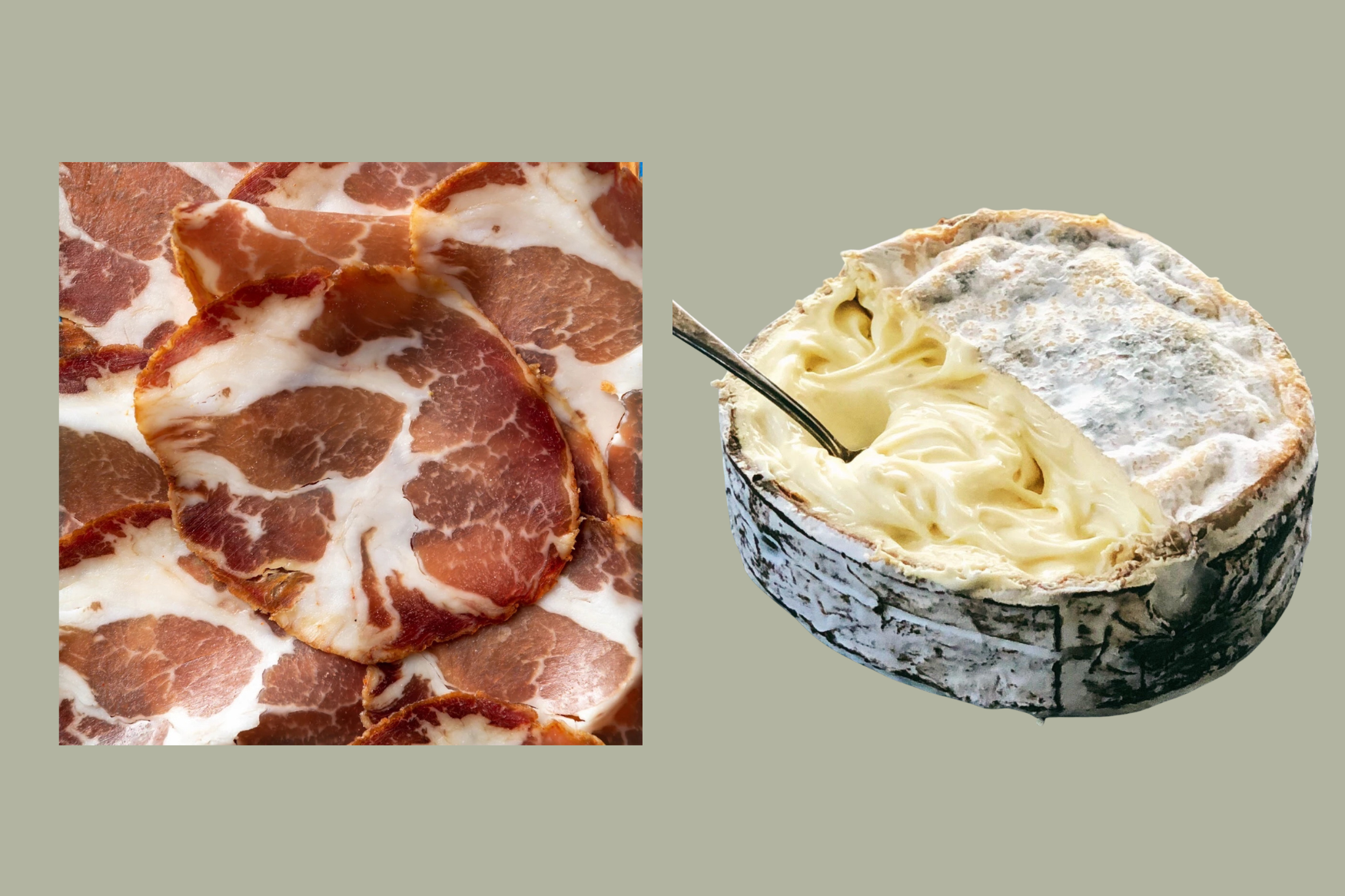
La Quercia Coppa and Uplands Rush Creek Reserve
Coppa, or capicolla, is a type of ham made from the neck and shoulder of pork, with origins in both France and Italy, though exceptional coppa may also be found in the U.S. “When I’m reaching for cured meat, this is the one,” says Michael Scott, ACS CCP and cheesemonger at Whole Foods Market in Wellesley, MA. “La Quercia’s Berkshire Coppa Americano is made from heritage Berkshire pork — beautifully marbled, full of flavor, and raised humanely in the Midwest.”
For many of the selections on this list, provenance played as much of a role as flavor in the cured meats that experts favored. “I always tell people: this is American charcuterie at its best. It’s proof that you don’t have to go to Europe to find something truly special.”
Naturally, flavor is also a driving factor. “La Quercia dry cures it with sea salt and spices,” says Scott, adding that the producer “then ages it in Iowa until it’s silky, savory, and just melts in your mouth. It’s got that bold, rich flavor I love, but it’s not overpowering — perfect with cheese, fruit, or honestly just on its own.”
Pairing perfection: “As the Coppa is from the Midwest, it cries out for a neighbor as a partner-en-cheeseboard,” says Scott.
He recommends something equally bold for the boldness of La Quercia’s Coppa: Rush Creek Reserve from Wisconsin’s Uplands Cheese.
“It’s a bark-wrapped, spoonable, raw milk beauty inspired by Vacherin Mont d’Or with notes of toasted hazelnuts, smoked bacon, yellow mustard, and a hint of alpine pasture,” he says.
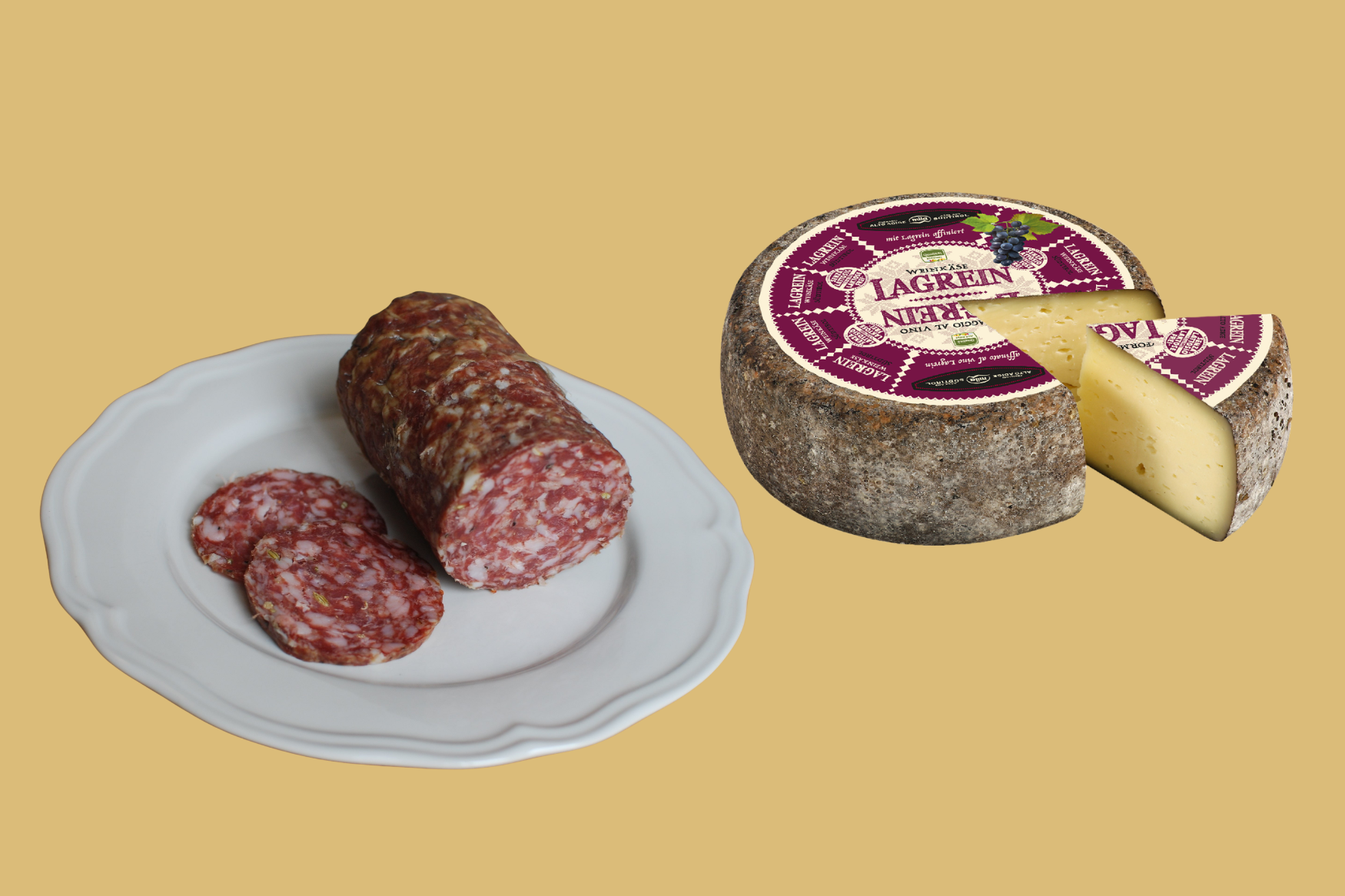
Finocchiona and Weinkase Lagrein
“There are so many other charcuterie board contenders out there,” says Jenn Rice, food writer and arguably one of the foremost American experts in Italian sausage. Tuscany’s distinctive Finocchiona PGI, however, is her current nomination for top salami.
“I love fennel, so I've been on a Finocchiona salami kick for the last couple years given that I spend a lot of time in the region,” Rice says. “It's a delicious pork salami that made its debut in the Renaissance era, when fennel was a lot cheaper than pepper,” she says, also pointing out that it has a PGI designation that ensures its quality and authenticity.
“It allegedly charmed Machiavelli and the Medici,” she adds, “and I definitely understand why.”
Pairing perfection: An under-the-radar Italian cheese from Alto Adige is a no-brainer cheese plate matchup for Finocchiona. Weinkase Lagrein is a cow’s-milk cheese whose German-sounding name trumpets its Tyrolean geography and influence. The cheese is soaked in the local wine, Lagrein, and steeped with spices that render it salami-esque in and of itself.
La Salumina Coppa di Testa and Three-Year-Old Comté
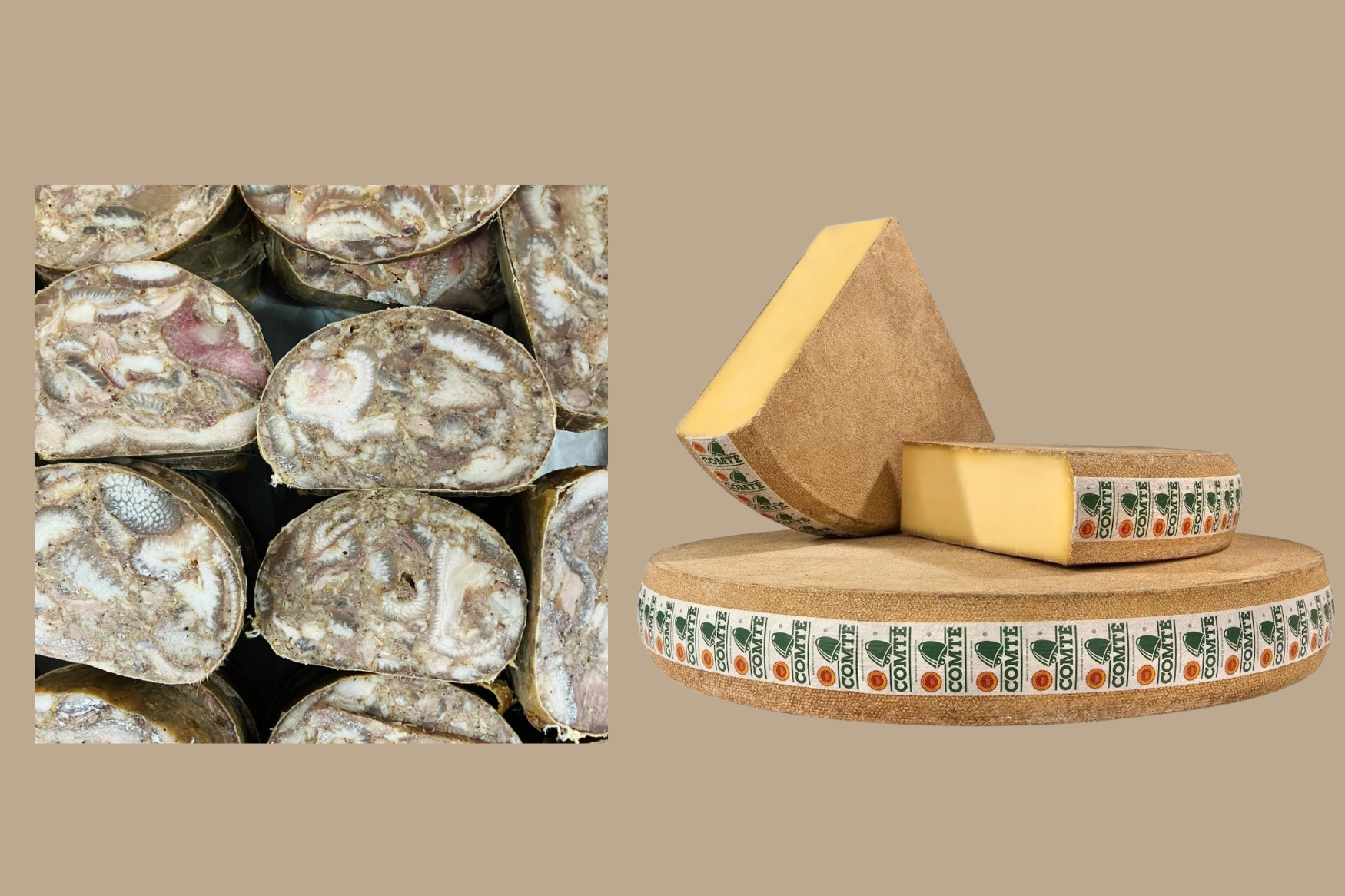
La Salumina Coppa di Testa and Aged Comté
New York state-based La Salumina is another American take on the form whose artisanal products wow those in the know, helmed by American and Italian spouses Eleanor Friedman and Gianpiero Pepe.
“I love the authentic Italian influence that goes into all their products and how each piece is a labor of love, cut and seasoned by hand and aged gently under their watchful eyes,” says Emilia D’Albero, the recent World’s Best Cheesemonger champion of the 2025 Mondial du Fromage.
In addition to their on-premise store in Hurleyville, N.Y., Friedman and Pepe partner with small retail operators in several states across the U.S., and also maintain a list of restaurant partners where La Salumina’s products may be found.
“They have a nose-to-tail approach to salumi and are committed to responsible sourcing, which is obvious in every bite,” D’Albero says, adding that they also make some classic Italian products that can be hard to find, including spalla cotta, a traditional style of cured pork shoulder, as well as the coppa di testa, a form of Italian head cheese.
Pairing perfection: La Salumina Coppa di Testa with an older Comté is an ideal combination, according to Jennifer Greco, Academy of Cheese Level One Associate and owner of Chez Loulou French wine and cheese tastings in Paris. “Head cheese is hearty, soft, and chunky, so it needs a cheese to stand up to its flavors and textures,” she says.
Greco adds that she believes a three-year-old Comté AOP would play up the savory notes in the charcuterie with its undercurrent of earth and allium tang: “I’d choose an aged Comté that has deep flavors of warmed butter, roasted nuts, and toasted brioche.”
Mortadella and Young Goat’s-Milk Gouda
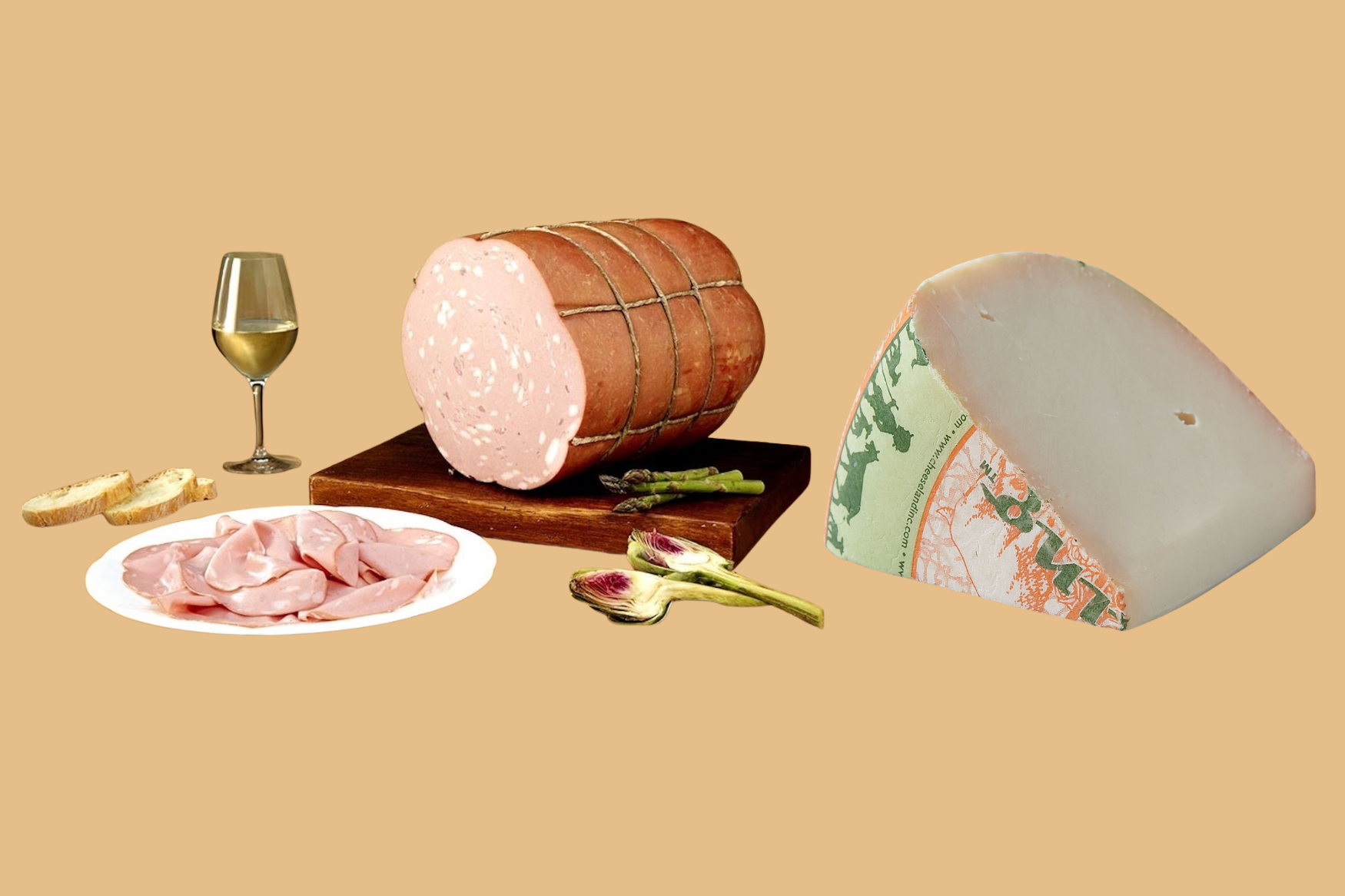
Mortadella and Young Goat’s-Milk Gouda
If you’ve ever been driving through Italy, and somehow encountered a magical sandwich at the likes of a gas station or rest stop — known as an “autogrill” — chances are good that mortadella was the reason that the sandwich made you question why other sandwiches even bother to exist. The precursor to the imposter “bologna” that many Americans have grown up with is a gently-spiced, emulsified pork sausage, with almost creamy pockets of lard and sometimes studded with pistachios. Its origins — and its impostor’s namesake — are in Bologna, a culinary destination within a country where most cities are culinary destinations. So it’s no wonder why mortadella, especially Mortadella Bologna PGI, is a favorite among charcuterie aficionados, either for a sandwich or just by itself.
“I have a soft spot for a truly good mortadella,” says food writer Emily Cappiello. “There’s something irresistible about its silky texture and the way it mingles with so many cheeses.
She suggests draping mortadella in sexy folds on your next charcuterie board along the other languid hams and sturdy sausages, or considering another useful application: atop a pizza.
“Mortadella also belongs on pizza,” Cappiello maintains. “I’ll die on this hill.”
Pairing perfection: “For classic purposes you can’t go wrong with mozz” as a complement to mortadella, says Isabelle Brosen, Assistant Manager of Events and Education at Murray’s Cheese. (This also includes mozzarella’s sexy cousin burrata, the other likely culprit on the life-altering sandwich as described above.)
Another inspired alternative? “I’d try a young Gouda,” Brosen suggests. “Creamy, mild, and lightly sweet, it will balance the pistachio flavor in the meat. [It’s] even better to go for a young goat’s-milk Gouda, and get a little tang going.”
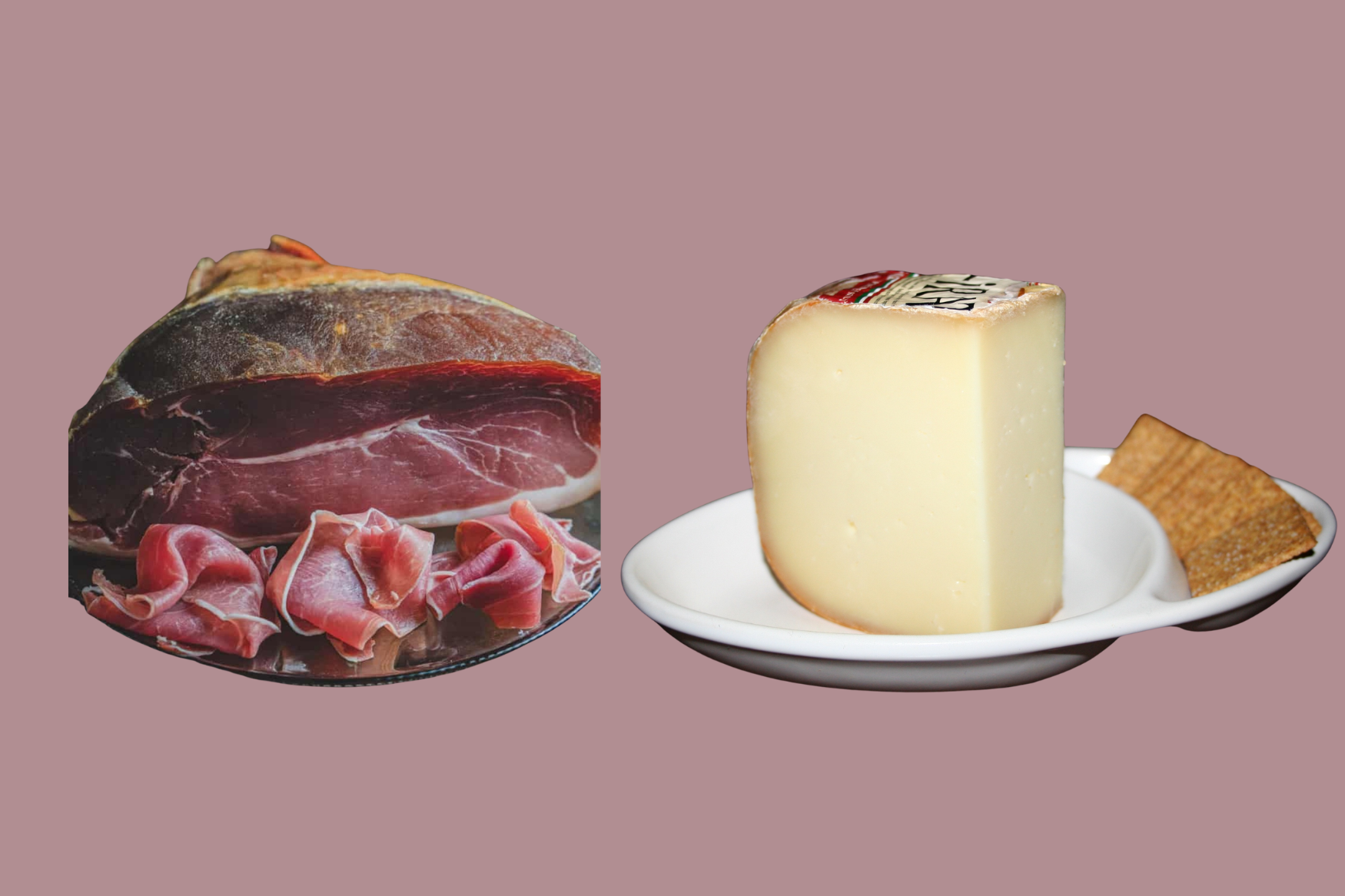
Jambon de Bayonne and Ossau-Iraty
While Spain’s legendary jamón Ibérico and Italy’s prosciutto di Parma hardly need an introduction, for my own personal taste, France’s Jambon de Bayonne PGI deserves a little recognition in the category, too. Along with its exceptional flavor, the ham is also surrounded by exceptional lore: Legend has it that a hog accidentally fell into the salty waters around Salies-de-Béarn and cured itself.
Hailing from the Adour Basin in France’s southwestern lobe, Jambon de Bayonne is named for the port city where the ham was shipped, rather than where it is necessarily processed, utilizing a specific breed of hogs. With a rich flavor and pronounced salinity, it is one of the only hams worldwide that stipulates the source of the salt used to cure the hams: ancient sea salts from Salies-de-Béarn, from a geologic era when the landmass would have still been under water. Of note, Jambon de Bayonne also boasts one of the world’s oldest food festivals — the annual Foire au Jambon de Bayonne, which dates back to 1462 — a necessary pilgrimage for lovers of charcuterie.
Pairing perfection: Jambon de Bayonne also has a built-in marriage with a cheese from the same region. Ossau-Iraty PDO’s gently earthy, sweet, and nutty notes are the perfect counterpoint for Jambon de Bayonne’s salty and mildly gamy notes.