
The Three Absolute Best Cheeses for Cheeseburgers
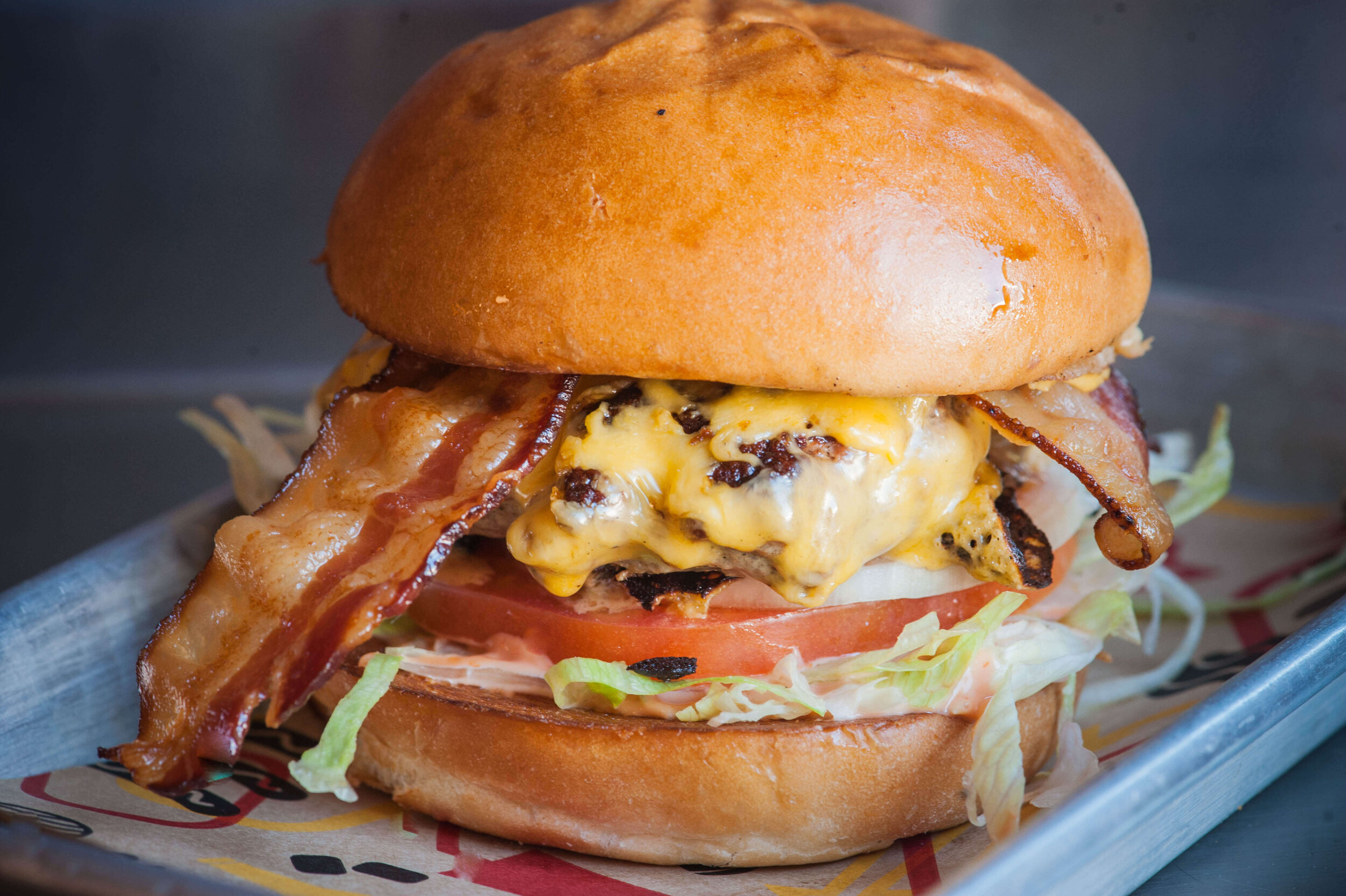
All American Cheese Burger. Photo credit: Wes Rowe
What’s the absolute best cheese for topping that burger? In speaking to both burger and cheese experts, we’ve narrowed the choices down to just three strong contenders. Here’s why.
In upscale cheese circles, the debate stems from the fact that although fancy artisan cheeses might win on taste, heat tends to alter their flavor and texture, and is not always for the best. When talking about foods like grilled cheese, burger cheese, and macaroni and cheese, the key word is meltability.
We asked Wes Rowe, chef at WesBurger 'N' More in San Francisco, for his thoughts on the matter.
“Artisan cheeses are nice but often wasted on a burger. The exceptions are really old sharp Cheddar, and blue cheese. I really love American cheese, especially thick sliced. This cheese is the classic for burgers, it’s delicious, melts second to none, and is a really gorgeous color of yellow.”

American cheese. Photo courtesy Andrew & Everett
American Cheese
That yellow color in American cheese traditionally comes from annatto, a coloring derived from the seeds of the achiote tree and was originally added to help sell paler cheeses at market. And of course, for burgers, Rowe means good old squares of pasteurized process American cheese from the supermarket. Processed cheeses melt more easily because they contain emulsifiers and oils to help them do just that. Just be sure to read the label—if the word “cheese” does not appear, it will contain little to no milk—it’s made from vegetable oil instead.

Cheeseburger with American cheese. Photo credit Andrew & Everett
American cheese has improved as consumer awareness and demand for better cheese have increased. Andrew & Everett, for example, was the first brand to introduce rBGH-BST hormone-free American cheese. Their preservative and hormone-free cheese, made with milk from grass-fed cows using vegetarian rennet, contains no antibiotics, artificial preservatives, artificial colors, binders, or fillers, and is gluten-free making it a favorite with Whole Foods Market shoppers. According to Stacey Bender of Bender PR Group, their sales definitely peak during the summer grilling season.
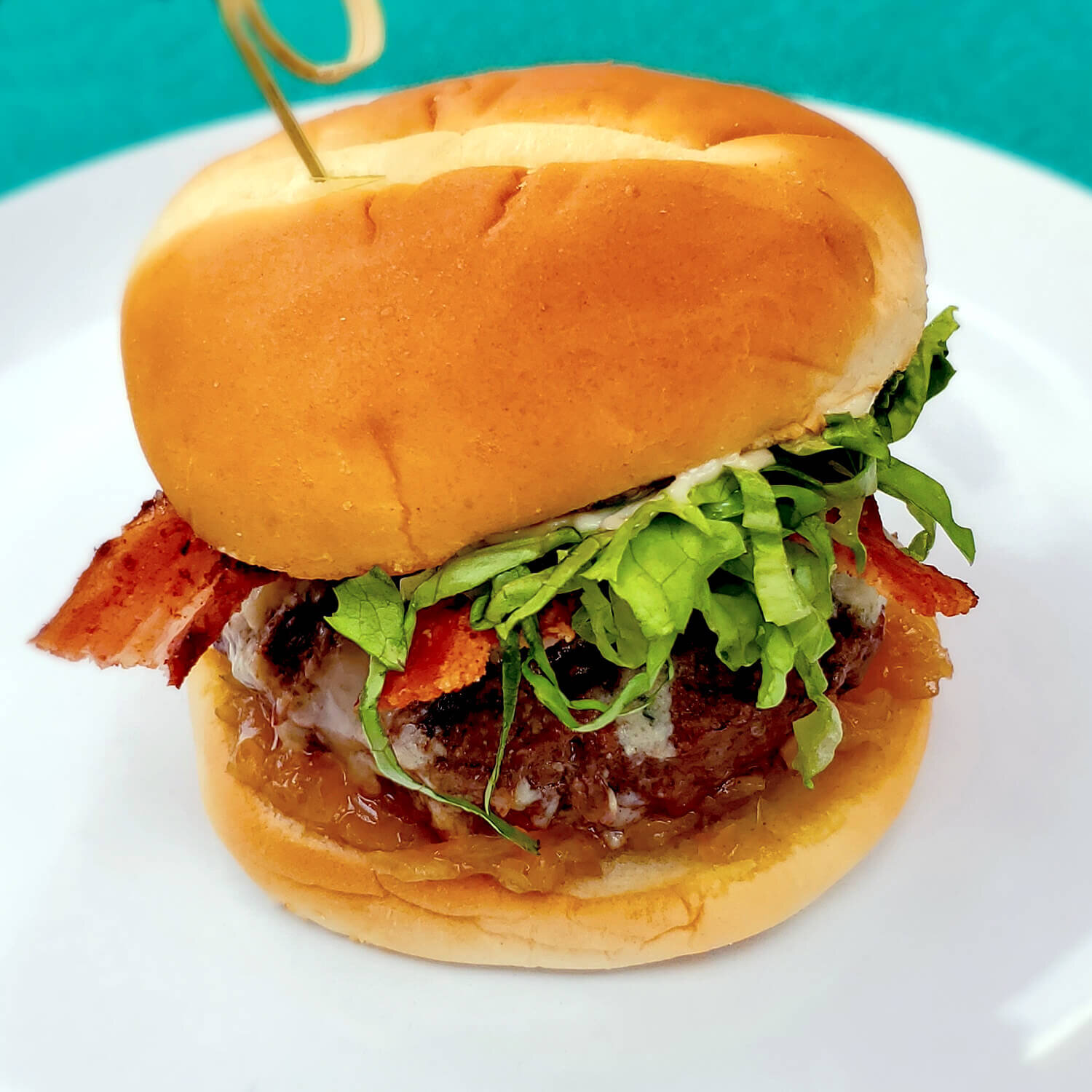
Smokey Blue Burger. Photo courtesy Rogue Creamery
Blue Cheese
On the artisan blue cheese side, Marguerite Merritt, cheese emissary of Rogue Creamery weighed in from Oregon to share ideas on their line of award-winning blue-veined cheeses for burger bliss. “Choose a blue cheese with a level of “blue” intensity that complements the type of meat you’re using. For a standard ground beef patty, I find that many blue cheeses can be too strong. Rogue Creamery’s Oregon Blue or Smokey Blue cheeses are more moderate in their “blue” flavor, and don’t overwhelm the taste of the beef.”

Smokey burger mise en place. Photo credit Rogue Creamery
Merritt also encourages thinking out of the burger box. She suggests “mixing crumbled blue cheese into the patty or making a stuffed burger” which sidesteps the meltability issue and paves the way for blue cheeseburger success. “My favorite choice when making a blue cheeseburger is Rogue Creamery’s Smokey Blue,” says Merritt. Wheels of this cheese are smoked over local hazelnut shells, and “the sweetness of the hazelnut shell smoke matches perfectly with the savory meatiness of a ground beef burger, especially one grilled outdoors on a charcoal grill.”
Chef Rowe agrees. “Rogue Creamery Smokey blue cheese is fantastic.”
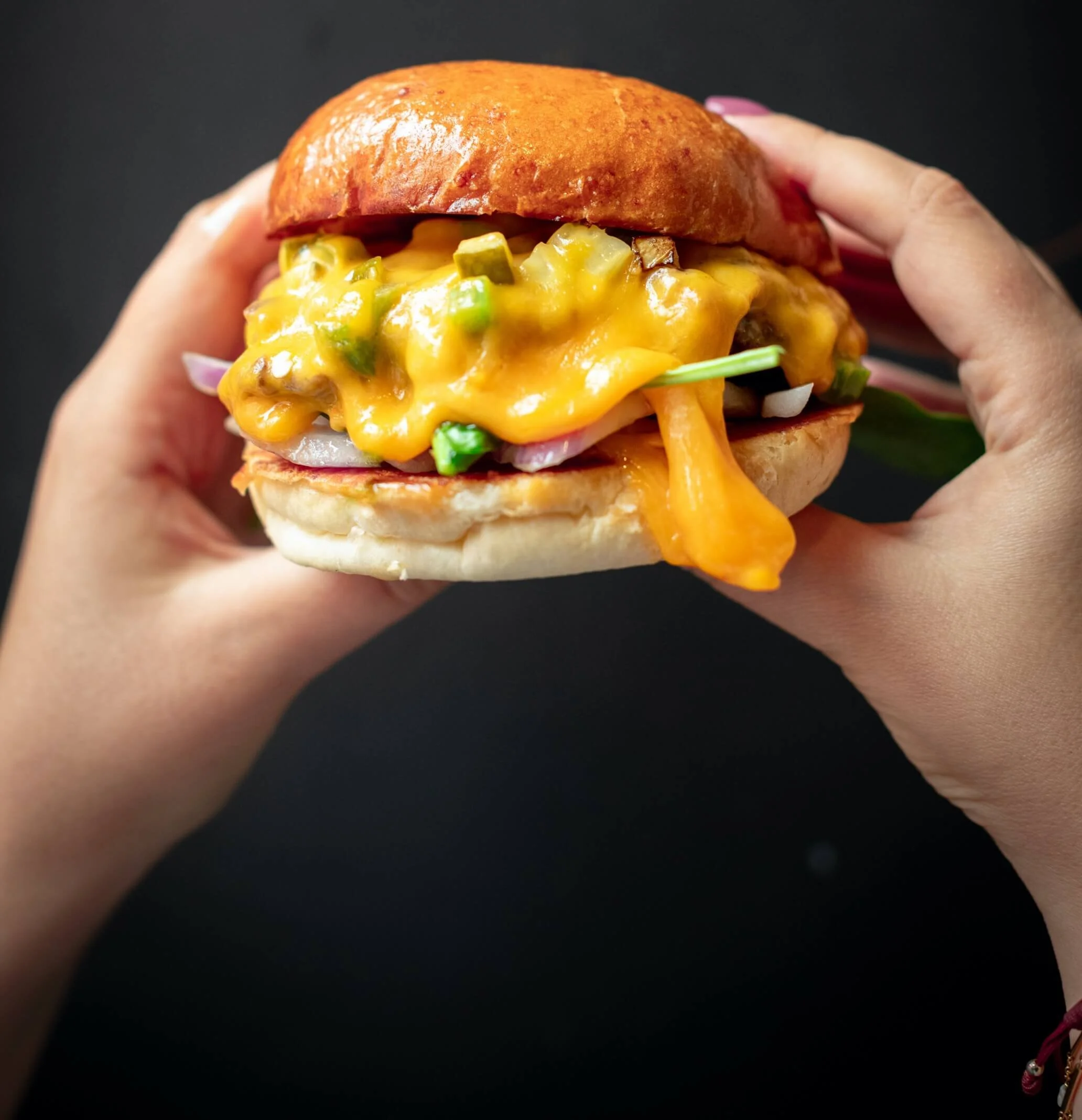
Cheddar cheese
A big step up from American cheese in terms of flavor, Cheddar softens into a smooth, creamy layer without turning greasy or disappearing completely. It hugs the patty instead of sliding off, which is exactly what you want on a burger. Cheddar has enough tang and depth to stand up to beef, but it doesn’t dominate. The umami from the meat and the slight sharpness of cheddar amplify each other rather than compete.
But there are a couple of other reasons why cheddar is a go to cheese for a cheeseburger. A cheeseburger is rich, and cheddar’s subtle acidity cuts through that richness, keeping each bite from feeling too heavy. Last but not least, when melted, cheddar becomes elastic and cohesive. It gives you that classic “cheese pull” without becoming stringy like mozzarella or too runny like some softer cheeses.